

Creatyi Cooler Latch Replacements
Heavy-duty replacement latches that snap securely back into place when your cooler's hardware fails mid-trip.
Why we love it
- UV-resistant, won't crack in desert sun
- Self-aligning design cuts install time
- Elastomeric construction absorbs road vibration
Pros
- Non-corrosive materials
- Self-aligning fit
- UV resistant
- Vibration damping
Cons
- Must match your cooler model first
- Two-pack only

Ozark Trail 10 Qt Hard Cooler
Lightweight hard cooler built for day trips and short overnighters when you need something genuinely portable.
Why we love it
- Weighs 2.78 lbs empty, easy to carry full
- 14-can capacity fits a day trip with ice
- Recycled plastic construction keeps costs down
Pros
- Lightweight and portable design
- Raised feet prevent ground moisture
- Sturdy carry handle for transport
- Made with recycled materials
Cons
- Limited capacity for longer trips
- Thin insulation for extended ice life

Ozark Trail 6-Can Soft Cooler
Collapsible soft cooler with a removable hard liner that doubles as a rigid bucket, ideal for car camping when you need flexibility without sacrificing structure.
Why we love it
- Remove the liner and it collapses flat for packing
- Hard liner protects food and keeps shape when loaded
- Shoulder strap makes it easy to haul across camp
Pros
- Removable hard liner for dual functionality
- Collapsible design stores flat when empty
- Adjustable shoulder strap for hands-free carry
- Leak-resistant bottom protects the minivan
- Front pocket holds keys and small items
Cons
- 6-can capacity is tight for a family weekend
- Soft-sided insulation not rated for extended ice

Ozark Trail 6-Can Soft Cooler
A lightweight soft cooler with a removable hard liner that bounces between day trips and car camping without leaking or taking up trunk space.
Why we love it
- Removable hard liner protects food en route
- Shoulder strap beats lugging it by hand
- Collapses flat when empty for storage
Pros
- Removable hard plastic liner
- Lightweight and portable design
- Adjustable shoulder strap included
- Easy to clean after trips
- Compact 6-quart capacity
Cons
- Limited ice retention on hot days
- Small capacity for weekend trips

MIYCOO 60-Can Soft Cooler Bag
Expandable soft cooler that holds enough for a family weekend and actually seals tight when packed in the minivan.
Why we love it
- Expands for more space without taking up extra room
- Five-layer design keeps ice solid through hot days
- Carries comfortable over shoulder or by handle
Pros
- Leak-proof construction
- Expandable double deck for organization
- Multiple carry options for flexibility
- Collapsible design saves storage space
- Attached bottle opener
Cons
- Soft sides won't protect against crushing
- Bulk makes it awkward when fully loaded
What Matters When You Are Packing Real Trips
Best Ozark Trail coolers are not all built the same, and a weekend in the high desert teaches you the difference fast. After fourteen years of hauling boxes across the Cascades and the Oregon scrub, I have watched latches split in the cold, drain plugs leak into minivans, and cheap foam liners collapse by the second afternoon. The picks in the list above cover hard-sided and soft-sided options, and they share one thing: they hold ice through actual use, not garage tests.
What separates a cooler that survives a trip from one that fails is not marketing language. It is how the gasket seals, whether the latch stays tight after a season, and what happens when you open the lid ten times on a hot day while your kids dig for snacks.
Gasket and Latch Quality Over Wall Thickness
Rotomolded boxes with thick walls get the attention, but a cooler that leaks meltwater or pops open on a bumpy road is worse than one with thinner walls and a solid seal. The gasket on the lid is where ice life actually lives or dies. A soft-sided cooler with a sealed liner keeps cold in just as well as a hard box if the zipper and plastic envelope hold. Check if the gasket is replaceable, because after a few seasons of sun exposure, it hardens and loses compression. A good latch should not require wrestling to close, and the hinge should not flex if you press down on the open lid.
Drain Plug Design and Accessibility
Every cooler collects meltwater, and a drain plug that leaks or sits in a spot where you cannot reach it turns a camping trip into a wet minivan. Raised feet on the bottom matter because they keep the plug above the ground and make it easier to tip the box slightly to empty it. The plug should turn smoothly and seal tight when closed. If you have to disassemble something to access it, you will skip draining before you pack it away, and mildew takes over.
Capacity That Works With Ice
A cooler rated for 14 cans sounds spacious until you load ice first, as you should. That ice takes up one third to one half of the space, depending on how much you pack. Stack cans vertically at first, then lay them horizontal, and put ice on top for even cooling. For a family trip with kids, the Ozark Trail 10-quart hard-sided option holds enough drinks and snacks without being so heavy that one adult cannot wrestle it out of the vehicle when full.
Carry and Storage When Not in Use
A soft cooler with an adjustable shoulder strap and collapsible sides is worth its weight when you are hiking from the campsite to a trailhead and back. Hard coolers with carry handles work better in the vehicle and look stable on a table, but they take up closet space year-round. Consider how you will actually use it: day hikes from base camp favor soft and packable, while week-long car camping wants the rigid box that keeps everything upright in the back of the truck.
A good gasket beats wall thickness every time. I have seen thin-walled coolers keep ice longer than rotomolded boxes with failing seals.
Hard-Sided vs Soft-Sided, and Why It Matters
Hard-Sided Coolers for Basecamp and Vehicles
A hard-sided box like the Ozark Trail 10-Quart Hard-Side Cooler sits stable on gravel, does not tip when kids lean on it, and the raised feet keep the drain accessible. The polypropylene shell stands up to UV and temperature swings, and the weight is light enough to carry but substantial enough to feel built. Hard-sided coolers are better for trips where the box stays in one spot or rides protected in a vehicle, because the rigid walls do not flex and leak if something falls on them.
Soft-Sided Coolers for Flexibility and Portability
Soft-sided coolers with removable hard liners give you two coolers in one. The Ozark Trail 6-Can Soft-Sided Cooler with Removable Hard Liner lets you pull out the inner bucket for easy cleaning, and the soft exterior collapses flat when empty. The shoulder strap means you can leave the hard cooler at camp and carry this one on a hike, or stash it in a backpack. The trade-off is that soft-sided coolers keep ice for around 24 hours, not multiple days, so they suit day trips and shorter outings better.
Expandable Soft Coolers for Teams and Group Trips
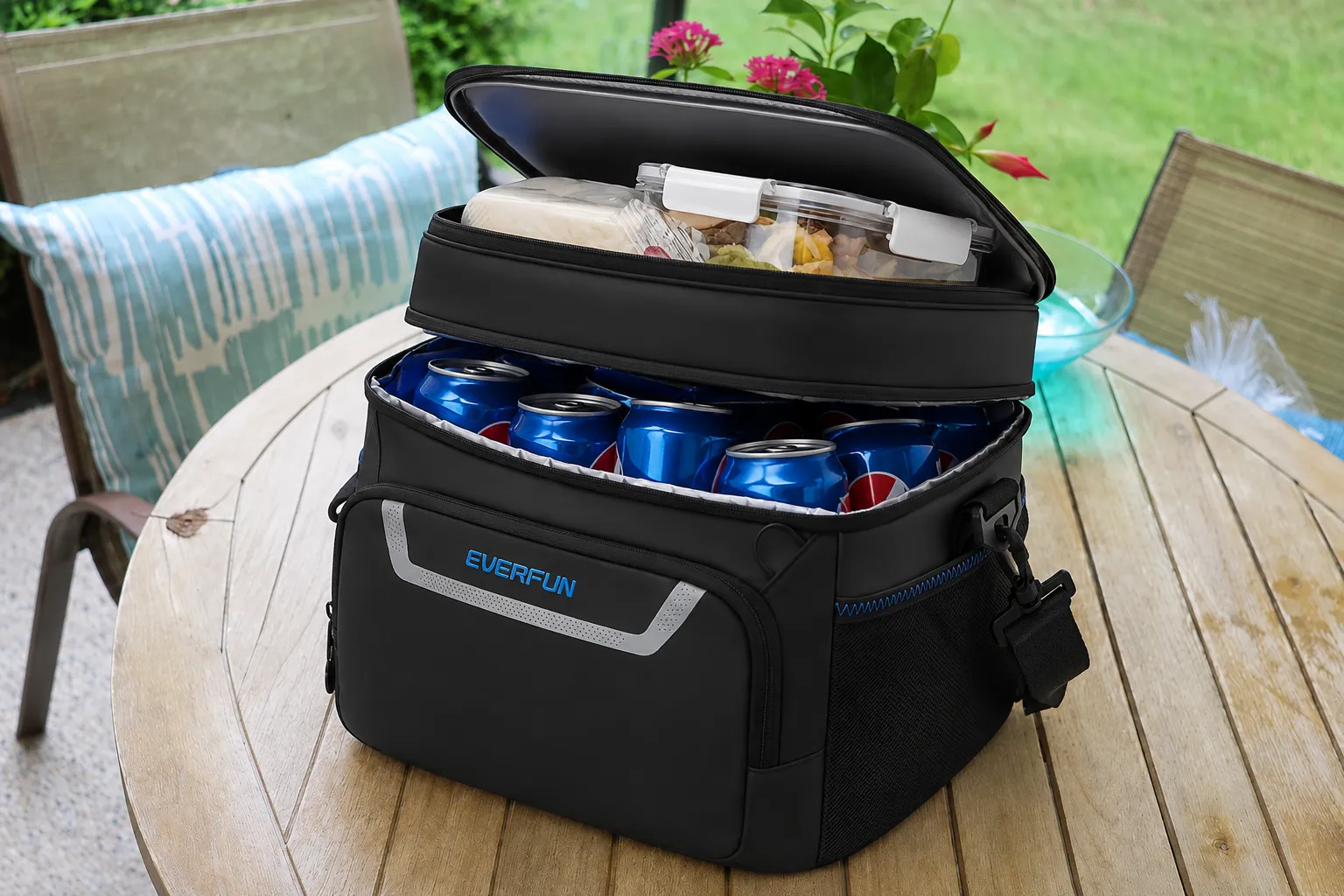
The MIYCOO Cooler Bag with Expandable Double Deck holds up to 60 cans and expands from 8.5 inches to 11.8 inches in depth, so you pack it tight for the drive and then widen it at camp. The dual compartments keep snacks on top and drinks below, which prevents food from getting crushed. It collapses to stash in a closet or vehicle, and the multiple carry options mean one person can handle it or two people can share the load.
Real Ice Life and What Tests Do Not Show
Factory Claims Versus Lid-Opening Reality
A five-day ice retention rating is tested sealed and unopened in a lab. It tells you what the box can theoretically do, not what happens when your kids open the lid every ten minutes looking for snacks. With normal use on a hot weekend, expect half to two-thirds of the advertised ice life. Pre-chilling the cooler and using block ice instead of cubes buys you more time than any wall thickness can, because it melts slower and stays colder longer.
Sun Exposure and Location
Shade matters as much as insulation. A cooler sitting in full sun with dark walls will warm up fast no matter how thick the walls are. Keep it under a pop-up tent, in the shade of the vehicle, or wrap a light-colored tarp over it. The high desert sun is relentless, and water evaporation cools the cooler slightly, so in dry heat, a wet towel draped over the box helps more than you would think.
Ice-to-Contents Ratio and Packing Order
Fill the cooler one-third to one-half with ice before you add food and drinks. Submerge drinks in ice when possible, because they cool faster and stay cold longer when surrounded. Canned beverages cool more evenly than bottles. Leave meltwater in the bottom rather than draining it immediately, because that cold water keeps the remaining ice from warming up as fast. Drain it before you drive home to prevent mildew, but during the trip, the water is your ally.
Pre-chill your cooler the night before and use block ice. Those two habits change everything.
What Gets Built Into Ozark Trail Coolers
Materials and Construction Standards
Ozark Trail coolers use polypropylene shells with rotomolded or injection-molded construction depending on the size. The plastic contains recycled content, which brings the weight down and the cost down without sacrificing durability for a season of family trips. The insulation inside is typically a foam blend, not the premium closed-cell foam in high-end brands, but it performs well enough when the cooler is packed with ice and kept shaded. The latches are injection-molded plastic, not metal, so they can crack if over-torqued or left in extreme cold, but replacement latches are cheap and available.
Drain Plug and Interior Finish
The drain plug is a simple screw cap, which means it can loosen if the cooler rolls around in a vehicle. Tether it with a small cable or rubber band if you are worried. The interior is typically a plain plastic shell, not a coated surface, so it can scratch and discolor over time, but it does not affect function. Some models have a slight lip or ridge on the interior bottom that can trap debris, so rinse it out before the first use and periodically.
Handle and Footprint
The carry handle is molded into the cooler and is sturdy enough for an adult to carry a half-full box with one hand, though two hands is safer when loaded. The compact footprint of a 10-quart model fits easily in a vehicle footwell or under a bench seat. The raised feet lift the cooler high enough that you can reach the drain plug, and they prevent the bottom from sitting flush in mud or sand where drainage becomes impossible.
Where to Use Each Size and Type
Day Hikes and Short Trips
A 6-quart soft-sided cooler with a shoulder strap is ideal for a day hike or a short river float. It holds enough for four people for four hours, stays light enough to carry full, and collapses down to fit in a backpack when empty. The shorter ice life (around 24 hours) is not a liability because you are not keeping food cold overnight. If you want something a little larger but still portable, the soft-sided options that expand give you flexibility.
Weekend Car Camping and Family Trips
A hard-sided 10 to 14-quart cooler is your friend. It sits stable on the picnic table, does not tip over when kids bump it, and keeps ice for two to three days if you pack it right. The hard shell protects against punctures and dents from rough handling. For a family of four camping two nights, this size holds enough drinks and food without being so large that it dominates your vehicle.
Week-Long Base Camps and Group Outings
Expandable soft coolers or larger hard-sided boxes (20 quart and up) work better for longer trips or teams. If you are feeding six people for a week, you need either two coolers or one very large one. The expandable soft coolers save space in the vehicle on the drive out but expand at camp. Hard-sided coolers in the 45 to 70-quart range are heavy but bulletproof, and ice lasts longer in the larger mass.
Tips
- Pre-chill your cooler the night before. Fill it with ice and water and leave it in a cool place for eight hours. This brings the temperature down before you pack food, and it makes your ice last significantly longer.
- Use block ice instead of cubes when possible. Block ice melts slower and keeps a lower temperature longer than crushed or cubed ice. Wrap it in newspaper or a towel to slow melting even more.
- Pack ice on top of food and drinks, not the other way around. Arrange cans vertically at first, then lay them flat, and finish with a full layer of ice on top. This keeps everything cold evenly.
- Drain meltwater before driving home, not during the trip. Meltwater sitting in the bottom keeps remaining ice cold. Drain it before you load the cooler into the vehicle to prevent mildew and smell.
- Check the gasket and latch before every trip. Run your finger along the gasket to feel for cracks or hardening. Test the latch by closing the lid hard and trying to open it. If either feels loose or stiff, fix it now.
- Keep the cooler in shade whenever possible. Sun exposure warms the box fast. Use a pop-up tent, vehicle shadow, or light-colored tarp to block direct rays.
FAQ
Will a cooler rated for five days of ice keep ice for five days on a family camping trip?
Not in real conditions. A five-day rating assumes the cooler is sealed unopened in a lab at a set temperature. On a camping trip where you open the lid frequently and the air is hot, expect two to three days of usable ice. Pre-chilling the cooler and using block ice extends this closer to the advertised time.
Can I use a soft cooler in winter to keep things frozen?
Yes, but the effect works backwards. A soft cooler in freezing air will insulate contents and keep them from freezing as long as they would in the open. If you need to keep something frozen during a winter trip, pack dry ice in a separate hard-sided cooler, since dry ice can damage soft-sided liners.
What is the difference between a cooler and an ice chest?
Practically speaking, there is no difference. Both terms describe an insulated box for keeping food and drinks cold. Ice chest is older terminology, and cooler is more common today, but manufacturers use them interchangeably.
How often should I replace the gasket on my cooler?
Check the gasket every season. If it no longer compresses when you press it with your thumb, or if you see cracks or hardening, replace it before your next trip. A good gasket is cheap and takes five minutes to swap out.
Can I leave meltwater in my cooler while camping?
Yes. The cold water at the bottom keeps remaining ice from warming up as fast. Drain it thoroughly before packing the cooler away for storage, because standing water leads to mildew and smell.
What size cooler do I actually need for a family of four?
For a weekend trip (two nights), a 10 to 14-quart cooler handles drinks and some food easily. If you are cooking at camp and using the cooler only for beverages and snacks, this size works. If you are relying entirely on cooler food (deli meat, cheese, prepared items), go one size larger to leave room for ice.



Write Your Review
No reviews yet. Be the first to share your experience!