


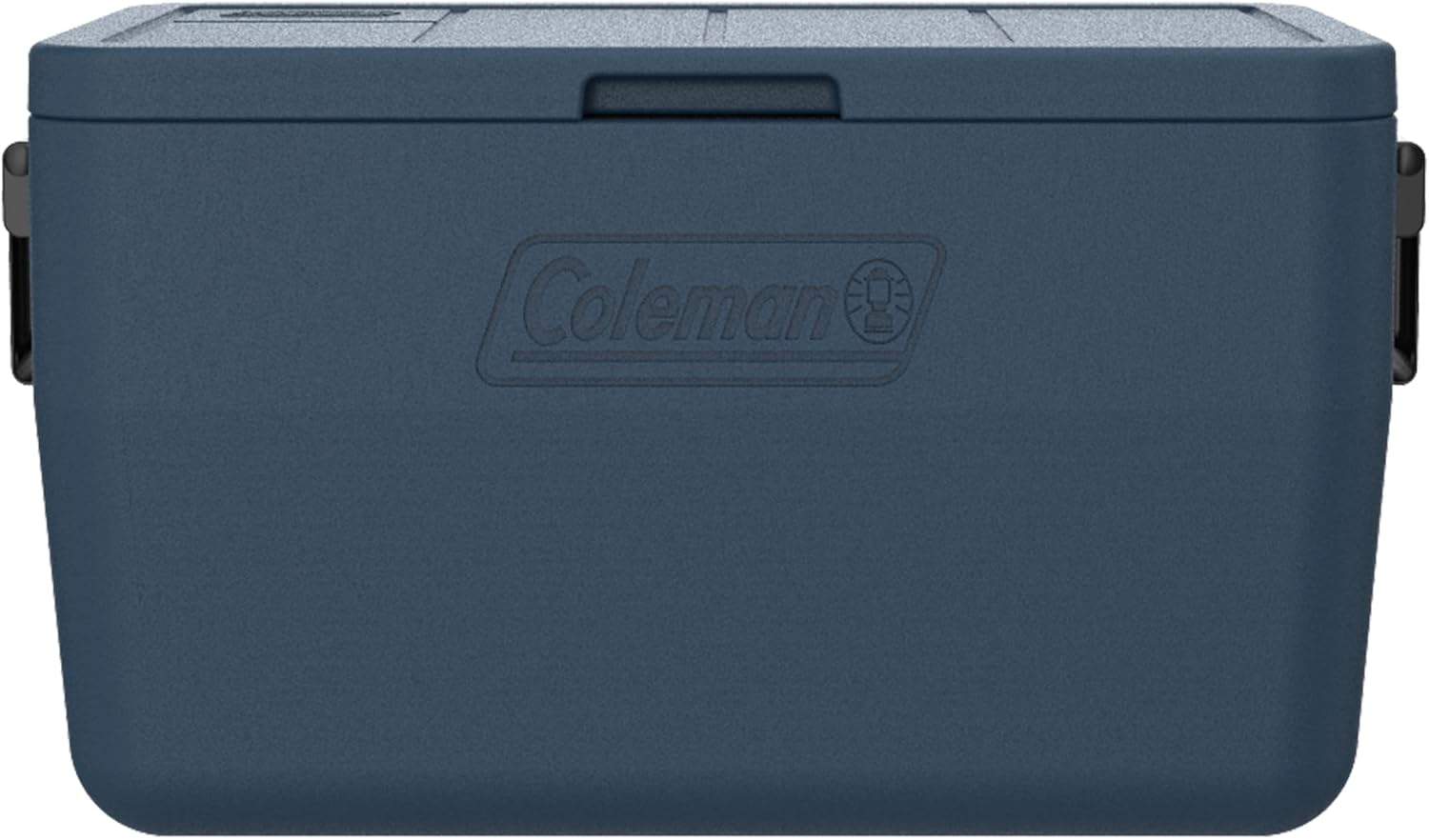
Coleman Marine 52Qt Wheeled Cooler
Wheeled cooler that handles weekend heat and minivan life without leaking, rated for five days of ice retention.
Why we love it
- Big wheels roll over gravel and sand easily
- Antimicrobial liner stays fresh between trips
- Lid holds 250 lbs, works as a seat or table
Pros
- Fully insulated lid and body
- Rust-resistant stainless steel hardware
- Leakproof channel drain plug
- Heavy-duty wheels and tow handles
- UV coating protects from sun damage
Cons
- Heavy when loaded with ice and food
- Wheels may struggle in deep sand

Coleman Classic Wheeled Cooler 101-Can
Rolling hard cooler rated for five days of ice in desert heat, with wheels tough enough for gravel and a lid that doubles as a seat.
Why we love it
- Six-inch wheels handle campground gravel without tipping
- Holds 50 cans plus 26 lbs of ice for a full weekend
- Recessed lip and one-handed lid opens even with gloves on
Pros
- Rated for five days of ice retention
- Oversized all-terrain wheels for gravel
- Molded cup holders built into the lid
- Lid seats 250 lbs as backup campsite chair
- Leakproof drain plug empties without tipping
Cons
- Heavy when full, needs two people to lift
- Wheels struggle on soft sand or deep snow

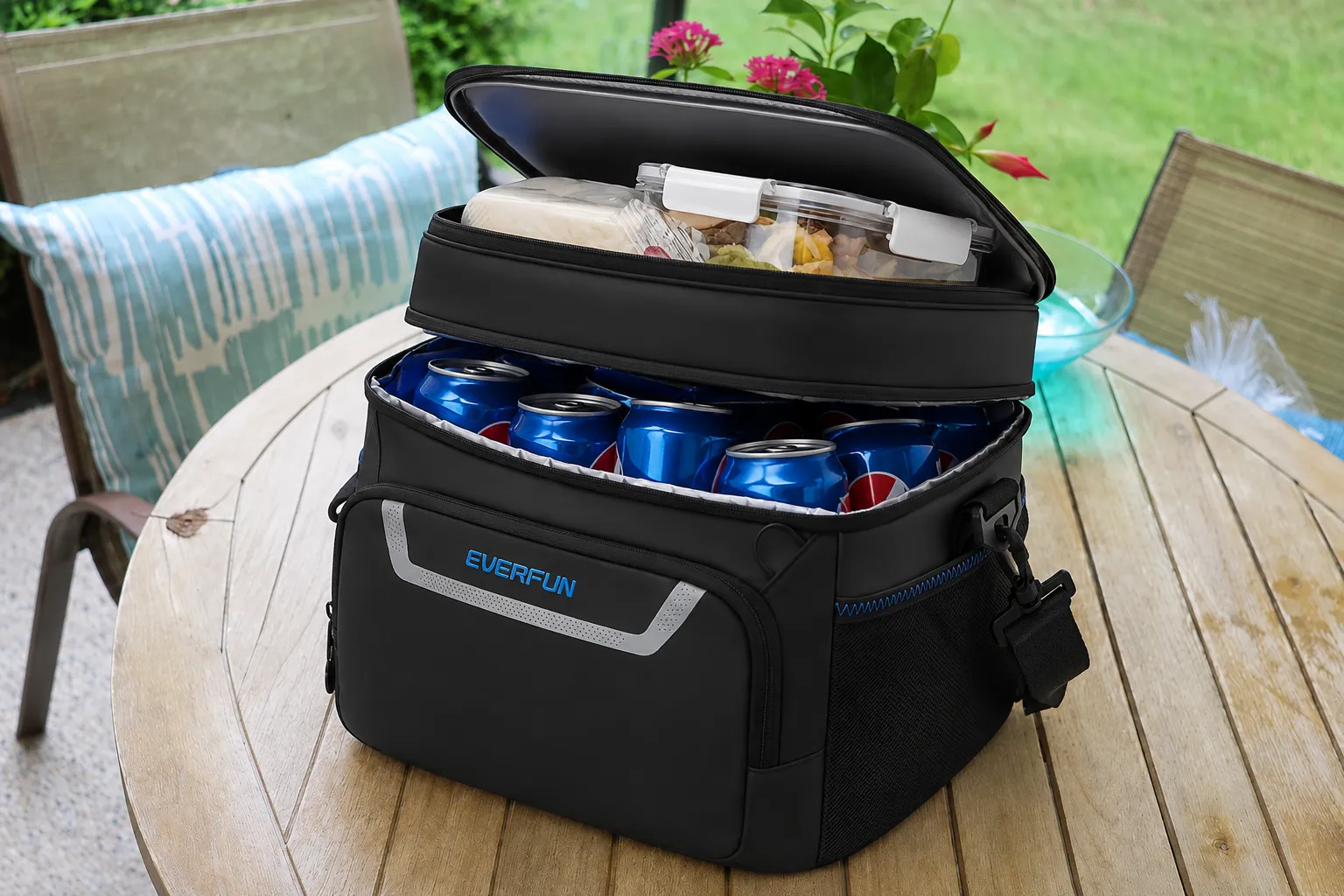
TONRUYN 50L Wheeled Cooler Bag
Soft-sided wheeled cooler that handles a packed minivan and hot high-desert weekends without tipping or leaking all over the gear.
Why we love it
- Wheels grip gravel and grass, not just pavement
- Detaches to carry as a bag when the loop is tight
- Top compartment keeps pizza flat, bottom stays cold
Pros
- All-terrain wheels with 360-degree swivel
- Detachable design for flexible use
- Waterproof 900D TPU-coated fabric
- Dual compartment organization
- Aluminum telescoping handle
Cons
- Soft-sided loses structure when mostly empty
- Wheeled cooler means slower carry across uneven terrain

Igloo Trailmate 52Qt Wheeled Cooler
Wheeled 52-quart hard cooler built to handle weekend heat and constant lid opens with thick insulation and soft-ride wheels that roll over gravel.
Why we love it
- Soft-ride wheels roll over campground gravel
- 1.5-inch foam walls rated for extended ice
- Telescoping handle pulls full weight easily
Pros
- Soft-ride 6.25-inch wheels
- 1.5-inch foam-insulated walls
- Locking lid with bottle opener
- Marine-grade telescoping handle
- Cool Riser Technology base
Cons
- 19.9 lbs adds weight when packed
- Wheels less stable in deep sand

LAKA 30QT Cooler with Wheels
Rotomolded cooler with wheels that actually rolls through campground gravel and keeps ice solid through a hot weekend.
Why we love it
- Wheels handle rough ground, not just pavement
- Rotomolded build survives kids and gear shifts
- Cup holders and bottle opener stay put on trips
Pros
- Rotomolded one-piece construction
- Airtight gasket seals well when closed
- Telescoping handle folds away clean
- Rubber wheels grip unpaved surfaces
- Integrated drain plug and cup holders
Cons
- Heavy when fully loaded with ice
- Price sits near premium cooler range
Wheels That Actually Roll Across Gravel
Most camping coolers with wheels spend their entire lives parked next to your campfire, getting opened every ten minutes. That changes what matters. You are not hauling it down a parking lot once. You are pushing it across sand, gravel, and dirt, sometimes with kids yanking on the handle, sometimes when the ground is uneven and wet. The wheels have to survive that. The handle has to stay locked. The latches have to hold through bounces and temperature swings.
After fourteen years of dragging these things across the Pacific Northwest, I have seen drain plugs leak in the minivan, latches crack in the cold, and wheels that looked tough fail within a season. The picks above all have wheels rated for rough terrain. The difference is in how the frame supports them and whether the handle actually stays put when you let go.
Wheel Size and Terrain Grip
Larger wheels roll easier over rock and root, but they add weight and height. A 6-inch wheel clears more than a 4-inch, but a wheeled cooler gets awkward above a certain profile. The Coleman Marine Cooler uses 6-inch wheels, which handles gravel campground loops without bogging down. Smaller wheels, like those on some soft-sided boxes, work fine on packed ground but complain on loose terrain. Rubber compounds matter too. Hard plastic wheels wear fast; rubber wheels grip better and last longer on coarse surfaces.
Handle Stability and Grip
Telescoping handles that lock firmly are non-negotiable. A handle that wobbles sends energy into the frame with every step, stressing welds and wheels. The Laka Cooler with Wheels has a marine-grade telescoping handle that locks tight and does not rattle. Swing-up handles on larger boxes let you pull from different angles, which helps on sand, but they add leverage strain. Test the lock mechanism before buying. If it feels loose after a few extends and retracts, it will fail after a month of trips.
Frame Weight Capacity
The frame has to support a full cooler, not just the empty shell. When you load 50 pounds of ice and contents, the handle assembly and wheel mounts take real stress. The Igloo Trailmate 52Qt Wheeled Cooler has sturdy mounting points where the wheels attach. Cheap frames flex or crack at those joints. A box rated to hold 250 pounds on the lid means nothing if the wheel mount shears off at 80 pounds of pull.
Rotomolded vs Injection Molded
Rotomolded construction distributes load more evenly because the walls are uniform thickness. Injection molded boxes have thinner walls and stress concentrates at seams. A rotomolded cooler with wheels will outlast an injection molded one on rough ground, but it weighs more and costs more. Soft-sided coolers with detachable wheels, like the TONRUYN Extra Large Wheeled Portable Cooler Bag, trade durability for portability. The wheels come off, so you can pack the bag flat when you fly.
Wheels fail faster than any other part because they work every single trip.
Ice Retention When the Lid Opens All Day
The manufacturers’ ice retention claims are tested sealed. Your family opens the lid constantly. In fourteen years of high-desert and coastal trips, I have learned the gap between a five-day lab result and reality is enormous. Every lid opening trades cold air for warm. Pre-chilling changes everything. Blocking sun changes everything. How much ice you actually pack changes everything.
Wall Thickness and Insulation Quality
Thicker foam keeps ice longer, but it also takes longer to chill down before a trip. The Coleman and Igloo boxes have 1.5-inch foam walls, which is solid for a 52-quart. The Laka uses thick PU foam and an airtight gasket, which helps it claim seven days. Soft-sided coolers have less insulation overall because fabric takes up space. A soft cooler loses ice in hours, not days, but it is lighter and drains faster. Pick based on your trip length, not on a number that was never tested with a kid’s hand on the lid.
Gasket and Lid Fit
A poor gasket leaks cold immediately. The seal around the lid is what actually keeps ice, not the wall thickness. Check the gasket before buying if you can. It should be dense foam or rubber, not thin or crumbly. The hinges matter too. Plastic hinges crack in cold. Stainless steel or heavy-duty nylon survives freeze cycles better. A latch that does not pull tight lets warm air in every time someone shuts the lid without thinking.
Pre-Chilling the Box
Pre-chilling adds days to ice life, but it costs time. If you load a warm cooler with ice, the ice melts fast just bringing the box down to temperature. Freeze the empty cooler overnight before packing, or fill it with ice the evening before and dump it that morning. Add fresh ice right before you leave. This habit alone changes a five-day cooler into a seven-day cooler in real use. Every family I know that gets good ice life does this. Every one that does not, complains the cooler fails by afternoon two.
Ice Packing Ratio
Ice takes up space. If you pack a 52-quart box with ice, 25 to 30 quarts of that volume is ice. You get maybe 20 to 25 quarts of actual food and drinks. A 30-quart rotomolded cooler holds about 24 cans with 35 pounds of ice. That ratio sounds bad until you realize most family trips need exactly that. Understand what the capacity actually means after you pack ice. Do not assume you can load it full of food.
Every family opens the lid ten times before lunch. Design your strategy around that.
Drains, Latches, and What Breaks First
Drains clog. Latches split. Hinges corrode. After fourteen years, I have replaced more latches and drain plugs than I have bought coolers. The hardware is where cheaping out shows up hardest.
Drain Plug Design
A channel-style drain is better than a ball valve. Ball valves clog with small ice chips and debris. A channel drain lets water flow around obstacles. The Coleman boxes use leakproof channel drains. Open it slowly or meltwater floods the cooler when you turn it sideways. Store the cooler with the drain open to air-dry inside. Close it before packing. If the drain does not seal completely, pack a small towel or rag underneath when the box is loaded in the vehicle. A dripping cooler wrecks a car interior.
Latch Material and Spring Tension
Rubber latches freeze and crack. Heavy-duty latches made from nylon or composite polymers survive cold better. The Laka uses heavy-duty rubber latches designed for regular use and temperature cycling. Try operating the latches in a store if you can. They should require firm pressure and snap back. Loose latches fail in two seasons. The lid should not open on its own if you tip the cooler slightly.
Hinge Hardware
Stainless steel or powder-coated hardware lasts. Bare metal rusts fast near water and salt. Check the hinges and the hardware holding them. If you see rust, move on. A rusted hinge will crack under normal use. The UV-coated Coleman boxes and the marine-grade hardware on the Laka are built for boats and salt spray, which means they survive normal camping better than standard boxes.
Before You Buy, Check These
- Open and close the latches 10 times. They should feel firm and consistent every time.
- Inspect the hinge hardware for rust, discoloration, or corrosion spots.
- Squeeze the lid gasket. It should spring back, not stay compressed.
- Look at the seam where the handle attaches to the lid. There should be no cracks or separation.
- Open the drain and check the plug threads. They should not be stripped or cracked.
Capacity vs. Real Usable Space
A 52-quart box does not hold 52 quarts of food and ice mixed together. It holds maybe 20 quarts of drinks and food, plus 30 quarts of ice if you pack it right. A 30-quart holds roughly 15 quarts of contents and 15 quarts of ice. Most families use way less ice than they think they need, and most boxes feel too big until you have been camping for three days with eight people.
Actual Contents Once Ice is Packed
The ice volume shrinks usable space. Pack ice on the bottom and sides, then load food and drinks in the middle. A 52-quart cooler with that layout holds about 50 to 60 cans with ice, or about 25 to 30 pounds of food. For a family of four on a weekend trip, that is enough. For a week, you need two coolers or a cooler plus a soft-sided backup. The Coleman Classic holds 101 cans without ice, or 50 cans with 26 pounds of ice. That 50-can figure is what matters for real use.
What Size Fits Your Trips
Match the size to your trip length and group. A 30-quart box is right for a couple for two nights or a family of four for one night. A 52-quart handles a family of four for two to three nights. A 70-plus-quart is overkill unless you are base-camping with a big group. Bigger boxes need bigger vehicles. A 100-quart cooler barely fits a minivan and takes two people to move full.
Weight When Loaded
A rotomolded 52-quart weighs 30 to 40 pounds empty. Add 35 pounds of ice and 20 pounds of food. That is 85 to 95 pounds total. One adult can move it across a campground, but barely, and not easily if you are tired. A soft-sided cooler half that weight. Wheels make the difference. Without them, you are dragging or carrying something in the 80-pound range on family trips. That wears you out faster than the hiking does.
Tips From Fourteen Years of Dragging These Things
- Pre-chill the cooler the night before. Fill it with ice, let it sit overnight, dump that ice, pack fresh ice the morning you leave. That one habit adds two days to ice life in real use.
- Use block ice and cubes together. Block ice melts slower and lasts longer. Cubed ice chills things faster. Pack block on bottom and sides, cubes on top and around food. Block takes two days to melt through, cubes handle the first 12 hours of opening.
- Keep the cooler out of direct sun. Park it in shade or throw a sleeping bag or tarp over it. Direct sun cuts ice life by a third. This matters more than wall thickness on a hot weekend.
- Leave the drain open at camp if you are staying overnight. Meltwater pools at the bottom and turns rancid. Crack the drain and let it weep out slowly. Close it before you pack to drive home.
- Pack the cooler so drinks are on top and food underneath. You open the lid constantly for drinks. Every open costs cold air. Freezing food on the bottom means it stays cold even if the top gets warm. Perishables go in the middle where they are coldest.
- Wipe the gasket dry and leave the lid cracked when you store the cooler. Trapped moisture breeds mold. Air circulation prevents it. Store it with the drain plug open and the lid propped slightly.
Common Questions
Does the five-day ice claim hold up with a family that keeps opening the lid?
No. The five-day claim is lab-tested sealed and unopened at 90 degrees. A family with kids opens the lid 20 times a day. Expect three to four days of solid cold, then a slow decline into warm. Pre-chilling the cooler and using block ice gets you closer to five days. Direct sun cuts it to two days.
Can I use a wheeled cooler for fishing, or does saltwater wreck it?
Saltwater corrodes unpainted metal over weeks. Stainless steel hardware survives. Powder-coated or painted frames survive longer than bare aluminum. Rinse the cooler with fresh water after beach or boat trips. Leave the drain open to dry out completely. A cooler used on salt water every week will corrode within a season if you do not rinse it.
What happens if the drain plug leaks inside the vehicle?
It is a nightmare. A 52-quart cooler with 30 pounds of melted ice can dump 15 to 20 pounds of water into a minivan. The water pools under the third row and rots the floor. Always transport the cooler with the drain either fully open (so water drips from underneath) or fully closed and tested beforehand. Never leave it half-open. Check the plug threads and the gasket before every trip.
Are soft-sided wheeled coolers as good as hard coolers?
They are different. Soft coolers lose ice faster because they have less insulation. But they weigh half as much, pack flat, and drain faster. If you need a cooler for day trips or a long drive where weight matters, a soft cooler with detachable wheels is smart. If you are base-camping for multiple nights, a hard cooler holds ice better and costs less per day of use.
How long do the wheels actually last?
Rubber wheels on a hard cooler used every other weekend last two to three years. Plastic wheels fail faster, sometimes in one season if the terrain is rough. Budget for wheel replacement. Many manufacturers sell replacement wheel kits separately. If the cooler itself is solid but the wheels fail, you can rebuild it cheaper than buying a new box.
Is there a wheeled cooler that works for van life and truck camping?
Yes, but size is everything. A 52-quart fits a truck bed or van with room to spare. A 70-quart needs a large truck or dedicated space in a van. Test fit it in your vehicle before buying. Many people size up then realize it does not fit their rig and they end up with a backup cooler they never use.


Write Your Review
No reviews yet. Be the first to share your experience!