


Coleman Classic 70-Quart Hard Cooler
A straightforward 70-quart hard cooler that holds ice through a hot weekend and handles constant lid-opening without leaking all over the minivan.
Why we love it
- Tethered drain plug keeps spills off gear
- Rated for five days of ice retention
- Sturdy lid seats two kids during camp meals
Pros
- Leak-resistant design
- Heavy-duty reinforced handles
- Built-in cup holders
- Stain-resistant liner cleans fast
Cons
- Heavy when fully loaded
- Standard plastic lid flexes under pressure

Igloo Marine Ultra 54 Qt Cooler
Stainless steel hardware and UV-resistant shell handle the high desert sun. Holds ice through a hot weekend without leaking in the minivan.
Why we love it
- Stainless hinges and latches survive salt, sun, and sand
- Non-slip handles grip wet hands on trail or boat
- Fits 76 cans, sized right for a family weekend
Pros
- Stainless steel hinge and lid strap
- UV inhibitors protect from sun damage
- Hybrid latches balance durability and seal
- Non-slip swing handles
Cons
- Heavy at 10.6 pounds empty
- Plastic snap latches wear over time

Igloo Polar 120 Qt Hard Cooler
Solid standard hard cooler that keeps ice through a hot weekend and survives a packed minivan without leaking.
Why we love it
- Drain plug works with a hose for easy cleanup
- Snap-lock child safety latch keeps hands out
- Made in USA with stain-resistant interior
Pros
- Reinforced swing-up handles for full cooler
- Dual snap-fit latches seal tight
- Threaded drain plug for quick emptying
- UV-inhibitor lid guards against sun damage
- 120-quart capacity fits family weekend
Cons
- Heavy when loaded with ice and food
- No wheels for long campground carries

Igloo Trailmate 50Qt Hard Cooler
Fifty-quart hard cooler built for weekend family camping with thick foam walls, locking lid, and draining cup holders that actually work.
Why we love it
- 1.5-inch foam walls hold ice through hot high-desert weekends
- Locking lid gasket keeps contents secure in a packed minivan
- Cup holders drain instead of pooling water on your gear
Pros
- 1.5-inch insulated foam walls
- Lockable lid with gasket seal
- Self-draining molded cup holders
- Extra-wide bail handle with grip
- Integrated bottle opener
Cons
- 15 pounds, heavy when full
- No wheels for long campground walks
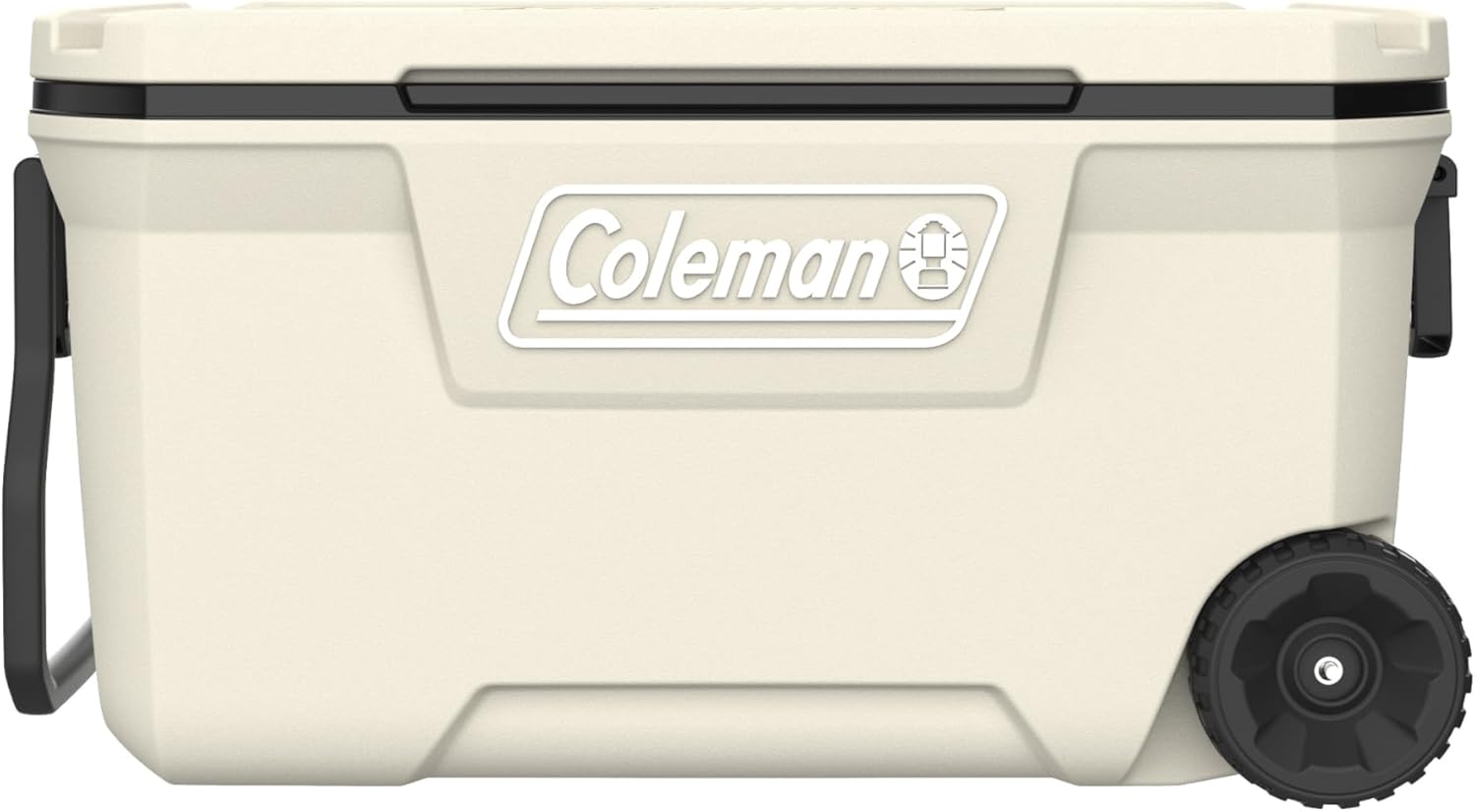
Coleman Classic Wheeled Cooler 80-Can
Wheeled hard cooler rated for five days of ice, built tough enough for family camping weekends with a lid that doubles as a seat.
Why we love it
- Six-inch wheels roll over gravel and grass
- Holds 80 cans with ice for a full weekend
- Lid seats 250 lbs, becomes extra camp seating
Pros
- All-terrain wheels for rough ground
- Tethered drain plug stays attached
- Molded cup holders keep drinks secure
- Hard shell lid rated for 250 lbs
- Dual tow and swing-up handles
Cons
- Heavy when loaded with ice
- Wheel performance varies in deep sand
What Matters When You Stay Under $150
Best coolers under $150 sit at an awkward line. You get real insulation, actual latch hardware, and a drain plug that works. What you don’t get is the rotomolded shell or the premium gasket that survives a decade of abuse. Spend an afternoon with a family of four opening the lid every ten minutes on a hot weekend, and you’ll see the difference between a box that holds ice for three days and one that holds it for five. At this price, the tradeoff is usually wall thickness or gasket design, not both.
Most coolers in this range fall into two camps: Igloo and Coleman boxes that emphasize capacity and durability features over extreme retention, or smaller specialty units that nail one thing really well. The real question isn’t whether they work. It’s whether what you’re getting matches how you actually use it.
Insulation Type and Wall Thickness
Foam-injected walls are the standard at this price. The Igloo Trailmate Cooler uses 1.5-inch foam insulation, which is genuinely thick for the money. Coleman’s offerings use what they call TempLock FX insulation. Both work fine for a three-to-five day trip if you pre-chill the box and pack smart. The weakness isn’t insulation thickness alone. It’s the combination of foam plus the gasket seal around the lid. A cheaper gasket lets cold air escape faster than a thicker wall can replace it.
Latch and Hinge Hardware
Below $150, most latches are plastic snaps instead of metal. That’s not automatically bad. The Igloo Marine Cooler uses a hybrid latch: stainless steel where it matters most (the hinge area) and plastic in the snap section. After a season of salt spray or high-desert sun, this approach outlasts an all-plastic design. Coleman and Igloo both use Riteflex resin in their hinges, which stays flexible in cold and doesn’t crack as easily. Check the hinges before buying. If they feel flimsy when you flex them gently, the latch will fail faster than you’d think.
Drain Plug Design
The tethered drain plug is now standard at this price, and it matters. A plug that stays attached never gets lost at a campsite. The Coleman Classic Series Insulated Portable Rolling Cooler and Coleman Classic models both feature tethered plugs. Test the seal before a trip by filling the cooler with water and letting it sit. If water pools around the drain after two hours, the plug or the threads are loose. You want zero drips.
Capacity vs. Usable Space
A 70-quart cooler doesn’t hold 70 quarts of cold drinks and food. Once you pack 35 pounds of ice, you’ve lost half the capacity to the ice itself. For a family weekend, aim for one quart of ice per person per day, plus 20 percent extra for safety. That means a 50-quart Trailmate holds about four people’s worth of food and drinks for a three-day trip if you pack efficiently. Larger wheeled models like the Coleman rolling cooler work for base camps where you don’t move the box around much.
Pre-chill your cooler the night before. A cold box holds ice twice as long as one that starts at room temperature.
Gaskets, Seals, and Why They Matter More Than Marketing Claims
Gasket Quality and Replacement
The rubber gasket around the lid edge does the real work. It’s what stops warm air from leaking in every time someone cracks the lid open. At this price, gaskets are usually replaceable, which is good because they dry out and crack after two or three seasons in the sun. Before buying, check whether the manufacturer sells replacement gaskets separately and for how much. If gasket replacements cost half the original cooler price, the box is designed to be disposable, not long-term gear.
Testing the Seal Before You Buy
Ask the store if you can fill it with ice water, close the lid, and let it sit for an hour. Lift the cooler gently and look for water pooling on the outside or seeping from the seal line. A good gasket keeps everything bone-dry. A bad one shows wet spots around the seal within 30 minutes. This test takes longer than most people spend shopping, but it’s the single best way to separate a cooler that will last from one that becomes junk in two seasons.
Lid Fit and Gasket Compression
Squeeze the gasket material with your thumb. It should feel dense and springy, not mushy or thin. Push down on the lid corner and feel how much resistance the gasket provides before it snaps shut. Latches that require real force to close trap a better seal than ones that click shut easily. A gasket that compresses too little leaves a visible gap when you close the lid. A gasket that’s too soft leaks air all night long.
The gap between a marketing claim and real ice retention widens with every lid opening. Discipline beats insulation.
What Gets Cut at This Price
Near the Bottom
Under $75, you’re looking at thin foam, plastic latches that crack in freezing weather, and gaskets that harden within one season. Drain plugs leak. Handles tear. The cooler works fine for a beach day but doesn’t survive the wear of regular camping trips. If you’re a once-a-year camper, this tier is honestly fine. If your kids open the lid fifty times a weekend, the seals fail faster than you’d expect.
The Middle of the Budget
From $75 to $110, you get real insulation thickness, hybrid or stainless steel latches in the right places, and gaskets that last two or three seasons. Drain plugs hold. Handles survive. This is where most families should shop for a workhorse cooler that won’t embarrass you in five years. The Igloo Trailmate Cooler sits here, as do entry-level Coleman boxes. You’re paying for reliability, not for extreme ice retention or rotomolded walls.
At the Limit
Right at $150, you can get either a larger cooler with premium features or a smaller one with rotomolded construction. A wheeled cooler with cup holders and a seat lid at $110 trades weight for features. A 120-quart hard cooler at $115 prioritizes capacity. Both are solid. Neither will outlast a $400 rotomolded box, but both will work hard for a decade if you care for the gasket and don’t leave the drain plug open.
Before Your First Trip
Pre-Chilling and Ice Strategy
Fill your cooler with ice the night before you leave. Leave the lid closed for at least eight hours, ideally overnight. This cools the entire box down. A room-temperature cooler plus room-temperature ice will warm up faster than you think. Block ice lasts longer than cubed ice because it has less surface area to melt. If you can find block ice, use two or three blocks plus a layer of cubes on top for smaller items. The blocks sit on the bottom and do the heavy lifting while cubes work around your food.
Packing Order
Ice goes down first. Drinks on top of the ice. Solid food (cheese, vegetables, leftovers) on top of drinks. Anything you’ll grab constantly should be easy to reach without digging through ice. Never pack warm food directly into ice. Let it cool to room temperature first or it will melt ice and waste your cooling capacity. Most families learn this the hard way after the first trip.
Keeping the Lid Closed
Every time the lid opens, cold air escapes and warm air flows in. One minute of open air time costs you two hours of retention. Set a rule with your kids: you ask once for what you want, then the lid closes. Don’t browse with the cooler open. Don’t let it sit open while you’re getting plates and utensils ready. This discipline alone can add two full days to your ice life compared to families who treat the cooler like a kitchen refrigerator.
Draining Without Disaster
Drain water daily if you’re staying in one place. Leave the plug out overnight to prevent bacterial growth and smell. Make sure your cooler site slopes slightly so meltwater doesn’t pool underneath. If the plug leaks while parked, you’ll wake up to a mud pit and no cold anything. Test the plug seal at home first. Never assume it works.
Tips
- Buy ice late in the day. The ice company has been running the freezer all day, so it’s coldest then. Pick it up within an hour of loading your cooler.
- Crack the lid between camping days. Moisture builds up under a sealed lid. Letting it air out for an hour prevents mildew and smell that sticks around for years.
- Line the bottom with a towel. Meltwater sits on plastic and speeds bacteria growth. A quick-dry towel wicks moisture away and keeps the interior cleaner.
- Never freeze a closed cooler. Ice expands and can crack plastic panels or warp the lid frame. Always leave the lid cracked if you’re storing ice in there long-term.
- Check your drain plug before every trip. A loose plug seems fine until you park the cooler on your vehicle floor and meltwater runs into the carpet. Tighten it one quarter turn by hand.
- Store it with the lid propped open. A sealed cooler traps moisture and becomes a mildew factory. Air circulation prevents smell and keeps the gasket from degrading prematurely.
Common Questions
Does a five-day ice retention claim mean my cooler will hold ice for five days with a family opening it constantly?
No. That claim is tested in a lab with the cooler sealed and unopened, in controlled temperature. A real family trip is nothing like that. Expect three days with discipline, two days with normal use. A five-day rating translates to three solid days in the field.
Can I use dry ice in these coolers?
Yes, but not safely without ventilation. Dry ice sublimates and releases carbon dioxide gas. Never seal a cooler completely with dry ice inside, and never put your face near the lid to check on it. The cold can also crack cheaper plastic. Use it in a well-ventilated space like a truck bed or open-air campsite, never in a tent or closed vehicle.
How long does a cooler at this price actually last?
With care, seven to ten years. The limiting factor is the gasket, which hardens in sun and should be replaced every three seasons. If you replace the gasket and don’t crack the lid frame, a $100 cooler will outlast most people’s camping interest.
Should I leave meltwater in the cooler or drain it completely?
Drain it daily or mildew grows. Meltwater is the perfect breeding ground for bacteria, and once smell sets in, it never fully leaves. The only time leaving water makes sense is if you’re doing a two-day trip in a cold climate and want extra thermal mass at the bottom.
Are these coolers safe for a truck bed in direct sun?
They work, but not optimally. The bottom of the cooler heats up from truck bed metal, and the sun bakes the sides. If possible, shade it with a tarp or towel. At minimum, tilt the cooler slightly so the drain plug is the lowest point. Heat rises from below faster than insulation fights it.
What’s the difference between a rotomolded cooler and these injection-molded boxes?
Rotomolded walls are one thick continuous shell, so they’re stronger and dent-resistant. Injection-molded coolers like most boxes under $150 are made by injecting foam between plastic layers, creating hollow walls. They’re lighter, less expensive, and good enough for family camping. They’re not as tough if you drag them across rocks or drop them off a truck.



Write Your Review
No reviews yet. Be the first to share your experience!