


Igloo Polar 120 Qt Hard Cooler
Solid standard hard cooler that keeps ice through a hot weekend and survives a packed minivan without leaking.
Why we love it
- Drain plug works with a hose for easy cleanup
- Snap-lock child safety latch keeps hands out
- Made in USA with stain-resistant interior
Pros
- Reinforced swing-up handles for full cooler
- Dual snap-fit latches seal tight
- Threaded drain plug for quick emptying
- UV-inhibitor lid guards against sun damage
- 120-quart capacity fits family weekend
Cons
- Heavy when loaded with ice and food
- No wheels for long campground carries

Permasteel 80-Qt Rolling Cooler
Big wheeled cooler with a divider that actually works for family trips, keeps ice going through a hot weekend.
Why we love it
- Wheels handle gravel and sand better than dragging
- Divider splits drinks so kids don't dig through everything
- Flip-top lid means one-handed access on the trail
Pros
- Four swivel caster wheels with locks
- Divider doubles as serving tray
- Removable flip-top lid for quick access
- Built-in bottle opener and cap catcher
- Holds 110 cans plus ice
Cons
- Heavy when loaded with ice and drinks
- Steel body means condensation and rust risk

Maelstrom 35 Can Soft Cooler Bag
Lightweight soft cooler that keeps ice solid through a hot desert weekend without weighing down the minivan.
Why we love it
- Flip-top design lets kids grab drinks without losing cold
- Collapsible when empty, stuffs flat in tight vehicle space
- Five-layer seal stays leak-proof on bumpy campground roads
Pros
- Leak-proof PEVA liner with ultrasonic welding
- Only 1.69 lbs empty, easy to carry full
- Flip-top keeps cold air in during frequent access
- Adjustable strap and handles for different carries
- Integrated bottle opener built in
Cons
- 12-hour ice life drops fast in direct desert heat
- Soft sides compress with heavy packing

Hulongo 30L Cooler Backpack
Backpack cooler that keeps drinks cold for a day hike or car camping trip without weighing you down or leaking on your back.
Why we love it
- Two insulated compartments keep drinks cold and snacks dry
- Padded straps and back panel stay comfortable when full
- Leak-proof seal protects your gear and clothes inside
Pros
- Two separate insulated compartments
- Rated for 12 hours cold retention
- Leak-proof seamless hot press seams
- Lightweight and adjustable padded straps
- Multiple pockets for phone and wallet
Cons
- Capacity limits weekend trips to day trips
- Soft-sided design less durable than hard coolers

Igloo Maxcold Glide 110Qt Wheeled
Big wheeled cooler rated for five days of ice in heat. Built for families who need to haul gear across a hot campground without the cooler dying halfway through the weekend.
Why we love it
- Wheels handle gravel and dirt without tipping
- 110 quarts holds a full family weekend
- Stainless hinges and hybrid latch last years
Pros
- Oversized wheels for rough terrain
- Ultratherm insulation rated five days
- Stainless-steel hinges and latch hardware
- Threaded drain plug for easy cleaning
- Made in USA
Cons
- Heavy when full, tough to lift alone
- Large footprint in a packed minivan
What Actually Matters When You Pick an Igloo
Best Igloo coolers range from rotomolded tanks that hold ice for a week to soft bags that work for an afternoon hike. The gap between what the marketing claims and what actually survives a family trip with kids opening the lid every ten minutes is where the real decision lives. After 14 years of weekend trips through the Cascades and high desert, I can tell you the difference between a cooler that fails by Sunday and one that gets packed for trip number fifty.
Most reviews come from someone who filled a box with ice in a garage and checked it the next morning. That tells you almost nothing about real use. What matters is gasket quality, latch durability, whether the drain plug leaks in a packed minivan, and how much actual usable space remains once ice is inside.
Rotomolded vs. Injection Molded Walls
Rotomolded construction means thicker, more uniform walls that hold temperature longer. The trade-off is weight and cost. A rotomolded box like the Igloo Hard Cooler Polar & Party Bar Series runs 20 to 40 pounds depending on size, and that matters when you are loading it full into a truck bed or carrying it across a campground. Injection molded units are lighter and cheaper, but the walls are thinner and ice retention drops noticeably in direct sun or heat above 85 degrees.
Gasket and Latch Hardware
The gasket is where most coolers fail. A thin rubber or foam gasket degrades after a season or two of sun exposure and temperature cycling. Look for a grooved gasket at least a quarter-inch thick and latches that hold firm without cracking in cold. Dual snap-fit latches are standard across quality Igloo models, and the stainless-steel hinges matter more than people think. I have watched hinges corrode or split when the box gets knocked around on gravel or thrown into the bed of a truck.
Drain Plug Design and Draining
A threaded drain plug that accepts a hose hookup keeps meltwater from pooling inside and breeding mildew. Cheap coolers use a simple pop-out drain that leaks into the vehicle if you are not careful. The Igloo Maxcold Glide 110Qt Wheeled Cooler has a threaded drain and soft-ride wheels, so you can roll it across a campground loop without tipping, and the drain works whether the cooler is level or slightly tilted in the truck bed.
Usable Capacity vs. Rated Capacity
A 70-quart cooler holds 70 quarts only if it is empty. Once you pack in ice, block or cubed, the real capacity for food and drinks drops by a third or more. If you are feeding a family of four for a weekend, a 70-quart box gets tight. Plan for a bigger box than the math suggests, or accept that ice takes priority and food gets squeezed.
A five-day ice retention claim tested sealed and unopened means almost nothing when kids open the lid every ten minutes in the sun.
Soft Coolers for Shorter Trips and Day Hikes
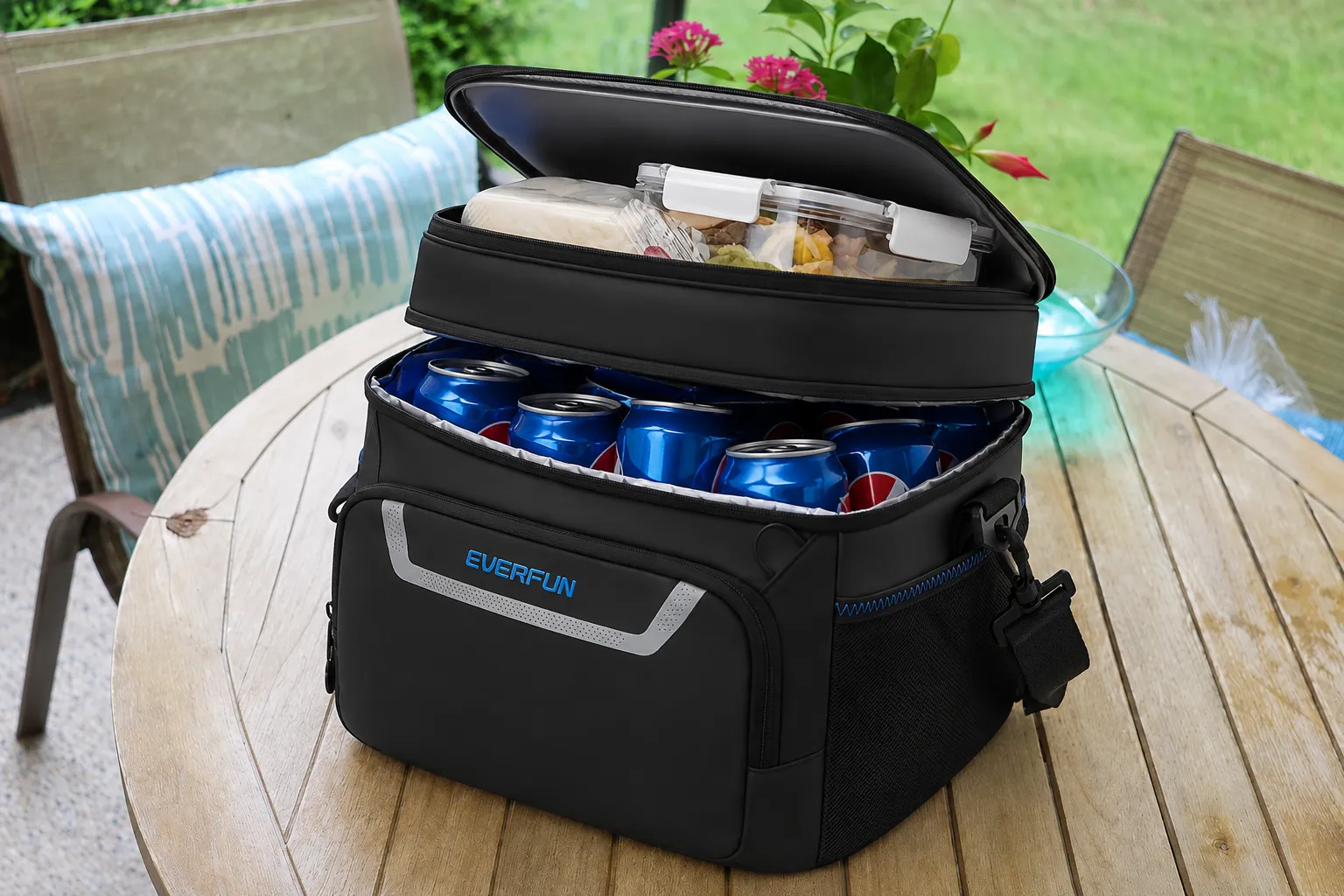
Not every trip needs a rotomolded tank. A soft cooler like the Maelstrom Soft Cooler Bag with 5-Layer Insulation works if you are measuring ice life in hours, not days. The bag weighs 1.69 pounds empty, collapses flat when packed, and the flip-top design keeps you from digging through the whole thing to find a drink. The claim is 12 hours cold retention, and that holds if you pack it tight with ice packs and do not open it constantly.
Where a Soft Cooler Wins
Soft coolers fit better in a minivan or car, store in a closet when empty, and do not punish you if you forget it in the back of a truck bed and freeze it solid over winter. The waterproof PVC liner and ultrasonic welding mean no leaks seeping into your gear. That matters on a river trip or a kayak outing where everything else gets wet anyway. The trade-off is ice life and durability. A soft cooler will not hold ice through a three-day high-desert weekend, and the stitching and zippers fail faster than rotomolded plastic.
When Soft is Not Enough
If you are gone for more than one night, a hard cooler is the right call. Soft coolers perform best when you can refreeze the ice packs or add fresh ice midway through a short trip. For a week-long base camp, a hard cooler with rotomolded walls is the only option that will not disappoint by day three.
Wheeled Coolers and Backpack Coolers for Different Scenarios
The Igloo Maxcold Glide uses a telescoping handle and soft-ride wheels so you can roll it across gravel and grass without tipping. That saves your back when the cooler is full, but it adds weight to the unit itself. If you are car camping or staying in one spot, wheels are worth the extra pounds. If you are hiking or portaging, they are dead weight.
The Backpack Option
A backpack cooler like the Hulongo Large Waterproof Insulated Cooler Backpack at 48 cans capacity works for day hikes and river floats where you need your hands free. The insulated back panel keeps meltwater off your shirt, and the straps distribute weight better than hauling a hard cooler by handles. Ice life is short, around 12 hours in moderate heat, so this is not a multi-day solution. The tradeoff is comfort. Fully loaded with ice and contents, a backpack cooler weighs 15 to 20 pounds and pulls on your shoulders on a long hike.
Wheels are worth it if you are stationary for the weekend. Leave them behind if you are hiking or portaging.
What Gets Cut at This Price Range
Entry-level hard coolers use thinner foam insulation and simpler latches. They work for day trips and casual camping, but the gasket gives up after a season and the drain plug leaks. Middle-tier options add better gaskets, reinforced latches, and rotomolded construction that lasts. The highest-tier boxes use thicker foam, stainless-steel hardware throughout, and design refinements like integral cutting boards or fish rulers molded into the lid.
Where the Money Goes
The jump from entry to middle tier buys you real ice retention improvement and hardware that survives abuse. The jump from middle to top tier buys convenience features and build quality that extends the cooler’s life past five seasons. For a family that camps twice a year, middle tier makes sense. For someone who is out most weekends, the better insulation and hardware in a top-tier rotomolded box will save money over time because you are not replacing it every three years.
Budget Coolers That Actually Work
You do not need a thousand-dollar cooler. A mid-range rotomolded box holds ice as well as a premium one once the sun goes down. The difference is in details: how long the gasket stays pliable, whether hinges corrode, how the drain seals. Test the latches before you buy. If they feel flimsy or click loosely, walk past it.
Tips
- Pre-chill the cooler the night before. A cold box starts with cold walls. Leaving it in a garage overnight or filling it with ice an hour before packing cuts the time it takes to bring contents down to temperature.
- Pack block ice on the bottom, not cubed. Block ice melts slower and keeps everything around it colder longer. Cubed ice is convenient for drinks but wastes surface area and melts fast in direct sun.
- Fill empty space with towels or newspaper. Air pockets make the cooler work harder. Packing tight means less cold air escapes when you open the lid.
- Leave water in the cooler overnight. Meltwater insulates. Draining it every time reduces ice life by a quarter or more once the air warms up inside the box.
- Store it with the lid cracked after a trip. Mildew grows in a sealed, wet cooler. Let it air dry with the lid open, then store it that way until the next trip.
- Check the drain plug seal before loading. A leaking drain floods your truck bed or tent floor. Test it with water before packing food.
Common Questions
Does a manufacturer’s ice retention claim actually hold with kids opening the lid constantly?
No. A five-day claim is tested sealed and unopened in a lab at a specific ambient temperature. In real use with frequent opening, a quality rotomolded cooler might give you three to four days in 85-degree heat. Soft coolers rated for 12 hours often drop to six to eight hours with repeated access. The claim is a ceiling, not a prediction.
How much usable space do I actually get once I pack in ice?
For a weekend trip with a family of four, assume ice takes up a third to half the cooler volume. A 70-quart box becomes a 35 to 47 quart food and drink space. If you want room to move things around and keep everything accessible, budget for a cooler rated 50 percent larger than your target capacity.
Can I leave a cooler in a truck bed or car for the whole winter?
Yes for soft coolers. Hard coolers should not freeze solid repeatedly because the plastic becomes brittle and latches can crack. If you must store a hard cooler outside, drain it completely and leave the lid cracked so water does not pool inside and freeze.
What temperature range can a soft cooler actually maintain?
A soft cooler keeps contents cold, not frozen, typically in the 40 to 50 degree range if packed right. It will not freeze anything and will warm up faster than a hard cooler, especially in direct sun. If you need frozen packs or frozen food to stay that way for more than a few hours, you need a rotomolded hard cooler.
Is the drain plug worth checking before every trip?
Yes. Fill the cooler with water and let it sit for five minutes. If water leaks out around the plug or from under the base, do not pack it until you fix the seal. A leaking cooler ruins a trip and makes the vehicle smell like mildew for weeks.
How long does a cooler last if you use it regularly?
A quality rotomolded cooler lasts 8 to 12 years of regular use if you rinse it, drain it, and store it properly. Soft coolers wear out faster, typically 4 to 6 years, because zippers fail and stitching breaks down. The gasket usually needs replacement by year five on either type if it is used year-round in sun.



Write Your Review
No reviews yet. Be the first to share your experience!