


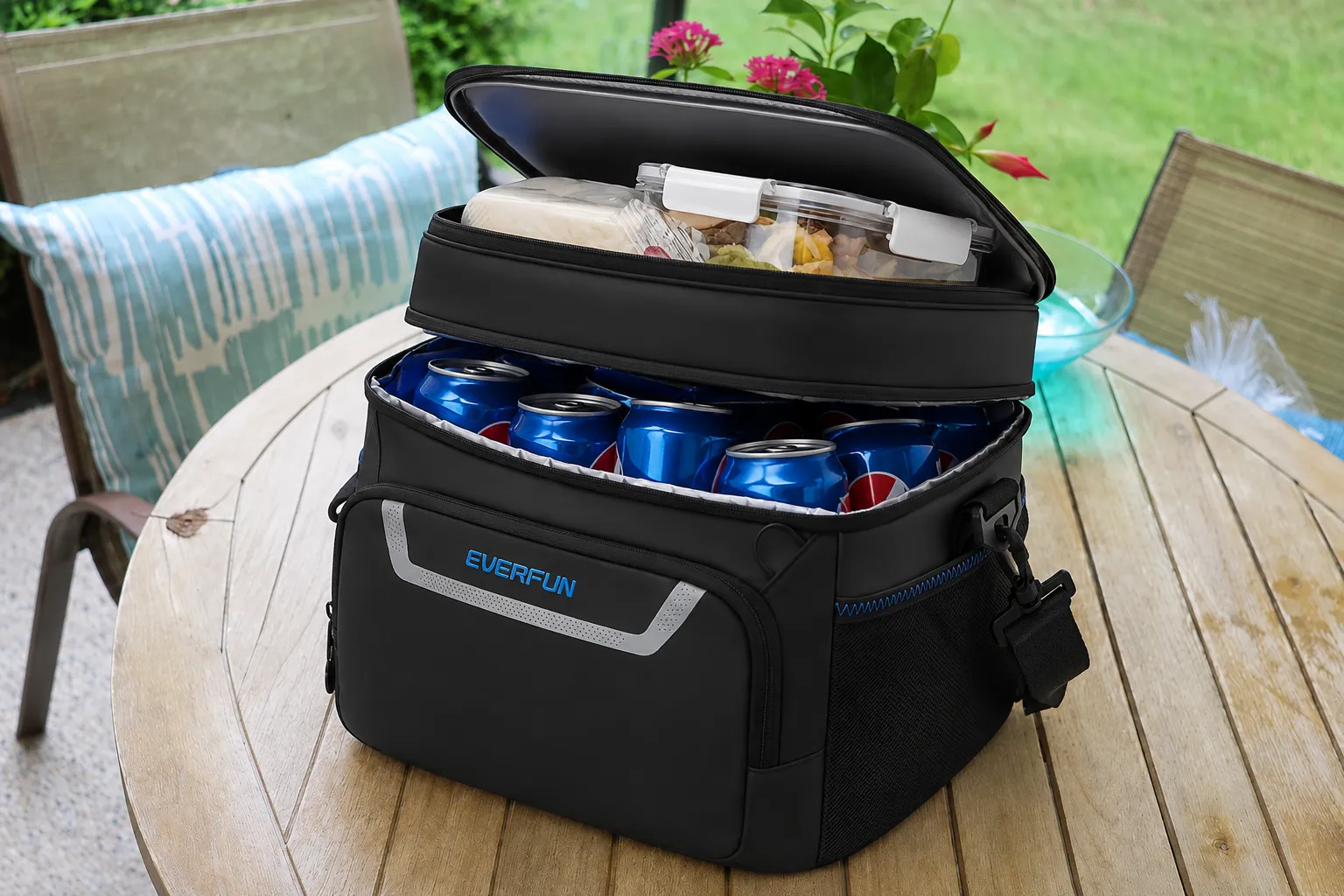
Maelstrom 35 Can Soft Cooler Bag
Lightweight soft cooler that keeps ice solid through a hot desert weekend without weighing down the minivan.
Why we love it
- Flip-top design lets kids grab drinks without losing cold
- Collapsible when empty, stuffs flat in tight vehicle space
- Five-layer seal stays leak-proof on bumpy campground roads
Pros
- Leak-proof PEVA liner with ultrasonic welding
- Only 1.69 lbs empty, easy to carry full
- Flip-top keeps cold air in during frequent access
- Adjustable strap and handles for different carries
- Integrated bottle opener built in
Cons
- 12-hour ice life drops fast in direct desert heat
- Soft sides compress with heavy packing

AO Coolers Stow-N-Go Carbon Soft Cooler
Low-profile soft cooler that fits tight spaces and keeps ice through a hot weekend without leaking all over the minivan.
Why we love it
- Fits under seats and tight storage spots
- Leak-proof liner survives constant lid opening
- Compact enough to carry across a full campground
Pros
- Leak-proof TPU liner rated for 24 hours
- Low-profile design fits cramped spaces
- Molded bottom handles rough handling
- Carbon fiber exterior resists scratches
- Four D-ring tie-downs secure in vehicles
Cons
- Soft-sided, needs careful packing placement
- Pricey for a soft cooler at this size

A-Premium 12V Portable Fridge 39QT
Electric cooler that runs on 12V power, holds 39 quarts across two zones, and freezes to minus 4°F without needing ice for weekend trips.
Why we love it
- Dual zones let you freeze one side, chill the other
- Runs on 12V from the van, no ice to replace
- Compressor cools fast: minus 4°F in under an hour
Pros
- Dual-zone temperature control
- Compressor-based freezing without ice
- 39-quart capacity for family trips
- Quiet operation under 45 decibels
- Multiple power inputs (12V, 24V, AC)
Cons
- Draws battery power while engine is off
- Heavier than a standard hard cooler

A-Premium 12V Portable Fridge 21QT
Electric cooler that actually freezes food and runs on 12V power, perfect for road trips and car camping when you need cold that lasts.
Why we love it
- Freezes to minus 4°F in under an hour
- Runs on car 12V or home AC power
- Holds 32 cans without taking up trunk space
Pros
- Compressor-based freezing, not just cooling
- Dual power: 12V DC and 110/240V AC
- Fast cooling in MAX mode
- Quiet operation under 45 decibels
- ECO mode cuts daily power draw
Cons
- Needs engine or shore power to run
- Heavier than a passive cooler
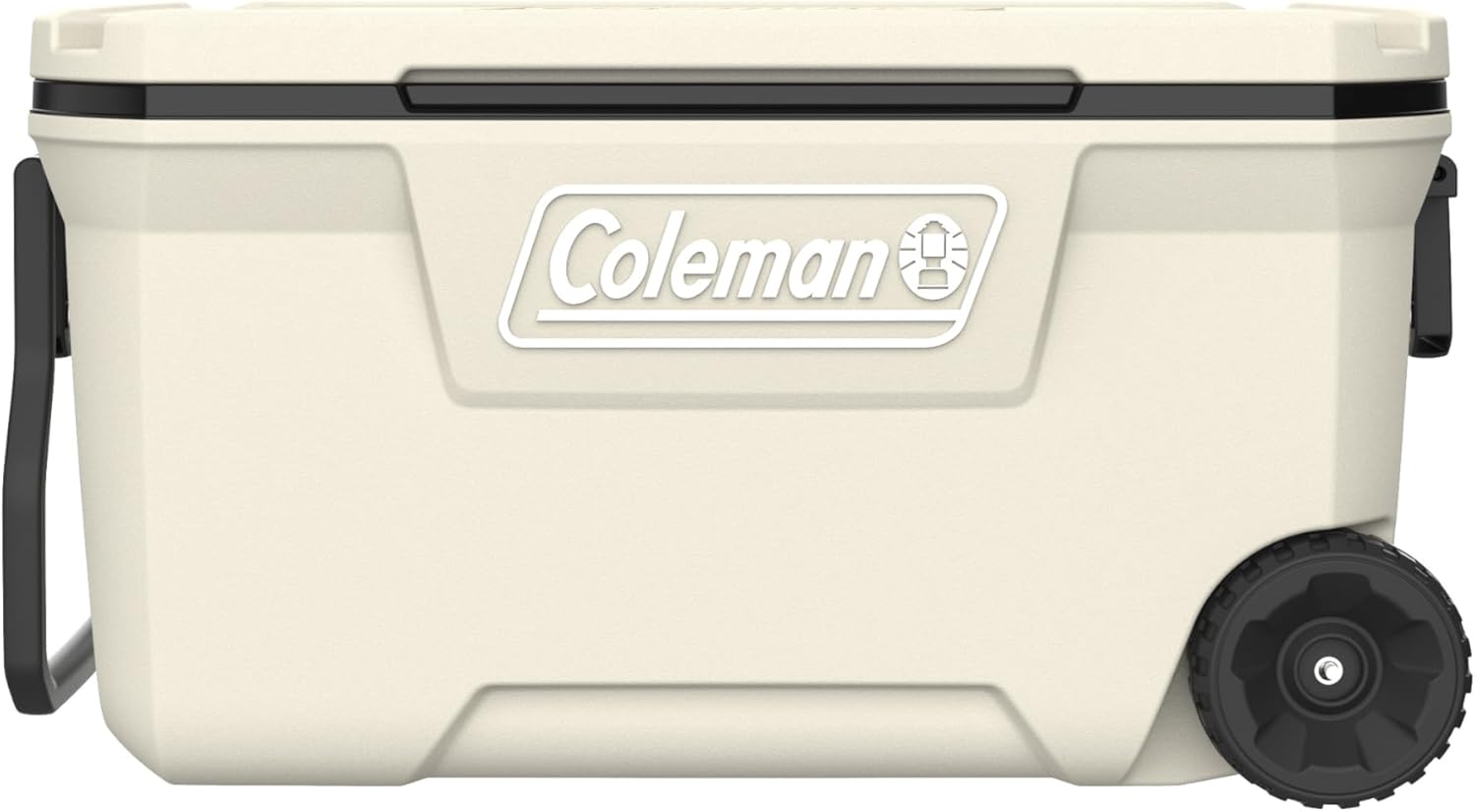
Coleman Classic Wheeled Cooler 80-Can
Wheeled hard cooler rated for five days of ice, built tough enough for family camping weekends with a lid that doubles as a seat.
Why we love it
- Six-inch wheels roll over gravel and grass
- Holds 80 cans with ice for a full weekend
- Lid seats 250 lbs, becomes extra camp seating
Pros
- All-terrain wheels for rough ground
- Tethered drain plug stays attached
- Molded cup holders keep drinks secure
- Hard shell lid rated for 250 lbs
- Dual tow and swing-up handles
Cons
- Heavy when loaded with ice
- Wheel performance varies in deep sand
Ice Retention vs. Real Family Use
Best camping coolers live or die on what happens when your kids open the lid every ten minutes and the sun won’t quit. You need to know the gap between a sealed lab test and a weekend where someone cracks the lid to grab a drink at 2 p.m. The coolers above span three different strategies: hard rotomolded boxes that hold ice for days, soft coolers measured in hours, and electric units that don’t use ice at all.
The real test is whether your food stays cold enough to eat safely and your drinks stay cold enough to want. That means picking based on how you actually pack, how often that lid gets opened, and what happens when direct sun hits the box for six hours straight.
Rotomolded vs. Soft Insulation
Rotomolded hard coolers use thick walls of polyurethane foam sealed inside plastic. The Coleman holds ice up to five days at 90 degrees Fahrenheit, though that assumes the box stays sealed and ice is packed well. Soft coolers like the Maelstrom use five layers of foam and fabric, but ice retention measured in hours not days. Rotomolded boxes weigh 20 to 40 pounds even empty, making them heavy to move loaded. Soft coolers stay light at under two pounds, which matters if you’re hiking from the parking lot or loading a kayak.
Capacity That Actually Works
The Coleman claims 167 cans without ice or 80 with 50 pounds of ice. That second number is what matters. Once you pack 50 pounds of ice, you’ve lost half the space, and food takes more of what’s left. A soft cooler holding 35 to 75 cans sounds bigger until you load it: two to four ice packs, then your actual drinks and food. The AO Coolers Stow-N-Go holds 24 cans plus seven pounds of ice, which is honest about usable space. Measure your typical trip and subtract ice first.
Seal and Drain
A gasket that leaks meltwater into your minivan is the reason coolers fail in real life. The Coleman includes a tethered drain plug that doesn’t get lost. Soft coolers like the Maelstrom use welded TPU liners with reinforced seams. The Maelstrom soft cooler bag is fully waterproof inside, but soft sidewalls mean if you tip it, water can leak from the seams under pressure. Hard coolers can’t tip as easily and seal better under load.
A tethered drain plug sounds small until you’ve lost one at a campground.
Power and Ice: Two Different Games
If your camping means driving to a base camp and staying in one place, a powered fridge changes everything. The A-Premium 12V refrigerator (21-quart) cools to minus 4 degrees Fahrenheit in about 49 minutes using a compressor, not ice. That means freezing meat, keeping butter solid, storing leftovers safely. A compressor draws real current, though, and can drain a car battery if you run it all night with the engine off. The 39-quart dual-zone model costs more but lets you freeze one compartment and refrigerate the other. Neither unit is meant to ride on a canoe.
Amp Draw and Engine Off
A 12V fridge pulls 40 to 60 amps under load, depending on the model and ambient heat. Running it with the engine off is risky on a vehicle with a standard battery. Estimate 8 to 10 hours maximum before your car won’t start. If you want it running at base camp while you hike, run the engine occasionally or bring a power inverter. ECO mode reduces draw to under 0.5 kilowatt-hours per day, extending your time, but cooling slows. Cold food stays cold better than cooling food to cold, so pre-chill everything before you leave pavement.
Noise and Placement
Both A-Premium models run under 45 decibels, quieter than a window AC unit. Place it where you won’t hear it in your sleeping area. The compressor cycles on and off, so it’s not a continuous hum. If you’re car camping at a crowded site, the noise bothers your neighbors more than you.
Building the Right Setup
Hard coolers and soft coolers work together. I take a rotomolded Coleman for week-long base camps where weight doesn’t matter and a soft Maelstrom for day hikes. The hard box stays at camp, the soft one rides in a pack. Before your first trip, run through these checks:
- Fill it with room-temperature water and ice, seal it, and leave it in direct sun for four hours. Track the temperature inside. Does it match the claim?
- Load it the way you’ll pack it on a real trip. Can one adult pick it up? Can two adults slide it into your vehicle?
- If it has a drain, fill it and position it at an angle. Does water leak from anywhere but the drain?
- Check the latch and hinges. Do they feel plastic or reinforced? Plastic breaks in cold.
- For soft coolers, open the zipper. Does it feel stiff or smooth? A stiff zipper fails fast.
Before Your First Trip
Pre-chill your box the night before by filling it with ice and leaving it in a cool place. Empty that ice before you pack real food. Cold walls keep new ice working longer than room-temperature walls. Use block ice if you have access, it melts slower than cubes. Pack ice on the bottom, drinks and perishables in the middle, snacks on top so you’re not digging to the ice every time someone’s thirsty.
Ice to Content Ratio
Cooler manufacturers assume a 1-to-1 ratio of ice to contents. For a hot high-desert weekend with kids opening the lid constantly, pack twice as much ice as the manual says. You’ll have room for less food, but what stays cold will actually stay cold. Meltwater keeps ice cold longer than air does, so don’t drain it unless you’re moving the box and worried about leaks.
Sun and Shade
Direct sun hammers any cooler. Keep it in shade, under a canopy, or cover it with a reflective tarp. A soft cooler in sun melts ice twice as fast as one in shade. If you’re on the beach or in an open camp, shade is non-negotiable. A $10 tarp pays for itself the first weekend.
Between Uses
Rinse the inside with fresh water and let it dry completely before storing. Leave the lid cracked so air can circulate. Mildew grows in a sealed damp cooler faster than it does in a fridge. If you notice a smell, wash it with a baking soda paste and rinse thoroughly. Soft cooler liners can be pulled out and machine washed on gentle cycle.
Open it only when you know what you want, not to decide.
Tips
- Freeze water bottles as ice. They melt into drinking water instead of diluting everything as regular ice does.
- Pack frozen items on the bottom. Cold air sinks, and frozen blocks keep the whole box colder longer than loose ice.
- Wrap soft coolers in damp towels on hot days. Evaporative cooling adds hours of ice life without costing extra.
- Don’t leave it in the sun while you set up camp. The minutes add up. Keep it in shade from the moment it leaves the vehicle.
- Inspect the drain plug before every trip. A stuck or cracked plug leaks in your car before you ever get to camp.
- Use ice packs on day trips instead of bulk ice. They’re easier to load, take up less space, and you can refreeze them at home.
FAQ
Do manufacturer ice retention claims actually work?
The claims are tested with the cooler sealed, unopened, in a lab at a specific temperature. Real camping means opening it for drinks, snacks, and meal prep. You’ll get half the claimed time with heavy lid use in hot sun. Budget for that and pack extra ice.
Is a larger cooler always better?
No. A cooler that’s too big for your trip sits half empty, wastes space in your vehicle, and becomes harder to pack with enough ice to work. Match the size to the trip length and group size, not to capacity alone.
Can I use a cooler in winter to keep things from freezing?
Yes. A well-insulated cooler traps heat as well as cold. Keep heated items (like soup in a thermos or a warmth pack) in the middle, and the box will buffer temperature swings. It’s slower than a refrigerator but works for short trips.
What’s the difference between a soft cooler and a cooler bag?
Soft coolers are standalone boxes with handles or straps. Cooler bags are collapsible and pack flat when empty, which saves vehicle space. Both use similar insulation, but bags trade durability for packability.
Do I need to drain meltwater or let it stay?
Let it stay if the cooler is sealed and not moving. Meltwater keeps ice colder. Drain only if you’re moving the box and worried about leaks, or if you’re on a boat and waves could slosh water out the drain.
Can a powered fridge run while I’m hiking away from camp?
Yes, but plan ahead. If your engine is off, a compressor fridge will run for 8 to 10 hours before draining your battery too low to start. If you want it running all day, run the engine periodically or use a power inverter on shore power at a campground.



Write Your Review
No reviews yet. Be the first to share your experience!