


Igloo Marine Ultra 54 Qt Cooler
Stainless steel hardware and UV-resistant shell handle the high desert sun. Holds ice through a hot weekend without leaking in the minivan.
Why we love it
- Stainless hinges and latches survive salt, sun, and sand
- Non-slip handles grip wet hands on trail or boat
- Fits 76 cans, sized right for a family weekend
Pros
- Stainless steel hinge and lid strap
- UV inhibitors protect from sun damage
- Hybrid latches balance durability and seal
- Non-slip swing handles
Cons
- Heavy at 10.6 pounds empty
- Plastic snap latches wear over time

Coleman Marine 52Qt Cooler
Big capacity hard cooler rated for five days of ice in heat, with a lid that doubles as a seat and cup holders molded into the top.
Why we love it
- Rated for ice up to six days at 90°F
- Holds 204 cans, perfect for family trips
- Lid supports 250 lb, works as extra camp seat
Pros
- Fully insulated lid and body
- Swing-up handles for carrying full cooler
- Antimicrobial odor-resistant liner
- UVGuard coating protects from sun
- Molded cup holders prevent spilling
Cons
- Heavy when packed with ice and food
- No drain plug mentioned in specs
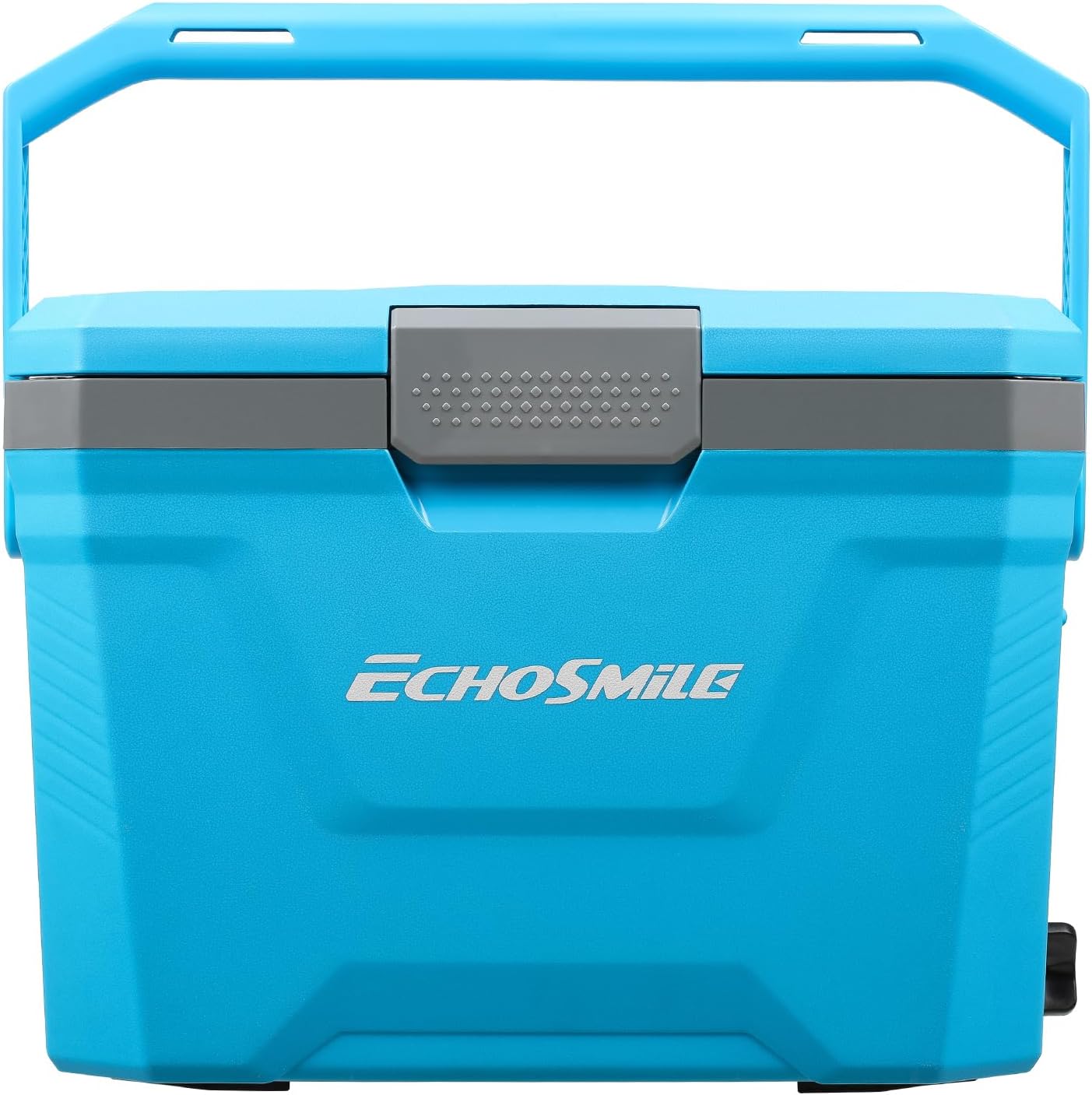
EchoSmile 20/35 Qt Hard Cooler
Standard hard cooler built for family camping with a reliable drain plug and latches that actually stay put through minivan rides.
Why we love it
- Quick-drain plug means no tilting to empty water
- Non-slip feet grip gravel campground pads
- Holds 24 cans plus ice, fits SUV trunks tight
Pros
- Integrated bottle opener on the lid
- Silicone sealing ring keeps water tight
- Quick-drain system with stainless chain
- Non-skid rubber feet stay put on gravel
- Rated for three days ice retention
Cons
- Not rotomolded, so lighter duty than premium coolers
- Weight penalty when loaded for a full weekend

AO Coolers Stow-N-Go Canvas Soft Cooler
Soft-sided cooler rated for 24-hour ice retention, designed to fit tight spaces and carry without scratching your gear.
Why we love it
- Slides under minivan seats for easy packing
- Soft canvas won't damage truck beds or boats
- Meets airline carry-on size for road trips
Pros
- Low-profile soft construction
- Leak-proof heavy-duty liner
- Durable YKK zippers with double pulls
- Canvas won't scratch upholstery
- 24-hour ice retention rated
Cons
- Soft sides less rigid when packed tight
- Canvas requires more care than hard shells

Blue Coolers Ark 100-110 Qt Cooler
A serious hard cooler built for families who actually camp in the heat and need ice to last the whole weekend.
Why we love it
- Two-inch insulation rated for ten days of ice
- Rotomolded construction survives being packed and moved
- Bear-resistant design doubles as gear security
Pros
- Two-inch insulated walls
- Rotomolded one-piece construction
- Freezer-style gasket seal
- Lockable lid and latches
- Rapid drain system
Cons
- Heavy when full, needs two people
- Expensive at $450 range
What Matters When Your Cooler Lives on the Water
A cooler for boat has to survive salt spray, constant opening from multiple people, and the specific heat load of direct sun reflecting off water. Dock shade is rare, and you can’t just leave the lid closed for hours while someone is fishing or swimming. The box needs marine-grade hardware that won’t corrode, a gasket that keeps working after sun exposure, and enough insulation to hold ice even when kids open it every ten minutes.
Most coolers fail on boats not because of ice retention under lab conditions, but because of three real problems: drain plugs that leak into the bilge when the boat rocks, hinges and latches corroded by salt and spray, and lids that don’t seal tight after a season of UV. The picks above handle those realities differently.
Gasket and Hinge Durability Against Salt
Stainless steel hardware is not optional on the water. The Igloo Marine Cooler uses stainless steel where it counts: the lid strap, hinges, and screws. The hinge is made from Riteflex resin, which flexes in cold and stays rigid in heat without cracking. Plastic hinges corrode and become brittle after one season of salt exposure. A hybrid latch that uses stainless steel at the hinge and plastic only in the snap area extends the life of the closure without adding weight.
Drain Plug Design That Won’t Leak Into the Bilge
A drain plug on a boat rocks constantly. The EchoSmile 20-Quart Cooler addresses this with a stainless steel chain attached to the plug itself, so you never lose it overboard. The plug sits flush and seals tight, tilting the box slightly to drain without pouring meltwater across your deck. Quick-drain systems sound convenient, but they need to be checked before every trip. A marine cooler should drain slowly and deliberately, and the chain keeps you from fishing the plug out of the water after the first opening.
UV Resistance and Color Stability
Cooler colors fade under marine UV faster than you’d expect. Fade-proof exteriors stay visible on the deck and preserve the integrity of the case over time. The Igloo Marine line uses UV inhibitors throughout the plastic, preventing the structural degradation that happens when UV breaks down polymer chains. A faded cooler is cosmetic; a cooler with UV damage is getting soft spots. The gelcoat on your boat is protected by UV guard, and your cooler should have the same level of defense.
Capacity and Where It Sits on Deck
Deck space on most boats is finite. A soft-sided cooler like the AO Coolers Stow-N-Go slides under seats and into storage lockers because it compresses when empty. It keeps ice for a full day even in extreme heat (120°F tested), which is solid for a day boat without the weight penalty. Hard coolers stay rigid and take up space all day, but they won’t scratch your boat or bounce around when the boat turns. A 20-quart hard box fits the cabin sole of a center console without blocking movement, while a rotomolded cooler on a small boat makes every trip a navigation exercise around it.
Marine Grade Construction: When Rotomolded Makes Sense
Wall Thickness and What It Actually Does
Rotomolded coolers like the Blue Coolers Ark Series have 2 inches of insulation and hold ice up to 10 days in controlled conditions. On a boat in 90°F heat with the lid opening constantly, that translates to 3 to 4 days realistically. The trade-off is weight and size. A 100-quart rotomolded box full of ice weighs over 150 pounds and dominates the deck or cabin. It’s designed to stay in place, not to move. That matters on a charter boat where it’s a permanent install, not on a day boat where you’re tripping over it every hour.
Gasket Design and Lid Sealing
A freezer-style gasket (the foam seal around the lid) is your primary defense against ice melt. Rotomolded boxes use denser gaskets that compress differently than injection-molded lids. After a season of opening and closing, the gasket flattens and no longer seals tight. Checking the gasket every spring before the season starts takes thirty seconds. If you press your thumb into the foam and it doesn’t spring back immediately, replace it. Coleman and Blue Coolers sell replacement gaskets, but Igloo and EchoSmile don’t always stock them for their marine models. Keep that in mind when choosing.
Latch Hardware and How It Fails
Quick latches on most hard coolers are plastic and fail under repeated use. They snap when cold, especially if you’re opening the cooler on a windy day and the lid bangs shut. A marine cooler needs quarter-turn or swing-up latches that distribute force. The Igloo Marine’s hybrid latch puts stainless steel at the hinge where the real stress lives, and allows the plastic snap to be replaced without replacing the entire latch. On a boat where your cooler is constantly accessed, this makes a difference after two seasons.
Soft vs. Hard: The Real Trade-off for Boats
Soft Coolers Save Deck Space and Won’t Damage Gel Coat
The AO Coolers canvas exterior won’t scratch gel coat if it slides across the cabin sole. A hard cooler edge can gouge your boat. Soft coolers drain through a zipper liner and stay sealed even when wet. YKK zippers resist salt corrosion better than cheap zippers. Double pull tabs mean you can open the cooler with gloves on or one-handed while holding a fishing rod. The trade-off is capacity and durability. A soft cooler holds ice for 24 hours realistically, not five days. Use it for day trips and day float trips. Use a hard cooler for multiday cruises or base camps.
Hard Coolers Are Rigid and Boat-Friendly
A hard cooler won’t shift in rough seas. It can sit on the cabin sole without rolling. The lid is high enough to see into without bending over the gunwale. And it performs on the water reliably over years because plastic doesn’t soak water like fabric does. The weight penalty is real. A 50-quart hard cooler full weighs 120 pounds. A soft cooler of similar capacity weighs half that. On a boat where you’re loading everything at the dock, that matters at the end of the day after five trips.
What Gets Cut at This Price Range
Entry-Tier Hard Coolers: Thin Walls and Plastic Hardware
Under the mid-range price point, you get injection-molded coolers with thin foam insulation. The Igloo Marine sits at the value end of marine-specific boxes. It holds ice multiple days in normal conditions, not extreme heat. Latches are plastic across the whole assembly. The hinge is standard plastic with UV inhibitors, not stainless reinforced. Drain plugs are simple and reliable. This level suits day boating and short trips where you’re replacing ice if the first batch melts. It’s not a five-year cooler. It’s a three-to-four-year cooler, and replacement parts are cheap.
Mid-Range: Where Marine Hardware Begins
At the mid-range mark (the EchoSmile and Coleman Marine), you get stainless steel hinges and improved gasket design. The drain system is built to last. Latches are reinforced plastic. Insulation is better, so you’re getting 3 to 4 days of ice retention in heat instead of 2. These boxes are designed for fishing and boating as stated in the marketing. They’re meant to handle salt spray and constant opening. A mid-range box lasts five to seven seasons if you care for it. Replacement gaskets are available. This is where you start staying off the ice replacement treadmill.
High End: Rotomolded, Full Stainless, and Multiyear Builds
A rotomolded cooler like the Blue Coolers Ark Series costs roughly triple the mid-range price. You get 2 inches of insulation instead of 1 inch, a freezer-style gasket that seals tight year after year, and hardware that’s designed for abuse. The lid supports 250+ pounds so you can stand on it. The wheels are high quality. The drain system is rapid and reliable. This is a cooler that goes on fishing charters, expedition boats, and base camps. It’s designed to stay in place and be filled once and left alone. The weight and size make it unsuitable for casual day boating on a small center console.
Getting the Most From Your Boat Cooler
Pre-Chill Before You Leave the Dock
A cooler starts losing the ice retention game the moment you open it at the marina. Load it the morning of your trip and leave the lid closed. The air inside is room temperature until you open it. A pre-chilled cooler full of cold air holds ice longer. If you’re leaving early in the morning, chill it the night before by running it inside your air-conditioned house for a few hours. This adds a full day of ice life, especially in heat. Don’t skip this step because it feels like planning. It’s the single biggest factor in actual ice retention.
Use Block Ice on Top, Cubed Below
Block ice melts slower than cubed ice because it has less surface area. On a boat where you’re opening the cooler repeatedly and the sun is beating down, block ice on top insulates everything below. Cubed ice is good for cocktails and fishing bait storage where you want fast cold. For food that needs to stay cold all day, layer a block on top of cubed ice. The block lasts longer and keeps the cubed ice from melting as fast. This costs a dollar more at most marinas and buys you four to six extra hours.
Drain the Meltwater Every Six Hours
A half-inch of standing water inside the cooler is sitting ice that isn’t insulating anything. It becomes a thermal mass that works against you. Open the drain plug, tilt the cooler slightly if needed, and empty the pan below it. Most marine coolers have a quick drain or through-hull plug. Do this every six hours on a hot day. You’ll add ice retention and the cooler stays fresher longer. Leaving meltwater in is the fastest way to food that smells and tastes like the bilge.
Secure It So It Doesn’t Slide in Rough Water
A cooler sliding across the cabin sole in a following sea is both a loss of stability and a hazard. Use bungee cords or cam straps to hold it in place. Hard coolers take a loop of rope through the handle and back around a cleat. Soft coolers should be stowed in a cabin locker or lashed down the same way. This takes two minutes and saves your cooler from rolling overboard in conditions you didn’t anticipate. It also keeps it from becoming a projectile if you turn hard.
Tips From the Water
- Replace the gasket every two years on a boat cooler. Salt and sun degrade foam faster than you think. A $20 gasket now prevents ice melt later.
- Rinse the drain plug with fresh water before closing up for the season. Salt crystallizes inside the valve and freezes it shut.
- Store the cooler with the lid cracked open in the off-season. A sealed cooler becomes a mildew chamber. Air flow is your friend.
- Check your latch hardware before each trip. A cracked latch fails on the water, not at the dock. Three-second check, zero cost.
- Pack frozen water bottles around the edges if you’re going out longer than the cooler’s rated time. They add insulation and become drinking water as they melt.
- Use the cooler as a seat only if the lid is latched and the cooler is full. An empty cooler under your weight will crack the bottom.
A cooler works best when you respect its limits and use it as designed, not as a multipurpose deck fixture.
Common Questions
Does an ice retention claim hold up when I’m opening the cooler constantly?
No. A five-day claim is tested with the cooler sealed in a lab at 70°F ambient. On a boat at 90°F with the lid opening every ten minutes, you lose roughly half that. A cooler rated for five days holds ice realistically for two to three days in marine conditions. This is why pre-chilling, block ice, and drainage matter more than wall thickness.
Can I use a soft cooler on a boat or should I stick with hard?
Both work, depending on your trip length and boat size. A soft cooler is better for day trips and won’t damage your gel coat. It packs down when empty, saving storage. A hard cooler is better for overnight trips and multiple days. It doesn’t absorb water and stays rigid in rough seas. Match the cooler to the trip, not the boat.
What should I do if the drain plug starts leaking?
First, check if the valve is clean. Salt deposits can prevent a seal. Remove the plug, rinse it with fresh water, and reinstall it firmly. If it still leaks, the gasket inside the valve is worn. Most marine cooler manufacturers sell replacement drain kits for $15 to $30. It’s a five-minute install and cheaper than replacing the whole cooler.
Is stainless steel hardware really worth the price difference?
On a boat, yes. Plastic hinges corrode and become brittle in one season of salt spray. Stainless steel stays functional for years. The price difference between a plastic hinge cooler and a stainless one is usually $20 to $50 on the cooler itself. A replacement hinge costs $40 to $80 and requires tools. Stainless is cheaper over the life of the cooler.
How do I prevent mildew and odors in a boat cooler?
Rinse the inside with fresh water after every trip and drain it completely. Store it with the lid cracked so air circulates. Between seasons, wipe the gasket with a cloth, spray the interior with a 50/50 white vinegar and water solution, and leave it open to dry for a full day. Mildew grows in damp, sealed spaces. Airflow and cleanliness stop it before it starts.
Can I leave my boat cooler out in the sun year-round without damaging it?
UV will degrade the plastic over time, making it brittle and weak. A cooler exposed to sun year-round will crack after two or three years where a stored cooler lasts five or more. Store it indoors or under a tarp when the boat is off the water. This is especially important for soft coolers, which don’t have the structural rigidity of hard boxes to compensate for UV damage.
Fresh water and airflow are cheaper than replacing a cooler every two seasons.



Write Your Review
No reviews yet. Be the first to share your experience!