


Vanis 30QT Vacuum Insulated Cooler
Vacuum-insulated hard cooler rated for 10 days of ice retention, built light enough to carry across camp but tough enough for family trips.
Why we love it
- Aerospace vacuum insulation rated for 10 days
- Only 5-5.4kg, manageable solo across a loop
- Food-safe liner, easy to clean after trips
Pros
- Vacuum insulation technology
- 30-quart capacity fits a weekend
- Lightweight for a hard cooler
- Food-grade BPA-free interior
- Dual cup holders and bionic handle
Cons
- Price point around $200
- No drain plug mentioned

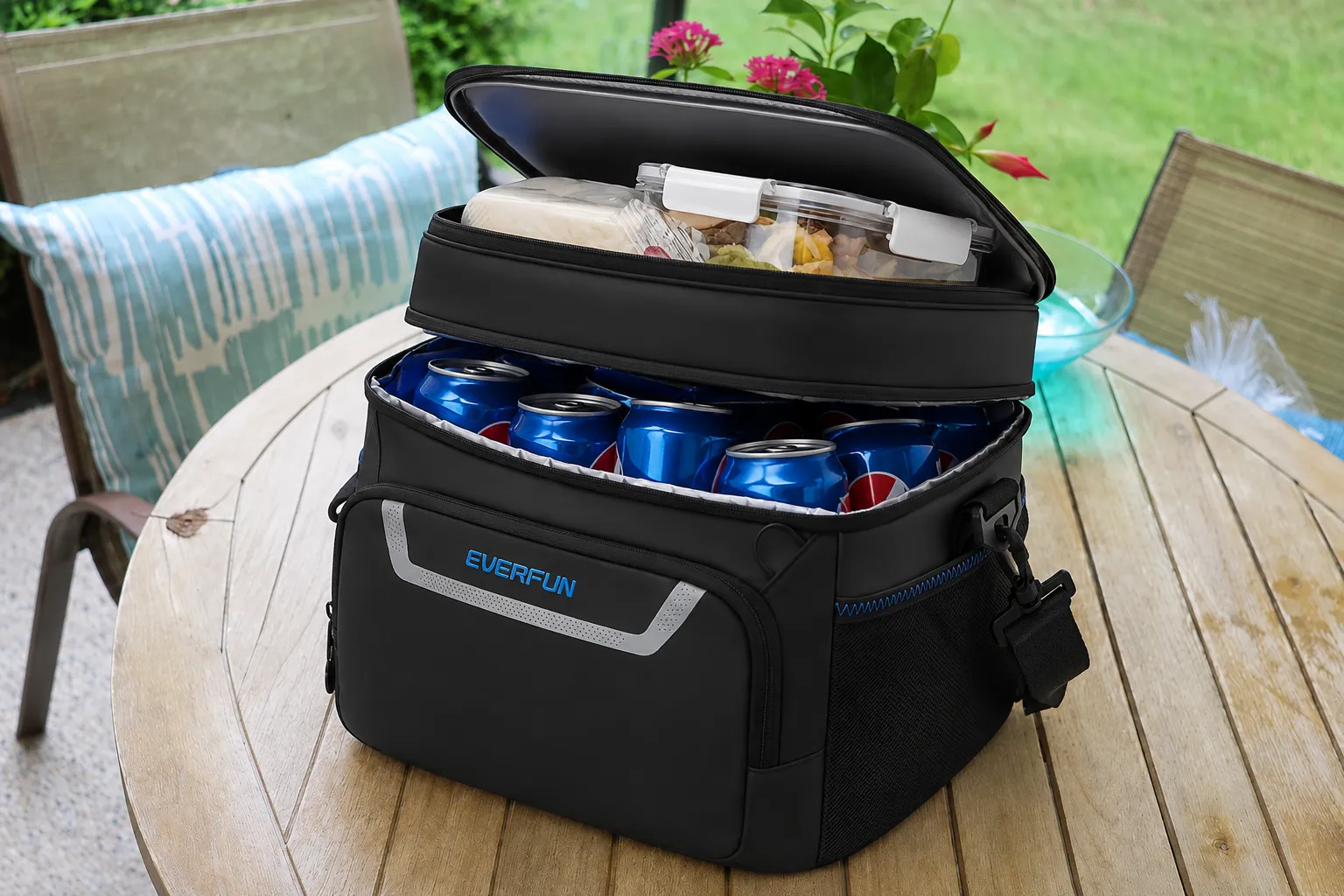
Hulongo Soft Sided Insulated Cooler Bag, 32L
1. Large Capacity & Versatile: Our 32L Soft Cooler can hold up to 48 cans, making it the perfect choice for picnics, beach outings, and camping trips. This versatile insulated bag is designed to keep your beverages cold and food fresh for over 12 hours, ensuring an enjoyable outdoor experience.Dimensions: 16 ½ x 11 ½ x 10 ¼ inches (42 x 26 x 29 cm).2. Superior Insulation & Leakproof: The collapsible cooler features exceptional insulation and a 100% leakproof PEVA lining, keeping your items secure and mess-free. This soft side cooler guarantees a worry-free and enjoyable experience, making it your go-to travel companion for any outdoor adventure.3. Durable & Water-Resistant: Our soft ice chest is made from high-quality Oxford fabric with a waterproof coating, providing a robust and water-resistant solution for your cooling needs. This beach cooler is designed to withstand wear and tear, ensuring long-lasting durability and protection for your items.
Why we love it
- 1. Large Capacity & Versatile: Our 32L Soft Cooler can hold up to 48 cans, making it the perfect choice for picnics, beach outings, and camping trips. This versatile insulated bag is designed to keep your beverages cold and food fresh for over 12 hours, ensuring an enjoyable outdoor experience.Dimensions: 16 ½ x 11 ½ x 10 ¼ inches (42 x 26 x 29 cm).
- 2. Superior Insulation & Leakproof: The collapsible cooler features exceptional insulation and a 100% leakproof PEVA lining, keeping your items secure and mess-free. This soft side cooler guarantees a worry-free and enjoyable experience, making it your go-to travel companion for any outdoor adventure.
- 3. Durable & Water-Resistant: Our soft ice chest is made from high-quality Oxford fabric with a waterproof coating, providing a robust and water-resistant solution for your cooling needs. This beach cooler is designed to withstand wear and tear, ensuring long-lasting durability and protection for your items.

SPARTER Backpack Cooler 49-Can
Backpack cooler built for families who need cold drinks and dry snacks in one bag without sacrificing comfort on the trail.
Why we love it
- Two insulated compartments keep ice separate from food
- Padded straps and chest strap fit like a real backpack
- Holds 49 cans or a family's weekend meals and drinks
Pros
- Separate dry and wet compartments
- Leak-proof PEVA liner with seamless sealing
- Waterproof nylon exterior and PU coating
- Integrated bottle opener
- Rated for 20 hours cold retention
Cons
- Zipper not leakproof, must keep upright
- Heavy when fully loaded with ice and food

Vanis 30QT Vacuum Insulated Cooler
Vacuum-insulated hard cooler rated for 10 days of ice retention, lightweight enough to carry across camp with phase-change elements instead of constant ice.
Why we love it
- Vacuum insulation keeps ice frozen way longer
- Phase-change tech means no ice cube refills
- Only 5-5.4kg: manageable weight for family trips
Pros
- Vacuum insulation technology
- 10-day ice retention rating
- Lightweight design
- Food-grade inner liner
- Dual cup holders and handles
Cons
- Premium price point
- Phase-change elements unproven in field

Rider Coolers PWC Soft Cooler 6-Can
Jet ski cooler that floats, seals tight, and carries like a shoulder bag for water-based trips.
Why we love it
- Floats if it goes overboard, full or empty
- Watertight both inside and out, no leaks
- Shoulder strap carries it across camp easily
Pros
- Floats even when completely full
- Completely watertight construction
- Padded shoulder strap included
- Over 24 hours ice retention rated
- Weighs under 3 pounds empty
Cons
- Holds only 6 cans, tight for a family
- Designed specifically for jet skis
What Matters When You are on the Water
Picking best coolers for jet ski is different from choosing a box for camp because your cooler has to survive salt spray, stay accessible while you are moving, float if it goes overboard, and not add so much weight that it throws off the handling of your watercraft. A cooler that works great in a truck bed becomes dead weight or a hazard on a PWC.
The five models here cover the range from ultraportable soft-sided options to full rotomolded boxes designed specifically for marine use. What connects them is that each one actually works on the water instead of just looking the part.
Buoyancy and Spillage
The first thing that separates jet ski coolers from land-based boxes is that they need to float. If your cooler goes into the water, you want it riding high, not sinking. Soft coolers inherently float because of their foam insulation and low mass. Hard coolers only float if they are designed light enough or if they have buoyant materials built into the shell. The Rider Coolers PWC Jet Ski Sea Doo Cooler Set floats at full capacity, which matters if you are towing it behind the ski or it bounces loose in rough water. Beyond floating, the cooler also needs to prevent water from getting inside. A watertight construction with a solid seal means your ice and food stay dry even if spray gets heavy.
Access and Carrying
Unlike a cooler in your truck bed or boat cabin, a jet ski cooler needs to be reachable without killing your throttle hand or dismounting. A soft cooler with a padded shoulder strap or a compact hard box with side handles lets you grab a drink while you are still seated. The Hulongo Soft Sided Insulated Cooler Bag holds 48 cans and weighs almost nothing when empty, making it practical to sling across your shoulder. Backpack coolers work for smaller crews because you can wear them on your back without tying your hands. On the water, convenience matters more than total capacity because you will not want to wrestle a 60-quart rotomolded box while the ski is pitching.
Size Against Watercraft Limits
Jet skis have space constraints that trucks do not. A 30-quart cooler takes up meaningful deck or tow space and adds weight high on the craft, which changes stability. The SPARTER Backpack Cooler runs to 49 cans, which is genuinely useful without becoming a cargo issue. If you are pulling a dedicated cooler behind the ski or mounting it, you gain more room, but a soft cooler or a small hard box stays nimble and does not require mounting hardware or tie-down systems.
Ice Retention Reality
Manufacturers love to claim eight hour or even 10 day retention on specifications tested in still air with a sealed lid. On the water, your cooler lid opens five times a minute while someone hunts for a drink, the sun beats down without shade, and saltwater spray adds heat stress to the exterior. Realistic ice life on the water is half what lab conditions show. A soft cooler good for 12 hours under ideal conditions will hold ice for maybe six hours in real use. Hard coolers and vacuum-insulated boxes preserve ice longer, but even a Vanis 30QT Vacuum Insulated Portable Cooler claiming 10 day retention does not prove that claim on open water with constant access.
Saltwater Durability
Regular coolers corrode or develop mildew when exposed to saltwater spray and moisture. Jet ski coolers need to handle rinse-down after every trip, which means stainless hardware, PEVA or food-grade liners that resist mold, and drainage that actually empties without sitting water. Oxford fabric with waterproof coating, nylon with PU layers, and sealed internal linings all resist the wet environment better than bare foam or uncoated plastic.
What floats and what handles constant spray are the two real decisions on the water.
Build Quality and Real-World Durability
A soft cooler or backpack cooler will fail first at the zipper or the seams, especially after saltwater exposure. The SPARTER Backpack Cooler uses a high-tech seamless hot pressing process for its leakproof main liner, but that zipper at the top is still a weakness. Zippers are not waterproof no matter what anyone claims. If you are packing this for a day on the ski, keep it upright and pack carefully so nothing weighs on that seal.
Hard coolers and rotomolded boxes fail at latches, hinges, and the gasket seal. After a season of UV, salt, and the flex of a moving watercraft, plastic latches crack and rubber gaskets harden. The Rider Coolers PWC Jet Ski Sea Doo Cooler Set comes with knuckles for secure mounting and straps to keep the box stable, which protects the latches from constant flexing. Vacuum-insulated coolers like the Vanis use button latches and molded cup holders. Those solid plastic latches hold longer than molded hinges on cheap hard coolers, but any plastic hinge eventually fatigues under vibration.
Drain plugs are often overlooked. On a jet ski cooler, water gets inside from splash and spray even if the seal is tight. A drain plug that actually seals when closed prevents meltwater from creeping out into your fuel tank area or bilge. Check that any hard cooler drains can be reached and opened without pulling everything out first.
Insulation Type and What It Costs
Soft-sided coolers use 8mm foam insulation and a PEVA liner. That is enough for a six to eight hour window if you pack ice smart. The Hulongo runs under $30 and the SPARTER runs around $40. Both are good for day trips. When your ice is gone, the box collapses flat and stores anywhere. They are also the lightest option, which matters when weight affects how your ski handles.
Rotomolded hard coolers use polyethylene walls, usually 1 to 2 inches thick, with foam injected between the layers. They hold ice longer because the thicker walls and gasket are harder to beat than foam layers. The trade is weight and volume. A 30 quart rotomolded box is heavy when full, and that mass has to go somewhere on your ski, changing trim and handling.
Vacuum-insulated coolers use aerospace-grade tech to trap air between walls, eliminating the heat transfer that happens through solid material. The Vanis models claim 10 day retention because vacuum insulation genuinely outperforms foam by a factor of three or more. The cost is higher, the weight is still real, and the vacuum seal requires care to protect. If that vacuum fails, the cooler becomes a regular heavy box with poor ice retention.
Soft coolers win on the water because they float, weigh nothing, and collapse when empty.
Securing It So It Does Not Become a Liability
A loose cooler on a PWC is a problem. It shifts during turns, throws weight where you do not want it, or falls overboard and makes you fish it out of saltwater. Soft coolers with shoulder straps stay with you because you wear them. Backpack coolers clip to your chest and waist, keeping weight centered and stable. If you are mounting a hard cooler, use the straps and knuckles provided. Rider Coolers includes everything you need to secure the boxes so they do not slide.
If your cooler is towed behind the ski, it needs its own flotation and secure tether. A soft cooler already floats. A hard cooler should be tethered short so if it comes loose, it stays close and does not become a hazard to other water traffic. Always pack your cooler so the contents do not shift and unbalance the load. Put heavier items low and toward the center of gravity.
After every trip, rinse your cooler with fresh water to remove salt and prevent mold in cracks and seams. If you use a hard cooler, open the drain and let it dry completely before storing. Soft coolers should be turned inside out to dry, then stored in a cool place with the lid open slightly.
Picks for Different Water Situations
For a solo or two person day trip in warm water where you want to stay lightweight and mobile, a soft cooler like the Hulongo works. You get six to eight hours of usable ice, the thing floats, and you carry it on your shoulder. No mounting hassle, no weight penalty to your handling.
For a group that needs more capacity without going huge, a backpack cooler like the SPARTER holds enough for a day and distributes weight on your back instead of your hands. The double insulated compartments let you separate drinks from food. At 20 hour retention the manufacturer claims, reality on open water will be eight to ten hours. Still plenty for a beach run.
For extended trips where ice preservation matters more than portability, or if you are pulling the cooler behind the ski in a tow setup, a hard cooler like the Vanis 30QT makes sense. The vacuum insulation actually works, and 10 day retention is not common marketing. Yes, you need to mount it and the thing weighs more, but if you are gone for a long weekend and ice has to last, this is where the technology pays off.
Tips
- Pre-chill your cooler the night before. A soft cooler or hard box full of cold items stays cold longer than ice alone. If you can pack it already cold, you extend usable time by hours.
- Use block ice or partially frozen water bottles instead of cubes. Block ice melts slower than cubes, and a one-liter bottle of ice takes up less space and costs less to replace than a bag of cubes.
- Pack the cooler in the shade whenever possible. Even 15 minutes of direct sun on a sealed cooler raises internal temperature. On the water, keep it under a canopy or towel when you are stopped.
- Leave the drain open or cracked after you pack. Meltwater sitting inside the cooler becomes a warm soup that wastes your ice. Let gravity drain it if there is any slope, or crack the plug just enough for slow seepage.
- Rinse and fully dry your cooler after saltwater use. Salt hides in seams and drains, hardens gaskets, and grows mold if given a few days. Fresh water rinse and air dry every time.
- Store soft coolers with the lid propped open. Moisture can get trapped in the seal even after drying. A cracked lid lets air circulate and prevents smell.
FAQ
Will a jet ski cooler survive being submerged?
Soft coolers float and stay above water. Hard coolers sink unless they are designed for buoyancy, which most are not. If your cooler goes under, a soft cooler stays afloat and drifts upwind. A hard cooler becomes a recovery job.
Can I use the same cooler for both land trips and water trips?
Yes, but a soft cooler designed to float and a backpack cooler with shoulder straps work better on the water. A rotomolded box is safer in a truck bed where weight and buoyancy do not matter. If you want one cooler for both jobs, pick a soft cooler. It is versatile enough for camping, car trips, and day trips on the water.
How much ice do I actually need on the water?
Plan for one to two pounds of ice per person per day, depending on air temperature and how often the lid opens. On the water in the sun, assume faster melt. For a six hour day trip with two people, two to three pounds of ice is realistic. For a full day, four to six pounds.
Does the 10 day ice retention claim mean anything on open water?
No. Lab testing keeps the cooler sealed, stationary, in shade, and without constant temperature swings. On a jet ski, your lid opens repeatedly, the sun moves, water spray adds heat, and the cooler flexes. Realistic ice life is roughly half the manufacturer claim. A cooler rated for 10 days will keep ice for four to five days in heavy use.
What happens if saltwater gets inside the cooler?
Saltwater will corrode metal hardware and grow mold inside foam and in seams. If spray or a wave gets inside, rinse immediately with fresh water and dry as completely as you can. Do not let salt sit overnight in the cooler.
Is a vacuum-insulated cooler worth the weight and cost for a jet ski?
Only if you are taking long trips where ice preservation matters more than portability, or if you are towing the cooler behind the ski instead of mounting it. For day runs, a soft cooler or backpack cooler is smarter. The weight penalty and bulk of a vacuum box changes how your ski handles.



Write Your Review
No reviews yet. Be the first to share your experience!