

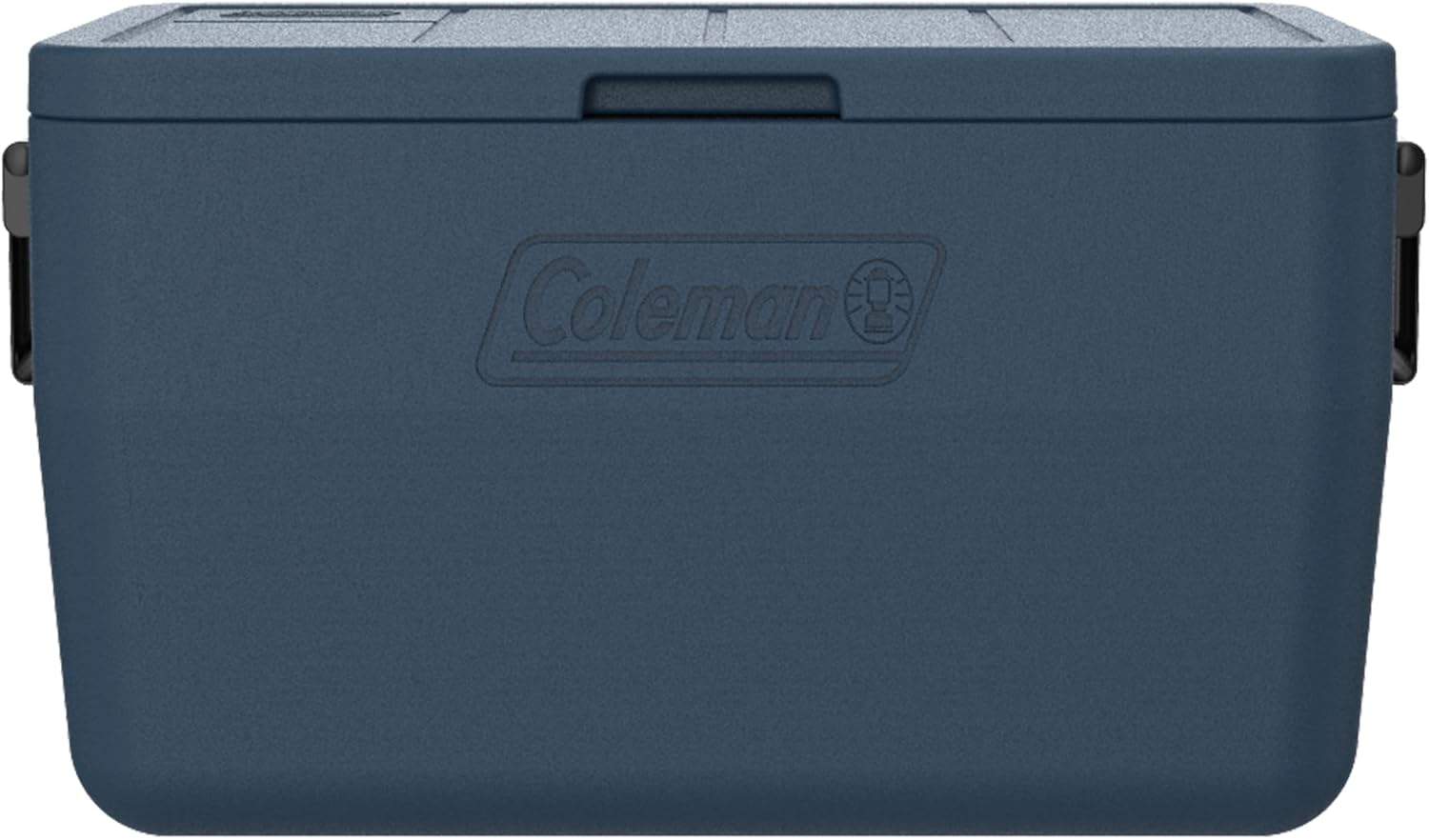
Coleman Chiller 48qt Cooler
Standard hard cooler rated for five days of ice retention, holds 31 cans with ice, and seats two adults on the reinforced lid.
Why we love it
- Ice rated to last 60 hours through hot weekend trips
- Lightweight at 7.6 lbs empty, easy to carry loaded
- Lid supports 200 lbs, doubles as extra seating
Pros
- TempLock foam insulation rated to 60 hours
- Fits 2-liter bottles standing upright inside
- Swing-up handles fold flat for vehicle storage
- Smooth surfaces wipe clean after use
- Made in USA with 1-year limited warranty
Cons
- Standard hard cooler, not rotomolded
- Lighter weight means thinner insulation walls

Coleman Classic 70-Quart Hard Cooler
Affordable hard cooler that keeps ice through a hot weekend without leaking all over the minivan.
Why we love it
- Rated for five days of ice in typical conditions
- Molded cup holders and seat-rated lid for camp use
- Drain plug stays tethered so you won't lose it
Pros
- High capacity holds a family weekend of food
- Swing-up handles grip full cooler without slipping
- Leak-resistant design doesn't drip in the van
- Recessed lid lip makes grabbing contents easier
- Made in the USA
Cons
- Heavy when loaded, needs two to carry far
- Plastic latches less durable than steel hardware

Coleman Xtreme 84-Can Wheeled Cooler
Wheeled cooler rated for five days of ice that actually rolls across gravel and fits a family weekend without tipping.
Why we love it
- Wheels handle campground gravel without bogging down
- Lid seats as extra camp chair when you need one
- Drain plug means no lifting when dumping melt water
Pros
- Rated for five days of ice retention
- Molded cup holders keep lids off
- 84-can capacity fits a long weekend
- Telescoping handle collapses for minivan storage
- All-terrain wheels roll loaded across rough ground
Cons
- Heavy when full, awkward without wheels
- Lid won't seat tight if cooler is overstuffed
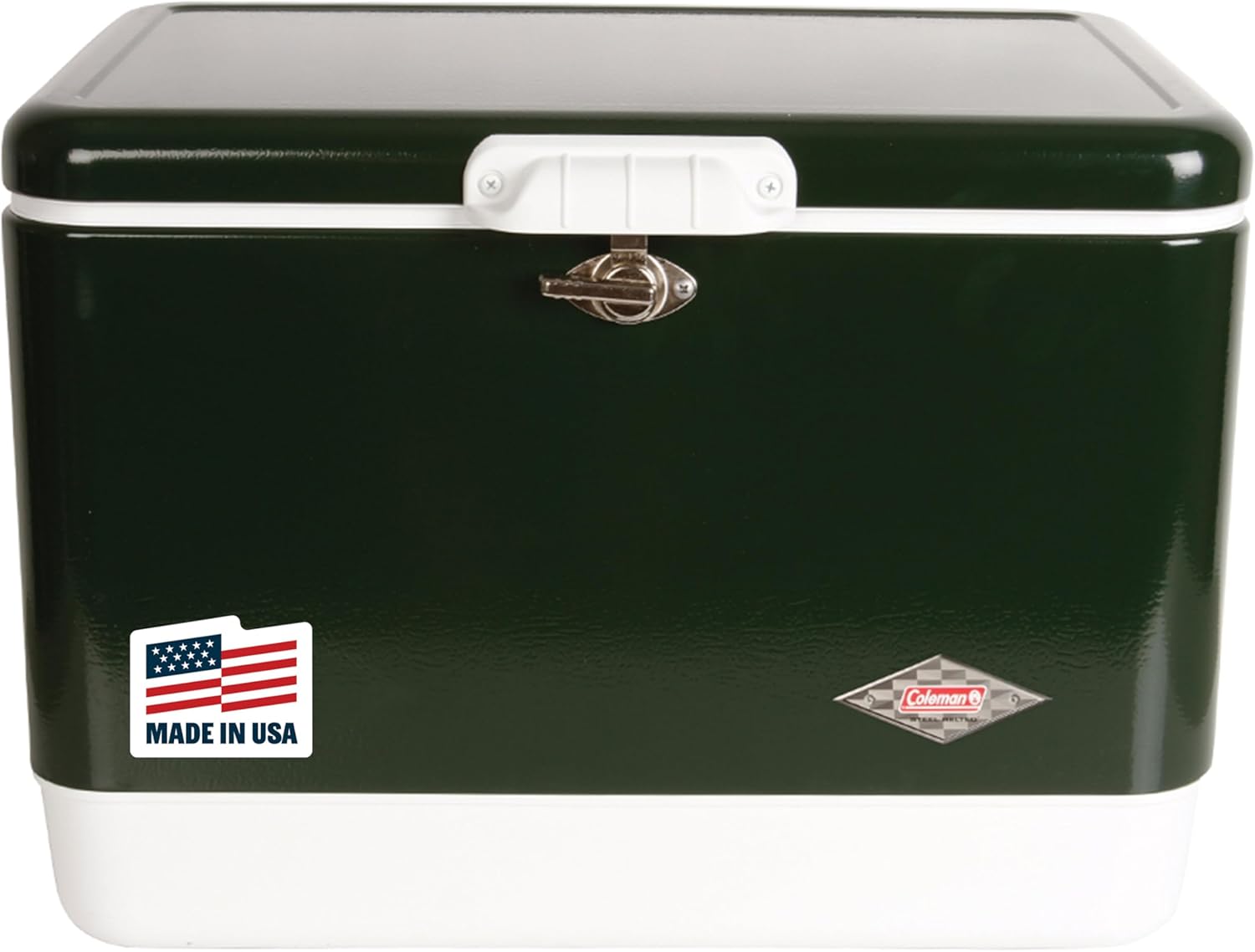
Coleman Vintage 54qt Steel Belted
Heavy-duty ice chest built for weekend trips, rated for four days of ice retention in hot conditions.
Why we love it
- Holds 85 cans for a full family weekend
- Rated four days of ice in heat
- Seat lid handles 250 pounds of gear
Pros
- Rust-resistant stainless steel hardware
- 54-quart capacity fits a family load
- Four-day ice retention rating
- Sturdy have-a-seat lid
- Comfort-grip steel handles
Cons
- Heavy when full, needs two people
- Retro design takes up space

Coleman Classic Wheeled Cooler 101-Can
Wheeled hard cooler rated for five days of ice that actually handles a packed minivan and hot desert weekends with kids constantly opening it.
Why we love it
- Six-inch wheels roll over gravel and campground grass
- Holds enough food and drinks for a full family weekend
- Lid seats 250 lbs and doubles as extra camp seating
Pros
- Rated five days ice retention
- Holds 50 cans with 26 lbs ice
- All-terrain wheels and swing-up handles
- Leak-proof drain plug and cup holders
- Lid doubles as camp seat
Cons
- Heavy when fully loaded
- Wheels struggle in deep sand
What Coleman Coolers Do Well, and Who They Are Not For
A Coleman cooler lands in your cart because it promises simplicity, ice retention, and durability without the premium price tag. Coleman has been making these boxes for over 130 years, and they still dominate weekend trips and tailgates across North America. I have run their gear through everything from high-desert heat to coastal rain, and the models above represent what actually holds up when kids are opening the lid every ten minutes.
The gap between what a cooler claims and what it delivers depends entirely on how you pack it, how often you open it, and whether you are willing to swap cubed ice for block ice. A Coleman rated for five days of ice retention does not mean five days with the lid cracked open in 90-degree heat. It means sealed, unopened, in a controlled lab. Real trips are messier. The picks above handle that mess better than the cheap foam boxes that fail by day two.
Insulation Type and Wall Thickness
Coleman builds most of these using foam insulation injected into rotomolded plastic shells. The Coleman Chiller 48-Quart Cooler uses their TempLock foam and holds ice up to 2.5 days. The heavier units like the Coleman Vintage 54-Quart Steel Belted Cooler add rust-resistant stainless steel hardware and a thicker shell, pushing ice retention to four days. More insulation means more weight and higher cost per trip, but also less ice loss during warm afternoons. The trade-off is real: a lighter box is easier to load into a minivan, but a heavier one loses less ice when the sun hits it directly.
Gasket and Latch Durability
The gasket is the foam seal running around the lid edge. It compresses over time and stops sealing properly if the latch is weak. All five models here use molded lids with internal ribbing designed to support 200 to 250 pounds of weight when the lid is closed. The Coleman Classic 70-Quart Cooler includes a recessed lip that makes lifting the lid easier even with gloves on. Latches fail when the box is packed too full and pressure warps the latch points, or when cold weather makes plastic brittle. Inspect the gasket before every season and replace it if you see cracks. A leaking cooler loses ice twice as fast as a sealed one.
Drain Plug and Cleaning
The drain plug is where things get real. A leaking drain plug floods your minivan. All these models include a leak-resistant drain with a tethered plug so you do not lose it. The Coleman Xtreme and Classic Series models add an EZ-clean lid with a smoother texture that wipes down in seconds. Sand, dirt, and meltwater cling to rougher surfaces and leave stains that turn into mildew if you do not clean them out. After a beach trip or week-long base camp, run hot water through the cooler, scrub the gasket with a brush, and leave the lid cracked open to dry. Mildew is harder to kill than ice is to replace.
Capacity Matched to Trip Length
The quart number is a lie if ice fills half the space. A 48-quart box holds about 31 cans plus 24 pounds of ice, leaving room for actual food. A 70-quart holds 50 cans plus 26 pounds of ice. For a weekend with two adults and two kids, the 48 to 70 range works. For week-long base camps, the larger models matter. The vintage steel-belted 54-quart holds 85 cans without ice, but with a full load of ice and food, you get real utility. Do not buy based on the headline number. Picture how many cold beers you need and how much food travels with them, then add ice weight and see if it fits in your vehicle.
Wheeled vs. Portable: Movement and Handling
Two of the five models have wheels. The Coleman Xtreme Rolling Cooler and Classic Series Rolling Cooler both run six-inch all-terrain wheels and retractable handles that collapse into the box for storage. Wheels matter when you are hauling a full cooler across gravel, sand, or grass to a campsite 200 yards from the parking lot. They do not matter if the cooler lives in the truck bed. The trade-off is weight. A rolling cooler weighs more than a portable one because the wheel assembly adds bulk. If you are loading it into a minivan and not moving it far at the campsite, the extra weight is dead load. If you are camped a quarter mile from the lot and opening it daily, wheels save your back.
Carrying handles are built into all five models. The portable (non-wheeled) Coleman Chiller and Classic non-rolling units have swing-up handles that fold flat for truck bed packing. The wheeled models add tow handles so two people can guide the box up a slope. A fully loaded 70-quart cooler weighs between 100 and 120 pounds. One person can move it on wheels. Two people should carry it if the terrain is too rough for wheels. Test your equipment at home before the trip. If you cannot move it when it is full, you bought the wrong size.
Ice Retention Claims and Real Life
Coleman rates ice retention from 2.5 days to five days depending on the model. Those numbers assume a sealed, unopened cooler in ambient heat around 90 degrees Fahrenheit. Real trips are not sealed. Your kids open the lid 40 times a day. The sun beats down. You pack warm food in there by mistake. Each of those cuts ice life by hours. Pre-chilling the cooler the night before adds a full day to ice retention. Using block ice instead of cubes adds another day because block melts slower. Packing dry ice on top (only in well-ventilated spaces) extends it further, but brings safety issues. The models here handle pre-chilled, well-packed scenarios well. In chaos, they lose ice like everything else. The difference is they lose it slower than foam boxes do.
When to Buy a Coleman, and When Not To
Coleman coolers make sense for weekend trips, tailgates, beach days, and base camps under a week when you prioritize carrying capacity and durability over premium ice retention. They are lighter than rotomolded competitors and more durable than cheap foam boxes. They are not bear resistant, not silent, and not designed for extended expeditions where every ounce matters. If you need ice retention beyond five days in extreme heat, a rotomolded box from a different brand will hold ice longer. If you are hiking with the cooler on your back, a soft-sided or backpack cooler weighs less. If you are fishing in salt water and draining the box daily, you need something easier to rinse and dry. Coleman makes boxes for people who want something that works, lasts, and does not cost $300. They deliver on that promise.
Pre-chill the cooler overnight, use block ice, and pack it full. That is 80 percent of ice retention right there.
Tips
- Pre-chill the cooler 24 hours before packing. Fill it with ice or ice packs and close the lid. This drops the interior temperature so added ice does not melt cooling down the box. It adds a full day to ice life.
- Layer block ice at the bottom and cubed ice on top. Block ice melts slower. Cubed ice packs tighter around food. Use both for the best balance.
- Drain meltwater every afternoon. Meltwater is cold and insulating, but standing water leads to mildew and bacteria growth. Pull the drain plug for 10 seconds and leave the cooler tilted on one corner to empty it.
- Clean the gasket after every trip. Sand and dirt embed in the foam and stop it from sealing. A soft brush and hot water take two minutes and add years to the cooler’s life.
- Store the cooler with the lid cracked open. Trapped moisture becomes mildew. Air flow prevents it.
- Keep the cooler out of direct sun at the campsite. Move it to shade or drape a light tarp over it. Every hour in direct sun costs ice.
A Coleman cooler outlasts cheaper boxes by seasons because the gasket, latch, and drain are built to last.
FAQ
Does the ice retention claim hold up if the lid opens constantly?
No. The five-day claim assumes a sealed, unopened cooler. Every time the lid opens, warm air enters and ice melts faster. A cooler that holds five days sealed might hold three days with normal family opening patterns. Pre-chilling, block ice, and keeping the cooler shaded help close that gap.
Can I use dry ice in these coolers?
Yes, but only in a well-ventilated space. Dry ice is frozen carbon dioxide and releases gas as it melts. Never seal a cooler with dry ice in an enclosed space like a car trunk or tent. Use it for specialized applications like keeping food frozen solid on multi-week trips. Wear gloves when handling it to avoid frostbite.
What happens if I leave meltwater in the cooler?
Meltwater is cold and technically insulating, so some campers leave it in to preserve ice longer. The downside is bacteria and mildew grow in standing water. After three or four days, the smell becomes unbearable. Drain it daily and the cooler stays fresh.
How long do these coolers actually last?
With proper care, a Coleman cooler lasts 10 to 15 years or more. The limiting factor is the gasket, which can be replaced for under $20. Latches break if the box is overstuffed, and drain plugs crack if dropped or overtightened. Handle the cooler well and it outlasts most people’s camping habits.
Is the size rated in quarts what I actually get for food storage?
No. The quart rating is internal volume. Once you pack ice, usable space shrinks by half or more. A 70-quart cooler holds about 50 cans plus 26 pounds of ice. Plan for half the stated capacity when you have ice in the box, and adjust for your own packing style.
Can I use a Coleman cooler to keep things frozen in winter?
Yes. A Coleman cooler is just insulation. In winter, it prevents food from freezing as quickly as it would in open air, and it keeps the interior temperature low enough for frozen foods to stay frozen longer than they would in a truck bed. Use it the same way you would in summer, just with the opposite goal.



Write Your Review
No reviews yet. Be the first to share your experience!