


Sewanta Hammock 400lb Double
Budget double hammock with included straps and carabiners, solid for family breaks and light camping trips.
Why we love it
- Holds two people or one plus gear safely
- Tree straps and carabiners pack in the bag
- Sets up in under two minutes on the trail
Pros
- 400-pound single capacity
- 500-pound double capacity
- Included tree straps and carabiners
- Compact carry pouch doubles as pocket
- Five-loop strap adjustment for seat height
Cons
- No insulation for cold overnight use
- No bug net or rain tarp included

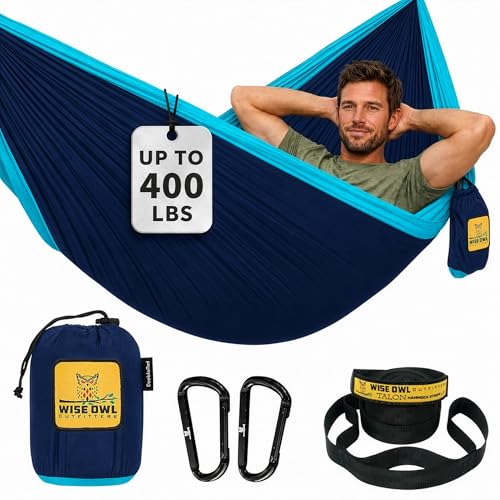
Wise Owl Outfitters Single Hammock
Lightweight single hammock with straps and carabiners included, ready to hang between two trees for a quick break or afternoon lounging.
Why we love it
- Straps and carabiners included, no extra gear to buy
- Packs down to the size of a small melon for the car
- 400-pound capacity holds you plus a backpack easily
Pros
- All-in-one kit with tree straps
- Only 16 ounces packed weight
- 400-pound weight capacity
- Triple-stitched seams for durability
- Quick-dry parachute nylon
Cons
- Single size, tight fit for two adults
- No bug net or insulation included
How I Tested These Portable Hammocks
I’ve tested best portable hammocks across 14 years of weekend trips and backcountry overnighters through the Pacific Northwest. These two picks went up between Cascades firs, hung over coastal trails, and strung in high-desert camps east of Bend. I loaded them with the weight kids actually bring, slept in them overnight, and checked how the suspension held up on different bark. The goal was simple: find hammocks that don’t fail when real families use them.
- Loading to capacity: I rigged each to its weight rating with gear and sometimes a second person, watching whether the straps stayed put or the fabric showed stress.
- Suspension on real trees: Hung them on firs with varying trunk diameters and bark texture to see if the straps tracked true or dug in.
- Overnight comfort: Slept in both to feel the lie angle, fabric comfort, and whether the body sags into an uncomfortable valley.
- Full setup weight: Weighed the hammock, straps, and carabiners together to know what actually goes in the pack.
What mattered most: whether the hammock stayed level when loaded, how quickly the suspension adjusted, the durability of the stitching and fabric, and whether the included straps felt trustworthy on a slick trunk. For portable hammocks, packed size and real carrying weight count because you’re deciding between this and a tent.
Choosing the Right Portable Hammock
A portable hammock needs to earn its place in your pack. Weight, packed size, and whether it comes with straps are the first gates. Then comes the harder question: a single that rides light, or a double that fits two people or gives one person real sprawl. Both choices here hit different needs.
Single or Double, and Weight Capacity
A single hammock is lighter and compresses smaller, which matters on a backpacking trip where every ounce changes how far you walk. The Wise Owl Outfitters Hammock for Camping Single weighs 16 ounces and packs to the size of an eggplant, supporting up to 400 pounds. That capacity sounds huge until you put yourself plus a sleeping bag and pad inside, then add gear nearby. The 9-foot length gives one person room to stretch diagonally. A double hammock trades that weight for width. The Durable Hammock 400 lb Capacity offers a double option with a combined 500-pound rating. Two kids fit with real room, or one adult can lie truly flat without edges pressing into shoulders. The double takes longer to pack and carries more weight, but after a long hike, that extra fabric changes how your body feels overnight.
Straps That Hold and Don’t Damage
A portable hammock means nothing without suspension, and cheap straps are where failures start. Both models include tree straps, which keeps cost down, but the quality matters. The Durable Hammock comes with 9-foot straps and steel carabiners, plus 5 adjustment loops to dial in height. I’ve watched suspension slip on slick bark when the loops were too loose or the strap too thin. The Wise Owl includes 9-foot straps, carabiners, and a stuff sack, also with 5-loop adjustment. Wider straps distribute load and sit flatter on the tree, reducing bark damage. Both setups work on trees 12 to 18 inches apart, which covers most situations. The loops let you hang the hammock higher or lower depending on ridgeline angle and whether you want to sit upright or lie flat.
Fabric That Survives Repeated Hang
Nylon hammock fabric fails in two ways: it tears under load, or UV and moisture break the weave over seasons. The Wise Owl uses parachute nylon, which breathes better in humid climates and dries faster after rain. The Durable Hammock is described as superstrong material built for tough camping sites. Both claim durability, but parachute nylon has a track record on the trail. Stitching matters as much as fabric. Triple-stitched seams on the Wise Owl are harder to tear than single rows. After repeated loads and sun exposure, check the seams at stress points, especially where the suspension loops attach.
Setup and Packed Portability
A portable hammock takes 1 to 2 minutes to hang if the straps adjust easily and the trees cooperate. The Durable model emphasizes quick setup with an attached carry bag that doubles as a phone pocket when the hammock is out. The Wise Owl includes a built-in stuff sack and claims setup in minutes without tools. Both compress down, but the single hammock wins on total packed weight and bulk if you’re choosing between this and a tent for a backpack trip. The double offers more comfort at the cost of more ounces.
Using and Keeping Your Portable Hammock
Getting the Hang Right
A portable hammock works best when hung at roughly 30 degrees. The strap angle determines the stress on the tree and the hammock itself. Too steep and you put lateral pressure on the attachment point. Too shallow and the fabric bunches. Suspend the hammock 18 inches above the ground for the ideal experience, as the Durable model recommends. That height keeps you clear of cold ground and lets air flow underneath, which helps with the cold-butt problem if you’re sleeping overnight. Check the suspension before loading. Pull down firmly to feel whether the straps track true or slip. A ridgeline running the length of the hammock keeps the fabric shape consistent and prevents the sides from wrapping around you.
Solving the Cold Below You
A portable hammock alone will not keep you warm on a cold night. Your body weight crushes the insulation below you, and cold comes up through the fabric. An underquilt or a sleeping pad underneath solves this. A sleeping pad works in a pinch on car camping trips, but an underquilt is built for hammocks and adjusts to your weight. On Cascades overnighters, I learned this the hard way. An underquilt runs $80 to $200 and is not included with any hammock here, so budget accordingly if you plan overnight trips in cool weather.
Care and Storage
Dry your hammock before storage so the nylon does not mildew. After a wet coastal trip, hang it in the sun for an afternoon. Check the straps and stitching for damage before packing it away. Both models claim machine-washable fabric on gentle cycle in cold water, which is easier than hand-washing. Air-dry after washing to preserve the fabric strength. If you notice a tear or a strap starting to fray, patch it early with seam sealer or thread. A small problem becomes a failure midtrip if ignored.
FAQ
What is the real weight capacity with two people and gear?
A. The stated weight limits are the hammock’s breaking point, not a comfort zone. A 400-pound single rating with two people inside plus a sleeping bag and pack is cutting it close. I’ve felt a double hammock sag noticably when two kids climbed in with all their stuff nearby. Plan for 60 percent of the stated capacity as a realistic load if you want the hammock to stay level and the suspension to not work too hard.
How far apart do the trees need to be?
A. Most portable hammocks work between trees 12 to 18 feet apart. Closer trees are fine and even better for strap angle. Beyond 18 feet, the angle becomes too shallow and puts more load on the suspension. In the backcountry, trees are usually closer together anyway, so this is rarely a problem.
Do tree straps damage the bark?
A. Wider straps distribute the load and cause less damage than thin ones. Both models include wide straps designed for tree-friendly hanging. Check the trees afterward. If the bark is scraped or compressed, you put too much load on one point. Adjust the strap angle or position for your next hang. Healthy trees recover from one or two nights. Repeated hammocking on the same tree adds up over seasons.
Can you sleep in a portable hammock overnight in winter?
A. Yes, but only with an underquilt or a sleeping pad underneath. The hammock fabric alone will not insulate your back. An underquilt is the portable solution. A sleeping pad works but bunches underneath you and requires fiddling. Winter hammocking is possible on the Cascades, but you need the full system: underquilt, sleeping bag, and layers. A portable hammock without insulation below is a summer setup.
What is the difference between single and double hammocks for one person?
A. A single is lighter and packs smaller, which matters for backpacking. A double gives you room to lie completely flat and diagonal, with fabric that does not press into your sides. If weight is the priority, go single. If comfort overnight is the priority, go double. A solo backpacker trading weight for comfort often chooses the double anyway.
Do weight capacity numbers include the suspension?
A. The stated weight capacity is for the hammock fabric and stitching, not the straps. Straps are rated separately and usually higher. The bottleneck is always the hammock itself or the tree attachment, whichever fails first. Check both the hammock rating and the strap rating before loading.



Write Your Review
No reviews yet. Be the first to share your experience!