

AnorTrek Camping Hammock Double
Lightweight double hammock with included straps, built for quick afternoon hangs and light backpacking trips with room for two.
Why we love it
- Straps and carabiners included, ready to hang
- Fits two people or one plus a small pack
- Weighs under two pounds, packs tight
Pros
- 500-pound weight capacity
- Straps and carabiners included
- Sets up in under 90 seconds
- Double size fits kids or couples
- Parachute nylon is durable
Cons
- No bug net or tarp included
- Not insulated for cold nights

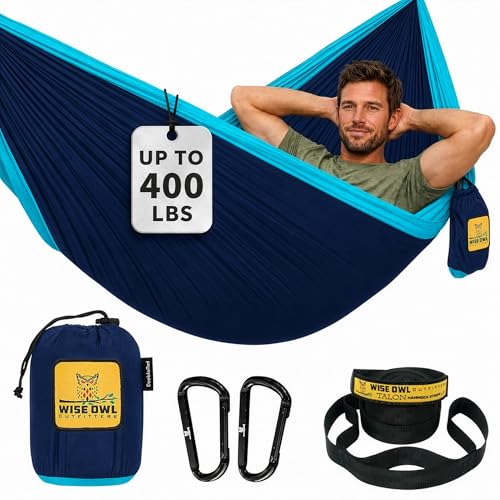
Wise Owl Outfitters Single Hammock
Lightweight single hammock with straps and carabiners included, ready to hang between two trees for a quick break or afternoon lounging.
Why we love it
- Straps and carabiners included, no extra gear to buy
- Packs down to the size of a small melon for the car
- 400-pound capacity holds you plus a backpack easily
Pros
- All-in-one kit with tree straps
- Only 16 ounces packed weight
- 400-pound weight capacity
- Triple-stitched seams for durability
- Quick-dry parachute nylon
Cons
- Single size, tight fit for two adults
- No bug net or insulation included

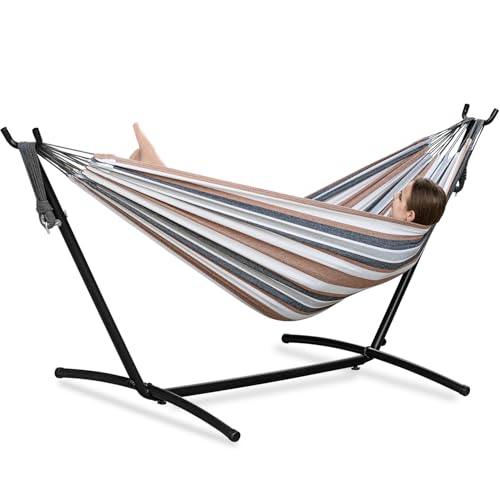
Wise Owl Double Hammock 500lb
Double hammock with tree straps included, rated for 500 pounds and light enough to pack alongside a tent on family trips.
Why we love it
- Straps and carabiners already in the bag
- Fits two kids or one adult plus a gear haul
- Weighs 24 ounces, stuffs smaller than a loaf
Pros
- 500-pound weight capacity
- Tree straps included in kit
- Packs down to 24 ounces
- Triple-stitched nylon holds up
- 10 by 6.5 feet gives real space
Cons
- No bug net or rain cover
- Cold back without an underquilt
How I Tested These Hammocks for Hiking
I tested best hammocks for hiking across 14 years of family trips through the Pacific Northwest: Cascades ridge lines, Mount Hood overnight hangs, Olympic Peninsula coastal trails, and high-desert afternoons around Bend. I’ve loaded these with both kids piling in, strung them between firs on quick breaks, and slept in them on cold nights to feel how the fabric and suspension actually hold up after repeated use in real conditions.
Weight capacity under load. I hung each to its rated limit with kids and gear to see if the suspension slips or the fabric sags, checking triple-stitched seams and carabiners after heavy use. Lie angle and comfort. I spent nights in them to evaluate how flat the fabric lays and whether the ridgeline keeps you centered. Packed size and total hanging weight. I weighed the full setup including straps and carabiners, then packed and unpacked to see if the stuff sack claim matches reality. Suspension and tree-friendliness. I rigged them on various bark types to feel whether the straps slip or hold, and how easy the loops are to dial in.
I judged them on real comfort factors: how much usable space you actually get, whether the weight capacity gives you headroom with two people plus overnight gear, how much the whole setup weighs once the straps are on, and whether the suspension included feels like an afterthought or built to last. For a lounging hammock, comfort and lie-flat feel matter most. For a camping hammock with a net, the sleep system. For a backpacking setup, packed weight wins.
Buying Guide for Hammocks for Hiking
Choosing the right hammock for hiking depends on how you plan to use it. A quick trail break calls for different priorities than an overnight hang in cold weather. The specs that matter most shift based on whether you are a solo backpacker, a family with kids, or someone who just wants to relax between summits.
Single or Double, and Who Fits
A single hammock is lighter and packs smaller, making it the default for solo backpacking and trail breaks. A 9-foot single typically weighs 16 ounces and gives one person plenty of room to stretch diagonally. The Wise Owl Outfitters Hammock for Camping Single hits that mark with 400-pound capacity, enough for most adults with a light pack. A double hammock is roomier but heavier, around 24 ounces, and carries 500-pound capacity. I’ve used doubles with both my kids for lazy afternoons and for sleeping two adults with gear on backpacking trips. The Wise Owl Outfitters Camping Hammock at 10 feet by 6.5 feet is genuine double space without feeling stretched thin. The real question is whether you are alone, or whether two of you (or a parent and child) will use it. Two people plus overnight gear add up fast against a weight rating.
What Comes Strapped In
Not all hammocks ship with suspension. Some include nothing but the hammock itself and you buy straps separately, which changes what you actually spend. The AnorTrek Camping Hammock bundles two carabiners and two 8.2-foot straps with each unit, and both straps have 5+1 adjustment loops so you can dial in the hang angle without tools. Others ship with 9-foot straps and a stuff sack, which is fine for most trees. What matters is whether the loops give you enough adjustment positions to dial in roughly a 30-degree strap angle, which spreads the load and keeps the hammock from sagging. Check that carabiners are steel and not cheap aluminum that bends, and that the straps themselves don’t fray after a dozen hangs.
Fabric, Seams, and Durability
Most hiking hammocks use parachute nylon, which is quick-drying and resists weather. The key is denier count and stitch quality. Higher denier (like 210T) means thicker fabric that lasts longer, but heavier. The trade-off gets sharper for ultralight backpacking, where every ounce counts, versus family trips where durability through repeated use matters more. Triple-stitched seams hold better than single stitches under load, especially at stress points like the gathered ends. I’ve felt seams start to come loose after a few seasons of heavy family use, so check the stitching after your first overnight hang and before the fabric itself shows wear.
Hanging It Right
A proper hang starts with finding two trees at least 12 to 15 feet apart with smooth bark and no sharp edges. Wrap straps around the trunk at chest height (not low, not high) and aim for a strap angle of about 30 degrees when you sit in the hammock. Too steep a strap angle puts stress on both the hammock and the trees. If the trees are too close, you can’t hang at the right angle and the load concentrates. Many tree-strap failures happen because the angle is wrong, not because the strap is weak. Check the bark after you hang to make sure the straps didn’t slip. On slick trunks like wet cedar on coastal trails, I’ve felt a strap creep, so I always test the hang before loading my full weight.
Staying Warm Overnight
The single biggest gap in hammock camping is the cold-butt problem: your body weight compresses the insulation below you and the cold comes up through the fabric. A sleeping bag alone won’t fix it. You need an underquilt slung underneath the hammock, or a sleeping pad laid inside. An underquilt is lighter and cleaner, but costs extra. A pad is cheaper and you likely own one already, but takes up pack space and shifts around. Either way, ignoring this means waking at 2 a.m. chilled from below while your sleeping bag still has plenty of warmth. Temperature rating on a sleeping bag becomes almost meaningless in a hammock without underquilt protection.
Packing and Washing
Hammocks fold into small stuff sacks and weigh almost nothing loose, but the suspension adds bulk. A single hammock with straps and carabiners is genuinely ultralight for backpacking. Before storage, dry the hammock completely in the sun after any damp trip, because nylon can mildew if packed wet. Machine wash on gentle cycle in cold water if the fabric gets sticky, then air-dry. Check for small rips or pulled seams before packing for the season. Carabiners can get bent or stuck if they freeze, so I wipe them dry after wet trips. A quick inspection takes five minutes and adds seasons to the gear.
FAQ
Can you really sleep two people in a double hammock overnight?
A. Yes, but the weight rating becomes critical. Two average adults plus overnight gear (pack, sleeping bags, pads or underquilts) can easily hit 400 to 450 pounds. A 500-pound rated double gives you headroom, but a 400-pound double is risky. The hammock won’t tear, but it sags lower and the hang feels unstable. I’ve done it countless times with Sarah and me, but we stay conscious of the total load.
How far apart do the trees need to be?
A. At least 12 to 15 feet is the standard target. Closer trees force a steeper strap angle, which puts extra stress on both the hammock attachment points and the trees themselves. If you only have trees 8 to 10 feet apart, you can still hang, but the angle gets tight and the load feels different. On high-desert trips around Bend where trees are sparse, I’ve sometimes settled for closer hangs, but I check the straps and fabric more carefully afterward.
Do tree straps damage bark or kill trees?
A. No, if you use them right. Straps spread the pressure across a wider area of bark than a rope would, and a quick hang over an afternoon does no damage at all. Even repeated hangs on the same tree over years cause no lasting harm. The bark might show a faint mark where the strap sat, but it recovers. Avoid hanging on saplings under 4 inches in diameter, because the small circumference concentrates the load.
Can you use a hammock if you don’t have trees?
A. Not without buying a stand or rigging to something else. A freestanding hammock stand exists, but it’s heavy and bulky for backpacking. Some people tie hammocks between fence posts, picnic tables, or vehicle attachments, which works for car camping but defeats the ultralight appeal. If trees are not available and you don’t have a stand, a tent is the right call.
Does the weight capacity include or exclude the hammock itself?
A. It’s the load capacity, meaning you and your gear. The hammock weight is separate and listed as part of the specs. When a manufacturer says 500-pound capacity, that’s what you can safely hang inside it, not what the hammock itself weighs. Two people plus a light pack can hit that limit fast, so check the math before you buy.
What happens if you ignore the lie angle and just rig it tight?
A. The fabric sags into a banana shape, pressure builds on the attachment points, and you sleep poorly because you’re not flat. A proper 30-degree strap angle keeps the hammock more level and spreads the load evenly. Tight rigging does not make a hammock safer, it just makes it less comfortable and more likely to fail where the straps attach.




Write Your Review
No reviews yet. Be the first to share your experience!