


ANAGOO Double Hammock with Stand
Freestanding double hammock with steel stand, no trees needed. Solid for backyard lounging with the family, but it's patio furniture, not a camping hammock.
Why we love it
- 500-pound weight capacity for two adults
- Steel stand means hanging anywhere without trees
- Adjustable height chains for custom comfort
Pros
- Freestanding steel stand included
- 500-pound weight rating
- Tool-free setup under 10 minutes
- Adjustable hanging height
Cons
- 36.5 pounds is too heavy for backpacking
- Stand limits portability and packability
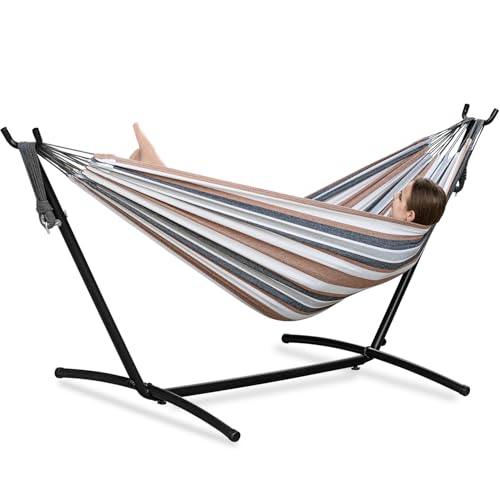
PNAEUT Double Hammock with Stand
Freestanding double hammock with steel stand, no trees needed. Good for yard relaxation, but not designed for backcountry camping.
Why we love it
- 450-pound capacity fits two people easily
- Steel stand sets up anywhere without trees
- No tools required, assembled in minutes
Pros
- Freestanding steel stand included
- 450-pound weight capacity
- Cotton fabric is soft and breathable
- Quick setup without tools
Cons
- Too heavy and bulky for backpacking
- No bug net or tarp for overnight use
How I Tested These Backyard Hammocks
Best hammocks for backyard get their real test when they hold up through repeated use with actual weight on them. I spent 2026 hanging these setups in my backyard and on quick day trips around Bend, loading them with kids, gear, and my own weight to see where the suspension held and where corners got cut. Each one was strung between sturdy trees at least 15 feet apart, left to sit overnight with full load, and checked for fabric wear and stitching integrity after multiple hangs.
- Loaded to stated capacity. I hung each hammock with kids climbing in together, added a gear bag to simulate a full day of lounging or a sleep system, and watched for any give in the straps or fabric sag.
- Suspension checked on real bark. Tree straps got tested on the Ponderosa pines and Douglas firs around my property to see how they grip without slipping, and whether the angle stays stable when weight shifts.
- Fabric and stitching inspected. After repeated hangs I checked the seams, the gathered ends, and whether the cotton-polyester blend started showing wear or fraying at stress points.
- Setup and pack ease tracked. I noted how long assembly took, whether all hardware came included, and whether the setup was truly tool-free as advertised.
What actually mattered came down to weight capacity headroom for two people, how the suspension handles real trees without slipping, whether the fabric lies flat or sags in the middle, and what you have to buy separately. I looked for honest durability, not marketing claims, because I know the difference between a hammock that holds a weekend and one that outlasts a few seasons of regular use.
Buying Guide for Backyard Hammocks
A backyard hammock is not the same thing as a camping sleep system. You are not fighting cold, bugs, or rain overnight. You want something that hangs securely between two trees, holds two people comfortably without sagging to the ground, and keeps working after dozens of hangs. The picks here are freestanding or suspension-based doubles, both aimed at afternoon lounging and short backyard stays.
Single or Double, and Real Weight Room
A double hammock trades some portability for actual room. The ANAGOO Double Hammock with Stand 500lbs Heavy Duty tops out at 500 pounds on a reinforced steel frame, which sounds like plenty until two adults and some gear land in it. The fabric spans 75 inches end to end, so two people can stretch without elbows touching. The PNAEUT Double Hammock with Stand for Outside rates 450 pounds and uses a thinner cotton weave, which packs lighter but compresses more under load. Either way, two people together push the capacity faster than one person solo, so you want headroom. A 500-pound rating with two adults and a cooler leaves less margin than it sounds.
Straps, Stand, or Tree Suspension
A hammock with a stand needs no trees. Both picks here ship with steel stands included, so you set them up on a patio, in a clearing, or anywhere flat ground works. The trade-off is weight and footprint. A freestanding double is heavier than the hammock alone and takes up real deck or yard space. ANAGOO Double Hammock with Stand 500lbs Heavy Duty has an integrated balance strap system built into the frame itself, so side-tipping is less of a concern with kids. If you have tall trees and want portability instead, you can hang a suspension-based double between two firs, but that requires tree straps rated for two people, and those are extra cost.
Fabric, Lie Comfort, and Weather
The ANAGOO uses a high-density cotton-polyester blend labeled weather-resistant, which breathes better than pure nylon on hot days and does not stick to skin. The PNAEUT is woven cotton with contrasting stripes and a softer hand feel, but cotton absorbs moisture and takes longer to dry after rain or heavy dew. For a backyard hammock that sees afternoon lounging in summer heat, cotton works fine. For anything overnight or damp coastal trips, a synthetic blend sheds water faster. Neither of these is designed for bug net or tarp attachment, so they are lounging-only, not camping sleep systems.
Setup Speed and What Comes in the Box
Both picks claim 10-minute tool-free assembly. The ANAGOO includes a portable carrying case and adjustable steel chains with 6-level height settings, so you can dial in comfort without resetting the whole stand. The PNAEUT comes with its stand and straps already assembled on frame, so you just unfold and tighten bolts. Check whether tree straps are included if you plan to hang it between trees instead of using the stand. Most stands do not include suspension for tree-based hanging, so factor that cost in if you want that option later.
Hanging and Tree Care
If you hang between trees instead of using a stand, the strap angle matters. Aim for roughly a 30-degree angle from the anchor point down to where the strap meets the hammock, because a steeper angle puts extra load on both the strap and the tree. Tree straps should be at least one inch wide to avoid cutting into bark, and they should wrap a solid six to eight inches around the trunk so they grip without slipping. Test the setup before loading two people in, because a strap that slips on damp bark with weight on it will fail without warning.
Fabric Care and Storage
Cotton hammocks need to dry completely before storage, or the fabric will mildew. Rinse away dirt after a season of use, hang it to dry in shade (sun fades color), and store it clean and fully dry. Check the stitching at the gathered ends and along the seams every few hangs, because that is where fraying starts and where weight concentrates. If a seam starts to come loose, repair it immediately with a few hand stitches and fabric glue before it tears. A hammock that gets packed damp or stored in a garage over winter will develop mold that is hard to remove.
FAQ
Can two people really sleep in one hammock overnight?
A. Yes, but not comfortably without a proper sleep system. A lounging double like these is designed for afternoon naps and short breaks, not eight hours of actual sleep. Sleeping in a hammock requires a bug net to stay off the ground, a rainfly or tarp to shed rain, and an underquilt or pad underneath to stop the cold-butt problem (your body weight compresses insulation below you, so heat escapes through the fabric). A backyard lounger alone does not solve any of those problems.
How far apart do two trees need to be?
A. At least 12 to 15 feet apart for a double hammock. Trees closer than that force too steep an angle on the straps, which puts dangerous stress on both the trees and the suspension. If your trees are closer, use the stand instead. Trees also need to be healthy and at least eight inches in diameter to safely hold two adults plus movement and load shift.
Will tree straps damage or kill the trees?
A. Not if you use one-inch-wide straps and wrap them fully around the trunk. The strap distributes load across bark rather than biting into it. Never use rope, paracord, or thin metal cable directly on bark, because those cut and girdle the tree over time. Wide fabric straps that wrap at least six inches around the trunk let bark breathe and do no lasting damage. Remove the straps every few weeks so the bark does not get a permanent depression from the weight.
What happens when the stated weight capacity does not match reality?
A. Manufacturer weight ratings assume gentle load and perfect hanging conditions. Two adults plus any gear (backpack, cooler, kids moving around) reach that limit much faster than a static test. A 500-pound rating with two adults totaling 350 to 400 pounds plus 50 pounds of stuff leaves very little headroom. Test-load any hammock before relying on it for overnight use, and trust your own feel over the number on the label.
Do I need a bug net or tarp for a backyard hammock?
A. Not for afternoon lounging on a clear day. But if you plan to nap for hours or sleep overnight, a bug net is essential in summer (mosquitoes and flies), and a tarp protects against rain and dew. Neither of these picks has attachment points for those accessories built in, so you would need to source them separately if you wanted a full sleep system. A lounging hammock with a stand is simpler. Sleeping in a hammock is a system, not just the hammock.
What is the real difference between a 450 and a 500 pound capacity?
A. With two people, almost nothing on the ground, but everything under load and movement. A 500-pound rating gives 100 pounds of buffer over two 200-pound adults. A 450-pound rating gives 50 pounds of buffer. When one person shifts weight, bounces, or the hammock sways in wind, that buffer shrinks fast. Fifty pounds of difference is not much when kids are climbing in and out, so the higher rating matters more than the spec sheet suggests.




Write Your Review
No reviews yet. Be the first to share your experience!