

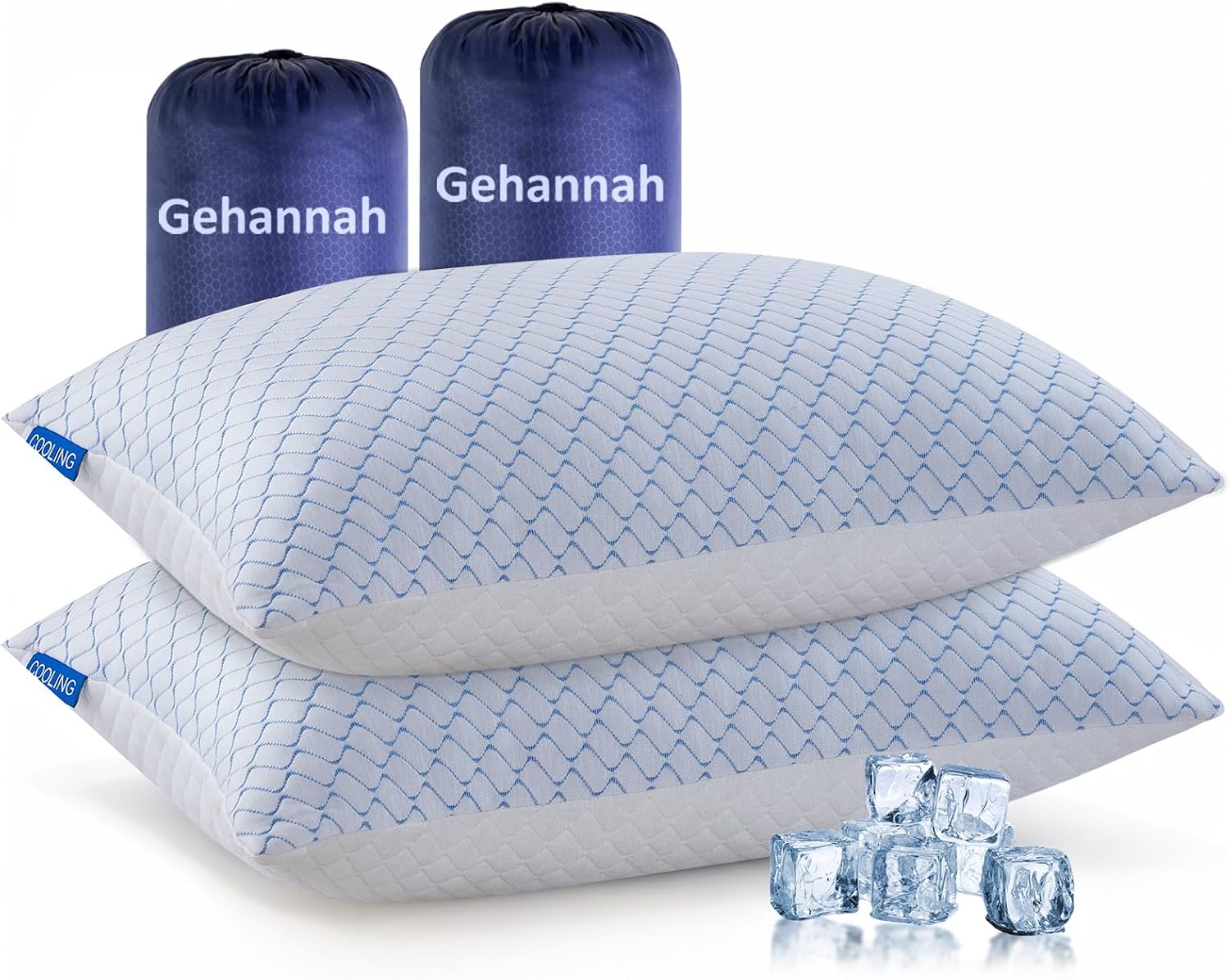
Gehannah Travel Pillow 2 Pack
Compressible memory foam camping pillow with a cool-touch cover. Comes in a 2-pack, so kids and adults get a decent night's sleep.
Why we love it
- Adjustable fill for kids' necks
- Cool side helps in summer
- Packs down small for the car
Pros
- Adjustable fill thickness
- Removable washable cover
- Cooling fabric on one side
- Includes storage bags
Cons
- Takes time to fluff up
- Not for ultralight backpacking
How I Picked These
Best kids camping pillows have spent more than a decade in our family’s rotation across Pacific Northwest camps, from Cascades base camps to high-desert overnighters to wet coastal trails. I have tested these across roughly 60 nights of real use with my kids, ages 8 and 11, watching how they sleep on different surfaces and whether a pillow actually stays under a child’s head when they roll at 2 a.m.
Testing process:
- Measured loft height and packed size against the manufacturer’s claim, because hang tags lie.
- Tested how pillows hold up under a child’s head across back and side sleeping, checking whether they bottom out or slip off a sleeping pad.
- Washed the covers and checked how the fabric feels against a child’s face, especially for noise and heat.
- Stuffed and compressed each pillow repeatedly to see how quickly loft returns and whether the fill breaks down.
What I judged them on was whether a pillow actually lets a kid sleep through the night without sliding off the pad or waking up with their head on the ground. I watched for loft that suits a child’s frame without being overkill, packability that does not add dead weight to my pack, and a cover that washes easily because field camps are dirty. I also paid attention to whether the pillow held up after multiple trips without the fill going flat or the fabric tearing.
Buying Guide for Kids Camping Pillows
Picking the right pillow for a child on the trail comes down to a few real decisions. Kids need loft that matches their smaller build, and they need something durable enough to survive being packed, jumped on, and used on rocky ground. The best choice balances comfort so they actually sleep against packability so it does not take up half the bag.
Loft Height for a Child’s Build
A child’s head is smaller and lighter than an adult’s, which means they need less loft to stay level. Too tall a pillow and their neck bends awkwardly. Too flat and their head sinks and turns all night. Memory foam pillows with adjustable fill let you compress them down to a 3 to 4 inch loft, which is roughly right for an 8 to 11 year old sleeping on their side. The Travel Pillow – Large 2 Pack Compressible Camping comes with shredded memory foam that can be fluffed or compressed to dial in comfort for a specific child’s frame. Inflatable pillows are harder to dial precisely, but if you fill one to roughly 70 percent capacity you can get a softer, lower loft that works for smaller sleepers. Foam does not compress as fine, so it sits somewhere in the middle and is less adjustable once packed.
Packability Without Sacrificing Sleep
A pillow that takes up a third of a child’s backpack defeats the purpose. Compressible foam pillows pack smaller than you would expect because the fill squashes, and they stay puncture-proof, which matters on rocky campsites. Inflatable pillows are the smallest of all, shrinking to apple size, but they require you to have a pump or lung capacity, and they feel firmer than foam. Hybrid pillows with a foam top and air bladder split the difference, packing tighter than pure foam but offering more comfort than pure air. For a kid’s trip where pack weight matters, a compressible foam in the 12 to 16 ounce range keeps the burden light.
Durability on the Trail
Kids drag pillows through dirt, rest them on sharp rocks, and pack them wet. A pillow with a machine washable cover survives more trips because you can clean it without stripping the fabric. Compressible foam is inherently tougher than an inflatable because there is no valve to catch on a tent zipper or break if a kid sits on it wrong. The Travel Pillow – Large 2 Pack Compressible Camping has a removable cover rated for cold water washing, which is realistic for field camps. Check whether the seams are sewn through the cover and fill or just the cover, because seams that go through both last longer. Inflatable pillows need you to sweep the tent floor before sleeping so a sharp pine needle does not puncture them, and they require more field care.
How to Care for a Kids Camping Pillow
Most camping pillows for children should be washed by hand or machine in cold water with a removable cover. Air-dry in shade, never in a dryer, because heat can damage the foam or seams. Store it with any valve open and the cover loose so mold does not grow between trips. On the trail, keep the pillow inside the pack or sleeping bag so it does not get damp from morning dew, and wipe the cover with a dry cloth if it gets wet.
Inflation and Real Comfort
If you are using an inflatable pillow, fill it to roughly 70 to 80 percent capacity, then let air out slowly until you hit the neck support you want. A pillow that is too firm will keep a child awake and too soft will bottom out. Compressible foam does not require any adjustment, which is one reason families prefer it for kids. Test a pillow before a big trip by having your child sleep on it at home so you know whether it actually works for them.
FAQ
Why does a pillow slide off a sleeping pad at night?
A. Nylon sleeping pads are slick, especially when a child is warm and sweating. Tuck the pillow inside the sleeping bag hood or slip a lightweight stuff sack over both the pillow and pad to create friction. Some families use a small carabiner to clip the pillowcase to a sleeping bag loop, which keeps it tethered.
How small do compressible foam pillows actually pack?
A. Manufacturers’ packed sizes are optimistic. A compressible foam pillow that claims to pack to 7 inches will shrink under vacuum compression, but once you remove it and let it breathe, expect it to expand to 10 to 12 inches of actual packed size. That is still smaller than an inflatable with a pump, but taller than the marketing image suggests.
Can kids sleep on an inflatable pillow, or is it too firm?
A. It depends on how much you fill it. At 60 to 70 percent inflation, an air pillow softens enough for a child to sleep through the night, though it will always feel firmer than foam. Some kids prefer the support, others find it uncomfortable. Test one at home before committing to a backcountry trip.
What is the difference between a kids pillow and a regular camping pillow?
A. Labeled kids pillows are often smaller and lower in loft to match a child’s head and neck. Regular adult pillows are taller and firmer, which can cause a child’s neck to bend and interrupt sleep. If you cannot find a pillow labeled for kids, look for compressible foam pillows that let you adjust the loft down rather than buying a full-size adult pillow.
How do I know if a stated loft height is real?
A. Measure it yourself by placing the pillow on a flat surface and measuring from bottom to top when fully fluffed. Most manufacturers give a range (3 to 5 inches) rather than a single number because loft depends on how much you fill or compress it. If a pillow claims 5 inches but measures 3 when you unpack it, that is the trade-off you make for pack size.
Can I use a pillowcase to extend the life of a camping pillow?
A. Yes. A lightweight cotton or synthetic pillowcase adds minimal weight and keeps dirt and sweat off the main cover, which reduces how often you need to wash it. Make sure the case is loose enough that it does not compress the pillow or trap heat, and choose a light color so it does not absorb heat on sunny mornings.




Write Your Review
No reviews yet. Be the first to share your experience!