


Lifetime Hard Cooler Bear-Resistant
Bear-certified hard cooler rated for up to 10 days of ice retention, built tough enough for family camping trips where the lid gets opened constantly.
Why we love it
- Bear-resistant certified for remote camping trips
- Drain spout connects to a garden hose for easy cleanup
- Handles constant lid-opening on hot weekends
Pros
- Bear-resistant certified by IGBC
- Up to 10-day ice retention rated
- Multi-functional grip and slide feet
- Integrated bottle opener and lock points
- Gasket seal maintains cold air longer
Cons
- Heavy when fully loaded with ice and food
- Premium price point around $260
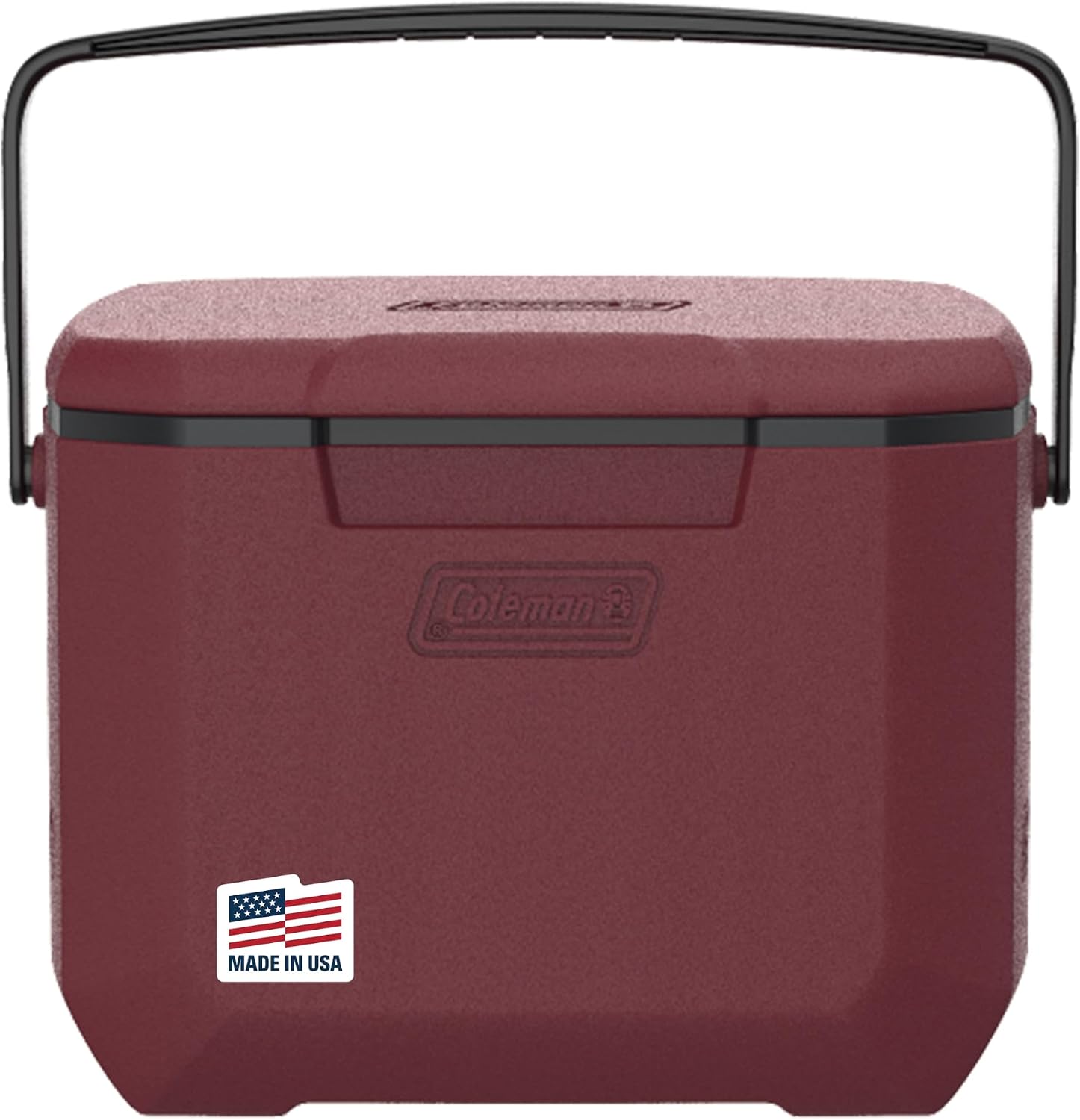
Coleman Chiller 16Qt Cooler
Tough weekend cooler that keeps ice solid through a packed minivan ride and a hot high-desert camping trip with the kids.
Why we love it
- Ice stays solid for 36 hours in heat
- Reinforced lid doubles as a seat
- Wide bail handle carries full cooler solo
Pros
- TempLock foam insulation
- Leak-resistant design
- Fits 11 cans plus 8 lbs ice
- Made in the USA
- One-hand carry when loaded
Cons
- Lightweight means thinner walls
- Not sized for multi-day trips

VEVOR 52 Qt Ultra-Light Hard Cooler
A lightweight 52-quart hard cooler that keeps ice solid through hot weekend trips without the weight penalty of traditional rotomolded designs.
Why we love it
- 30% lighter than rotomolded coolers, easier to carry full
- Rated for six days of ice retention in heat
- Includes dry-goods basket and separator for organized packing
Pros
- Ultra-light hard PP construction
- 2.5 inches of closed-cell foam insulation
- Commercial-grade silicone seal
- Quick-flip latches and integrated handle
- Built-in beer opener
Cons
- Hard plastic body less durable than rotomolded
- 52 quarts still requires two hands when full

Igloo Trailmate 50Qt Hard Cooler
A 50-quart hard cooler built tough enough for weekend heat and family chaos, with Sure-Lock latches that actually stay shut.
Why we love it
- Sure-Lock latches seal tight with two fingers
- 1.5-inch foam walls rated for extended ice life
- Wide side handles grip secure when fully loaded
Pros
- Sure-Lock latches stay secure
- 1.5-inch foam insulation
- Molded-in cup holders
- Bottle opener built in
- 50-quart capacity holds weekend food
Cons
- Heavy at 15.35 pounds when loaded
- No wheels for campground hauling

RTIC 32 QT Ultra-Light Hard Cooler
A 32-quart hard cooler that weighs 30% less than traditional designs, built to handle hot weekend trips without sacrificing ice retention or durability.
Why we love it
- 30% lighter than rotomolded coolers of same size
- 2.5 inches of foam keeps ice through hot desert days
- One person can carry it full across the campground
Pros
- Ultra-light design cuts weight penalty
- 2.5-inch closed-cell foam insulation
- 48-can capacity fits a family weekend
- Doubles as bench or step stool
- Durable hard-sided construction
Cons
- Lighter materials may not last as long
- Less robust latches than heavier competitors
What That Five-Day Rating Actually Means
Best ice retention coolers come with claims. Ten days. Six days. Thirty-six hours. The number sits on the box, and it looks like a promise. After 14 years of weekend trips through the Cascades and the high desert, I can tell you the gap between that number and what happens when your kids open the lid every ten minutes is real.
Most coolers get tested sealed and unopened in a climate-controlled lab. Your family trip looks different. The sun is direct, the ambient heat is 85 degrees, and someone wants ice water at mile three of the hike. What matters is not the marketing claim but how the cooler holds ice under conditions that actually happen.
How Ice Retention Claims Get Made
Manufacturers test in controlled environments, usually with the cooler sealed, pre-chilled, and left alone. The Lifetime Hard Cooler, High Performance Ice Chest claims up to 10 days, which comes from testing under those ideal conditions. That translates to real-world performance of roughly 5 to 7 days if you pack it properly and leave it in the shade. The difference is insulation thickness, gasket quality, and whether you pre-chill it. A cooler with 2.5 inches of closed-cell foam and a commercial-grade silicone seal will outperform one with thin walls, but the lab test does not measure lid opening frequency or sun exposure.
Usable Ice Life vs. Rated Ice Life
The Coleman Chiller 9/16/30/48/60qt Cooler with Ice Retention, Leak Resistant, Great for Camping, Concerts, Sports, and More rates 36 hours. In practice, if you pack it with a mix of ice and frozen gel packs and avoid opening it in the heat of the day, you get 2 to 3 days of usable cold for drinks and perishables. The difference is that marketing tests do not account for thermal shock from opening the lid or for the fact that ice below 32 degrees works harder than water sitting on top of half-melted cubes.
What Pre-Chilling Actually Does
Chilling the cooler the night before adds 1 to 2 days to ice life. The empty box starts cold, so the ice does not have to work as hard cooling down the interior mass. Combine that with block ice (which melts slower than cubes) and you genuinely can stretch performance. A cooler that claims 5 days becomes a 6 or 7-day box if you treat it right from the start.
Seal Quality Is the Real Differentiator
The gasket matters more than wall thickness alone. A cooler with thinner walls but a tight seal will hold ice longer than a thick-walled box with a loose latch. Check the gasket by closing the lid and trying to lift it slightly. It should resist. Latches that split in the cold or do not press evenly let warm air in constantly. The Igloo Trailmate Cooler features Sure-Lock rubber latches that fasten with two fingers and maintain consistent pressure across the lid.
Ice lasts longer in shade with the lid closed than it does in marketing claims with the lid open.
Rotomolded vs. Blow-Molded vs. Ultra-Light
Three different construction methods dominate the market, and each trades insulation for weight and durability differently. Rotomolded coolers are thick-walled and heavy, blown-molded coolers are lighter but thinner, and ultra-light hard coolers cut weight by 30 percent compared to traditional rotomolded builds. Which one you choose depends on whether you are hauling it solo or whether you have help.
Rotomolded: The Tank
Rotomolded construction means the plastic is spun inside a heated mold, creating uniform wall thickness and extreme durability. These coolers survive being sat on, being thrown in a truck bed, and being stored outside for months. They hold ice exceptionally well because the walls are thick. The downside is weight. A rotomolded cooler in the 50-quart range can weigh 25 to 30 pounds empty. If you are car camping with a group and the cooler stays in one place, rotomolded is your box.
Blow-Molded: The Compromise
Blow-molded coolers like the Igloo Trailmate use a different process where heated plastic is blown into a mold, creating a lighter shell with good insulation. The walls are thinner than rotomolded but thicker than injection molded. Weight comes down to 15 to 20 pounds, and ice retention stays strong because the foam insulation layer is still 1.5 inches thick. Latches and hinges tend to be weaker on cheaper blow-molded units, so check that the Sure-Lock hardware feels solid when you press down.
Ultra-Light: The Portable Option
Ultra-light hard coolers use injection molding with optimized foam and materials to cut weight by 30 percent compared to rotomolded equivalents. The RTIC 32 QT Ultra-Light Hard Cooler weighs 14.7 pounds empty but still carries 2.5 inches of insulation. The VEVOR Ultra-Light holds similar specs at around 20 pounds. These are built for backpack camping, river floats, and situations where carrying matters. Ice retention is solid, roughly 5 to 6 days, but the trade-off is durability. Thinner walls crack if the cooler gets thrown or sat on hard, and latches are not as forgiving if they get twisted.
Gaskets, Latches, and What Fails First
The seal is everything. Even a cooler with perfect insulation will fail if cold air leaks out around the edges. After 14 years, I have watched latches split in cold weather, gaskets dry rot in the sun, and drain plugs crack under pressure. These are the hardware pieces that actually fail on you in the field.
Gasket Materials and Failure Modes
A gasket is a rubber or silicone ring that sits in a groove around the inside of the lid. It compresses when you close the lid and creates an airtight seal. Commercial-grade silicone gaskets are better than standard rubber because silicone stays pliable in cold and does not dry out as fast in sun. Check the gasket by running your finger around it. If it feels cracked, hard, or like it is separating from the channel, replace it before the trip. A degraded gasket can cut ice life in half.
Latch Durability
Latches hold the lid tight and apply pressure to the gasket. Plastic latches fail. I have snapped them while closing the cooler in sub-freezing temps, and I have had them become loose after one season of UV exposure. Metal latches or heavy-duty plastic ones with reinforcement work better. The Sure-Lock latches on the Igloo Trailmate are two-finger operation, which means you do not have to pull hard to lock them and they do not put stress on weak points. Test the latches by pulling up on the lid after closing. It should not budge.
Drain Plug Design
The drain plug lets meltwater out without opening the lid. A poorly designed plug will leak in a packed minivan or fail to seal when you close it. Check that the plug threads easily and seals tightly. The Lifetime model includes an easy-to-drain spout compatible with a garden hose, which lets you control water flow without tipping the cooler. Cheaper coolers have small push plugs that do not seal well and clog with debris. If the plug leaks, line the cooler with a heavy-duty trash bag before packing.
A gasket that has hardened in the sun is your first sign the cooler is ready to fail.
Packing, Pre-Chilling, and the Ice-to-Contents Ratio
The cooler itself is only half the battle. How you pack it and prepare it before the trip determines whether the ice lasts five days or three. Most people pack wrong. They fill the cooler halfway with food and drinks, dump in some ice, and wonder why it melts by afternoon two.
The Ice-to-Contents Ratio
Ice should be 50 percent of the total volume, or close to it. If the cooler holds 50 quarts and you want five days of ice, you need 25 quarts of ice and 25 quarts of food and drinks. Most people think 10 pounds of ice is enough. It is not. Block ice lasts longer than cubes because it has less surface area, but cubes pack tighter. Mix them. Put block ice at the bottom, layer food and drinks in the middle, and cap with crushed ice or cubes on top. The mass of ice around the food is what keeps it cold, not the ice sitting in water at the bottom.
Pre-Chilling the Night Before
Empty the cooler, fill it with ice and a small amount of water, close the lid, and leave it overnight. The next morning, drain the meltwater and repack with frozen gel packs, block ice, and your food. The cooler interior is now cold, so the ice does not have to work cooling down a room-temperature shell. This one step adds 1 to 2 days of usable life. Freeze water bottles the night before and use them as both ice and drinking water. As they melt, you get cold drinking water without diluting the ice with tap water.
Packing Order
Start with block ice or a frozen gel pack on the bottom. Layer in perishables that do not need frequent access. Put drinks and items you want most accessible near the top, separated by ice or frozen packs. Do not pack items you will need after the first day on the bottom. Reaching to the bottom means opening the lid wide and letting cold air out. The more the lid stays closed, the longer the ice lasts.
Location and Sun Exposure
Set the cooler in the shade whenever possible. Direct sun raises the temperature inside by 10 to 15 degrees. If you have to park in sun, drape a light-colored tarp over the cooler. Remove it for access, but cover it again when you move on. I have watched ice disappear in three days in full sun and last eight days in shade with identical packing. Shade is free ice retention.
Tips From the Road
- Use block ice on the bottom and cubes on top. Block ice melts slower because it has less surface area exposed. Cubes fit around food better, so use them where you need the fit.
- Freeze your water bottles the night before. They act as ice, and as they melt you get cold drinking water without diluting other contents.
- Pre-chill the cooler empty overnight. The cooler interior should be cold before you pack it, so the ice does not waste energy cooling the box itself.
- Keep the lid closed as much as possible. Every time you open it, warm air enters and cold air escapes. Grab what you need and close it fast.
- Store the cooler with the lid cracked after the trip. This lets air circulate and prevents mold and mildew from growing inside while it dries.
- Drain meltwater if you will not open the cooler for more than a day. Sitting water in the bottom is dead weight and makes the cooler smell. Leave the drain plug open so air can move through.
FAQ
Do the manufacturer ice retention claims actually happen?
No, not with normal use. A 5-day rating is tested sealed and unopened in a lab. In the field with the lid opening and ambient heat, expect 2 to 3 days on a 36-hour claim and 3 to 4 days on a 5-day claim. Use the rating as a reference point, not as a guarantee. The right packing and pre-chilling get you closer to the claim.
What happens if I leave meltwater in the cooler overnight?
Meltwater sitting at the bottom of the cooler will accelerate ice melt because the cooler has to work harder to keep water cold than to keep ice cold. Drain it using the drain plug. If the cooler has no plug or the plug leaks, prop one side up on a rock to let the water run out.
Can I use dry ice in a regular cooler?
Dry ice is carbon dioxide and it sublimes (turns to gas) rapidly. It will damage a cooler not designed for it because the pressure buildup can crack the plastic. Only use dry ice in coolers rated for it, and never seal the cooler completely. Dry ice requires venting or the pressure will warp the box.
How do I clean a cooler without the smell coming back?
Rinse it thoroughly with fresh water after each trip, especially if food or fish was inside. Wipe down the interior and drain completely. Prop the lid open and let it dry in the sun. Once it is dry, store it with the lid cracked to allow air to move. If smell persists, wipe the interior with a 50/50 mix of white vinegar and water, then rinse and dry completely.
Do I really need to pre-chill the cooler?
Yes. Pre-chilling adds real ice life because the cooler interior stays cold and the ice does not waste energy cooling the plastic. If you skip this step, expect to lose 1 to 2 days of performance, especially on trips longer than three days.
What is the realistic lifespan of a cooler?
A well-maintained cooler with a tight gasket and solid latches will last 10 to 15 years. Ultra-light coolers may not last that long because the thinner walls are more prone to cracking. Rotomolded coolers last longest if you store them out of direct UV when not in use. Replace the gasket if it hardens, and do not force latches if they feel weak.




Write Your Review
No reviews yet. Be the first to share your experience!