


Titan Deep Freeze 16 Can Cooler
Zipperless lid and a removable hard liner make this soft cooler practical for family weekend trips where the lid opens constantly.
Why we love it
- Flip-open lid beats wrestling a zipper with two kids
- SmartShelf keeps sandwiches from getting crushed
- Shoulder strap actually comfortable when loaded full
Pros
- Zipperless flip-open lid design
- Removable hard liner and SmartShelf
- Leak-proof interior contains spills
- Padded shoulder strap for carrying
- Wipes clean easily after trips
Cons
- Soft cooler, ice retention limits multi-day trips
- 16-can capacity tight for family of four
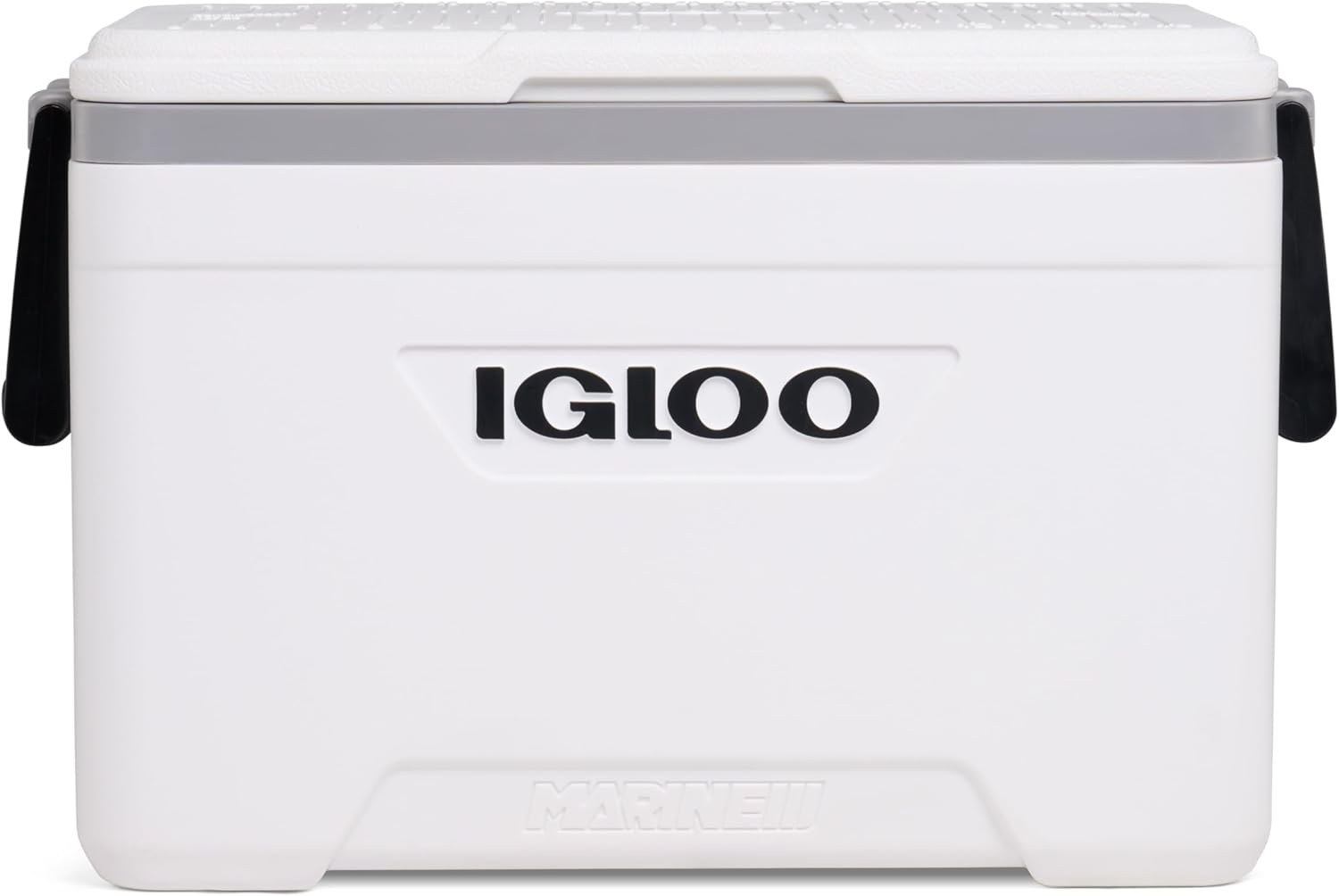
Igloo Marine 25 Qt Cooler
A compact hard cooler with elevated cooling design that handles weekend trips without leaking, even when packed tight in the minivan.
Why we love it
- Cool Riser design lifts contents off hot surfaces
- Swing handles stay comfortable when fully loaded
- Compact enough to fit tight spaces, holds 36 cans
Pros
- Elevated Cool Riser technology
- Eco-friendly THERMECOOL foam insulation
- Swing-up handles and tie-down loop
- Compact 25 Qt size for tight packing
Cons
- Smaller capacity limits multi-day trips
- Standard cooler, not premium ice retention

EchoSmile 25-75 Qt Rotomolded Cooler
Rotomolded hard cooler rated for five days of ice retention with reinforced latches, drain plug, and enough sizes to fit a solo hike or a family weekend.
Why we love it
- Rotomolded one-piece body handles rough trips
- Silicone gasket and latches seal tight when lid slams
- Quick-drain plug empties melt water in seconds
Pros
- Rotomolded one-piece construction
- Silicone gasket seals heat out
- Five-day ice retention rated
- Quick-drain plug for cleanup
- Size range 25-75 quarts
Cons
- Heavy when fully loaded
- Premium pricing for the category
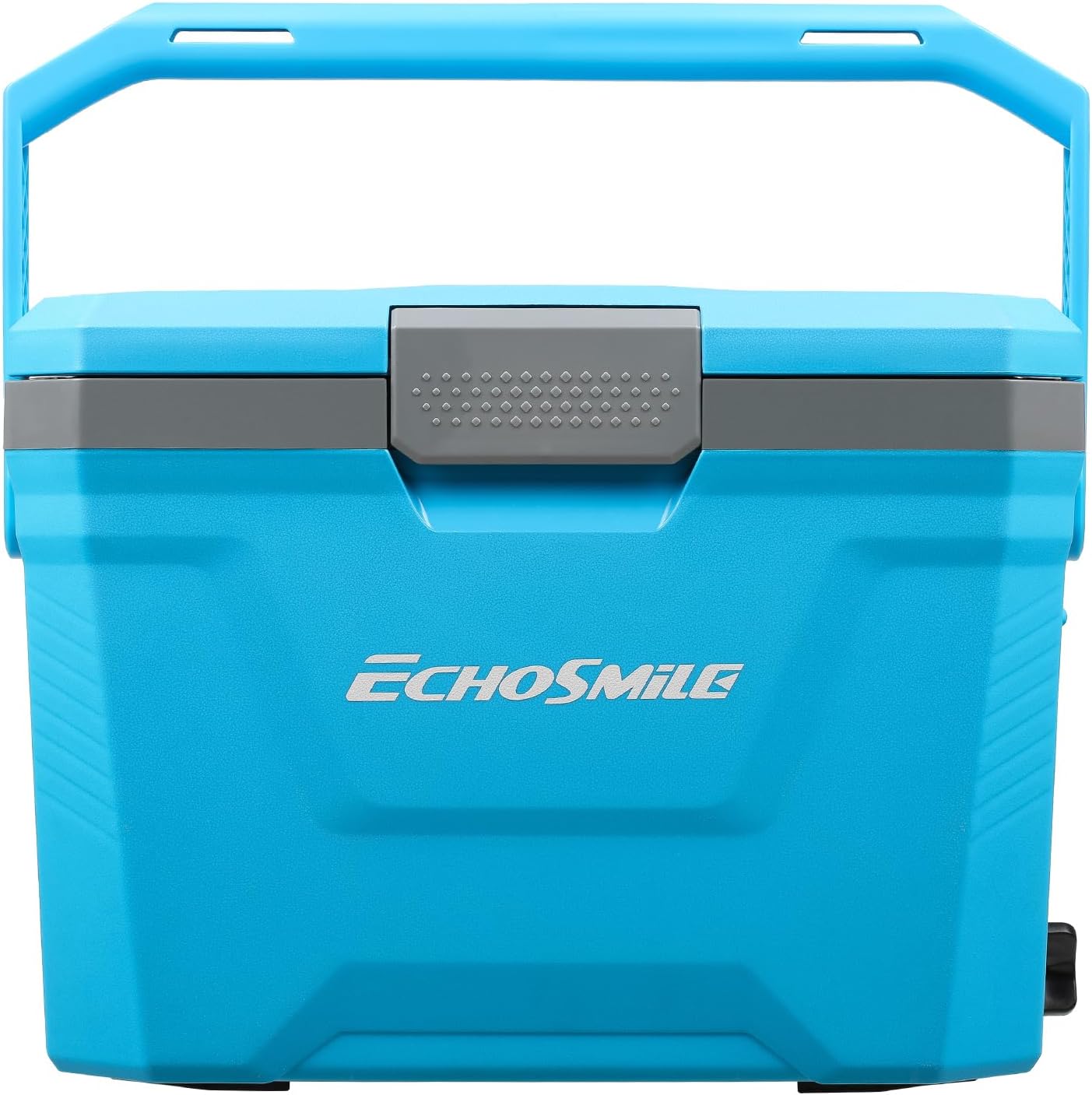
EchoSmile 20/35 Qt Hard Cooler
Standard hard cooler built for family camping with a reliable drain plug and latches that actually stay put through minivan rides.
Why we love it
- Quick-drain plug means no tilting to empty water
- Non-slip feet grip gravel campground pads
- Holds 24 cans plus ice, fits SUV trunks tight
Pros
- Integrated bottle opener on the lid
- Silicone sealing ring keeps water tight
- Quick-drain system with stainless chain
- Non-skid rubber feet stay put on gravel
- Rated for three days ice retention
Cons
- Not rotomolded, so lighter duty than premium coolers
- Weight penalty when loaded for a full weekend

BlueCoolers Cobalt 55 Roto-Molded
Roto-molded hard cooler rated for five days of ice, 40% cheaper than premium brands, and light enough to actually carry across camp.
Why we love it
- Rated for five days ice in real heat
- Nearly 20% lighter than traditional roto-molded
- Bear-proof and costs half what YETI asks
Pros
- Roto-molded one-piece construction
- Freezer-style lid gasket and seals
- Two-inch insulation throughout
- Easy-close latch system
- Lockable lid with bottle opener
Cons
- Heavy when fully loaded with ice
- Five-day rating assumes lid stays closed
What Matters When You Are Spending Under $50
Best coolers under $50 sit at the point where budget constraint meets real outdoor use. You want ice retention that survives a hot weekend, not a marketing claim tested in a garage. The picks above all stay under that ceiling while delivering the basics a family trip demands: sealed gaskets, solid latches, and walls thick enough to matter.
The gap between a $35 cooler and a $50 one is not small. At this price floor, you are choosing between form factors and construction methods that trade off portability against longevity. A soft cooler packs easier but leaks sooner. A rotomolded box weighs more but lasts years. Hard-sided injection-molded units split the difference.
Hard-Sided vs Soft-Sided Construction
Hard-sided coolers in this range use injection-molded plastic shells with foam insulation. The Igloo Marine Cooler is a 25-quart that relies on THERMECOOL foam and a Cool Riser base design to keep ice below the lid where air pockets form. Hard shells withstand impact and UV better than fabric, which matters if your cooler lives in the truck bed year-round. Soft-sided units like the Titan by Arctic Zone Deep Freeze Cooler use a zipperless front and a removable HardBody liner that prevents the insulation from absorbing meltwater. Soft coolers pack flatter, carry on your shoulder, and fit in tight vehicle spaces. Hard coolers sit stable and handle repeated opening without stress on zippers.
Ice Retention Expectations at This Price
Manufacturers in this range claim 2 to 3 days of ice retention, but that is full-ice mode with the lid sealed. Once your kids start opening it every ten minutes for a snack, real-world performance drops. The Titan cooler claims 2 days with a triple-layer ColdBlock base. The Igloo targets the same range with its elevated design. These claims hold if you pre-chill the box, use a 2:1 ice-to-contents ratio, and keep it in shade. Direct sun and frequent lid opening cut a day off either way. Soft coolers perform better in the 12 to 24 hour window for day trips and shorter camps.
What Breaks First at Budget Prices
Drain plugs leak. Latches crack. Gaskets fail when exposed to UV or temperature swings. At this price tier, manufacturers save cost on hinge hardware and sealing ring material. The Titan uses a patented zipperless lid that eliminates one failure point. Hard coolers in this range rely on ball latches or swing latches that work until cold makes them brittle. Look for rubber gaskets, not vinyl. Check the drain plug and whether it has a stainless tether. A plug that falls out in the field is worth avoiding.
Portability and Vehicle Fit
A 25-quart hard cooler like the Igloo measures roughly 20 by 16 by 16 inches and weighs around 8 pounds empty. Filled with ice and contents, it hits 30 to 35 pounds and requires two hands. Soft coolers distribute weight across your shoulders, but a full 16-can capacity on a long hike gets uncomfortable. The Titan fits between car seats or under a bench. Hard coolers do not collapse, so they occupy that space whether full or empty. For minivan camping trips where every square inch matters, soft wins. For truck bed storage or campground base camp where the cooler sits in one place, hard is more durable.
The difference between a five-year cooler and a one-year cooler at this price is the gasket and the drain plug hardware.
Construction Details That Survive a Season
Insulation Type and Thickness
Foam-injected walls are standard in this price range. The quality difference is measurable. THERMECOOL foam is cleaner than older CFC-blown stock and does not yellow as fast. Polyurethane foam holds its R-value longer but costs more. At $35 to $50, you get extruded polystyrene or polyethylene foam, 1 to 2 inches thick. That is enough for weekend trips. Rotomolded coolers at the top of this range, if any exist below $50, have 3-inch walls and last twice as long, but they also weigh twice as much. Hard-sided injection-molded boxes hit the sweet spot of weight and insulation for casual use.

Gasket and Hinge Hardware
Open a cooler lid dozens of times and the hinge wears. At under $50, hinges are often aluminum riveted to plastic. Quality varies wildly. Swing latches hold better than ball latches under stress, but both fail if ice expands and locks the lid shut. Gaskets should be silicone, not rubber, because silicone stays flexible in cold. Check whether the gasket is glued into a channel or just seated. Glued lasts longer. A cooler that fails to seal or whose lid will not close has no value. Before buying, push on the latches with force and look for flex in the plastic.
Drain Plug Reliability
A drain plug that leaks ruins a minivan carpet. At this price, look for plastic plugs with O-ring seals and threaded bases, not simple push-fit designs. The EchoSmile 20-quart hard cooler includes a stainless tether so the plug does not disappear. A quick-drain system without tilting is worth the slightly higher cost. Test the plug by filling the cooler with water and leaving it sit for an hour. If there is pooling underneath, skip that model.
Checks Before You Buy
- Open and close the lid 20 times. Feel for resistance or grinding. Smooth operation means the hinges are seated properly.
- Press on each latch with your thumb. They should flex slightly but not crack or crease visibly.
- Look at the seam where the gasket meets the lid. It should sit in a groove, not just glued flat.
- Inspect the drain plug base. Threaded is better than smooth. Check that the O-ring sits flush.
- Run your finger along the interior. It should be smooth plastic, not rough foam where the foam is exposed.
What Gets Cut at This Price
At the Lower End (Around $35)
Entry-level coolers in this range sacrifice insulation thickness and wall consistency. Injection-molded plastic can develop thin spots where the mold gates are. Gaskets are often vinyl instead of silicone. Drain plugs are simple snap-fit designs that pop out if tilted. Latches are thin plastic. You get a functional box for a beach day or a short truck trip, but do not expect it to survive repeated use in high heat or UV. These coolers work as throwaway gear for one season or occasional use.
At the Mid-Range ($40 to $45)
Mid-range picks upgrade to better foam, silicone gaskets, and swing latches instead of ball latches. Drain plugs become threaded. The cooler will hold ice for 2 to 3 days if pre-chilled and if you respect the 2:1 ice-to-contents ratio. These are the coolers I have kept for three to five years and only retired because I wanted the next size up. Construction is consistent. Failure points are fewer. This tier is where value lives.
At the Ceiling ($48 to $50)
At the top of the $50 ceiling, you might find a soft cooler with a removable hard-shell insert or a small hard cooler with reinforced corners. The Titan cooler at $46.99 includes an integrated hard-body liner and a SmartShelf to separate snacks from cold drinks. These features prevent ice melt from ruining sandwiches. You stay under $50 but get durability closer to a $75 model. This is the last cooler you would buy in this budget tier before stepping up to a size or construction class that breaks the ceiling.
A $50 cooler with a solid gasket and a tethered drain plug outperforms a $80 model with loose hardware.
Tips From the Road

- Pre-chill your cooler the night before. A room-temperature box will melt ice just bringing everything down to cool. Freeze it or leave it in an unheated garage overnight.
- Use a 2-to-1 ice-to-contents ratio. Two pounds of ice for every pound of food and drink. This ratio works. More ice melts fast and wastes money. Less ice does not hold cold long enough.
- Load hard items on the bottom, soft items on top. Gravity and cold air sink. Sandwiches and fruit survive longer when kept above the ice line.
- Keep the cooler in shade and cover it with a light blanket. Reflected heat matters more than you think. A white cloth over the lid cuts melt by 20 percent on a high-desert afternoon.
- Leave some meltwater in the cooler. Drain it every other day to prevent mildew, but a little water at the bottom keeps the air cold and your ice lasting longer.
- Clean the gasket and interior with a damp cloth after each use. Mold grows fast in damp plastic. Let it dry with the lid cracked open, not sealed.
Common Questions
Does a 2-day ice retention claim actually hold with kids opening it constantly?
No. Manufacturers test with the lid sealed and the cooler in still air. A family trip means opening it 20 times a day. Real performance in that scenario is closer to 24 to 36 hours if you pre-chill and keep it shaded. Account for that when planning a three-day trip. Bring extra ice or a backup cooler.
What is the difference between a 16-can and a 25-quart rating?
A 16-can cooler holds sixteen 12-ounce cans standing upright with ice around them. A 25-quart cooler holds 25 liters of volume. Once you add ice, a 16-can cooler actually holds about 8 to 10 cans plus ice. The quart rating is more honest. Check both numbers and assume the usable capacity is half the advertised volume once ice is in.
Can I leave water in a cooler when it is not in use?
No. Stagnant water grows mold and bacteria. Drain it completely and let the interior dry with the lid open. Store it outside of direct sunlight with the lid cracked so air circulates. Mold is harder to kill than mildew and ruins a cooler faster than any other damage.
Will a soft cooler hold ice as long as a hard cooler at the same price?
Soft coolers sacrifice an inch or two of wall thickness to be portable. They perform better in the 12 to 24 hour window. For day trips and short overnighters, soft is competitive. For a full three-day weekend in heat, a hard cooler with thicker insulation and a sealed gasket will hold ice longer. Choose based on your trip, not on price alone.
What kills a cooler fastest at this price range?
UV damage to the plastic and gasket, mold growth from standing water, and latches cracking in cold. A cooler left in the truck bed under sun dies in two summers. Drain it, store it dry in the shade, and it will last five years. UV protection and gasket material are where the money goes.
Is there a difference in performance if I use block ice instead of cubed?
Block ice melts slower because it has less surface area. In a cooler under $50, the gasket and insulation matter more than ice type. Block ice lasts a day longer than the same weight in cubes, but it takes up more space and is harder to arrange. A mix of both works best. Cubes fill gaps and chill quickly. Block ice anchors the temperature and lasts.




Write Your Review
No reviews yet. Be the first to share your experience!