


Titan Deep Freeze 16-Can Soft Cooler
Soft cooler with a hard interior shelf that keeps food from getting crushed on weekend trips and holds ice through a hot day in the high desert.
Why we love it
- HardBody liner protects sandwiches from getting squashed
- Shoulder strap carries a full load across the campground
- Leak-proof construction won't soak the minivan floor
Pros
- HardBody liner with removable SmartShelf
- Deep Freeze insulation rated for all-day ice
- Adjustable padded shoulder strap
- Water and stain resistant exterior
Cons
- 16-can capacity is tight for a family weekend
- Soft sides flex when fully loaded

Hulongo 30L Cooler Backpack
Backpack cooler that keeps drinks cold for a day hike or car camping trip without weighing you down or leaking on your back.
Why we love it
- Two insulated compartments keep drinks cold and snacks dry
- Padded straps and back panel stay comfortable when full
- Leak-proof seal protects your gear and clothes inside
Pros
- Two separate insulated compartments
- Rated for 12 hours cold retention
- Leak-proof seamless hot press seams
- Lightweight and adjustable padded straps
- Multiple pockets for phone and wallet
Cons
- Capacity limits weekend trips to day trips
- Soft-sided design less durable than hard coolers

Maelstrom 30 Can Soft Cooler Bag
Lightweight soft cooler with sealed pockets and a 24-hour ice rating. Practical for weekend trips when you need to pack light but still keep food cold.
Why we love it
- Leakproof zipper and PEVA lining for minivan trips
- Multiple pockets keep snacks and gear organized
- Collapses flat when empty for easy storage
Pros
- Leakproof ultrasonic-welded seams
- Five-layer insulation with food-grade PEVA
- Multiple carry options: strap, handle, side grips
- Collapsible design saves space when packed away
- Includes detachable bottle opener
Cons
- Soft-sided design offers less durability than hard coolers
- 24-hour rating assumes minimal lid opening
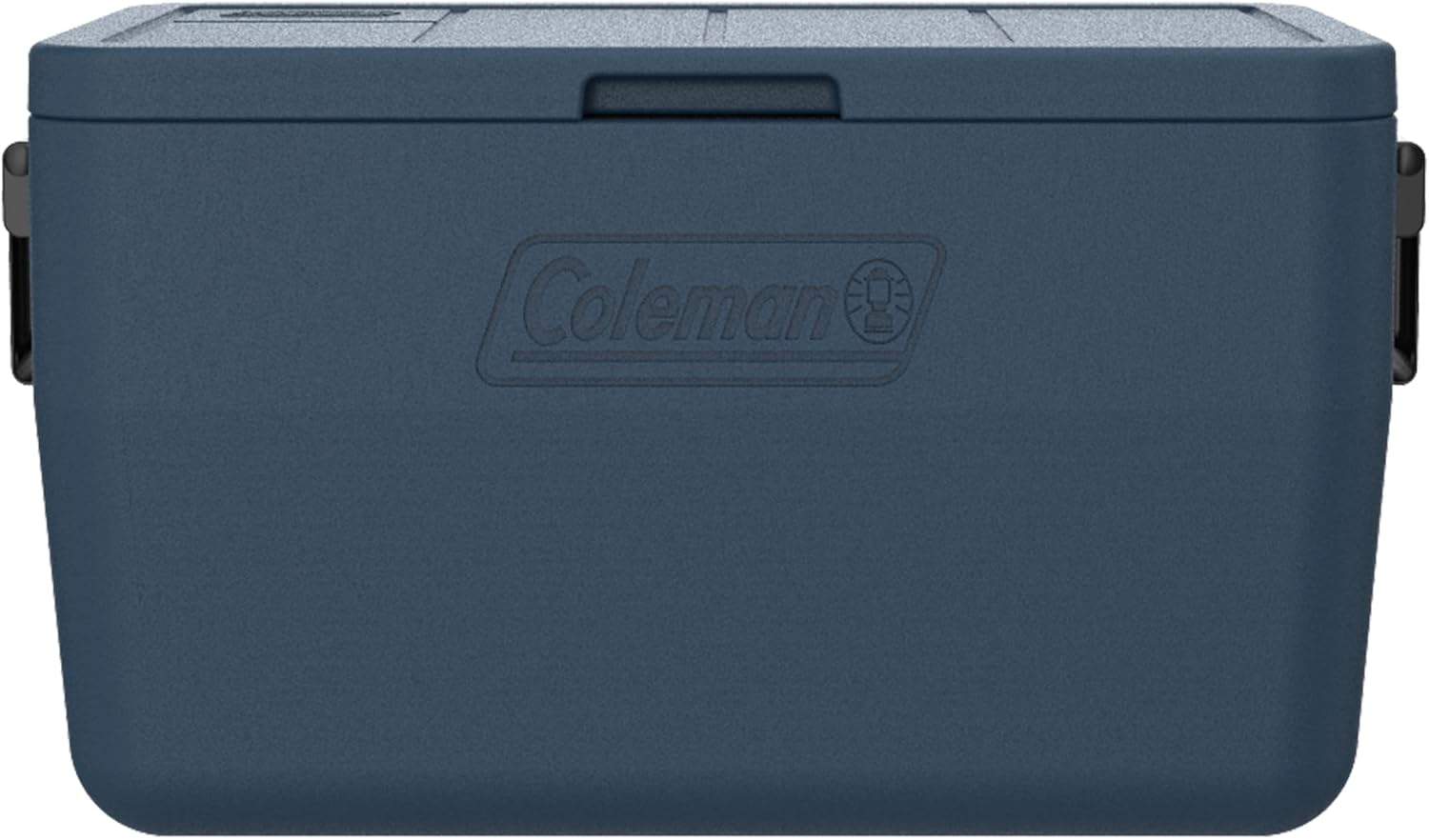
Coleman Chiller 48qt Cooler
Standard hard cooler rated for five days of ice retention, holds 31 cans with ice, and seats two adults on the reinforced lid.
Why we love it
- Ice rated to last 60 hours through hot weekend trips
- Lightweight at 7.6 lbs empty, easy to carry loaded
- Lid supports 200 lbs, doubles as extra seating
Pros
- TempLock foam insulation rated to 60 hours
- Fits 2-liter bottles standing upright inside
- Swing-up handles fold flat for vehicle storage
- Smooth surfaces wipe clean after use
- Made in USA with 1-year limited warranty
Cons
- Standard hard cooler, not rotomolded
- Lighter weight means thinner insulation walls

Igloo Trailmate Journey 70Qt Wheeled
Wheeled 70-quart hard cooler built to handle hot high-desert weekends and campground loops without tipping or leaking.
Why we love it
- Ten-inch never-flat wheels roll over gravel
- Holds ice through a full weekend in heat
- Horizontal handle pulls 50% easier when full
Pros
- Never-flat ten-inch wheels
- Telescoping dual-trigger steel handle
- Holds 112 cans, seats two kids
- THERMECOOL foam insulation
- Made in USA
Cons
- Weighs 35.8 pounds empty
- Difficult to carry across rough terrain
What Matters Most When Sand Gets Involved
Picking best coolers for the beach is different from buying one for a campsite or your truck bed. Sand gets into everything, salt spray corrodes hinges and drain plugs, and you open the lid constantly because people want drinks every ten minutes in the heat. The gap between a lab test and what actually survives a Saturday at the shore is wider than most reviews admit. After fourteen years running coolers through the Pacific Northwest, I have learned what fails first at the beach and what holds up.
Most coolers fail not because the insulation quits, but because the hardware does. Latches crack from the cold, drain plugs corrode or leak in your truck bed, and zippers on soft coolers get jammed with sand. What you really need is a box that forgives frequent opening, handles saltwater rinse-off, and does not require a marine restoration project after one weekend.
Soft Cooler or Hard Box
Soft coolers and cooler bags keep things cold for about 24 hours with proper ice and stay lighter to carry down the beach. The trade-off is that zipper quality matters more than insulation thickness. A soft cooler can fail at the zipper before the walls ever give up. Maelstrom 30-Can Soft Cooler Bag uses seamless ultrasonic welding and multi-layer PEVA construction to handle sand and saltwater spray without leaking at the seams. Hard boxes stay cold longer (up to 60 hours with the right setup) but weigh more and need a place to sit in your vehicle. Choose soft if you are hiking down to the water or carrying it more than a short walk.
Drain Plug Design and Corrosion
Beach environments accelerate corrosion. A plastic drain plug works fine inland but can stiffen and crack from salt exposure. Coleman Chiller 48-Quart Cooler uses a simple threaded plastic design that is easy to service but will corrode if you do not rinse and dry it after use. Stainless steel plugs last longer but cost more. Check the drain mechanism before you buy, because a stuck plug after one salty weekend means meltwater pooling inside and bacteria growing in the standing water.
Handle and Carry Comfort
A soft cooler with padded straps carries better when you are hiking across sand. Hulongo Large Cooler Backpack has adjustable padded straps and two insulated compartments so wet drinks do not soak your snacks. Hard coolers with swing handles work well for vehicle transport but become a two person lift when full, and most people end up dragging them through sand rather than carrying them. If the beach parking is far from the water, test the carry method before committing.
Gasket and Lid Seal
Salt spray and sand get into gasket channels. A cooler with a simple flat gasket is easier to clean than one with a complex interlocking design. Run fresh water through the gasket after each trip and leave the lid open to dry. If the gasket gets stiff from salt exposure, soaking it in warm water with a little vinegar usually restores the seal. A bad gasket costs ice time faster than any insulation problem will.
The Soft Cooler Advantage for Beach Days
Hours matter more than days at the beach. Most beach trips are five to eight hours, and a soft cooler that keeps things cold for 24 hours will handle that easily. The lightweight design and packable shape mean you can fold it up and throw it in the truck bed without taking up fixed space all season. Sand does not stick to soft-sided coolers the way it does to textured hard plastic, so cleanup is faster. The downside is that soft coolers are not bomb-proof. Rough sand edges can puncture the outer fabric if you drag it, so carry it when you can rather than dragging.
Hard coolers with wheels are the exception if your beach trip involves rolling heavy supplies down a gravel lot or boardwalk. Igloo Trailmate Journey 70-Quart Wheeled Cooler has 10-inch never-flat wheels designed to handle sand and uneven ground. The horizontal dual-trigger steel handle gives real leverage, which matters when you are pulling 70 quarts down a beach path. The wheel assembly adds weight and complexity, so this pick is only worth it if you are hauling for groups or extended stays.
Materials That Survive Salt and Sand
Stainless steel hardware lasts longer than zinc-plated or bare plastic in saltwater environments. Check the hinges, latches, and drain plug material before buying. A cooler with mostly plastic hardware can work fine for freshwater trips but will show white corrosion or stiffness after a few beach weekends. Some rotomolded hard coolers use marine-grade silicone gaskets designed for saltwater, which cost more but skip the annual replacement cycle.
The outer shell material matters too. UV-resistant polyethylene or nylon holds color better than cheap foam-backed cloth that fades and gets brittle. After eight years of sun exposure, a quality outer shell still feels flexible while a budget option becomes chalky and stiff. Sand does not ruin the cooler, but sun exposure does if you leave it in the truck bed between trips.
Application: Setting It Up to Last the Day
Pre-chill your cooler the night before. Fill it with ice at home if you can, so the walls are already cold when you add your drinks and food at the beach. Block ice lasts longer than cubed ice and handles the heat better. If you must use cubed ice, pack it denser so it collapses slower as it melts. A cooler filled halfway with ice and half with contents will stay cold longer than one where you skimp on ice to fit more drinks.
Keep the cooler out of direct sun and wind. Sand is an insulator in a bad way because it traps air, so do not bury your cooler in sand thinking it will stay cold. Shade from an umbrella or tent works far better. Every time you open the lid, cold air escapes and the surrounding air warms the contents. Discipline on the lid is more important than wall thickness at the beach. Designate one person as the cooler keeper so you do not have four people opening and closing it all afternoon.
Rinse the cooler with fresh water before you leave the beach. Salt residue left inside will corrode hinges and gaskets over the winter. If you use it in saltwater environments regularly, do a thorough rinse with a hose and leave the lid open to dry completely. A dry cooler stored in shade will last years longer than one left damp in a garage.
Salt spray corrodes hardware faster than any insulation fails. A simple rinse after every trip cuts maintenance work in half.
Tips
- Fill with ice the night before. A pre-chilled cooler stays cold longer because you are not wasting cold energy bringing room-temperature walls down to freezing.
- Use block ice or dense-packed cubed ice. Loose ice collapses quickly and leaves gaps where warm air circulates. Pack it tight against the sides.
- Rinse the drain plug weekly during beach season. Salt crystallizes inside the threads and can cause sticking or corrosion that makes it impossible to empty the cooler.
- Store it with the lid cracked open. A completely sealed cooler traps moisture, which leads to mildew and odor. Air circulation prevents bacterial growth.
- Keep it shaded and out of wind. Direct sun and moving air both accelerate melting. Position it with your back to the sun or use an umbrella.
- Check the gasket for sand before closing the lid. A single grain of sand prevents a full seal, and you will lose ice time faster than you think.
Open the cooler once per hour instead of constantly, and you will add real hours to ice retention.
FAQ
How long do soft coolers actually keep food cold at the beach?
Around 24 hours with a full load of ice and minimal opening. The moment you start opening it every ten minutes in 85-degree heat, you are down to 12 to 16 hours. Block ice lasts longer than cubed because it melts slower, so fill the bottom half with block and top with cubed for easy access to drinks.
Does the 60-hour ice retention claim really work?
That claim is tested in a lab with the cooler sealed, unopened, in controlled conditions. In real use at the beach with constant opening, expect 24 to 36 hours with a hard cooler and proper ice setup. Pre-chilling the cooler the night before and using block ice both extend that window. Direct sun cuts it in half, so shade matters more than the spec sheet.
What drains faster, a soft cooler or a hard box?
Soft coolers drain better because they collapse as water drains out, which helps the last bit flow toward the plug. Hard coolers trap pockets of water at low points in the floor, and you sometimes need to tilt them to get everything out. This is why a soft cooler is worth considering even if you want the ice retention of a hard box.
Can I use a cooler to keep things warm instead of cold?
Yes, but insulation works both directions. A cooler filled with hot water and sealed will hold heat for a few hours, though not as long as it holds cold. Foam insulation does not care which way the temperature gradient goes. This works fine for keeping soup or coffee warm on a beach morning.
Will sand inside the cooler ruin it?
Sand inside the cooler is annoying but not damaging if you rinse it out at the end of the day. The real problem is sand in the gasket channel or drain threads, where it can cause a leak or prevent the lid from sealing properly. Rinse the entire cooler inside and out before storing, and brush out the gasket groove with a soft brush.
How do I stop mildew from growing in my cooler between beach trips?
Store it with the lid cracked open or removed completely so air circulates. A damp, sealed cooler is an incubator for mold and bacteria. If you already have mildew, soak the interior with a solution of one part white vinegar to three parts water, scrub it with a soft brush, and rinse thoroughly. Sunlight helps kill remaining spores, so leave it open in the sun for an afternoon.




Write Your Review
No reviews yet. Be the first to share your experience!