


ANAGOO Double Hammock with Stand
Freestanding double hammock with steel stand, no trees needed. Solid for backyard lounging with the family, but it's patio furniture, not a camping hammock.
Why we love it
- 500-pound weight capacity for two adults
- Steel stand means hanging anywhere without trees
- Adjustable height chains for custom comfort
Pros
- Freestanding steel stand included
- 500-pound weight rating
- Tool-free setup under 10 minutes
- Adjustable hanging height
Cons
- 36.5 pounds is too heavy for backpacking
- Stand limits portability and packability
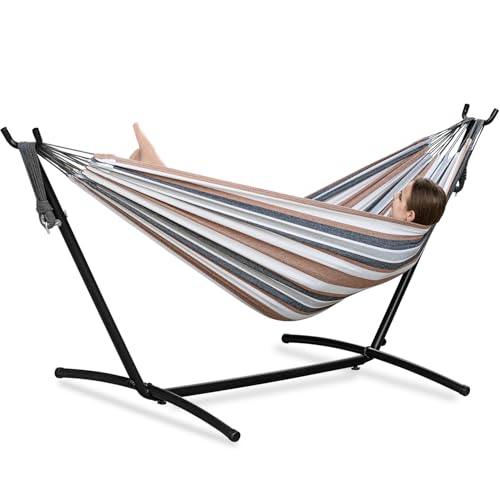
PNAEUT Double Hammock with Stand
Freestanding double hammock with steel stand, no trees needed. Good for yard relaxation, but not designed for backcountry camping.
Why we love it
- 450-pound capacity fits two people easily
- Steel stand sets up anywhere without trees
- No tools required, assembled in minutes
Pros
- Freestanding steel stand included
- 450-pound weight capacity
- Cotton fabric is soft and breathable
- Quick setup without tools
Cons
- Too heavy and bulky for backpacking
- No bug net or tarp for overnight use
How I Tested These Backyard Hammocks With Stand
Best backyard hammocks with stand get real use at our place in Bend over long weekends and lazy summer afternoons. I’ve set up double hammocks with stands on the patio, tested them loaded with two kids and gear, and spent nights in them to feel how the weight distribution works when you’re actually trying to rest. These aren’t backpacking rigs or tree-dependent setups; they’re built to work without having to find the right two trees, which changes everything about how you test them.
- Loading them to capacity: Two kids piling in together, or me and Sarah with a cooler nearby. A 500-pound rating sounds generous until you realize how fast that fills up with real bodies and stuff.
- Checking the stand stability: The frame has to handle shifting weight, twisting, and the way kids move around. A cheap stand tips or sags; a good one stays planted.
- Testing suspension and angle: How the hammock sits matters for comfort. Too flat and you feel the metal bar through your back. Too angled and you slide.
- Inspecting fabric and stitching: After repeated use, seams fray or cotton blend starts to pill. I’m looking at what actually holds up, not what looks good in a photo.
What I judged them on was real backyard use: how stable the stand feels when two people move around, whether the fabric is breathable enough for a long afternoon, how quickly it sets up when you want to use it now, and whether the weight capacity is realistic for your actual family. No scores, just whether it works for how you actually use it.
Buying Guide for Backyard Hammocks With Stand
A stand-supported hammock removes the hardest part of hammocking: finding two trees far enough apart and close enough together. But a stand adds weight and limits where you can use it. What matters most is whether the frame feels solid under load, how much room you actually get, and what you’re giving up in portability.
Stand Stability and Weight Capacity
The stand is what fails first. A flimsy frame wobbles when someone shifts their weight, and a cheap metal bar bends faster than you’d expect. The ANAGOO Double Hammock with Stand 500lbs Heavy Duty uses a reinforced alloy steel frame with integrated balance straps to handle side movement without tipping. The PNAEUT Double Hammock with Stand for Outside sits lower to the ground and spreads the weight with a wider stance, trading some headroom for stability. Both claim solid capacity, but the real test is how steady they feel when two people are actually in them and one shifts weight. With kids, that happens constantly.
Fabric Width and Actual Comfort
A double hammock is only comfortable if there’s real room to spread out. A narrow fabric stretches too thin and sags in the middle, so your back ends up lower than your legs and you feel awkward. The ANAGOO runs 75 inches end to end, which gives couples or two kids space without touching. The PNAEUT uses a tighter cotton weave across a similar length, so it spreads your weight in the center. The difference is subtle but matters on a long afternoon. If you’re planning to nap or read for hours, width and fabric breathability decide whether you wake up sweaty or comfortable.
Setup Time and Portability
A stand-supported hammock defeats itself if it takes an hour to assemble. Both of these set up in under 10 minutes without tools, so you can throw one in the truck for a cabin trip or a backyard upgrade on a Saturday. The ANAGOO includes a carrying case and adjustable chain height, so you can change how high you sit without moving the stand. That matters if you’re sharing it or switching between an afternoon hang and evening use. The PNAEUT is simpler, which also means fewer moving parts to break, but less adjustability. Pick based on whether you want one setup that stays put or the flexibility to dial it in.
What Comes With It
Check whether straps or suspension are included, because that’s an easy way the real cost creeps up. Both of these come with the hammock bed and stand, so you’re not hunting for extra parts. If you’re upgrading an older hammock, that matters. Some models ship stand-only, which saves weight but costs you more upfront if you need the bed too.
Hanging It Right
With a stand, there’s no strap angle to fuss with and no bark damage to worry about. You just set it up on level ground. That simplicity is the whole point. Make sure the ground is reasonably flat, or the weight shifts and the frame can rack. With a long-term setup like a patio hammock, check the footprint and whether it fits where you want it.
Care and Storage
Dry the fabric before you pack it away, especially the cotton blends that soak up moisture and mildew if they’re stored damp. Check the stitching where the fabric meets the frame after a full summer of use, since that’s where stress accumulates. If the stand is metal, a quick wipe of the joints keeps rust from creeping in. Store it indoors or under a cover over winter in wet climates like the Pacific Northwest.
FAQ
Can two people actually sleep in a double hammock at night?
A. In a pinch, yes, but it’s tight. For an afternoon nap or casual lounging, a double works fine. For real overnight sleep, each person is fighting for the center, and you’re both cold without an underquilt. These stand-supported hammocks are designed more for relaxation than for backcountry camping, so the sleep system isn’t built in.
Will the weight capacity hold up if you’re heavier than average?
A. The stated capacity is the manufacturer’s claim under ideal conditions. Two adults plus a kid and a cooler reach that limit faster than it sounds on paper. If you’re pushing toward the top of the range, you’ll feel the difference in how much the frame sags and whether you feel a hard spot in the middle. Pick one that rates higher than your combined weight plus gear.
Do I need a new stand if I already have a hammock bed?
A. Not necessarily. Most double hammock beds fit any stand that matches the width and has the right attachment points. If you’re upgrading the frame, measure your current bed and verify the connection hardware before buying. Some stands are proprietary, and mixing brands can leave you with incompatible gear.
How much space do I need to set one up?
A. A double hammock with stand needs roughly 10 by 8 feet of flat ground, depending on the leg span. Check the footprint before you buy if you’re tight on patio space. If the ground slopes, the frame can twist and lose stability, so level ground matters more than with a tree-suspended hammock.
Can I leave it outside year-round in a wet climate?
A. Not without cover. Rain soaks the cotton-blend fabrics, and moisture gets trapped in the frame joints and corrodes the metal. In Oregon or Washington, pull it under a tarp or into storage when you’re not using it for stretches. A season left out exposed will age it fast.
Is a stand-supported hammock easier to use than a traditional tree hammock?
A. Absolutely, if you have the space for it. No strap angle to calculate, no bark to protect, and no failed search for two trees far enough apart. The trade-off is weight and portability. A tree hammock packs in a stuff sack; a stand takes a truck.




Write Your Review
No reviews yet. Be the first to share your experience!