


RTIC 45 QT Rotomolded Hard Cooler
Thick-walled rotomolded cooler built to handle constant lid-opens and rough trips without leaking or breaking down.
Why we love it
- 2.8-inch foam walls keep ice solid over hot weekends
- Rotomolded construction survives kids, gear, and campground abuse
- Built-in bottle opener and cargo net for quick camp setup
Pros
- Rotomolded one-piece construction
- 2.8 inches of closed-cell foam insulation
- Integrated bottle opener and cargo net
- Doubles as a bench or step stool
- Fits up to 60 cans
Cons
- Heavy at 29.5 pounds empty
- Premium price point around $240
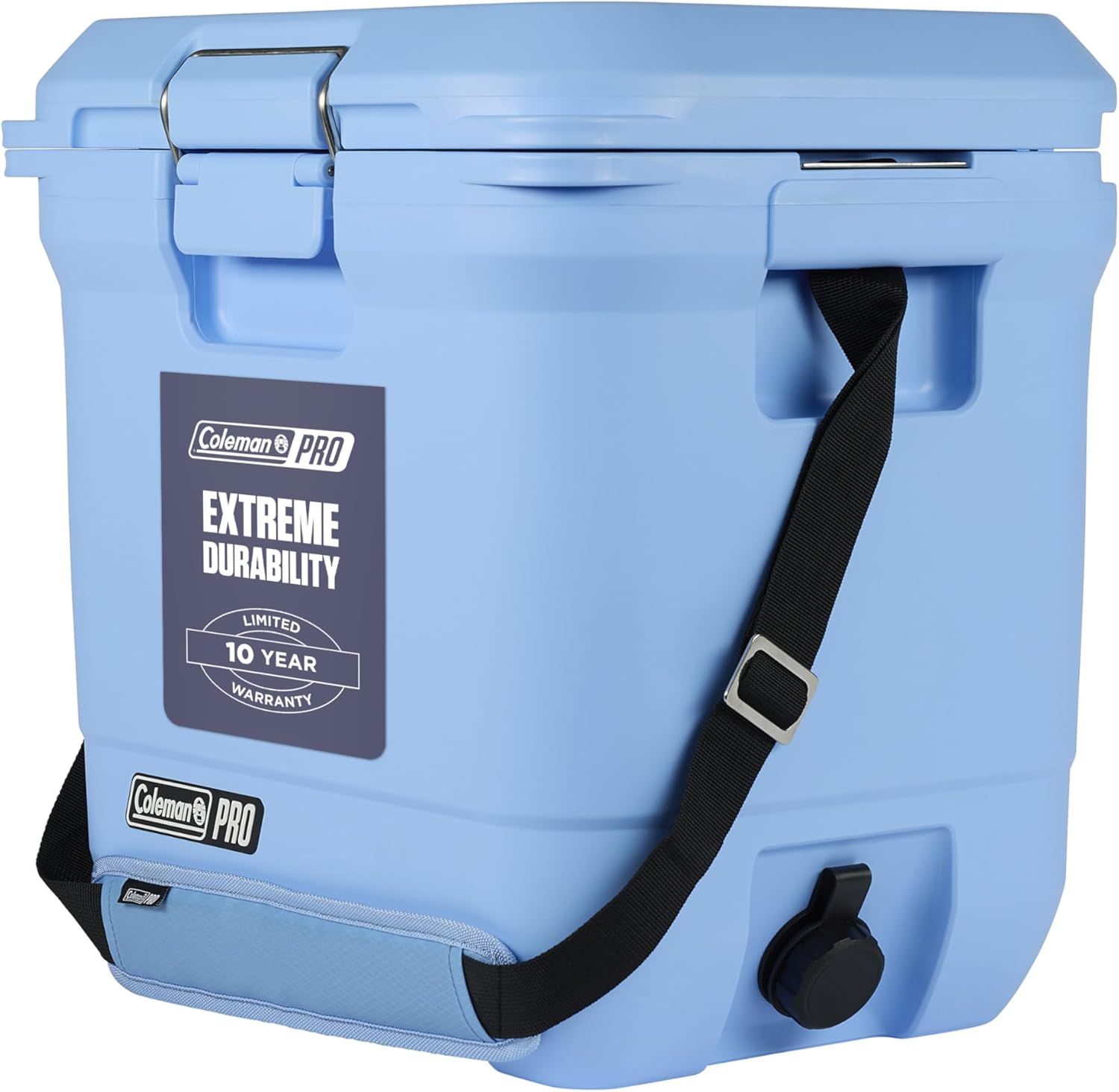
Coleman Pro 25Qt Hard Cooler
Twenty-five quarts of extra-thick insulation that actually keeps ice through a hot high-desert weekend without weighing you down.
Why we love it
- Two-inch walls hold ice three days in real heat
- Padded strap makes a full cooler bearable to carry
- Fifteen percent lighter than rotomolded competitors
Pros
- Extra-thick two-inch insulation walls
- Stainless steel latch opens one-handed
- Attached oversized drain plug stays put
- Have-a-seat lid handles actual weight
- Padded carrying strap for loaded trips
Cons
- Heavy when loaded with ice and food
- Pricey for a standard hard cooler

YETI Tundra 45 Hard Cooler
Built to survive a hot weekend with two kids opening the lid constantly and still make the campground loop carry without complaint.
Why we love it
- Three inches of PermaFrost foam keeps ice solid through heat
- Rotomolded construction shrugs off rocks, minivans, and chaos
- Freezer-grade gasket locks cold in when lids actually get slammed
Pros
- Bear-resistant certified design
- Freezer-grade gasket seal
- Rotomolded armored construction
- T-Rex latches stay locked tight
- NeverFail hinge system
Cons
- Heavy when loaded with ice
- Not wheeled for long hauls

Landworks 45QT Rotomolded Cooler
Heavy-duty rotomolded cooler rated for five to ten days of ice retention, built to handle constant lid openings and rough campground carries.
Why we love it
- 360° freezer gasket keeps cold locked in all weekend
- Rope handles absorb shock when carrying full across camp
- Drain plug empties without tipping or mess
Pros
- 3-inch polyurethane insulation
- 360° freezer-style D-seal gasket
- Marine-grade rope handles with grips
- Dual stainless steel bottle openers
- Non-skid rubber feet, snag-free latches
Cons
- 26.45 lbs empty, heavier when full
- Pricey for a family on a budget

Ninja FrostVault 45Qt Wheeled Cooler
Wheeled cooler with a separate dry zone that keeps food at fridge temps without ice contact, plus all-terrain wheels that actually roll through a campground.
Why we love it
- Dry zone keeps food cool without sitting in ice
- All-terrain wheels handle gravel and dirt roads
- 45-quart capacity fits a family weekend of food
Pros
- FrostVault dry zone keeps food under 40F
- Puncture-resistant all-terrain wheels
- 45-quart capacity holds 68 cans
- Up to 3 inches of insulation
- Lockable lid and bear-resistant ready
Cons
- Pricey for a wheeled cooler
- Heavy when fully loaded
What a 45-Quart Box Actually Holds With Ice
A 45-quart cooler is one of the most deceptive sizes on the market. The number sounds generous until you load it for a real trip and realize that 45 quarts includes the space your ice occupies. With a 2:1 ice-to-contents ratio (the standard for multi-day trips), you are looking at closer to 15 usable quarts for food and drinks. That difference matters when you are packing for a family weekend in the Cascades or a week-long base camp.
The picks above range from wheeled units with dry storage zones to pure rotomolded tanks designed for extreme durability. Each approaches that size differently, and choosing wrong means either carrying a cooler that is heavier than it needs to be or one that runs dry of ice on day three. This section walks through what separates them.
Insulation Thickness and Build Material
Rotomolded construction means the cooler is built as one piece with insulation sandwiched into the walls. The Landworks 45QT and YETI Tundra 45 both use this method with around 3 inches of polyurethane foam, which is why they hold ice longer in direct sun. A Landworks 45QT Rotomolded Cooler advertises 5 to 10 days in shade and 3 to 4 days under direct sun. That claim is rooted in real engineering, not garage testing. Rotomolded boxes weigh more empty (around 26 to 29 pounds) because the insulation is thicker and denser. If you are hauling this from your vehicle to a campsite or wheeling it across gravel, that weight adds up.
Gasket Quality and Latch Hardware
The seal between the lid and body determines how long meltwater stays cold. A freezer-style gasket (D-seal on the Landworks, PermaFrost on the YETI) compresses when the lid closes and creates a cold pocket at the perimeter. Budget coolers use simpler seals that let air exchange happen faster. The latch hardware matters too. Rubber latches absorb the shock of a hard close and resist splitting in cold mornings. Stainless steel latches on the Coleman Pro and mechanical T-Rex latches on the YETI hold tight without the brittleness of cheap plastic.
Drain Plug Design and Accessibility
A poorly designed drain plug leaks in a packed minivan. An oversized one with a tether (not loose in the bottom of the cooler) saves hours of frustration. The Landworks includes a recessed fast-drain plug that sits flush with the exterior and does not snag on gear. The RTIC 45 QT uses a simpler design but still keeps the plug from getting lost. Drain access matters too. If the plug is blocked by a lip or corner, you cannot drain it fully without tipping the entire box, and that is when meltwater spills into your sleeping bags.
Can Capacity and Real-World Packing
Manufacturers state can capacity with ice empty and no food. The RTIC 45 QT fits 60 cans, the Ninja FrostVault 45qt holds 68 cans, but neither of those numbers reflects an actual camping trip. Once you load ice, sandwiches, and meat for four people, you lose about 40 percent of that theoretical space. The Ninja’s separate dry storage zone changes the math by keeping food above the ice line, so you do not have to dig through cold meltwater to grab a bag of chips. The trade-off is wheels add weight and a higher price point.
The gap between a five-day ice claim and what survives a hot weekend with kids opening the lid every ten minutes is the whole story.
Wall Thickness, Hinge Durability, and Field Abuse
A cooler that fails after one season wastes money and leaves you stranded. Rotomolded walls distribute stress evenly, so a box that survives a drop from a truck bed stays functional for ten years. The Coleman Pro uses injection-molded construction with walls up to 2 inches thick. This is 15 percent lighter than rotomolded coolers of the same capacity, which matters if you are the one carrying it solo. The trade-off is a shorter lifespan for the latch mechanism and potential cracking if the cooler is dropped hard or exposed to extreme temperature swings.
Hinges take the most abuse. A cheap hinge splits when the lid is slammed in a cold snap. Heavy-duty rubber hinges (like those on the YETI Tundra 45) flex instead of fracturing. If you are using this cooler year-round or in backcountry conditions, the hinge is worth the premium cost. Test the lid action before buying if you can. It should open and close smoothly without binding or rattling.
Check for stress points where the handle meets the body and where the drain plug housing is glued or bolted in. These are the failure zones in a heavily used cooler. Rotomolded units have fewer seams, so fewer potential leak points. Injection-molded coolers have more assembly, which means more places for glue to fail or bolts to loosen over time.
Weight When Loaded and Vehicle Fit
A 45-quart cooler weighs about 26 to 30 pounds empty. Add 30 to 40 pounds of ice and food, and you are carrying 60 to 70 pounds. For one person moving it from the truck to a campsite, that is manageable. For two people wrestling it into a minivan with the back doors open, it becomes a real decision point. The Ninja FrostVault 45qt has wheels and a handle, which transforms it from a heavy box to a piece of luggage. If your campsite has a gravel road, those all-terrain wheels are gold. If you are backpacking or paddling, the wheels are dead weight you will regret carrying.
Measure your vehicle’s storage space before committing to a 45-quart cooler. The YETI Tundra 45 is 25.5 inches long, 16 inches wide, and 15.5 inches high. A minivan can fit one along the back wall, but adding a second cooler or a large ice pack becomes tight. The Ninja’s wheels add 2 to 3 inches to the footprint. Know your constraints. A size that does not fit your truck bed or trunk becomes a constant frustration, and you will end up buying a second, smaller cooler anyway.
The right size is the one you actually load and use, not the one that theoretically holds enough.
Pre-Chilling, Ice Type, and Meltwater Discipline
No cooler works properly if you do not pre-chill it the night before. Fill it with ice, leave it in the garage, drain it in the morning, then repack it for your trip. This one step adds a full day to ice retention across any cooler type. Block ice lasts longer than cubed ice because it has less surface area. A 10-pound block stays frozen longer than ten pounds of cubes in the same cooler. The catch is that block ice does not nestle around food and drinks the way cubes do, so some coolers perform better with one type or the other.
Meltwater discipline separates people who get a week out of their ice from people who see it gone by day four. Leave the drain plug in place and let the cooler sit in its own cold water. That water is part of the cooling system. If you drain it every morning, you lose insulation. The only exception is fishing trips where saltwater or blood gets into the box. In that case, drain it clean and reload with fresh ice.
Keep the cooler in shade and out of direct sun. A rotomolded cooler in full sun will sweat and lose cold faster than one parked under a tree or in a truck bed covered with a blanket. Sun exposure can cut ice retention by 30 to 40 percent. Discipline about lid opening matters too. Every time someone cracks the lid, warm air rushes in and cold air escapes. A family with two kids learning to grab their own snacks can cycle through a week’s worth of ice retention mistakes in one day.
Tips
- Pre-chill the night before. An unchilled cooler pulls energy from your ice just reaching equilibrium. Starting cold saves days of ice life.
- Use block ice as the base layer. It lasts longer and creates a solid cold foundation for cubed ice layered on top.
- Keep the drain plug in place during multi-day trips. Meltwater is an insulator. Only drain it if contamination forces you to.
- Store it with the lid propped open between trips. A sealed empty cooler traps moisture and encourages mildew. Crack the lid an inch and store it in the shade.
- Inspect the gasket before loading. Debris or mold in the seal compromises performance. Wipe it clean with a damp cloth every time.
- Keep it shaded and cover it on the truck bed. A reflective tarp over a cooler in direct sun extends ice life significantly.
FAQ
Does a five-day ice retention rating hold up with kids opening the lid constantly?
No. That rating assumes the cooler is packed, closed, and left sealed in a lab. Real camping involves opening the lid 20 to 40 times a day. Plan on losing one to two days of rated performance with a family. Discipline about lid opening (designate one person to grab items) helps more than buying a thicker cooler.
Can I use a 45-quart cooler for a week-long trip?
Yes, but only with pre-chilling, block ice, shade discipline, and realistic packing. A Landworks or YETI held on a week-long trip with 2:1 ice-to-contents will make it, especially in spring or fall when ambient temperatures are cooler. In summer, plan to resupply ice on day four or five.
Is rotomolded really worth the extra weight?
If you use the cooler 20 or more times a year, yes. The hinges and latches last longer. The gasket stays airtight for years. If you camp twice a year, an injection-molded cooler saves money and weight without real trade-offs for casual use.
What happens if I leave meltwater in the cooler overnight?
It stays cold and extends ice life the next day. Drain it only if it has blood, fish slime, or salt water in it. Fresh meltwater is part of the system.
Can I leave a 45-quart cooler outside in winter?
Yes, but freezing and thawing cycles can crack injection-molded coolers over time. Rotomolded units handle freeze-thaw better. Store any cooler with the lid open to prevent ice buildup inside.
Do drain plugs really leak, or is that just cheap coolers?
Even good coolers leak if the plug is loose or the sealing washer is missing. Check the plug before every trip and carry a spare washer. Tethered plugs that stay attached to the cooler prevent loss and reduce leaks.




Write Your Review
No reviews yet. Be the first to share your experience!