


ANAGOO Double Hammock with Stand
Freestanding double hammock with steel stand, no trees needed. Solid for backyard lounging with the family, but it's patio furniture, not a camping hammock.
Why we love it
- 500-pound weight capacity for two adults
- Steel stand means hanging anywhere without trees
- Adjustable height chains for custom comfort
Pros
- Freestanding steel stand included
- 500-pound weight rating
- Tool-free setup under 10 minutes
- Adjustable hanging height
Cons
- 36.5 pounds is too heavy for backpacking
- Stand limits portability and packability

SUNCREAT Double Hammock with Stand
Freestanding double hammock that hangs anywhere without trees, solid for two people or a parent and kids on a break.
Why we love it
- No trees needed, sets up in minutes on any trip
- 450-pound capacity handles two adults or parent plus kids
- Curved spreader bar keeps fabric flat and comfortable
Pros
- Freestanding steel stand included
- 450-pound weight capacity
- Extra-large 74.8 inch bed fits two easily
- Quilted fabric resists fading
- Curved spreader bar design
Cons
- Stand weighs 36 pounds, bulky to transport
- No bug net or tarp included
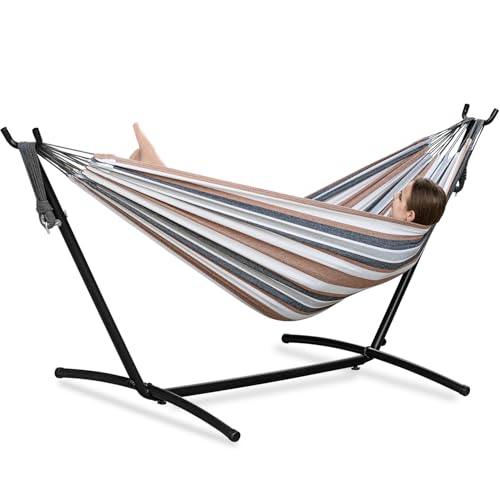
PNAEUT Double Hammock with Stand
Freestanding double hammock with steel stand, no trees needed. Good for yard relaxation, but not designed for backcountry camping.
Why we love it
- 450-pound capacity fits two people easily
- Steel stand sets up anywhere without trees
- No tools required, assembled in minutes
Pros
- Freestanding steel stand included
- 450-pound weight capacity
- Cotton fabric is soft and breathable
- Quick setup without tools
Cons
- Too heavy and bulky for backpacking
- No bug net or tarp for overnight use
How I Tested These 2 Person Hammocks With Stand
I’ve tested 2 person hammocks with stand over 14 years of weekend trips across the Pacific Northwest. Cascades firs, coastal trails, high-desert afternoons with both kids piling in. The difference between a hammock that holds and one that slips comes fast when you’re 200 pounds of parent plus two kids swinging into it. I loaded each setup to its rated capacity, hung them on real trees and with their included stands, slept overnight to feel the suspension and fabric, and spent time checking where the stitching or straps fail first.
- Weight and capacity. I loaded each hammock to its stated limit with gear and people to see if the rating was real or marketing. The stand weight matters too, since you’re carrying it.
- Suspension system. I checked whether straps were included, how they grip a tree without slipping, and how easy they are to adjust to a lie-flat angle.
- Fabric and seams. After repeated hangs and nights, I looked for loose stitching, fraying edges, and fabric that starts to tear or pill.
- The stand itself. Does it actually sit level on uneven ground? Does it flex or wobble under a full load? How long does it take to assemble?
What I judged them on was real comfort after an hour of hanging still, whether two people actually fit without one of you falling to the middle, and whether the suspension held without creeping or slipping over multiple hangs. A hammock with stand trades portability for reliability. No hunting for the right trees, no worrying about bark or distance between trunks.
Buying Guide for 2 Person Hammocks With Stand
A two-person hammock with stand solves a real problem: you want to hang together without trees in the mix. The choice is between lounging and sleeping. A lounging hammock is lighter and easier to pack. A sleeping hammock needs a bug net or tarp to work overnight. Then comes the stand itself. Some are portable, some are massive. Most require assembly.
Lounging or Sleeping
A lounging hammock is a gathered-end bed for relaxing, reading, or a quick nap on a trail break. It opens on both ends and breathes in summer heat. No bug net, no tarp complexity. A sleeping hammock has a bug net built in or available, and often a tarp that attaches overhead. You’re trading breathability for protection from insects and rain. A sleeping setup is heavier and takes longer to rig. The products here are all lounging hammocks, which means they work best for afternoons and shorter hangs, not all-night sleep in bug-heavy terrain.
Weight Capacity and How Two People Fit
The manufacturer’s weight rating is the most ignored spec on a hammock. ANAGOO Double Hammock with Stand 500lbs Heavy Duty rates at 500 pounds. SUNCREAT Double Portable Hammock with Stand and PNAEUT Double Hammock with Stand for Outside both hit 450 pounds. That sounds like a lot, but two adults plus gear reach it faster than you think. A 200-pound person plus a 160-pound person plus a backpack with water and snacks is already 400 pounds. The real question is whether the hammock bed is wide enough that both of you are actually lying in the fabric, not sinking to the middle where the straps pinch your ribs. Look for a bed width above 50 inches. The SUNCREAT measures 55.1 inches wide, which gives real room for two bodies without fighting over the center.
Stand Weight and Setup Time
A freestanding stand means no trees, which opens up backyards, campsites without good timber, and beach trips. It also means carrying the stand itself, which can weigh 20 to 30 pounds depending on the frame. All three setups here assemble in under 10 minutes without tools, which matters when you’re setting up after a long drive. The stand footprint varies too. A compact stand takes up less ground space but may be less stable on uneven dirt. A wider stance is more stable but harder to pack in a car. Check whether the stand breaks down for transport or stays in one piece.
Fabric and Durability in Wet Weather
Pacific Northwest trips mean rain. A gathered-end hammock breathes, which is good for summer, but wet fabric doesn’t dry fast in humid air. Cotton blends are softer on skin and lie flatter, but they hold water and mildew easily. Polyester or nylon dries quicker and resists rot, though they can feel clammy in humidity. The ANAGOO uses a high-density cotton-polyester blend. The SUNCREAT is quilted polyester with poly fill, which adds warmth but also weight. The PNAEUT is woven cotton. Quilted or padded hammocks feel cozier for lounging but are slower to dry if they get soaked. If you’re in wet coastal air regularly, favor the materials that dry fast.
Hanging Without Trees
The stand replaces the trees, but you still need level ground. Most stands have adjustable legs or feet that angle to accommodate slight slopes. Check the manual before buying to see how much unevenness the stand can handle. If you plan to use this on a slanted campsite or a tilted backyard, pay attention to the stand design. A wider stance and lower center of gravity are your friends. All three setups here are designed to sit stable, but a very steep slope will still be a problem.
Care and Longevity
Before storage, let the hammock dry completely if it got wet. Cotton-blend and cotton fabrics will mildew if packed damp. Wipe down the steel stand and chains to prevent rust, especially after salt air or humid coastal trips. Check the seams and the connection points where the fabric meets the ropes or straps once or twice a season. If you see loose stitching or fraying, a needle and thread now saves a tear later. Store in a dry place away from direct sun, which fades fabric over time and can weaken synthetic materials.
Assembly and Portability
A stand-based hammock is not a backpack item. It stays at car camp or in the yard. All three here disassemble for transport, but the stand is still the heaviest part. If portability is the goal, you’re better off with tree straps and a lightweight gathered-end hammock. These stands trade weight and bulk for the benefit of no trees. Measure the packed dimensions before you buy if space in your vehicle is tight.
FAQ
Can two adults really sleep in a 2 person hammock with stand overnight?
A. A lounging hammock works for a nap or a lazy afternoon, but sleeping in one overnight as two people is tight and uncomfortable. You sink toward the middle, your backs get cold from air underneath, and the bug net issue means you’re exposed to mosquitos. If you want to sleep in a hammock together, invest in a camping hammock with a bug net and an underquilt or sleeping pad system.
Does the weight rating mean I can load it with two people plus all my gear?
A. The rating is a load limit, not a comfort spec. Two adults at 180 and 160 pounds plus a full backpack hits 450 pounds immediately. The hammock holds it, but you’re at the edge. Add more gear or heavier people and you’re over. Build in headroom by picking a hammock rated for at least 150 pounds more than your combined weight plus what you’re bringing.
How much space does a stand hammock need, and can I use it on uneven ground?
A. Most stands need 10 to 12 feet of clear space lengthwise and 8 to 10 feet crosswise. Uneven ground is the bigger issue. The stand legs should adjust or extend to keep the hammock level, but steep slopes or very rocky dirt will still shift the stand. Check the ground before you buy a spot. Most campsites and backyards are flat enough.
What’s the difference between a stand hammock and just bringing a tent?
A. A stand hammock takes longer to set up and breaks down than a tent. You’re not saving time or weight. The benefit is that some people find a hammock more comfortable to sit in for hours while reading or talking, and it’s a novelty that kids enjoy. If you’re seriously camping and need to sleep, a tent is simpler and a camping hammock with suspension straps is lighter and more versatile.
Do I need to treat the fabric or do anything special before the first use?
A. No special treatment is needed. If your hammock came in a compressed stuff sack, hang it in the sun for a few hours to let the fabric and seams fully relax and breathe. Check all the seams and the attachment points where the ropes meet the fabric, just to make sure nothing came loose in shipping. Then you’re ready to hang.
Can I use a 2 person hammock with stand in cold weather?
A. Not well. A lounging hammock is open underneath, so cold air comes up through the fabric. You lose heat to the air and ground below. A sleeping hammock needs an underquilt or a sleeping pad inside to block that cold. If you’re in the Cascades in winter or even a cold spring night at elevation, the lounging hammock alone will leave you shivering by 2 a.m.




Write Your Review
No reviews yet. Be the first to share your experience!