


Pro Venture 12x9 Hex Rain Fly
Lightweight hex tarp that covers a hammock and gear in heavy rain, packs small enough to always bring.
Why we love it
- Hex shape sheds water from multiple angles
- 1.8 lbs packed fits in any backpack side pocket
- Six tie-down points anchor fast between trees
Pros
- PU 3000 ripstop nylon resists tears
- Includes guy lines and aluminum stakes
- Asymmetrical hex design maximizes coverage
- Packs into included waterproof stuff sack
Cons
- Requires a hammock and straps to use
- No temperature rating for insulation

onewind 12x10ft Hammock Tarp
Lightweight rainfly with door system for hammock camping, versatile enough for season-to-season use and family trips.
Why we love it
- Door flaps seal out weather or fold open
- 1.8 lbs keeps pack light for backcountry
- 11 tie-outs handle any tree or terrain
Pros
- Overlapping door system
- Ultra-lightweight at 1.8 lbs
- 4000mm water-resistant coating
- 11 reinforced tie-out points
- No-knot setup with included hardware
Cons
- Requires hammock and straps separately
- Tarp-only system, no insulation below

Wise Owl Outfitters Hammock Rain Fly
11-by-9 tarp that actually sheds rain and packs light enough to throw in with a hammock or tent setup for weekend trips.
Why we love it
- Covers hammock plus gear in downpour
- 26 ounces keeps backpack weight sane
- Stakes and lines come in the bag
Pros
- Taped seams stay waterproof in rain
- 3000mm water pressure rating holds up
- Generous 11x9 coverage for two hammocks
- Includes stakes, lines, and carry sack
- Light enough for overnight trips
Cons
- Need to buy tree straps separately
- Gray color shows dirt fast on trips
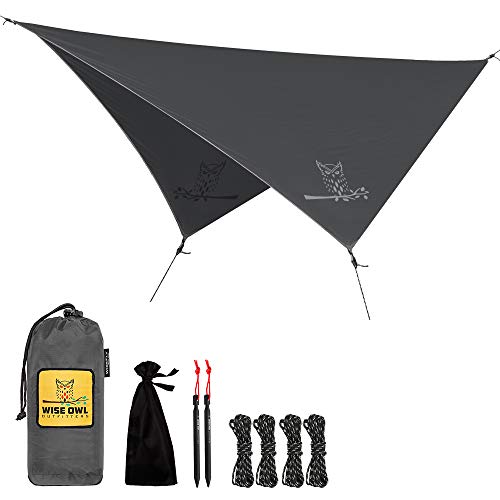
Wise Owl Outfitters Hammock Rain Fly
Lightweight tarp that shields a hammock setup from rain and sun, packed with the straps and stakes you actually need.
Why we love it
- 18.9 oz packs small, doesn't weigh down a family trip
- Guy lines and stakes included, no extra gear to buy
- 11x9 ft coverage fits a hammock plus room for gear
Pros
- Taped seams and PU coating shed rain reliably
- All hardware included in the box
- Lightweight accessory for hammock systems
- Waterproof carry bag keeps it dry between trips
Cons
- Requires a hammock and straps to function
- 3000 mm rating adequate for rain, not extreme weather
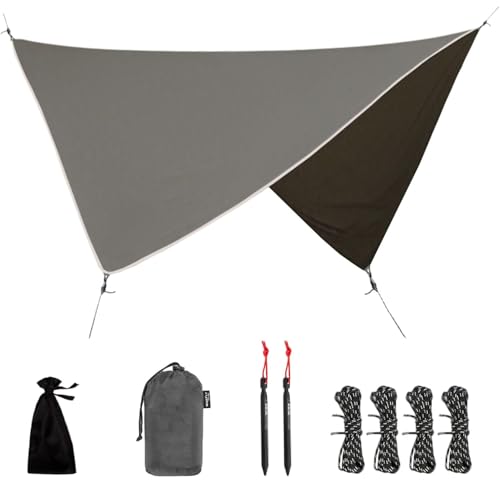
Winkaura Hammock Tarp 11x9 ft
Lightweight rain tarp sized right for camping hammocks, with taped seams and stakes included for quick setup on the trail.
Why we love it
- Stakes and guy lines included, ready to hang
- Taped seams keep water out in Pacific Northwest rain
- Lite version at 18.9 oz stays packable for backpacking
Pros
- Taped seams with 3000mm PU rating
- Aluminum stakes and guy lines in the box
- Two weight options for different trips
- Ripstop nylon holds up on rough bark
Cons
- No hammock included, tarp only
- 11x9 ft coverage is snug for two hammocks side by side
How I Tested These Best Hammock Tarps
Best hammock tarps get strung up on real trips, not backyard photo shoots. I’ve hung these over my hammock on Cascades trips, coastal overnighters where the rain came sideways, and high-desert afternoons where the sun felt relentless. Testing spanned 14 years of family camping, from quick trail breaks to multi-night backpacking stretches where weight matters and setup speed keeps the kids from getting restless.
What I actually checked:
- Water shedding in heavy rain. A tarp that works in a drizzle means nothing. I tested these in Pacific Northwest downpours, watching how water beads or pools at the seams and corners.
- Setup time and complexity. A tarp that takes 20 minutes to rig while your hammock already hangs is dead weight. I timed setup, tested the guy lines under tension, and checked whether the stakes stayed put in different soil.
- Packed weight and size. These come in the pack, so they weigh what they weigh. I confirmed the claimed packed dimensions against what actually stuffs into a backpack pocket.
- Coverage and pitch versatility. A tarp 11 feet wide leaves you exposed at the sides if the wind shifts. I tested multiple rigging angles to see how much real protection you actually get.
- Durability after repeated hangs. Ripstop fabric and taped seams matter less if the stitching splits or the attachment points tear. I checked these after weeks of use, not just after one outing.
What mattered most was whether the tarp stayed dry overnight with two kids and their gear tucked underneath, whether the suspension took the load without slipping, and whether it packed small enough to make the trip feel lighter instead of heavier.
Buying Guide for Best Hammock Tarps
Choosing the right tarp for your hammock setup depends on what kind of trips you take and how much weather protection matters. A tarp rated for backpacking might leave you cold if you sleep in a hammock regularly. The wrong size or weight will either sit at home unused or wear you out carrying it.
Coverage Size and Pitch Options
Size matters more than the spec sheet suggests. An 11 by 9 foot tarp sounds spacious until you hang it and realize the corners pull up when you angle the guy lines to keep rain off the hammock. The Pro Venture Waterproof Hammock Rain Fly measures 12 feet by 9 feet with an asymmetrical hex design, which lets you pitch it multiple ways depending on wind direction and how much clearance you need around the hammock. That extra foot of length makes a real difference when coastal storms come from the side. The onewind 12×10ft Ultralight Camping Hammock Tarp adds a full foot of width at 12 by 10, and includes overlapping door flaps that let you seal the ends completely or fold them open on calm nights. If you mostly camp in the high desert with afternoon sun and light rain, an 11 by 9 foot tarp handles it fine. For extended Pacific Northwest trips where the weather turns serious, the extra coverage pays for itself in dry sleep.
Weight and Packed Size for Backpacking
Ultralight backpackers count ounces. A tarp that weighs 26 ounces adds up when your base system already pushes 30 pounds. The Pro Venture comes in at 1.8 pounds and packs into a stuff sack measuring just 10 by 5 by 5 inches, which stuffs into a pack corner without complaint. The onewind tips the scale at 1.8 pounds as well, but its silnylon fabric (1.1 ounce, 20 denier) and 4000mm water pressure rating mean you get serious durability in a lighter package. If you’re car camping or doing weekend trips where a few extra pounds don’t matter, the heavier tarps like the Wise Owl standard version at 26 ounces work fine. If every ounce counts, silnylon costs more upfront but saves weight and packs smaller.
Setup Complexity and Accessories Included
What comes in the bag matters. The Hammock Tarp – Rain Tarp for Camping Hammock Tent includes six 10-inch guy line cords, four aluminum tent stakes, and a waterproof carry bag for under $20. That’s entry-level, and it works, but the guy lines are short and the stakes are light enough that they pull out in hard ground. The Pro Venture and onewind both include adjustable tensioners and carabiners, which let you fine-tune the pitch without retying knots. The onewind adds an extra layer with its overlapping door system, four carabiners with cordage already attached, four aluminum guy line adjusters, and a double-ended stuff sack. More accessories mean faster setup, but also more to track and more weight. If you’re learning, start with the basic kit. If you’ve hung tarps a hundred times, the adjustable setup saves frustration in the dark.
Water Rating and Seam Integrity
Ripstop nylon with taped seams holds up longer than uncoated fabric. Most of these tarps are rated 3000mm water pressure, which handles moderate to heavy rain. The onewind steps up to 4000mm with its silnylon construction, which sheds water faster and keeps the fabric from feeling clammy in damp conditions. A 3000mm rating is plenty for most trips, but if you sleep in a hammock regularly and live somewhere wet, the 4000mm backing feels like insurance. Check that the seams are actually taped, not just stitched. A stitched seam without tape will eventually leak where the needle punched through.
FAQ
Do I actually need a tarp if my hammock has a bug net?
A. A bug net and a tarp do different jobs. The net keeps insects out, but rain runs right through. Cold air also comes up through the bottom of the hammock if there’s nothing between you and the sky. The tarp blocks rain and wind, and if you rig it with an underquilt underneath, it helps trap warmth. You need both for serious camping.
How far apart do trees need to be to hang a hammock tarp?
A. Trees roughly 12 to 15 feet apart work well for most setups. The tarp rigging angles matter more than exact distance. If trees are closer, you can still rig it by adjusting the guy line angles. The issue comes with trees that are too far apart, which pulls the strap angle too shallow and puts sideways stress on the tree trunks.
Will a tarp actually keep two people dry underneath a hammock?
A. If the tarp is big enough and pitched right, yes. An 11 by 9 foot tarp covers a single hammock and some gear stacked alongside. A 12 by 10 foot tarp gives enough room for a hammock with clearance on both sides. The key is anchoring the bottom edges so water doesn’t run under the sides. Guy lines at the corners pulled tight keep the tarp from sagging into the hammock.
Can a hammock tarp work as a ground shelter without a hammock?
A. Yes, these tarps work as standalone shelters. You can string them between two trees as a basic A-frame, or lay one on the ground under a tent to keep moisture out. They’re flexible enough that ultralight backpackers often carry one instead of a tent. Just make sure the guy lines and stakes are rated for the wind and rain you expect.
How do I keep a tarp from getting moldy after a wet trip?
A. Dry it completely before storing. If you pack it wet, mildew starts in 48 hours and the fabric gets permanent dark spots and a smell that doesn’t wash out. Hang it in the sun for a few hours when you get home, even if it just rained. Once it’s dry, fold it loosely and store it in a cool, dry place away from UV light.
Does a tarp rated for a certain weight capacity really hold that much?
A. The weight capacity on a tarp usually refers to the total load the attachment points and seams can handle in testing conditions, not real rain and wind load. Two people in a hammock plus 50 pounds of gear will stress a tarp the spec sheet didn’t account for. These tarps are rated to block water, not to be load-bearing structures. What matters is the seam quality and whether the guy line attachment points hold when you pull them tight.




Write Your Review
No reviews yet. Be the first to share your experience!