

Sewanta Hammock 400lb Double
Budget double hammock with included straps and carabiners, solid for family breaks and light camping trips.
Why we love it
- Holds two people or one plus gear safely
- Tree straps and carabiners pack in the bag
- Sets up in under two minutes on the trail
Pros
- 400-pound single capacity
- 500-pound double capacity
- Included tree straps and carabiners
- Compact carry pouch doubles as pocket
- Five-loop strap adjustment for seat height
Cons
- No insulation for cold overnight use
- No bug net or rain tarp included

AnorTrek Camping Hammock Double
Lightweight double hammock with included straps, built for quick afternoon hangs and light backpacking trips with room for two.
Why we love it
- Straps and carabiners included, ready to hang
- Fits two people or one plus a small pack
- Weighs under two pounds, packs tight
Pros
- 500-pound weight capacity
- Straps and carabiners included
- Sets up in under 90 seconds
- Double size fits kids or couples
- Parachute nylon is durable
Cons
- No bug net or tarp included
- Not insulated for cold nights

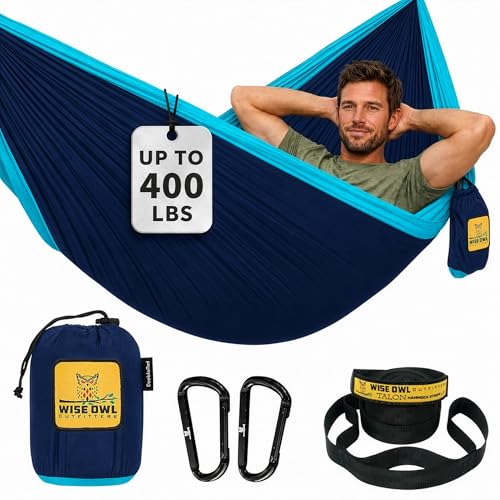
Wise Owl Outfitters Single Hammock
Lightweight single hammock with straps and carabiners included, ready to hang between two trees for a quick break or afternoon lounging.
Why we love it
- Straps and carabiners included, no extra gear to buy
- Packs down to the size of a small melon for the car
- 400-pound capacity holds you plus a backpack easily
Pros
- All-in-one kit with tree straps
- Only 16 ounces packed weight
- 400-pound weight capacity
- Triple-stitched seams for durability
- Quick-dry parachute nylon
Cons
- Single size, tight fit for two adults
- No bug net or insulation included

Wise Owl Double Hammock 500lb
Double hammock with tree straps included, rated for 500 pounds and light enough to pack alongside a tent on family trips.
Why we love it
- Straps and carabiners already in the bag
- Fits two kids or one adult plus a gear haul
- Weighs 24 ounces, stuffs smaller than a loaf
Pros
- 500-pound weight capacity
- Tree straps included in kit
- Packs down to 24 ounces
- Triple-stitched nylon holds up
- 10 by 6.5 feet gives real space
Cons
- No bug net or rain cover
- Cold back without an underquilt
How I Picked the Best Hammocks for Backpacking
Best hammocks for backpacking have lived in my pack and on my back through 4 seasons of Cascades overnighters, coastal trips, and high-desert weekends. I’ve strung singles between Douglas firs, doubled them up with both kids, weighed the full setup including suspension on a scale, and woken up to the cold-butt problem more times than I care to admit.
The testing was simple: load them to their rated capacity with gear, hang them on the trees we actually camp under, sleep in them overnight, and see what holds up and what fails. I checked the suspension straps for slippage on slick trunks, measured the lie angle and fabric width, packed each one down to see if it really lives in a daypack, and watched the stitching and seams through repeated hangs. Some hammocks promise ultralight but only if you leave the straps behind. Others claim two person capacity and sag like a taco shell when both of you get in.
What I judged them on: how flat and comfortable the lie is when you’re actually in it, whether the weight capacity claim means something with two people plus overnight gear, how much the whole rig weighs and compacts once you roll it up, what suspension is included (because the straps matter as much as the hammock), and for the camping models, whether the sleep system works (net coverage, weather protection, and solving the cold underneath).
Buying Guide for Best Hammocks for Backpacking
Picking the right hammock for backpacking comes down to whether you’re lounging on a trail break or sleeping in it overnight, how much weight your suspension can handle, and what you’re willing to carry. The specs that matter are weight capacity, packed size, and the quality of the straps and stitching.
Single or Double, and How They Behave
A single hammock gives one person plenty of room to stretch out. The Wise Owl Outfitters Hammock for Camping Single measures 9 feet by 4.5 feet and supports 400 pounds, which sounds generous until you factor in a backpack full of gear. At 16 ounces, it packs smaller than an eggplant and uses parachute nylon that dries fast. A double hammock runs 10 feet by 6.5 feet and holds 500 pounds, giving two people real space without that cramped, touching-the-sides feeling. The Wise Owl Outfitters Camping Hammock double weighs 24 ounces, still light enough to replace a tent. The trade-off is clear: a single weighs half as much but forces one person per hang, while a double lets you sleep two or gives one person the luxury of diagonal stretch. If you’re backpacking solo and every ounce counts, single. If you’re rigging a family setup or want room to roll without touching the fabric, go double.
Suspension Straps Included or Not
Check whether tree straps are in the box, because if they aren’t, you’re adding weight and cost. The AnorTrek Camping Hammock ships with two 8.2-foot straps and carabiners, which means you hang it in minutes with no extra purchase. The Durable Hammock 400 lb Capacity also includes 9-foot straps and carabiners in the kit. Both save you from discovering on the trail that your hammock arrived without suspension. The straps matter as much as the fabric, because weak or slippery straps will shift on wet bark and bounce you out of level. Look for adjustable loops (5 to 6 is standard) so you can dial in the right height and angle.
Lie Angle and Weight Capacity Headroom
A weight capacity that works on paper doesn’t always work in reality. A hammock rated for 400 pounds holds one person at that limit, but add a 35-pound backpack and a second person and you’re over it. That’s when suspension slips or fabric tears. For backpacking, pick a model with capacity well above your combined weight, or resign yourself to single sleeps only. The 500-pound models give you headroom for a light partner plus overnight gear, or for a heavier solo camper without cutting it close. Lie angle matters too. If the straps angle in too steep, you’ll sag into a banana shape and wake with a numb shoulder. Roughly 30 degrees from horizontal is the sweet spot, which most good hammocks hit when the straps have enough adjustment loops.
Packed Weight and Size for the Whole Rig
Don’t trust the hammock weight alone. The AnorTrek single at 1.3 pounds and the Wise Owl single at 16 ounces both look light until you add 9-foot straps, carabiners, and a stuff sack. You’re looking at 1.5 to 1.8 pounds for a complete single setup, or 2 to 2.5 for a complete double. That’s half what a lightweight tent weighs, which is why hammocks make sense for backpacking. But if the manufacturer only lists the hammock weight and not the suspension, you’re being sold incomplete numbers. Ask for the full hanging weight before you buy.
Fabric, Stitching, and Durability Over Years
Parachute nylon holds up better than lighter ripstop, but it weighs a bit more and takes longer to dry. Most of these models use 210T parachute nylon, which survives tree bark and repeated hangs without tearing. Triple-stitched seams matter on a 400 or 500-pound load, because single stitching will unravel under stress. Before you buy, check whether the reviews mention seams separating or fabric degrading after a season of use. A cheap price tag often means cheap fabric that starts to thin after 20 or 30 hangs.
FAQ
Can you really sleep two people in a double hammock overnight?
A. Yes, but weight capacity fills fast. Two people under 200 pounds each have room and comfort. Add a combined weight over 350 pounds and you’re pushing the rating, especially with a backpack shared or stowed nearby. Test the setup in your yard first, or start with a single night close to home.
How far apart do the trees need to be?
A. Roughly 12 to 15 feet works best. Closer than 10 feet and the strap angle gets too steep, putting unnecessary strain on the suspension. Farther than 18 feet and you’ll struggle to get the hammock level and tight. On some backcountry trips, you won’t find perfect spacing, but avoid anything under 8 feet or over 20.
What solves the cold-butt problem when sleeping in a hammock?
A. An underquilt or sleeping pad underneath. Your body weight compresses the insulation below you, so fabric alone won’t keep you warm from underneath. An underquilt attaches to the hammock and hangs below it; a sleeping pad fits inside. Either one cuts the cold from rising through the bottom. Without one, you’ll wake cold even in a 20-degree sleeping bag.
Do weight capacity numbers matter if you’re not at the limit?
A. They tell you how much the fabric can take before failure, and how much stretch and sag happens at load. A 400-pound hammock loaded to 300 pounds hangs tighter and flatter than the same one loaded to 350. If two people are camping together, a 500-pound model gives you better lie angle and less fabric stress than a 400-pound model.
What happens to gear and water inside the hammock while you sleep?
A. Keep your backpack on the ground, not inside. A pack inside adds weight, changes your balance, and can roll or shift during the night. Water drips through most fabric, so don’t count on a hammock to keep your pack dry. A small tarp pitched above the hammock or a rain fly keeps both you and your gear dry.
Is tree-strap damage a real concern when camping?
A. Good straps protect the bark. Wide, padded suspension spreads the load and doesn’t cut into soft wood. Never use rope or thin cord directly on bark. Most modern hammocks ship with straps wide enough (about 1 inch) to sit safely even on a young tree. Let the tree recover between seasons if you camp in the same spot often.



Write Your Review
No reviews yet. Be the first to share your experience!