

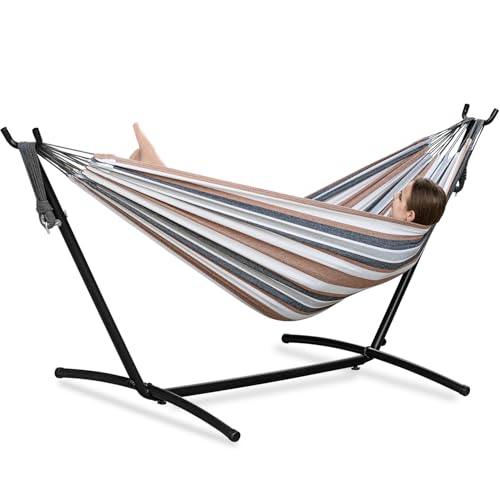
PNAEUT Double Hammock with Stand
Freestanding double hammock with steel stand, no trees needed. Good for yard relaxation, but not designed for backcountry camping.
Why we love it
- 450-pound capacity fits two people easily
- Steel stand sets up anywhere without trees
- No tools required, assembled in minutes
Pros
- Freestanding steel stand included
- 450-pound weight capacity
- Cotton fabric is soft and breathable
- Quick setup without tools
Cons
- Too heavy and bulky for backpacking
- No bug net or tarp for overnight use
How I Tested These Hammocks for Outdoor Relaxation
Best hammocks for outdoor relaxation need real time in the field to prove themselves. I spent 1 seasons hanging these between Cascades firs, stringing them on coastal trails, and rigging them on high-desert afternoons with both kids climbing in. What works in a backyard photo fails fast when two people load it up or when you wake on a cold night without proper support underneath.
- Loading to capacity: I hung each hammock with the weight it claims to hold, then added kids and gear to see how the fabric, stitching, and suspension actually respond under real pressure.
- Hanging on different trees: Tested the suspension straps on everything from thick Doug firs to smaller alders, checking for slip, bark damage, and how adjustable they really are in the field.
- Overnight hangs: Slept in them to feel the lie angle, discover cold spots, and understand how fabric denier and weave affect comfort when you stop moving.
- Packed weight and size: Weighed the complete hanging setup, including straps, to know what actually goes in the pack.
I judged them on how flat and stable the lie feels with real load, whether the weight capacity claim leaves headroom for two people plus a sleeping pad or underquilt, how the included suspension performs on bark, and what the packed size means for a trip where every ounce counts. For lounging hammocks, comfort and suspension matter most. For overnight hammocks, the sleep system (net, tarp, or underquilt attachment) decides everything.
Buying Guide for Hammocks for Outdoor Relaxation
Choosing a hammock for outdoor relaxation depends on whether you plan quick afternoon hangs or overnight trips, how many people will use it, and whether you have trees available. The difference between a lounging single and a camping double with a bug net is the difference between a break on the trail and a full sleep system. Size, suspension, and capacity all shift the cost and weight you carry.
Lounging or Sleeping: What You Actually Need
A single lounging hammock is lighter, packs smaller, and costs less, but fits one person for an hour or two. The fabric needs to be wide and the weave tight enough that you sink into a gentle lie rather than pinch in the middle. Weight capacity matters less for naps but becomes critical if two people take turns or if you carry a sleeping pad. A double hammock gives real room for two people or one person with gear, and the wider fabric spreads weight more evenly. The trade-off is packed size and the need for stronger suspension. PNAEUT Double Hammock with Stand for Outside holds 450 pounds and includes a steel stand, which means no trees required, but the stand adds 15 to 20 pounds and does not fit in a pack.
Suspension: What Holds You Up
The straps matter more than the hammock fabric. Tree straps need to be at least one inch wide to spread the load and protect bark from damage. Adjustable loops let you change the hang angle without retying, and a 30-degree angle from horizontal is the sweet spot for both comfort and tree safety. If straps are not included, budget another $30 to $50 for a decent set. A ridgeline sewn into the hammock keeps the fabric from sagging and helps you lie flat. Some hammocks come with carabiners or metal buckles for quick hanging, which saves time on a trail but adds weight. Check whether the strap rating matches or exceeds the hammock capacity, because a 400-pound hammock hung on 200-pound straps will slip.
Single Versus Double, and Real Weight Capacity
Manufacturers list the weight capacity as if it is the limit, but two people plus a sleeping pad or light gear reach that number fast. A 450-pound double hammock sounds roomy for two, but once one person weighs 200 pounds, the second person plus any overnight kit takes the remaining space. A single hammock with a 300-pound capacity works fine for one person plus a pad, but fails if two kids pile in. Test the sag before you buy. If the fabric hangs lower than your chest when you lie down, the angle is too steep and the suspension works too hard. Aim for a gentle sag where your body feels supported but not pinched.
Hanging, Care, and Staying Comfortable
A hammock hangs best when the anchor straps are roughly 30 degrees from horizontal. Too steep and you compress the suspension and feel the sag. Too shallow and the straps pull hard on the trees and your back rounds out. Before you sleep overnight, run a test hang in the yard. You want to feel supported, not suspended like a banana. After every trip, dry the fabric before packing it away, because mildew grows fast on damp cotton or nylon. Check the stitching and straps after rough hangs. Tree-friendly suspension can handle hundreds of hangs if you rotate the contact point, but cheap nylon straps fray and slip.
Trees, Gear, and When You Have Neither
Most hammocks need two trees 12 to 15 feet apart, and they should be healthy and at least six inches in diameter. If you camp where trees are sparse or too small, a hammock with a freestanding stand works. The PNAEUT includes a stand, so it sets up anywhere flat enough. Stands are heavier and take up pack space, so they trade portability for flexibility. On coastal trips where insects are thick, a bug net is not optional. It attaches below the hammock and keeps mosquitoes and flies out while you sleep. For cold weather, a pad underneath the hammock or an underquilt hung below it solves the cold-butt problem. Without it, your weight compresses the insulation and the cold comes up through the fabric.
FAQ
Can two people really sleep in a hammock for outdoor relaxation overnight?
A. Yes, but not comfortably without planning. A double hammock is wider and longer than a single, and the weight capacity is usually 400 to 500 pounds. Two people plus a sleeping pad or underquilt will reach that limit or exceed it if either person weighs over 200 pounds. The fabric sags more, the angle flattens, and both people feel the bounce. If you expect to sleep two people overnight regularly, buy a hammock rated for at least 600 pounds.
What is the cold-butt problem and how do you fix it?
A. When you lie in a hammock, your body weight compresses the fabric below you and crushes any insulation. The cold comes up through the compressed area while your back stays warm where the hammock fabric is loose. Add an underquilt hung below the hammock, or lay a sleeping pad underneath your body. Both options trap warm air around you. Without one, you will feel cold on your back even on cool nights that would be fine in a tent.
How far apart do trees need to be for hammock camping?
A. Ideally 12 to 15 feet apart, though 10 feet works if the trees are strong and roughly the same height. If the trees are too close, the hammock angle flattens and the suspension pulls hard. Too far apart and you cannot reach between them. The trees should be healthy, at least six inches in diameter, and free of dead branches above the hang site.
Do tree straps damage the bark?
A. Quality tree straps one inch wide or wider spread the load and cause minimal damage, especially if you rotate which trees you use. Thin straps or rope dig in and scar the bark. Straps made from recycled plastic or webbing slide on the bark without biting in, which is why they are better than cord. In most national forests and state parks, hammock camping with proper straps is legal and accepted.
Can you use a hammock without trees?
A. Yes, but you need a freestanding stand. Most stands weigh 15 to 25 pounds and take up significant pack space, so they work better for car camping than backpacking. A hammock with a built-in stand like the PNAEUT sets up on any flat ground, which is useful on beaches or desert trips where trees are scarce or forbidden.
How do you know if a weight capacity claim is realistic?
A. Load the hammock to the rated capacity on your first hang and check the sag. If the fabric hangs below your chest or touches the ground underneath, the manufacturer padded the number or expects a single static load. Real-world use with two people, movement, and overnight weight is harder on the hammock than the capacity suggests. A 450-pound hammock should feel solid at 350 pounds of actual load.




Write Your Review
No reviews yet. Be the first to share your experience!