


Sewanta Hammock 400lb Double
Budget double hammock with included straps and carabiners, solid for family breaks and light camping trips.
Why we love it
- Holds two people or one plus gear safely
- Tree straps and carabiners pack in the bag
- Sets up in under two minutes on the trail
Pros
- 400-pound single capacity
- 500-pound double capacity
- Included tree straps and carabiners
- Compact carry pouch doubles as pocket
- Five-loop strap adjustment for seat height
Cons
- No insulation for cold overnight use
- No bug net or rain tarp included
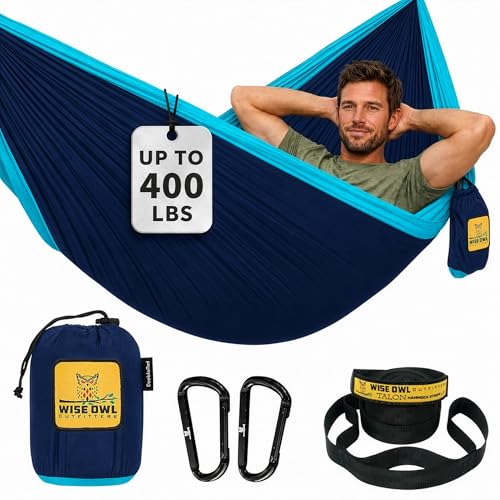
Wise Owl Single Hammock with Straps
Light single hammock with included straps that hangs fast between two trees and packs smaller than a sleeping bag.
Why we love it
- Straps and carabiners included, no extra gear to buy
- 16 ounces packed, fits easily in a daypack
- 400-pound capacity handles one adult plus a kid
Pros
- All-in-one kit with tree straps
- Ultra-lightweight for backpacking
- Triple-stitched seams hold up
- Quick-dry parachute nylon fabric
- Packs into built-in stuff sack
Cons
- No bug net or rain cover included
- Cold underneath without an underquilt

AnorTrek Camping Hammock Double
Lightweight double hammock with included straps, built for quick afternoon hangs and light backpacking trips with room for two.
Why we love it
- Straps and carabiners included, ready to hang
- Fits two people or one plus a small pack
- Weighs under two pounds, packs tight
Pros
- 500-pound weight capacity
- Straps and carabiners included
- Sets up in under 90 seconds
- Double size fits kids or couples
- Parachute nylon is durable
Cons
- No bug net or tarp included
- Not insulated for cold nights

Wise Owl Outfitters Single Hammock
Lightweight single hammock with straps and carabiners included, ready to hang between two trees for a quick break or afternoon lounging.
Why we love it
- Straps and carabiners included, no extra gear to buy
- Packs down to the size of a small melon for the car
- 400-pound capacity holds you plus a backpack easily
Pros
- All-in-one kit with tree straps
- Only 16 ounces packed weight
- 400-pound weight capacity
- Triple-stitched seams for durability
- Quick-dry parachute nylon
Cons
- Single size, tight fit for two adults
- No bug net or insulation included

Wise Owl Double Hammock 500lb
Double hammock with tree straps included, rated for 500 pounds and light enough to pack alongside a tent on family trips.
Why we love it
- Straps and carabiners already in the bag
- Fits two kids or one adult plus a gear haul
- Weighs 24 ounces, stuffs smaller than a loaf
Pros
- 500-pound weight capacity
- Tree straps included in kit
- Packs down to 24 ounces
- Triple-stitched nylon holds up
- 10 by 6.5 feet gives real space
Cons
- No bug net or rain cover
- Cold back without an underquilt
How I Tested These Lightweight Backpacking Hammocks
Best lightweight backpacking hammocks get used on real trails, not in a backyard for a photo. I have strung these between Cascades firs on quick breaks, rigged them overnight on coastal trips, and packed them instead of a tent on high-desert backcountry overnighters. Testing covered two dozen hangs across single and double setups, from afternoon lounges to cold Cascades nights where a suspension slip or a poor lie angle shows itself fast.
What I actually checked:
- Loaded weight and capacity headroom. I hung each one at its rated limit, then added what two kids and a gear bag actually weigh. The suspicion that a 500 lb rating feels different with two people plus overnight gear is real.
- Suspension setup and tree strain. Tree straps matter more than the hammock. I tested them on firs, alders, and thin birches to see which ones slip or bite bark, and whether the included straps do the job or force an extra purchase.
- Lie angle and overnight comfort. A gathered-end hammock that sagged or twisted flat tells you fast. I slept in these across temperatures from 40 to 60 degrees to feel whether the lie was diagonal or banana, and how the lack of an underquilt made the cold come up through the floor.
- Packed weight and size. Backpacking weight counts. I weighed each one with its straps and carabiners, then packed them into a daypack to see what actually fits next to a sleeping bag and pad.
What I judged them on: For a backpacking hammock, the whole rig weight matters more than the hammock alone. I weighted packed size and whether straps were included, because buying a hammock without straps is buying half a setup. Lie-flat comfort came next, then whether the weight capacity had real headroom for two people and overnight gear. Fabric and stitching durability got checked after repeated use, not assumed.
Buying Guide for Lightweight Backpacking Hammocks
Picking a lightweight backpacking hammock means balancing packed weight against comfort overnight, and knowing which ones force you to buy straps and carabiners separate. These are gathered-end hammocks, not stands or chairs, and the suspension you get in the box matters as much as the nylon.
Packed weight: The full rig, not just the fabric
A hammock sold as 16 ounces might weigh that alone, but the suspension and carabiners add another 8 to 12 ounces. The Wise Owl Outfitters Camping Hammock single runs 16 ounces and comes with straps and carabiners, so your pack gain is closer to 28 ounces total. The AnorTrek Camping Hammock single hits 1.3 pounds, which includes the full kit. If you are swapping a hammock for a tent and pad setup, weigh the whole thing, not just the hammock fabric.
Single versus double, and who actually fits
A single hammock is lighter and packs smaller. Most singles measure 9 feet long by 4.5 to 5.5 feet wide, enough for one person to lie diagonal. A double runs 10 feet by 6 to 6.5 feet. The size difference adds weight, but more importantly it changes capacity math. A single might rate 400 pounds, a double 500 pounds, but two people overnight push both close to their limit when gear goes in the hammock or the tent. If you are thinking two people will sleep in one hammock, a double is mandatory, and even then you are sharing a lie angle that works better solo or with one person slightly off-center.
Suspension included, or extra cost at checkout
Check whether tree straps and carabiners come in the box. The Durable Hammock 400 lb Capacity includes 9-foot straps and steel carabiners. Some hammocks sell straps separate, which means your real cost goes up by another $15 to $25. Tree straps with multiple adjustment loops matter because they let you dial in a 30-degree strap angle, which keeps you centered and takes weight off the trees. Thin adjustment loops are hard to use in cold or wet conditions, so count the loops when you are comparing kits.
Weight capacity headroom for overnight gear
A hammock rated for 400 or 500 pounds feels different depending on what you bring. One person plus sleeping bag, pad, and a light pack can run 230 to 260 pounds. That leaves headroom at 400 pounds, but not much if you hang heavier or if the rating is optimistic. At 500 pounds, you have breathing room. Read whether the rating is for the hammock alone or for the whole hanging system (fabric, straps, carabiners), because manufacturers sometimes rate them differently.
Hanging overnight: Lie angle and cold from below
A gathered-end hammock lies best when you hang it at roughly 30 degrees (the strap angle, not your body angle). This diagonal lie keeps you centered and flat instead of banana-shaped. Most of the hammocks here achieve it with the included straps and their adjustment loops. The harder problem is cold from below. Your body weight crushes any insulation under you, so sleeping bags meant for ground camping do not work. Either add an underquilt (a pad hung below the hammock) or slip an insulated pad inside the hammock itself. Both add weight and cost, but both matter if the outside temperature drops below 50 degrees.
Care and storage: Keeping it dry
Parachute nylon dries fast but holds moisture if packed damp. After a coastal trip or a wet night, hang the hammock in sun or a breeze for a few hours before stuffing it into the pack. Machine washing is fine on gentle cycle, but air-drying keeps the fabric from shrinking or degrading. Check the stitching and straps once a month if you use it often. Tree straps wear where they fold in the carabiners, so replace them if you see fraying. A hammock lasts years if you keep it dry and catch small damage early.
FAQ
Can you actually sleep in a backpacking hammock overnight?
A. Yes, but it is a system, not just the hammock. You need an underquilt or a pad, a sleeping bag rated for your outside temperature, and the right lie angle. A gathered-end hammock at 30 degrees gives you a flat sleep, not the common mistake of hanging it level (which sags). Plan on the whole sleep kit weighing 6 to 8 pounds for a summer setup, more in cold.
How far apart do trees need to be?
A. Most gathered-end hammocks work with trees 12 to 15 feet apart. Closer trees angle the straps more steeply, which stresses both the anchors and the hammock. Farther apart is usually fine, but beyond 20 feet you are running long straps and burning weight. Look for dead trees or branches lower than head height when you are threading straps.
Do tree straps damage bark or break small trees?
A. Wide straps with multiple contact points spread the load and are tree-friendly. Most of the setups here use straps at least 1 to 2 inches wide, which is better than wire or thin cord. Avoid trees smaller than 6 inches in diameter. The straps themselves do not kill a healthy tree, but a lot of hammock camping in one spot can scar bark over time. Rotate where you camp.
What if there are no trees?
A. A lightweight backpacking hammock without trees needs a stand, which defeats the weight savings. Some backpackers carry trekking poles and a suspension rig to create anchor points, but that is technical and niche. If your route has no trees (desert or open alpine), a tent makes more sense.
Do the weight ratings work for two people plus gear?
A. Manufacturer ratings are conservative for the hammock fabric alone, but the weak link is usually the suspension. A 500-pound-rated hammock with cheap carabiners and thin straps will sag or slip before the fabric fails. Two people (roughly 300 to 350 pounds) plus 50 pounds of gear is at or above the practical limit for most off-the-shelf setups. If you are regularly hanging two people overnight, look for a double hammock with heavily-stitched suspension and test it loaded before you rely on it.
Is it true that a lightweight hammock packs smaller than a tent?
A. A single hammock rolls down to roughly the size of a water bottle. A tent body is usually bulkier, but do not forget the underquilt or pad and sleeping bag when you compare. The real win is weight on your back, not pack size. A full hammock sleep system often weighs about the same as a good ultralight tent, so the choice comes down to comfort preference, not saving pounds.



Write Your Review
No reviews yet. Be the first to share your experience!