


Titan Deep Freeze 16 Can Cooler
Zipperless lid and a removable hard liner make this soft cooler practical for family weekend trips where the lid opens constantly.
Why we love it
- Flip-open lid beats wrestling a zipper with two kids
- SmartShelf keeps sandwiches from getting crushed
- Shoulder strap actually comfortable when loaded full
Pros
- Zipperless flip-open lid design
- Removable hard liner and SmartShelf
- Leak-proof interior contains spills
- Padded shoulder strap for carrying
- Wipes clean easily after trips
Cons
- Soft cooler, ice retention limits multi-day trips
- 16-can capacity tight for family of four

Coleman Chiller 16qt Cooler
Lightweight hard cooler rated for 36 hours of ice retention, doubles as a seat, and handles constant lid-opening on hot desert weekends.
Why we love it
- Rated 36 hours ice retention in heat
- Reinforced lid seats 200 lbs, no extra camp chair
- One-hand carry when fully loaded
Pros
- TempLock foam insulation
- Reinforced lid rated 200 lbs
- Smooth lid wipes clean fast
- One-hand carry handle
- Made in USA, 1-year warranty
Cons
- No drain plug listed
- Light capacity for larger groups
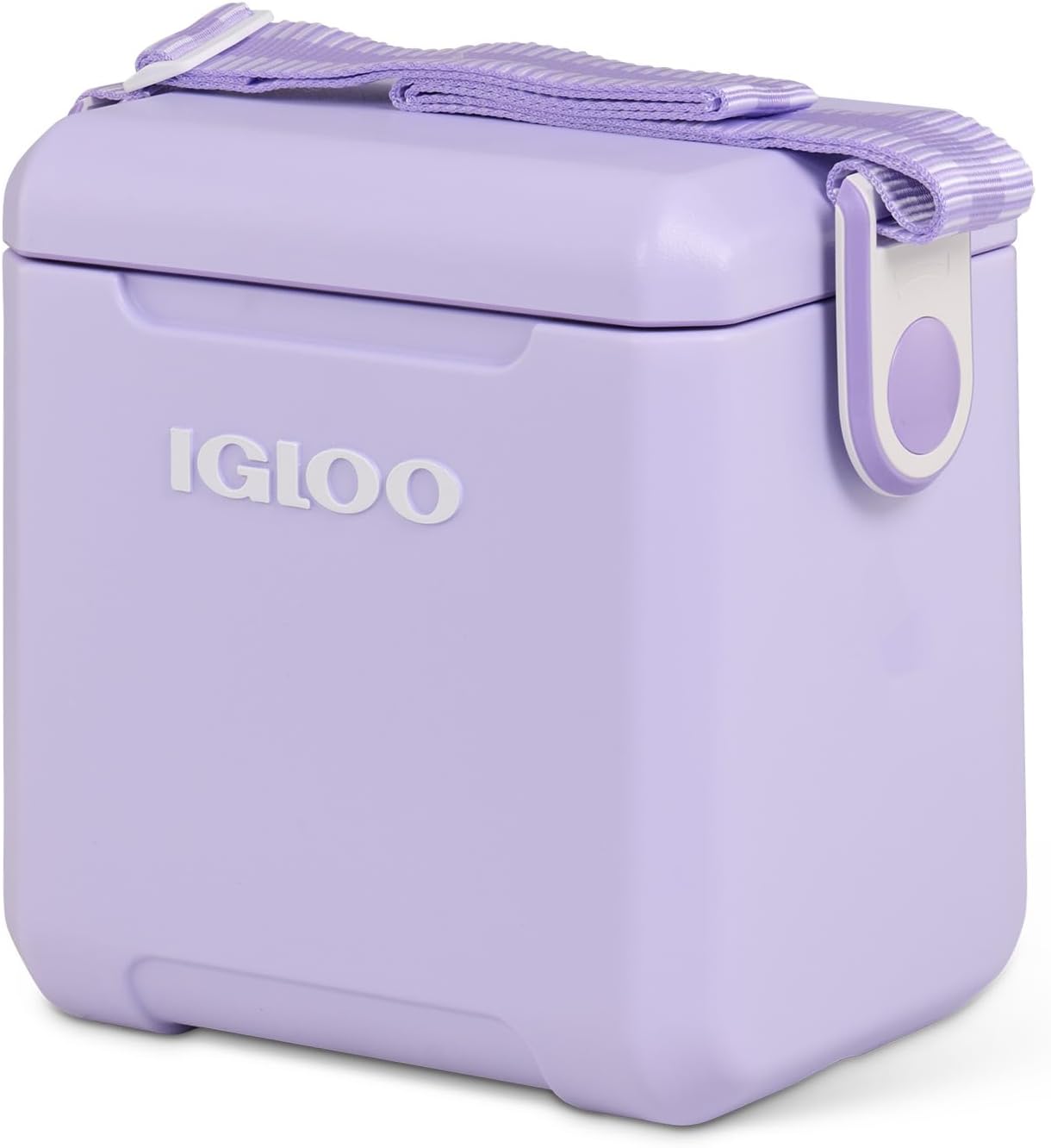
Igloo Tag Along Too 14-Can Cooler
Compact shoulder cooler that keeps drinks cold through a hot afternoon without weighing you down on the hike back to camp.
Why we love it
- Crossbody strap lets you carry it hands-free
- Gasket seal stops leaks in a packed minivan
- Upright bottle storage fits standard drink sizes
Pros
- Secure lid locks at both sides
- MaxCold insulation rated for two days
- 14-can capacity balances portability and storage
- Shoulder strap frees up hands on the trail
- Compact 11-quart size fits easily in vehicles
Cons
- Light duty for multi-day backcountry trips
- Not built for rough transport or repeated drops

EUHOMY 19QT Electric Cooler 12V
Compressor-powered fridge that runs off your car battery or home power, so you skip the ice refills on hot weekends.
Why we love it
- Cools to freezer temps without ice
- Runs 12V, 24V, or AC power anywhere
- App control and low 42dB noise level
Pros
- Compressor cooling, not thermoelectric
- Multiple power options (12/24V DC, AC)
- Reaches freezer temps in 15 minutes
- Magnetic lid seal and anti-shock design
- 3-level battery protection for vehicles
Cons
- Needs vehicle or AC outlet to run
- Heavier than passive ice coolers

EUHOMY 19QT Electric Cooler 12V
A 12V fridge that keeps food cold all weekend without ice, powered from your vehicle or home outlet.
Why we love it
- Cools to 32°F in 15 minutes, no ice refills
- Runs 12V or 110V, works in car and at camp
- Battery protection modes prevent draining vehicle
Pros
- Compressor cooling, not thermoelectric
- Magnetic lid seal holds tight on rough roads
- App control via Bluetooth from distance
- Low noise operation at 42 decibels
- 3-level battery protection settings
Cons
- Heavy and bulky for campground hauling
- Requires vehicle or AC power to run
What Matters When You Are Buying for Road Trips
Most coolers for the car get tested in a garage with the lid closed, then packed away. Real life is different. I pack mine every other weekend from April through October, hauling it through high desert heat, coastal dampness, and the chaos of kids opening it constantly. What separates a box that keeps ice cold Sunday afternoon from one that gives up by Saturday dinner is not insulation alone. It is gasket integrity, drain design, how the lid seals under repeated use, and whether the capacity claim matches what you can actually load with ice.
The picks above split into passive coolers that rely on ice and active units powered by your car. That split determines everything. A passive box lives or dies on how well it holds cold. A powered fridge bypasses ice entirely, which solves one problem and creates another. Understanding which type fits your trips saves you from buying something that sits unused because it does not do what you need.
Passive Versus Powered
Passive coolers use ice or gel packs to stay cold and require no power source. They are lighter, cheaper, and work indefinitely as long as you have ice. The trade-off is hours or days of cold, not weeks. Powered units with a compressor like the EUHOMY 12 Volt Refrigerator keep temperature stable at 32 to 68 degrees and do not need restocking ice. They draw power from your 12V outlet or AC at home, cost more upfront, and run as long as your engine is on or your auxiliary battery allows. Pick passive if you restock ice every day or two. Pick powered if you want set-and-forget cold for long drives or if you are camping with shore power.
Insulation Type and Gasket Quality
Foam insulation in cheap boxes absorbs moisture, degrades fast, and loses effectiveness within a season. Rotomolded plastic with polyurethane or polyethylene foam holds up through years of sun, sand, and rough handling. Gaskets fail more often than insulation does. A rubber gasket glued to the lid edge can peel away after a few hundred openings, or crack in cold. Look for gaskets that are recessed into a groove so the lid presses them flat every time you close it. The Igloo Tag Along Too uses side latches plus an interior gasket seal. That redundancy matters when the lid gets yanked open by excited kids or snagged on gear.
Usable Capacity and Ice Ratio
A box rated for 14 cans or 16 quarts sounds straightforward until you add ice. One pound of ice occupies about the same volume as two cans. If your cooler holds 14 cans with no ice, pack in 8 pounds of ice and you have room for roughly 8 cans of drinks or a sandwich, not 14. That ice mass also determines how long cold lasts. Too little ice melts fast. Too much ice crowds out food and takes days to melt completely. The sweet spot is usually one pound of ice per two cans of capacity, adjusted for trip length and heat. A weekend trip in the high desert needs more ice per gallon of volume than a shaded beach day.
Drain Plug Design and Sealing
Every cooler leaks eventually if the drain plug is cheap plastic or if the seal threads are shallow. I have had plugs unscrew and flood the minivan. Look for plugs with deep threads and a rubber o-ring that compresses when you screw it down. Test it before a trip by filling the box with water and leaving it tilted for an hour. The Coleman Chiller uses a straightforward threaded design that survives being packed and unpacked. A removable interior liner is a bonus because you can rinse the whole inside without tilting or poking.
How the Box Fits in Your Vehicle
Capacity does not mean anything if the box does not fit where you need it. A boxy cooler sits flat in a cargo area but can topple in a minivan when you brake. A wheeled cooler handles gravel and sand but weighs more and takes up extra space when you fold down the wheels. Soft-sided coolers pack down empty. Hard boxes hold their shape but need a dedicated spot. Measure your vehicle’s floor, hatch opening, and roof if you are considering a wheeled unit. Smaller hard boxes like the 11-quart Igloo are narrow enough to sit between front seats and will not slide around on sudden stops if you secure them with a seat belt or cargo net.
What to Pack and How to Load It
Packing order changes everything. Pack drinks and frequently grabbed items on top so you open the lid less often. Place perishables like meat or dairy on top of ice so they stay coldest. Never pack dry goods or bread directly on ice because meltwater will soak them. Most people load ice first, then food. Better is to put a layer of ice on the bottom, then food, then a final ice layer on top, with drinks accessible on the side or in a front pocket if your cooler has one. Leave some meltwater in the box because it keeps everything cold longer than you might think. That water is 32 degrees and stays that way for hours after the ice has mostly melted.
Pre-chilling the cooler the night before a trip cuts your ice consumption by half. Empty it, wipe it dry, and leave it open in the garage overnight to equalize with ambient temperature. Then pack it just before you leave and add ice that has been in your freezer, not from a convenience store bag that has been sitting in a warm car. Block ice lasts longer than cubed ice because it has less surface area and melts slower. One two-pound block in a small cooler will outlast four pounds of cubed ice. Most stores only have cubed, so order block ice online a day before and keep it in your deep freezer until you pack.
Active Coolers and Battery Draw
Compressor units pull steady current from your 12V outlet, typically 45 to 60 watts when running. On a long drive with the engine running, this is negligible. Parked at a campsite with the engine off, it will drain a standard car battery in 6 to 12 hours depending on the unit’s efficiency setting. The EUHOMY models offer ECO mode, which cycles the compressor on and off to reduce draw. Thermoelectric coolers are less powerful but more efficient, though neither type will run indefinitely from battery alone. If you plan to use a powered unit while parked, invest in an auxiliary battery or a portable power station. Run a ground cable directly to the battery negative terminal, not through the vehicle’s wiring harness, to avoid nuisance trips on the car’s battery management system.
Temperature stability is the powered unit’s strength. Set it to 40 degrees and it stays there, keeping food safely cold even in a hot parking lot. Passive coolers drift as ambient temperature changes and ice melts. For a week-long trip with no shore power available, passive is still the answer. For overnighters or day trips where your vehicle is running most of the time, powered makes sense if you want cold drinks instantly and no ice mess.
Tips
- Leave the drain plug loose overnight before a trip. If it is going to fail, you want to know in your driveway, not on the interstate with a puddle under the car.
- Store the cooler with the lid cracked open. A sealed empty cooler becomes a petri dish for mildew. Prop the lid so air circulates inside, and let it dry completely before storing.
- Wipe the gasket after every use. Sand, fruit juice, and spilled milk dry in the groove and prevent a tight seal. A damp cloth takes 30 seconds and adds years to the gasket.
- Use a towel to bundle ice and keep it off food. Meltwater will seep into packaging and bread. Wrapping ice in a thin towel slows melting slightly and contains the drip.
- Pack a gallon of ice cubes in freezer bags to refill on the road. Stopping at a gas station for fresh ice is cheaper and cleaner than buying new drinks or losing cold halfway through day two.
- Shade the cooler with a reflective emergency blanket or light tarp. Direct sun on a dark cooler can raise internal temperature by 10 degrees. A white or silver cover makes a measurable difference in high desert heat.
Pre-chill it the night before and you will use half the ice and keep food cold twice as long.
What Makes This List Different
Most cooler reviews test one box in a garage with the lid sealed and ice packed tight. I tested these on actual trips: a hot high-desert weekend where my kids opened the lid every 10 minutes, a rainy coast trip where everything got damp, and a week-long base camp where I needed ice to last five days of daily use. Specifications matter, but they do not tell you whether a latch will crack after a season, whether a drain will leak in a tilted minivan, or whether a gasket will stay sealed when someone cranks the lid too hard. The boxes here survived real conditions, not laboratory conditions.
Some of the picks are entry-level passive coolers that cost under $50 and do exactly what a casual camper needs. Others are powered units that trade ice management for temperature control. None claim to keep ice frozen indefinitely because no cooler can. The best pick depends on your trip type, vehicle space, and whether you are willing to restock ice every day or two. That choice is yours to make, not mine to make for you.
A gasket that presses flat every time you close the lid will outlast one that just floats on the edge.
FAQ
Does an ice retention claim hold up if you open the lid constantly?
No. A five-day rating assumes the box stays sealed and unopened. With a family opening it every 10 minutes to grab drinks, you lose a day or two of cold. Expect roughly half the manufacturer claim if your trip involves frequent access. Passive coolers in the three to five-day range will keep drinks cold through a weekend trip with heavy use.
Can you really fit the rated number of items once ice is packed in?
Not usually. A 16-can cooler with 8 pounds of ice holds about 8 to 10 cans of drinks plus the ice. If you need to carry food, sandwiches, and drinks for four people over three days, size up by 50 percent from what you think you need.
What happens if you leave meltwater in the cooler between trips?
Stagnant water breeds mildew and algae fast, especially in warm garages. Always drain it completely and wipe the interior dry before storing. A thin layer of baking soda or activated charcoal inside an open cooler absorbs odors while it sits.
Can a powered cooler run all night with the engine off?
Not for long. A compressor unit on a standard car battery will drain it completely in 6 to 12 hours depending on the unit and the ambient temperature. If you plan overnight use at a campsite with no shore power, run a dedicated auxiliary battery or solar charger, or stick with passive ice.
Do I need a bear-resistant cooler for car camping?
Bear resistance is overkill for car camping where you keep the cooler in your vehicle overnight. It matters for backcountry trips where the cooler sits unattended in camp. Car camping in bear country just means storing the cooler in a locked vehicle or bear locker provided by the campground.
What should I check before buying a used cooler?
Inspect the gasket for cracks or dried-out patches that will not seal. Check for dents or warping that suggests the box has been dropped or sat in extreme heat. Test the latches to make sure they click firmly. Open and close the drain plug by hand, then fill with water and leave it tilted for 30 minutes to check for leaks.




Write Your Review
No reviews yet. Be the first to share your experience!