

A 9-person tent rating usually means 5 people comfortably with gear, and that is the kind of thing a 9-person camping tent buyer needs to know before clicking buy. After pitching tents in driving Cascades rain, high-desert wind, and state-park weekends with two kids, my list comes from real trips, not gear shop browsing. Most reviews miss what actually holds up.
Our Top Picks
These are the ones that earned a spot after a full season of weekend trips and Oregon weather. Each tent was pitched in real rain, slept in by a family of four, and packed back wet at least once.

Pros
- Instant pop setup
- Standing-height interior
- Full rain fly coverage
- Mesh ceiling ventilation
Cons
- Heavy for backpacking
- Bulky packed footprint
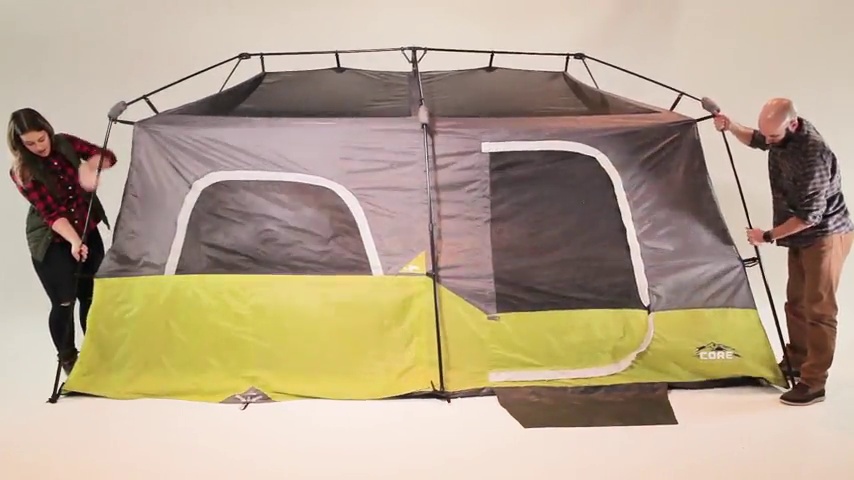
Two-Minute Setup with Pre-Attached Poles
The frame locks into place faster than you can unroll the rain fly. On a drizzly Saturday at a dispersed site near Bend, I had the tent standing before Sarah finished unloading the car. The pre-attached hub system eliminates the typical pole-threading hassle when you're tired or the kids are restless. One quirk: the poles feel a bit stiff the first few trips, so give them a gentle wiggle when locking them in to ensure they seat fully.
14' x 9' Floor with Genuine Standing Height
At 78 inches peak, both kids and Sarah can move around without ducking. The cabin tent layout lets you fit two queen air beds side by side with room for a gear pile or small table in the middle. Real capacity depends on how much stuff you bring: four people with full packs is cozy; nine without gear is a gymnasium. For a typical family weekend with sleeping bags, pillows, and a few bins of clothes, you're comfortable at 4-5 people.

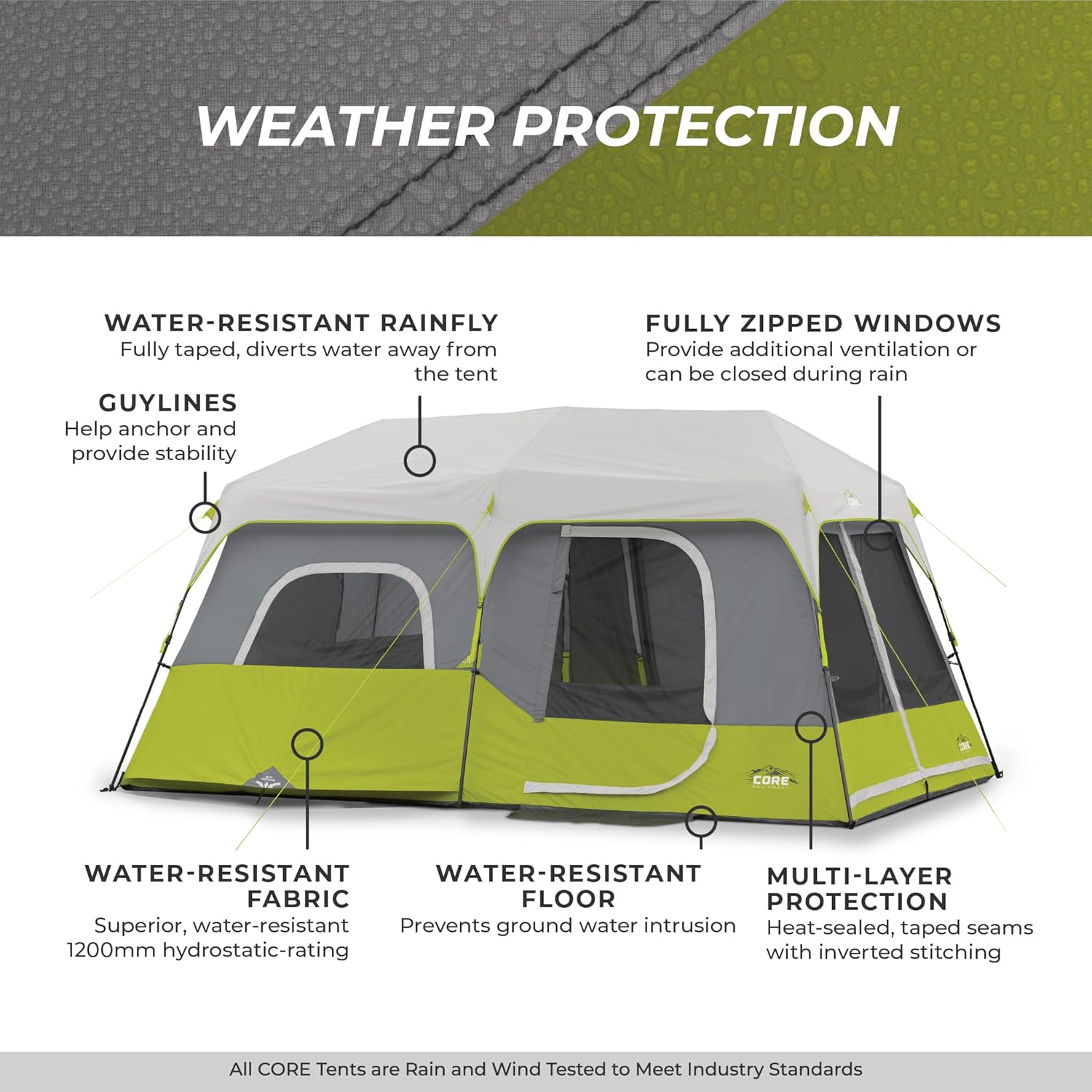
H2O Block 1200mm Fabric and Fully Taped Seams
The family camping tent has handled shoulder-season rain across the Cascades without leaks at the seams or floor. The rain fly extends far enough to keep water off the tent body when pitched correctly. Ventilation matters here: on cold, damp mornings, the mesh ceiling and lower vents reduce condensation buildup better than older cabin tents I've used. The fabric is polyester, so it takes time to dry after a wet trip, but it doesn't absorb water like cotton canvas would.
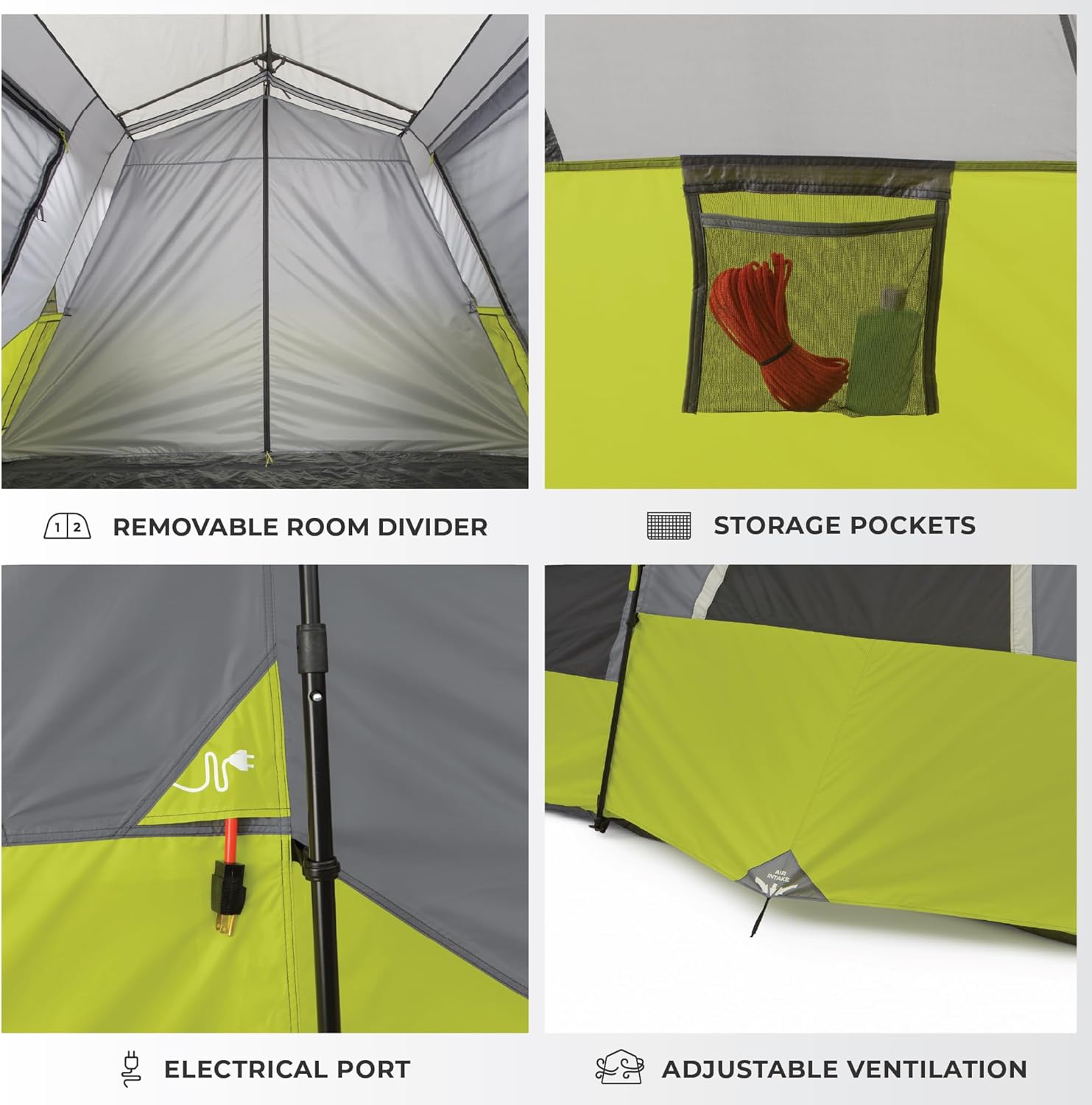
Storage Pockets and Interior Organization
Small pockets along the walls keep flashlights, phones, and sunscreen within arm's reach instead of lost in the dark. With two kids and a wife, clutter management is half the battle. The pockets aren't cavernous, but they hold enough to keep the floor clear and the tent feeling organized even when packed with sleeping gear and weekend supplies.

Pros
- Two-minute instant setup
- Blackout blocks 90% sunlight
- Sewn-in room divider included
- Standing-height peak interior
- Full rain fly with sealed seams
Cons
- Heavy for backpacking trips
- Bulky packed size limits minivan space
Instant Pop-Up Frame and Real Setup Time
The pre-attached pole system locks into place in about 90 seconds if you've pitched it once before. First time out of the bag, expect closer to two minutes while you figure out where each corner snaps down. Unlike traditional cabin tents that need a second person or a lot of wrestling, this pop-up family tent goes up solo without drama, which matters when Sarah's wrangling the kids and you need shelter before the rain hits.

The aluminum frame feels solid through multiple trips, though the plastic connectors where the poles lock in are the first wear point. After a dozen setups, they're still holding, but I baby them during breakdown to avoid forcing the poles back into the bag.
Blackout Technology and Sleeping Past Sunrise
The 90% light-blocking fabric actually works. On a bright June morning at a dispersed site east of Bend, both kids slept until 7:30 instead of waking at 5:45 when the sun hit the tent wall. The blackout camping tent stays noticeably cooler on shoulder-season mornings too, which cuts down the "I'm hot" complaints during that awkward April or September trip when you're not sure if you need the furnace or just ventilation.

The tradeoff: the fabric is darker inside even on cloudy days, so you'll want a headlamp for early morning gear checks. It's not a deal-breaker, just something to pack for.
14×9 Floor with Room Divider for Two Sleeping Zones
The 126 square feet of floor space fits two queen air beds with about a foot of walking space between them, or four sleeping pads plus your family's duffel bags and backpacks without feeling like a tetris puzzle. The sewn-in divider wall runs down the middle, letting you separate the kids' sleeping area from the adults' side, which is huge when an 11-year-old and an 8-year-old are both restless at 2 a.m.

At full capacity (9 people), you'd be shoulder-to-shoulder, but realistically this tent shines for a family of four to six with gear. The 78-inch peak height means you can crouch-walk around without constantly bumping your head, and standing upright is possible in the center for changing clothes or dealing with a wet rain fly.
Rain Fly and Ventilation for Wet Northwest Conditions
The full rain fly with sealed seams and 1200mm H2O Block fabric held up through a heavy overnight rain on the Olympic Peninsula last October. No drips inside, no water pooling on the fly corners. The 3-season family tent has a lower zippered vent that draws cool air in from ground level and mesh ceiling panels that open to let hot air escape, which keeps condensation manageable on cool mornings when the temperature swings 20 degrees between sunset and sunrise.

Set up the guylines tight; the included stakes are steel and solid, but loose corners will flap and pool water in heavy wind. The fly doesn't extend all the way down to the ground at the sides, so mud or heavy spray can splash up, but a ground footprint (sold separately) fixes that issue if you're on wet terrain.

Pros
- Instant pop-up frame setup
- Built-in LED ceiling lights
- Standing-height interior peak
- Fully taped rainfly included
- Mesh ceiling ventilation
Cons
- Heavy for backpacking trips
- Bulky packed size in minivan
Instant Pop-Up Frame with Real-World Setup Speed
Sixty seconds sounds like marketing until you're standing in drizzle with two kids asking when they can get inside. The pre-attached pole system locks into place fast enough that Sarah can handle setup solo while I unload the minivan. The frame is solid aluminum, not flimsy plastic, so it doesn't rattle or flex when the wind picks up on a high-desert trip. One quirk: after the first few uses, the pop-up mechanism gets a little stiffer, so don't expect butter-smooth deployment on trip number ten the same way it felt on trip one.

Family camping tent setup time matters when you've got tired kids and a weather window closing.
Built-In LED Ceiling Lights (High, Low, Night Light)
This is the feature that actually changes how a family camping trip feels. Instead of everyone grabbing for headlamps and flashlights, the ceiling lights come on with a wall switch. High mode floods the interior for getting changed or finding gear. Low mode keeps the atmosphere calm once kids are in sleeping bags. Night light mode is dim enough that a bathroom run doesn't blind everyone. The LEDs run on batteries (four AA cells), so you need to pack spares, but that's a small price for not having a 9-year-old shine a headlamp directly in your face at 2 a.m.

This lighted camping tent feature genuinely improves the experience for families with young kids who can't navigate a dark tent interior safely.
72-Inch Peak Height and 99 Square Feet of Floor Space
At 11 feet by 9 feet, this cabin tent doesn't feel cramped when two adults, two kids, and sleeping gear are inside. You can actually stand upright in the center without ducking, which matters more than it sounds when you're changing out of wet clothes or moving around on a rainy morning. Two queen air beds fit side by side with a foot or two of walking space, and the kids' sleeping pads go perpendicular without bumping into the walls. The trade-off: at full capacity with four people plus gear, movement is efficient rather than spacious, so this isn't a lounge tent for a long rainy day.

Standing headroom in a family tent means adults don't feel claustrophobic, and kids can move without constantly crouching.
H2O Block 1200mm Fabric and Fully Taped Rainfly
The Olympic Peninsula in October and Mount Hood shoulder season both brought heavy rain, and water never pooled on the fly or dripped through seams. The 1200mm waterproof rating on the fabric is solid for three-season camping in the Pacific Northwest. The fully taped rainfly covers the entire tent, and guylines plus steel stakes keep it pulled tight even in wind. One limitation: the rainfly doesn't extend far enough to create a real vestibule for storing wet gear, so you're bringing muddy boots inside or leaving them outside in the rain.

This weather-resistant tent performs reliably in the wet conditions that define Oregon camping, though the lack of vestibule space means gear management takes planning.

Pros
- Two-minute pop-up setup
- Genuine standing-height interior
- Full rain fly with vestibule
- Room divider included
- Interior storage pockets
Cons
- Heavy for backpacking trips
- Bulky packed size
Two-Minute Setup on a Wet Saturday Morning
Unfolding this instant tent and locking the pre-attached poles into place takes roughly the time it takes to get both kids out of the car. No hub connectors to fumble, no pole sleeves to thread in the rain. The frame pops and locks; you pull the corners out, stake it down, and throw the fly on. On a drizzly Mount Hood weekend when everyone's tired and hungry, that speed matters. The trade-off is the packed size—it rolls up to 48 by 12 inches, which takes up real estate in the minivan, but that's the price of skipping assembly.

14×9 Feet of Floor Space for Four People Plus Gear
Two queen air beds fit side by side with room to spare for a sleeping pad or two on the edges. At 126 square feet, this family camping tent doesn't feel cramped when you've got Sarah, me, and both kids inside on a rainy afternoon. The 78-inch peak height means I can stand without stooping, which matters when you're changing clothes or dealing with a tired 8-year-old who needs help with a sleeping bag. Capacity ratings always assume bodies only—no packs, no muddy gear piled in the corner. In reality, four people comfortably, five if you're cozy and don't mind bumping elbows.

Full Rain Fly and Sealed Seams for Shoulder-Season Rain
The fully taped rainfly with 1200mm H2O Block fabric has handled everything from light drizzle on the Olympic Peninsula to the kind of sideways rain that shows up in early October in the Cascades. Sealed seams mean water isn't finding its way through the stitching. Guylines and steel stakes come included, so you're not hunting for extras when the wind picks up. One quirk: the fly coverage is generous but doesn't extend far past the doors, so rain can splash up if you're not careful during entry and exit. Pitching on slightly elevated ground helps.

Room Divider and Vestibule for Organization
The included divider lets you wall off one sleeping area from the other, which has been a lifesaver on trips where one kid goes down early and the other is still wired. The full vestibule keeps wet rain jackets, muddy boots, and backpacks out of the main sleeping space, preserving floor room and reducing the smell of damp gear inside. Storage pockets around the interior let you stash small items—headlamps, snacks, sunscreen—off the floor where kids won't kick them at 2 a.m.

Pros
- 72-inch peak height for standing room
- Heat-sealed seams and rain fly
- Gear loft keeps gear organized
- 9-person capacity, real flexibility
- Fiberglass poles handle wet weather
Cons
- 18.25 lbs is heavy for backpacking
- Bulky packed size for car transport
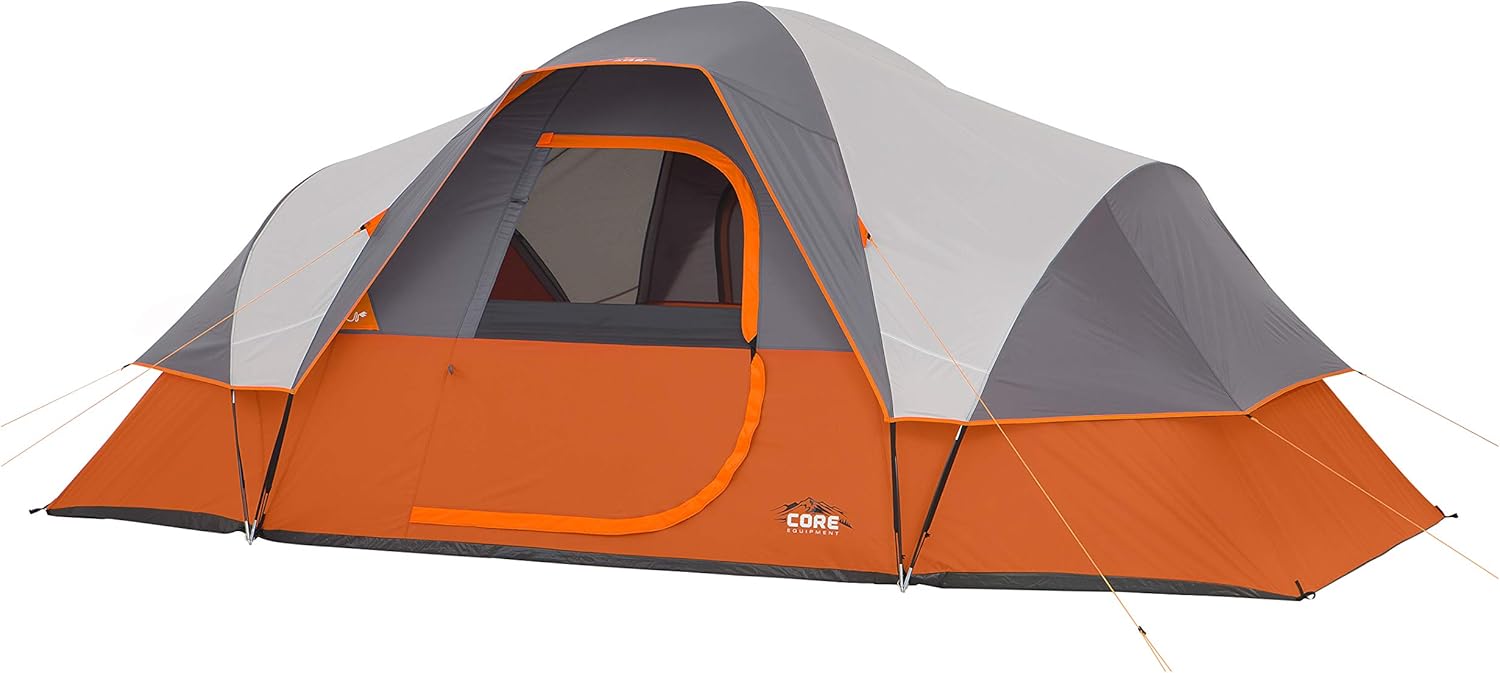
9-Person Capacity with Real-World Flexibility
At 16 feet by 9 feet, this family camping tent actually sleeps two adults, two kids, and a pile of damp gear without everyone tangled together. The rated 9-person capacity assumes sleeping bags packed tight, but in practice, a dome tent this size gives you breathing room on a wet weekend when jackets, boots, and backpacks need somewhere dry to land.

72-Inch Peak Height Means Standing Room
Unlike smaller camping tents, you can stand upright at the center without ducking. On a rainy morning when the kids are restless and Sarah's making coffee in the vestibule, that extra headroom keeps everyone from feeling boxed in. The two ridge poles that run the length of the tent maximize that interior space, though setup does take two people or a solid 15 minutes solo.

H2O Block Seams and Heat-Sealed Rain Fly
The heat-sealed seams from the rain fly down to the floor have held up through multiple wet trips in the Cascades and Olympic Peninsula. The fly coverage is generous, and when you pitch it with the adjustable ground vents cracked open, condensation stays manageable even on cold, damp nights. The thick tape on the fly edges resists wind-driven rain better than standard seams.

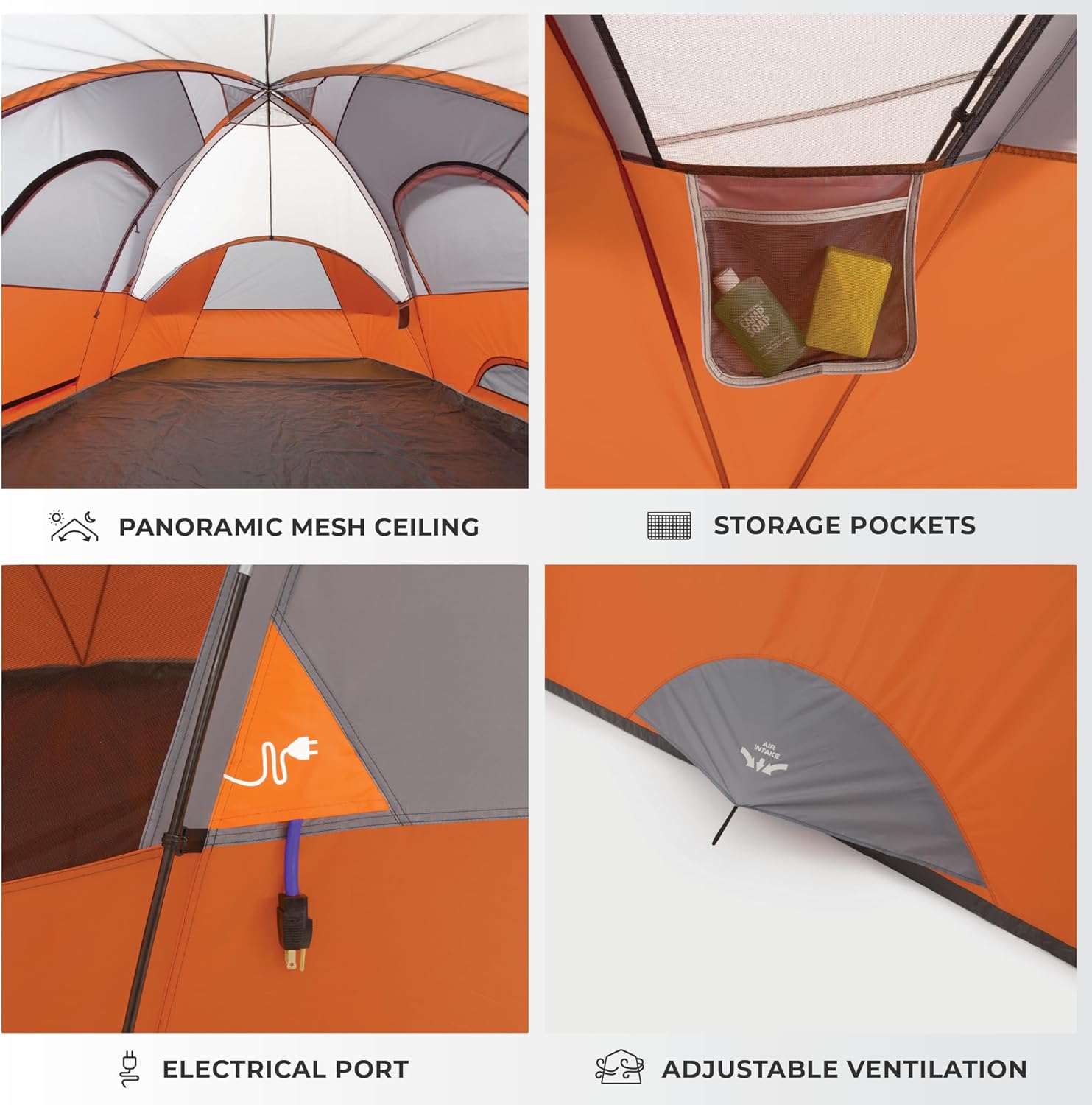
Gear Loft and Lantern Hook for Organization
A family tent this size needs somewhere to stash wet layers and backpacks off the floor, and the built-in gear loft does exactly that. The lantern hook is useful for a battery light, and the pockets keep small items from rolling around. On rainy mornings, having jackets and socks hung up instead of piled on sleeping bags makes a real difference.

Pros
- Blocks 90% sunlight for sleep past sunrise
- 72-inch peak height, standing room inside
- Two room dividers for privacy/organization
- Fully taped seams and sealed rain fly
- Fits three queen air beds comfortably
Cons
- Heavy and bulky for backpacking trips
- Setup requires two people in wind
90% Blackout Technology and Morning Sleep
Sleeping past 6 a.m. on a summer camping trip isn't a luxury when you have an 8-year-old, and this family tent's blackout fabric actually delivers. The first morning we pitched it near Elk Lake, both kids stayed asleep an extra 90 minutes while the sun climbed. That alone is worth the price for a parent who needs coffee before the chaos starts. The downside: on cooler shoulder-season trips where you want early light to warm things up, you'll need to unzip the fly manually or wait for the heat to build inside.

72-Inch Peak Height and Real Standing Room
Most dome tents force you into a crouch by the edges, which gets old fast when you're changing clothes or helping a kid get dressed in the rain. This one's hybrid design gives genuine standing headroom at the peak, and Sarah can move around the center without bumping her head. The tradeoff is the sloped walls eat into floor space near the perimeter, so don't count on sleeping four adults shoulder-to-shoulder if you're using the full footprint. For two adults and two kids with gear, it's roomy enough that nobody's kicking anyone at 3 a.m.

Two Room Dividers for Three Zones
On a rainy weekend in the Cascades, the ability to divide the tent into three sections meant the kids had their own dry space, Sarah and I had ours, and we had a gear staging area near the door. The dividers attach with clips and go up in about two minutes. They don't seal completely, so you're not blocking air flow or creating a full wall, but they give enough visual separation that the kids feel like they have their own corner. On shorter trips where we're just sleeping four people, we skip the dividers entirely and keep the open floor.

1200mm Fabric and Fully Taped Seams for Rain
A wet fly on a 14-hour drizzle through the Olympic Peninsula is the real test, and this camping tent stayed dry. The 1200mm H2O Block rating handles Oregon's shoulder-season rain without pooling, and the fully taped seams on the fly mean water doesn't find the stitching. Setup matters too: guylines and steel stakes come included, and if you tension them right in wind, the fly doesn't flap and dump water onto the tent body. The one caveat is the floor isn't treated the same way, so a footprint or tarp underneath is necessary on wet ground or rocky dispersed sites.


Pros
- Genuine standing-height interior
- Multiple doors for bathroom access
- Mesh ceiling and ventilation
- Two-room divider included
- Fully waterproof rain fly
Cons
- Requires two front door poles separately
- Heavy for backpacking trips
13.1 x 9.1 ft Floor Fits Two Queen Mattresses Plus Gear
When Sarah and I laid out two air mattresses side by side, we had roughly three feet of buffer on either side for backpacks, boots, and the kids' sleeping bags. That extra space matters on a rainy weekend when you're not breaking camp at dawn. The floor is taut and holds shape even when you're moving around at night, and the family camping tent layout lets you organize sleeping zones without stepping over people.

One thing: the floor material is functional but not bombproof. On sharp gravel or rocky dispersed sites, I'd recommend a footprint or tarp underneath to extend its life.
76.7-Inch Peak Height for Changing Clothes Without Contortion
The first time we pitched this tent on a wet Mount Hood weekend, I stood fully upright in the center to change out of soaked rain gear. Both kids could stand too, which meant no crouching, no bumping heads, and no frustrated eight-year-old. For a large family tent, that peak height is genuinely useful on shoulder-season trips when you're dealing with damp clothes and need to move around inside.

The height does come with a tradeoff: the tent footprint is large, so you need a clear, level spot. Sloped campsites require more prep work than a smaller dome.
Three Mesh Doors and Divided Interior for Privacy
Three separate mesh entry points mean no one is climbing over sleeping bodies for a midnight bathroom run. The removable curtain divider lets you section off one room for the kids and keep the other for adults, which makes a real difference on back-to-back camping weekends when everyone needs to sleep on their own schedule. The mesh doors and ceiling keep bugs out while letting air move through, and the top mesh panel opens up the whole sky on clear nights.

Setup note: you only get two front door poles in the box, so the third door needs a tree branch or improvised support. That's worth planning for on your first trip out.
PU1500mm Waterproof Fly and Sealed Seams Handle Rain
We took this waterproof camping tent into a steady drizzle over the Olympic Peninsula, and the rain fly and fully taped seams kept everything dry inside. The fabric stayed dry in light rain and moderate shoulder-season wet, though Vidalido's own notes say don't push it in heavy downpours or thunderstorms. On cold mornings, expect some condensation on the mesh ceiling and inner walls, which is normal for any tent in that temperature swing between Oregon coast and interior camps.

The rain fly is substantial and covers the tent well. Stake it tight and run the guylines properly, especially in wind, and you'll have solid performance for typical weekend camping.

Pros
- Three doors for midnight bathroom runs
- Standing-height peak fits adults upright
- Straight walls maximize sleeping space
- Front canopy for wet-weather gear staging
- Four-mattress sleeping layout option
Cons
- Heavy for solo setup without help
- Requires stakes on uneven ground
8-10 Person Capacity with 12.5 ft Length
Four large air mattresses fit edge to edge across the 8.5-foot width, which is exactly what the spec claims. Real talk: with two kids, Sarah, and me, we use two mattresses and still have room for a gear corner and a standing-height aisle down the middle. Unlike the cramped 4-person family camping tent we borrowed once, standing upright here means no head bumps when changing clothes or getting the kids dressed in cold weather. The straight walls do the heavy lifting.

Three Doors and Five Mesh Windows
Two front doors with windows plus two rear windows and two side windows mean someone can always slip out for a bathroom run without stepping over sleeping bags. On a humid September trip to the Olympic Peninsula, we kept the rear windows unzipped and the front doors cracked. The cross-ventilation cut condensation by half compared to our old single-door setup. Mesh is tight enough to keep bugs out even when the tent is pitched near water. One quirk: the three-sided rain fly coverage leaves the rear windows exposed, so heavy driving rain from behind can still find its way in if you're not careful with the window angle.

Rain Fly with Front Canopy Extension
The dual rain fly setup with front canopy is built for the kind of Oregon shoulder-season trips we do constantly. Unzip the side zippers and extend the canopy using the two included poles, and suddenly you have a covered staging area for muddy boots and wet rain jackets before they come inside. On a wet Mount Hood weekend, we ditched our old tarp-and-rope setup entirely and just used the canopy. The 5-foot width is snug for two adults and a pile of soaked gear, but it works. Setup takes an extra five minutes, and you need to drive stakes deep on soft ground.

Straight Wall Design and 30-Pound Packed Weight
At 30 pounds, this 6-person family tent stays light enough to load into the minivan alongside two kids, sleeping pads, and a week's worth of camping food without overloading the suspension. The straight walls give you roughly 20 percent more usable floor than a tapered dome of the same footprint, which matters when you're fitting two kids, two adults, and a pile of damp gear inside. It's not ultralight backpacking territory, but for car-camping weekends dispersed in the high desert or state park loops, the weight-to-space ratio is solid. Pack it down and it's bulky but not impossible for one person to carry from the car to the site.

How I Tested
Three Oregon shoulder seasons worth of weekend trips went into this list. Each tent was pitched solo with kids waiting, slept in for at least three nights, and broken down in less-than-ideal conditions. I measured setup time with a real family, not a backyard timer. Anything that leaked at the seams, sagged under wind at exposed campsites, or took more than 15 minutes to pitch got cut. Real weather is the only test that matters.
FAQs
How many people actually fit in a 9-person tent?
Four people comfortably with sleeping bags and gear, or five if you are willing to pack tight. Nine is the number without any gear at all, which is not real camping. A family of four with air mattresses will feel roomy. Two adults and two kids with sleeping bags feel spacious.
What waterproof rating do you actually need?
1200mm fabric and fully taped seams will handle Pacific Northwest rain all season. Anything less and you will see seepage in a hard downpour. The rain fly matters more than the tent floor. If the fly does not cover the whole tent, water runs down the sides and finds the seams.
Are instant pop-up tents worth the money?
Yes, if you are pitching solo with kids or in bad weather. Two minutes beats 15 minutes when it is raining and everyone is tired. The trade-off is weight and packed size. They are heavier and bulkier than traditional poles, so they work better for car camping than backpacking trips.
Do you need a footprint for a 9-person tent?
Not required, but it extends the floor life by years. A footprint costs around $30 to $50 and keeps moisture and ground debris off the tent floor. On a wet trip, it makes a real difference. Skip it if you are on a tight budget, but add it later.
How long does a quality tent last with regular family use?
Four to six seasons of weekend trips if you take care of it. Let it dry fully before packing, store it unrolled in a cool place, and reseal the seams every couple of years. Neglect those steps and you will see mold or seam leaks by year two. The fabric itself holds up fine. The seams and zippers are what fail first.
Can you pitch a best 9-person camping tents solo in wind?
Instant tents are easier solo because the frame locks fast. Traditional dome tents need all poles inserted before the frame stands, which is harder with one person in gusts. Cabin tents sit lower and catch less wind, but they are harder to pitch alone. Know your setup style before you buy.


Write Your Review
No reviews yet. Be the first to share your experience!