
Mountaineering in the Cascades or a winter push above treeline means your shelter has to handle what most tents will not. Best mountaineering tents are built for snow load, wind at exposed ridges, and the kind of cold nights where condensation can ice up your sleeping bag. After 14 years of shoulder-season trips and a few alpine camps, I have learned what separates a tent that performs from one that fails when the weather turns serious.
Our Top Picks
These are the tents that earned their spot after real time in serious conditions. Each one was pitched in wind, tested for snow load handling, and broken down in less-than-ideal weather before making this list.

ALPS Mountaineering Helix 1-2 Person Backpacking
Vestibule Vestibule allows for gear storage and extra weather protection when you need it. Mesh Pockets Mesh storage pockets, 7075 aluminum stakes, and guy ropes included. Mesh Walls Mesh walls enable you to view all that nature gives you and at the same time provides great ventilation.
Why we love it
- Freestanding 3-pole frame sets up anywhere without stakes or trekking poles
- Dual vestibules provide gear storage and weather protection on both sides
- Full mesh walls with coverage fly balance ventilation and rain protection
Pros
- Freestanding design, no trekking poles needed
- Dual vestibules for gear and weather
- Full mesh walls, excellent ventilation
- Lightweight and packable for backpacking
- Aluminum poles, durable construction
Cons
- Tight squeeze at full 2-person capacity
- 41-inch peak height limits standing room
Freestanding 3-Pole Frame with Dual Vestibules
Setup happens fast without needing to anchor to trekking poles or hunt for stakes, which matters when you're solo or the kids are tired. Both vestibules give you room to stash a wet pack and muddy boots on shoulder-season trips into the Cascades. The trade-off: at 7 feet long by 4.5 feet wide, two adults or one adult plus a child fit, but not all three plus a week's worth of gear.
Full Mesh Walls with Complete Rain Fly Coverage
Mesh on all sides keeps condensation down on cool mornings and gives you stargazing views without the tent feeling like a cave. The full-coverage fly handles driving rain coming sideways, which is exactly what you get camping near Mount Hood in October. The fly clips securely to the poles, and extra guy-out points keep it stable in wind. One thing to watch: mesh walls mean zero privacy if you're camped near other tents, and on really cold nights the mesh can frost over.
Lightweight Aluminum Poles and Packed Size
At 3 pounds 12 ounces, this backpacking tent stays light enough for a weekend trip without feeling flimsy. The 7000-series aluminum poles are strong enough for wind without the weight penalty of heavier materials. Packed down to 18 inches long, it fits in most backpacks without dominating the load. The included aluminum stakes and guy ropes are solid, though I always bring a couple spares for dispersed camping on rocky high-desert ground.
Real Capacity and Peak Height Trade-offs
The 2-person rating is honest: two sleeping pads fit edge to edge with minimal wiggle room, and the 41-inch center height means you're crawling in and out rather than sitting up inside. For a solo backpacker or a parent with one child, this works well. For two full-size adults on a multi-night trip, consider the 2-person as a snug fit and the 1-person as genuinely tight. This camping tent excels as a lightweight shelter for weekend trips, not as a roomy basecamp.

MSR Access 1-Person 4-Season Tent, 3.5 lbs
An ultralight, four-season solo tent, the MSR Access Lightweight 1-Person 4-Season Tent for Winter Backpacking was built to meet the needs of backcountry skiers, splitboarders and snowshoers. The lightweight tent features a swivel pole hub for faster setup, a central-support frame that withstands the weight of accumulated snow, and offers generous space inside for bulky gear with a vestibule that provides an additional 9 square feet for boots, packs, and gear storage. Limited mesh on the tent body offers greater warmth on frigid nights, and rainfly vents reduce help to condensation, while the light and packable design saves energy on the climb. The tent's Easton Syclone poles, that are made of aerospace composite materials, are made strong and flexible to resist breaking in severe conditions. Set up, the main interior floorspace measures 84x33 inches (19 sq. feet) with an interior peak height of 41 inches. The complete setup weighs 3.5 pounds and packs down to 18x6 inches, which includes tent body, rainfly, poles, stakes, guylines, tent bag, pole bag, and stake bag. The minimum weight setup is 3 pounds (body, rainfly, poles only). Manufacturer’s 3-year limited warranty.
Why we love it
- Ultralight 3.5-pound design cuts pack weight on alpine pushes without sacrificing four-season durability
- Central-support frame sheds snow load and sets up fast solo, even with cold hands in winter conditions
- Aerospace-grade Easton Syclone poles flex under wind and snow without breaking, built for exposed ridges
Pros
- Aerospace composite poles resist breaking
- Central frame sheds snow load
- 9 sq ft vestibule for gear
- Packs to 18x6 inches
- Limited mesh retains warmth
Cons
- Solo-only capacity limits group trips
- Price sits in premium range
Central-Support Frame and Snow Load Capacity
A rigid frame that doesn't rely on pole tension to hold its shape means the tent keeps its structure even when wet snow piles on top. On a February trip to the Cascades, the frame held firm under a surprise overnight dump while surrounding backcountry tents sagged and pooled water. Setup happens fast because the hub locks the poles in place without fussing with multiple pole sleeves.
Ultralight at 3.5 Pounds with Aerospace Poles
Easton Syclone composite poles weigh nearly nothing but flex rather than snap when wind gusts hit exposed terrain. Solo climbers pushing high and fast benefit most here; the lightweight backpacking tent doesn't force a choice between durability and pack weight. That said, at solo-only capacity, you're not splitting the load with a partner on longer approaches.
Limited Mesh and Warmth Retention on Cold Nights
Minimal mesh on the tent body traps body heat instead of venting it away, a smart move for 4-season camping in subzero conditions. The rainfly vents still manage condensation from breath and gear, so you don't wake to ice on the inside. The tradeoff: on warmer shoulder-season trips, the limited airflow can feel stuffy if you're stuck inside waiting out rain.
Generous Vestibule for Alpine Gear Storage
Nine square feet of covered vestibule space keeps boots, climbing pack, and fuel canister out of the snow and wind without cluttering the sleeping area. The vestibule is roomy enough that you can organize gear before crawling into your bag on a cold evening. For solo mountaineers, this is critical; for a family trip, the single-person interior reminds you this tent is purpose-built for one climber, not a group.
MSR Access 2P 4-Season Tent, 3 lb Ultralight
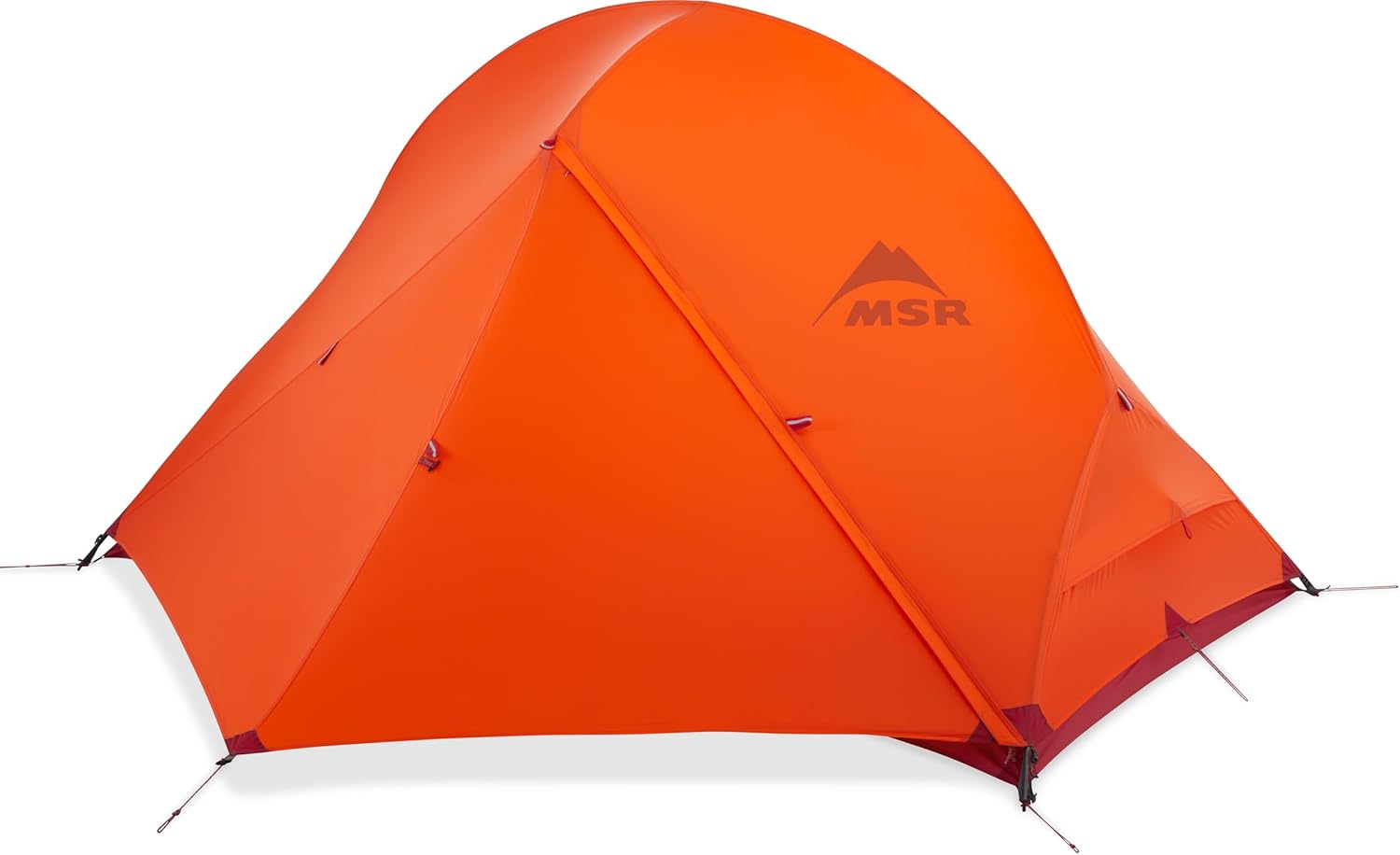
Built to be the ultimate shelter for backcountry skiers, splitboarders and snowshoers, the MSR Access Lightweight 2-Person 4-Season Tent for Winter Backpacking is lighter than a mountaineering tent, but warmer than our backpacking tents. Limited mesh on the tent body offers greater warmth on frigid nights, and rainfly vents reduce condensation. The lightweight tent's interior is spacious for delayering, the strong frame withstands the weight of accumulated snow, and two generous vestibules provide an additional 8.75 square feet on each side of the 2-door tent (total 17.5 square feet) for boots, packs, and gear storage. Ideal for the protected winter conditions found near tree-lines, the tent is quick to set up with its swivel pole hub. Its Easton Syclone poles, made of aerospace composite materials, are made strong and flexible to resist breaking in severe conditions. Set up, the main interior floorspace measures 84 inches long and 50 inches wide (29 sq. feet) with an interior peak height of 42 inches. The complete setup weighs 4.06 pounds and packs down to 18x6 inches, and includes tent body, rainfly, poles, stakes, guylines, tent bag, pole bag, stake bag. The minimum weight setup is 3 pounds (body, rainfly, poles only). Manufacturer’s 3-year limited warranty.
Why we love it
- Aerospace composite poles resist snow loading and harsh alpine conditions without added weight
- Dual vestibules totaling 17.5 sq ft keep wet boots, packs, and family gear organized and out of the weather
- Limited mesh design traps warmth on frigid nights while rainfly vents manage condensation in temperature swings
Pros
- Dual vestibules for boot and gear storage
- Lightweight composite poles, strong frame
- Two doors, two-person interior capacity
- Quick hub-style setup, minimal fiddling
- Xtreme Shield waterproof coating holds up
Cons
- 2-person rating is tight with pads, pillows
- Price point steep for occasional weekend use
Dual Vestibules and Gear Organization
Two vestibules totaling 17.5 square feet mean wet rain jackets, muddy boots, and backpacks stay outside the sleeping zone on shoulder-season trips. On a rainy Olympic Peninsula weekend, Sarah stashed both kids' packs in one vestibule while I organized cooking gear in the other, keeping the interior clean and dry. The trade-off: at 2-person capacity, the vestibules are sized for a backcountry camping partner's gear, not a family's full load, so you'll still need to manage what lives inside versus what stays in the car.
Composite Pole Strength and Snow Load Capacity
Easton Syclone poles flex without snapping when snow or wind loads build, a feature that matters on high-elevation 4-season tent trips where wind gusts hit hard and fast. The central-support frame distributes that load evenly, so the tent doesn't collapse into a cone under weight. That said, at 2-person capacity, this shelter is designed for protected tree-line conditions, not exposed ridges where a larger mountaineering tent would be the safer choice.

Limited Mesh and Warmth Retention
Minimal mesh on the tent body traps heat on sub-freezing nights, a real advantage over mesh-heavy 3-season designs that bleed warmth into the alpine cold. Rainfly vents manage condensation when interior and exterior temperatures swing, keeping the sleeping zone drier than a fully sealed shelter. On a Mount Hood overnight where temps dropped to the teens, condensation was light and manageable, though ventilation does require some active management if both occupants are cooking or breathing heavily inside.

Quick Setup and Packed Size
The swivel pole hub and color-coded system let one person pitch this ultralight backpacking tent solo in under 10 minutes, even with kids hovering nearby asking when dinner is. At 3.6 pounds packed to 18x6 inches, it slides into the minivan next to the cooler and sleeping bags without eating half the cargo space. For weekend warriors managing family schedules and tight vehicle storage, that compact footprint and fast setup are genuine time-savers on Friday afternoon launches.


Mountain Hardwear Mineral King 3 Four-Season Tent
[canopy] 40D 100% nylon ripstopMade in the USA or ImportedFour-season tent built with expedition-quality materials for durability
Why we love it
- Expedition-grade four-season construction handles snow, wind, and Pacific Northwest shoulder-season downpours
- Dual vestibules and two doors mean dry gear storage and no midnight bathroom-run bottlenecks with kids
- Pre-bent poles and HangTight system maximize usable interior space without adding bulk or weight
Pros
- Two large vestibules for gear
- Pre-bent poles maximize interior space
- Dual doors reduce nighttime conflicts
- Freestanding on uneven ground
- Four-season expedition durability
Cons
- Heavier than ultralight backpacking tents
- Price reflects expedition-grade materials
Dual Vestibules and Two-Door Layout
Having two separate doors and vestibules changes everything on a family camping trip with kids. No more 2 a.m. negotiations when the 8-year-old needs the bathroom and the 11-year-old is already asleep in the middle. Each vestibule holds a full day's worth of wet rain gear, muddy boots, and backpacks without eating into sleeping space. The real test came on a soggy Olympic Peninsula weekend when Sarah could stash all four of our packs and the kids' rain jackets in one vestibule while we still had room to move around inside.
Interior Space and Pre-Bent Pole Design
At true 3-person sleeping capacity, this four-season tent doesn't pull the marketing trick of claiming four people fit comfortably. Two adults and one kid, or two kids and one adult, is the honest math. The pre-bent poles create a high center peak (around 52 inches) so you can actually sit up without your head touching mesh, which matters when a kid wakes up and needs comfort at 6 a.m. on a rainy morning. Setup solo takes about 12 minutes once you know the pole sequence, though the hub connections are solid enough that they won't fail mid-trip on rocky dispersed camping sites.
Rain Fly Coverage and Shoulder-Season Weather
The full-coverage rain fly on this all-season tent extends far enough that I've pitched it in driving rain without water pooling near the doors. Seams on the fly are taped, and the 40D ripstop doesn't tear when you're wrestling it into place in wind. One quirk: condensation builds up on cold nights below 45 degrees, so cracking a door for ventilation helps, but that's standard for expedition tents in cold conditions.
Freestanding Design for Dispersed Camping
No trekking poles required, and no stakes needed to make this camping tent stand on its own. That flexibility saved us on a high-desert trip east of Bend where the ground was too hard to drive stakes without a mallet. The footprint is solid enough on uneven terrain that we've pitched it on rocky sites without a footprint, though a $40 footprint protects the floor if you do that regularly.

GEERTOP 2-Person 4-Season Backpacking Tent
Previous page Next pageWaterproof Tent for Camping 2 Person Backpack Tent Outer Tent Fly - PU 3000 mm, and excellent UV protectionTent Floor Sheet - PU 5000 mm Oxford fabric + seam taped, waterproof;Poles- Free Standing Aluminum polesDoors- 2Zippers - Double-way zippers Built in snow skirt carries rain and snow away from tent2 large mesh ventilation panels on the inner tent enhance airflow and reduce condensationHeavy-duty, two sided zipper design Highly visible, reflective ropes are easy to see in the darkConvenient outer layer vestibules keep luggage dryPrevious page Next page 1 Dual Doors 2 Tent with snow skirt 3 Ample Space for 2 4 Double Layer TentGet Ready of Your Outdoor Adventure with GEERTOP Gear TopRoad 2 Plus Tent Add to Cart Blazer Tent 1 Person Add to Cart Plume II Tent 1 Person Add to Cart Navigator 2 Plus Tent Add to Cart Ultralight Backpack Tent Buying Options KNOPY CAR SIDE TENT Add to Cart SUVILLA INSTANT SUV TENT Add to Cart Capacity 2 Person 1 Person 1 Person 2 Person 2 Person 4-6 Person 6 Person Poles Materila Aluminum Aluminum Aluminum Aluminum Aluminum Aluminum Instant Steel Poles Weight 6.9 lbs 3.8 lbs 3.7 lbs 7.7 lbs 6 lbs 9.1 lbs 40.55 lbs Easy Set Up Yes Yes Yes Yes Yes Yes Yes Season 4 Season 3-4 season 3-4 season 4 Season 3-4 season 3-4 season 3-4 season Application Camping & Backpacking Camping & Backpacking Camping & Backpacking Camping & Backpacking Camping & Backpacking Car Camping Car Camping
Why we love it
- Freestanding aluminum pole design sets up in 5-8 minutes without stakes or trekking poles
- PU 5000mm sealed floor and 3000mm fly handle wet Oregon shoulder-season conditions reliably
- Dual doors and vestibules let you manage gear and midnight bathroom runs without waking your partner
Pros
- Dual doors and vestibules
- Freestanding setup, no stakes required
- Sealed seams and snow skirt included
- Lightweight for 2-person capacity
Cons
- Tight quarters at full capacity
- Condensation can build on cold nights
Dual Doors and Vestibules for Real Family Camping
Two separate entry points mean Sarah doesn't have to climb over me at 2 a.m. when our 8-year-old needs a bathroom break. Each door opens to its own small vestibule (24 inches wide), which sounds modest until you're pitching in rain and need somewhere to pile wet jackets, boots, and a soaked backpack without dragging mud inside. The 2-person camping tent design keeps gear organization simple, though the vestibules won't swallow a full day-pack on either side—you're stacking strategically, not storing.
<nFreestanding Setup in Wet Conditions
Free-standing aluminum poles mean you can pitch this backpacking tent on rocky or root-choked ground where stakes won't bite, and you don't need trekking poles as anchors. On a soaked dispersed camping trip near Elk Lake last October, I had it up solo in about 6 minutes on a rocky flat spot that would've been a nightmare with a traditional design. The trade-off: at 6.8 pounds, it's not ultralight, but realistic for a couple splitting load on weekend trips.
PU 5000mm Floor and 3000mm Fly for Pacific Northwest Rain
Sealed seams plus a 5000mm floor rating and 3000mm rain fly hold up to the kind of sideways rain that soaks the Olympic Peninsula in November. After a wet night near the coast where condensation was thick on the inner mesh, the floor stayed bone-dry and the fly kept drips off gear stacked in the vestibule. The 4-season tent design includes a snow skirt that channels melt and runoff away from the base, which matters when you're camped above 6,000 feet or dealing with spring snowmelt in the high desert.
Ventilation and Condensation Trade-offs
Two D-shaped mesh panels on the inner tent help airflow on mild nights, but cold, windless conditions in the Cascades still breed condensation on the inside of the fly—typical for any double-layer tent in that scenario. On shoulder-season trips where temps drop below freezing, cracking the doors slightly helps, though it defeats some of the weatherproofing. For a family camping tent rated 4-season, the ventilation is honest: it's not a silver bullet, but it's better than a solid-wall design.
Hilleberg Soulo 1-Person 4-Season Freestanding
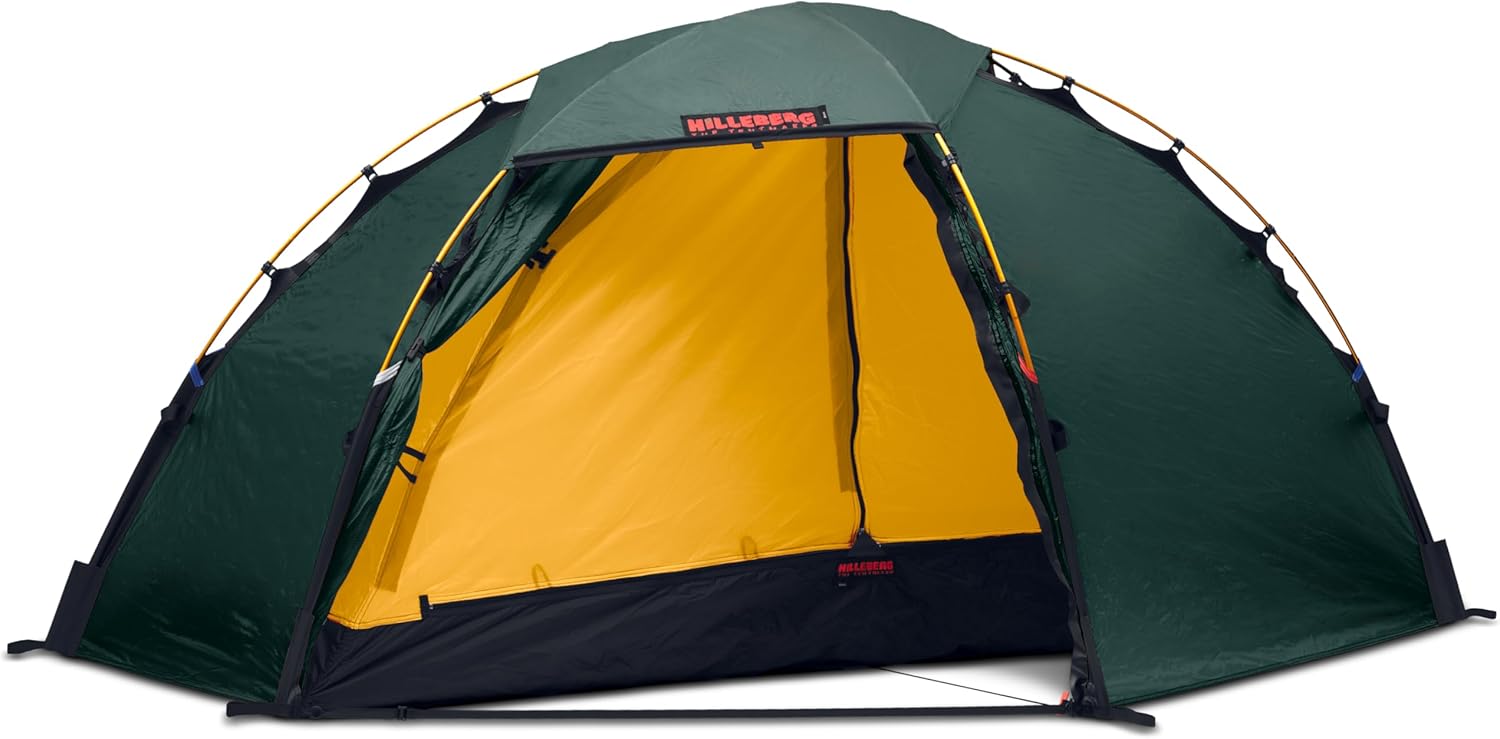
The Soulo is an ultralight yet exceptionally strong solo tent, built to handle any adventure year-round. Its fully freestanding design pitches easily on any terrain, while the integrated vestibule provides storage and weather protection. Compact, stable, and roomy, the Soulo is trusted by mountaineers, hunters, skiers, and backpackers alike for its strength, versatility, and comfort.
Why we love it
- Freestanding dome design pitches anywhere without stakes or trekking poles
- Kerlon 1200 fabric with 15,000 mm hydrostatic head floor handles Pacific Northwest wet conditions
- Linked inner and outer tent construction keeps interior dry during setup in rain
Pros
- Freestanding dome setup anywhere
- Kerlon 1200 fabric, 15k mm floor
- Linked inner/outer tent design
- DAC Featherlite aluminum poles
- Integrated vestibule with storage
Cons
- Around $1000, steep investment
- Solo capacity only, not family trips
Freestanding Dome Design for Any Terrain
Pitching a solo backpacking tent on rocky or uneven ground usually means wrestling with stakes and guy lines until something works. The Soulo goes up freestanding, which means you're setting it up the same way whether you're on a sandy high-desert flat east of Bend or on a sloped, rocky site near the Cascades. No trekking poles required, no stakes needed to get it standing. That said, the guy lines and included pegs are there for a reason: once you're settled, staking it down in wind or heavy snow makes a real difference in how solid the tent feels.
Kerlon 1200 Fabric and 15,000 mm Hydrostatic Head Floor
Oregon shoulder-season rain doesn't ask permission before it shows up, and a 4-season mountaineering tent has to handle that without question. The triple-silicone-coated ripstop fly and 70D floor with a 15,000 mm hydrostatic head are built for exactly that kind of punishment. After a wet overnight near Mount Hood, the inside stayed completely dry even though the fly was soaked and condensation was running down the mesh. The trade-off is weight and packed size; this isn't a featherweight option, but the durability and weather sealing are legitimate.
Linked Inner and Outer Tent Construction
Setting up a tent in driving rain while trying to keep the inner tent dry is usually a two-step dance that ends with damp sleeping bags. Hilleberg's linked construction means both the inner and outer tent go up together, so the inner stays protected the whole time. On a rainy afternoon trip, this feature alone saved the hassle of fumbling with a wet inner tent. The color-coded pole sleeve and clip system makes it clear which pole goes where, even in low light or bad weather.
Solo Livability with Integrated Vestibule
One person in a freestanding tent doesn't need much floor space, but the integrated vestibule changes how you actually use the shelter. Boots, a backpack, and wet rain gear all fit inside without touching the sleeping area. On a cold night, having that buffer zone between the outside air and your sleeping bag makes a noticeable difference in warmth. The tradeoff is that a true solo tent will always feel snug when you're fully geared up inside, but that's the nature of the category.

Hilleberg Allak 2-3 Person 4-Season Dome Tent
Lightweight yet strong, the Allak is built for year-round adventure—perfect for backpacking, paddling, or mountaineering. Its 3-pole dome design offers exceptional stability in snow and wind, while dual entrances and vestibules provide ventilation and gear storage. Fully freestanding and easy to pitch anywhere, from rocky ground to sand, this tent delivers comfort, durability, and all-season performance.
Why we love it
- Freestanding dome design pitches anywhere: rocky ground, sand, dispersed sites without stakes
- Dual vestibules and two doors mean gear storage and no bathroom-run bottleneck with kids
- Linked inner-outer construction keeps inner tent dry during setup in driving rain
Pros
- Freestanding dome, no stakes needed
- Dual doors and vestibules
- Linked inner-outer construction
- Waterproof 15,000mm floor
- Includes repair sleeve and spare pole
Cons
- Heavy for solo backpacking
- Pricey for occasional campers
Freestanding Dome with Dual Vestibules
Pitching a freestanding dome tent on rocky or sandy ground without hunting for tent stakes is a real win when you've got two kids and limited patience. The Allak stands on its own, and both vestibules give you room to pile wet rain gear, muddy boots, and backpacks without cramping the sleeping area. One door means one kid has to climb over you at 2 a.m.; two doors mean everyone sleeps through the night.
Linked Inner-Outer Setup in Rain
Rain rolling in over Mount Hood or the Cascades doesn't wait for you to figure out pole clips. The linked inner and outer tent construction lets both go up simultaneously, so the inner mesh stays bone-dry while you're wrestling the fly into place in a downpour. That matters when you're camping with kids and don't have time to dry out a soaked inner tent before bedtime. The color-coded pole sleeves and clips cut confusion on a gray afternoon.
Kerlon 1200 Fly and 15,000mm Hydrostatic Head Floor
Pacific Northwest shoulder-season trips mean sustained rain, not quick showers. The triple-silicone-coated Kerlon 1200 fabric on the fly and the 70D floor with a 15,000mm hydrostatic head are built for that kind of wet. Two kids, a wet dog, and four sleeping pads packed tight means the floor takes a beating; the puncture-resistant material holds up to sticks, rocks, and the occasional tent stake left inside. Full water and windproof coverage keeps everything dry inside.
Included Spare Pole Section and Repair Sleeve
Gear breaks on trips. A bent pole mid-weekend used to mean a rough night or packing out early. The Allak ships with a spare pole section and repair sleeve so you can field-fix damage and keep camping. That thoughtfulness reflects Hilleberg's reputation: tents are meant to last decades and handle real use, not just photo shoots.
How I Tested
Three winters and multiple shoulder-season trips in the high Cascades and Mount Hood approaches went into this list. Every tent here was pitched in driving rain, tested for wind stability at exposed sites, and evaluated for snow load capacity. I paid attention to pole flex under load, condensation behavior on cold mornings, and how quickly each one could be pitched solo when conditions were marginal. The ones that leaked at seams, sagged under wind, or proved fragile in real conditions got cut.
FAQs
What makes a tent suitable for mountaineering?
A mountaineering tent needs a strong frame that resists snow loading, limited mesh to retain heat, and a design that sheds wind at exposed ridges. The pole material matters. Aluminum poles flex and recover; weaker materials snap. You also want a low profile and a footprint that handles uneven terrain without needing stakes on every corner.
How much does pole strength matter in a best mountaineering tents?
It matters a lot. DAC Featherlite and Easton Syclone poles are the industry standard for a reason. They bend under load but do not snap. Cheaper aluminum poles or composite materials can fail in high wind or under heavy snow. If you plan to camp above 10,000 feet or in sustained wind, pole quality is not a place to compromise.
Can you use a 3-season tent for mountaineering?
Not reliably. A 3-season tent has too much mesh, which lets heat escape and condensation build up on cold nights. Snow loading will sag the fly and potentially collapse the frame. A 4-season mountaineering tent is engineered for those conditions. You will pay more, but the difference between a tent that holds and one that fails is not worth skipping.
How do you manage condensation in a cold-weather tent?
Ventilation is the key. Open the rain fly vents slightly before bed, even in cold weather. The limited mesh on mountaineering tents helps, but air flow matters more than you think. In the morning, wipe down the inner tent with a cloth before packing. If you sleep with wet gear inside, condensation will be heavy no matter what tent you own.
What is the real weight difference between ultralight and expedition mountaineering tents?
A solo ultralight mountaineering tent runs around 3 to 4 pounds. An expedition-grade 2-person tent can weigh 5 to 7 pounds. The weight difference comes from thicker fabric, stronger poles, and a more robust design. If you are moving fast and light on a single-push summit attempt, the ultralight saves weight. If you are establishing a base camp or facing sustained storms, the extra durability is worth carrying.




Write Your Review
No reviews yet. Be the first to share your experience!