


Core 9 Person Instant Cabin Tent, 14'x9', 78" Peak
polyesterImportedINSTANT POP UP TECHNOLOGY: Pre-attached poles lock into place for setup in 2 minutes or less
Why we love it
- Two-minute setup with pre-attached poles, no assembly needed
- 14' x 9' floor sleeps 4-9 depending on gear, fits two queen air beds
- 78-inch center height lets you stand upright inside
Pros
- Instant pop setup
- Standing-height interior
- Full rain fly coverage
- Mesh ceiling ventilation
Cons
- Heavy for backpacking
- Bulky packed footprint
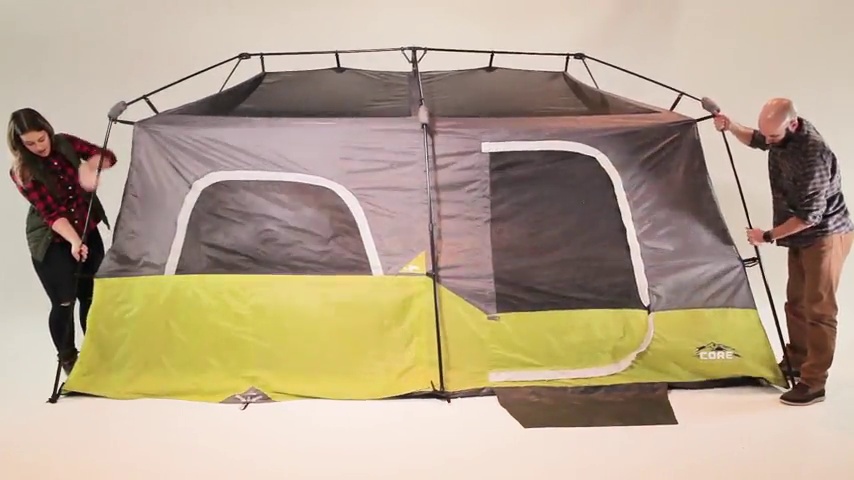
Two-Minute Setup with Pre-Attached Poles
The frame locks into place faster than you can unroll the rain fly. On a drizzly Saturday at a dispersed site near Bend, I had the tent standing before Sarah finished unloading the car. The pre-attached hub system eliminates the typical pole-threading hassle when you're tired or the kids are restless. One quirk: the poles feel a bit stiff the first few trips, so give them a gentle wiggle when locking them in to ensure they seat fully.
14' x 9' Floor with Genuine Standing Height
At 78 inches peak, both kids and Sarah can move around without ducking. The cabin tent layout lets you fit two queen air beds side by side with room for a gear pile or small table in the middle. Real capacity depends on how much stuff you bring: four people with full packs is cozy; nine without gear is a gymnasium. For a typical family weekend with sleeping bags, pillows, and a few bins of clothes, you're comfortable at 4-5 people.

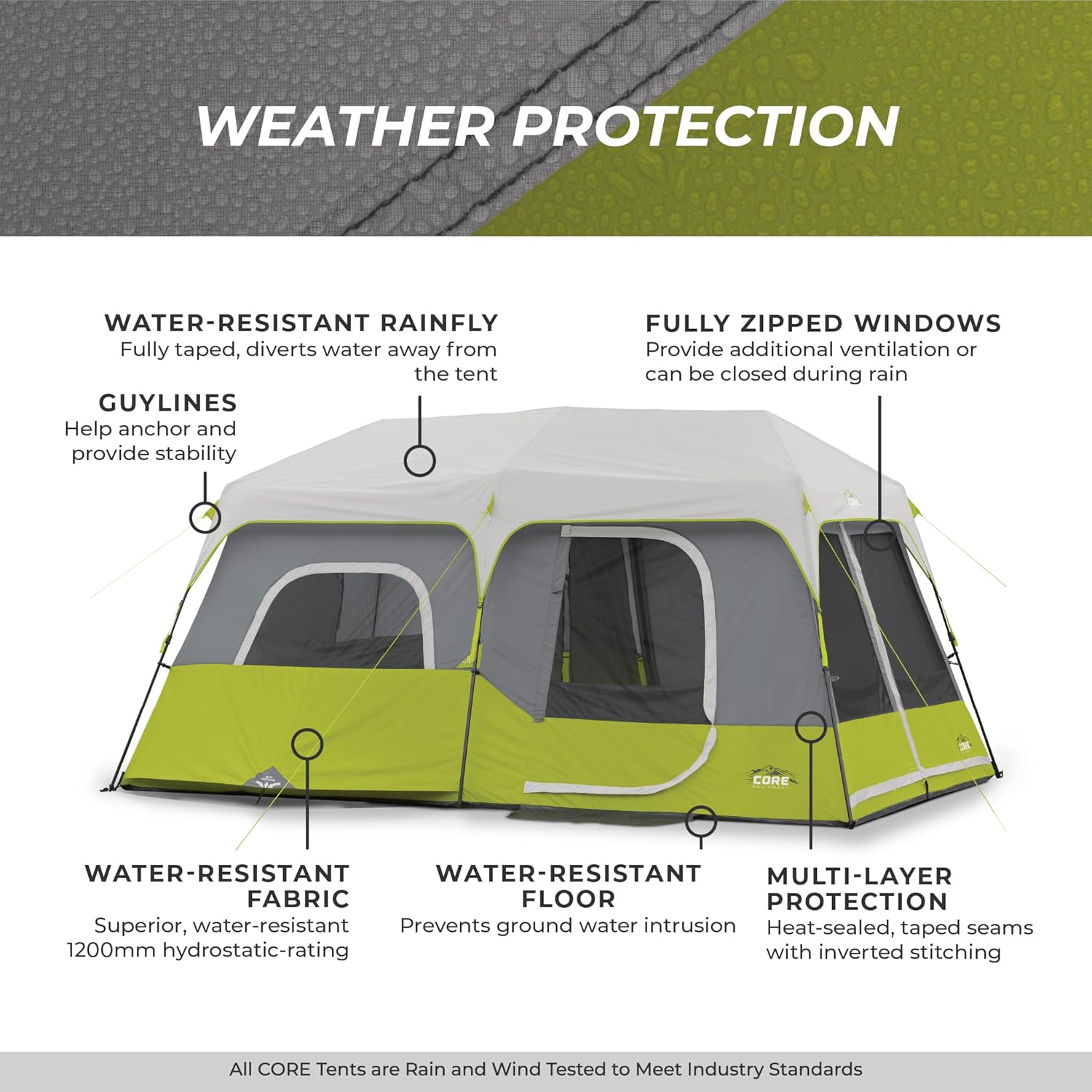
H2O Block 1200mm Fabric and Fully Taped Seams
The family camping tent has handled shoulder-season rain across the Cascades without leaks at the seams or floor. The rain fly extends far enough to keep water off the tent body when pitched correctly. Ventilation matters here: on cold, damp mornings, the mesh ceiling and lower vents reduce condensation buildup better than older cabin tents I've used. The fabric is polyester, so it takes time to dry after a wet trip, but it doesn't absorb water like cotton canvas would.
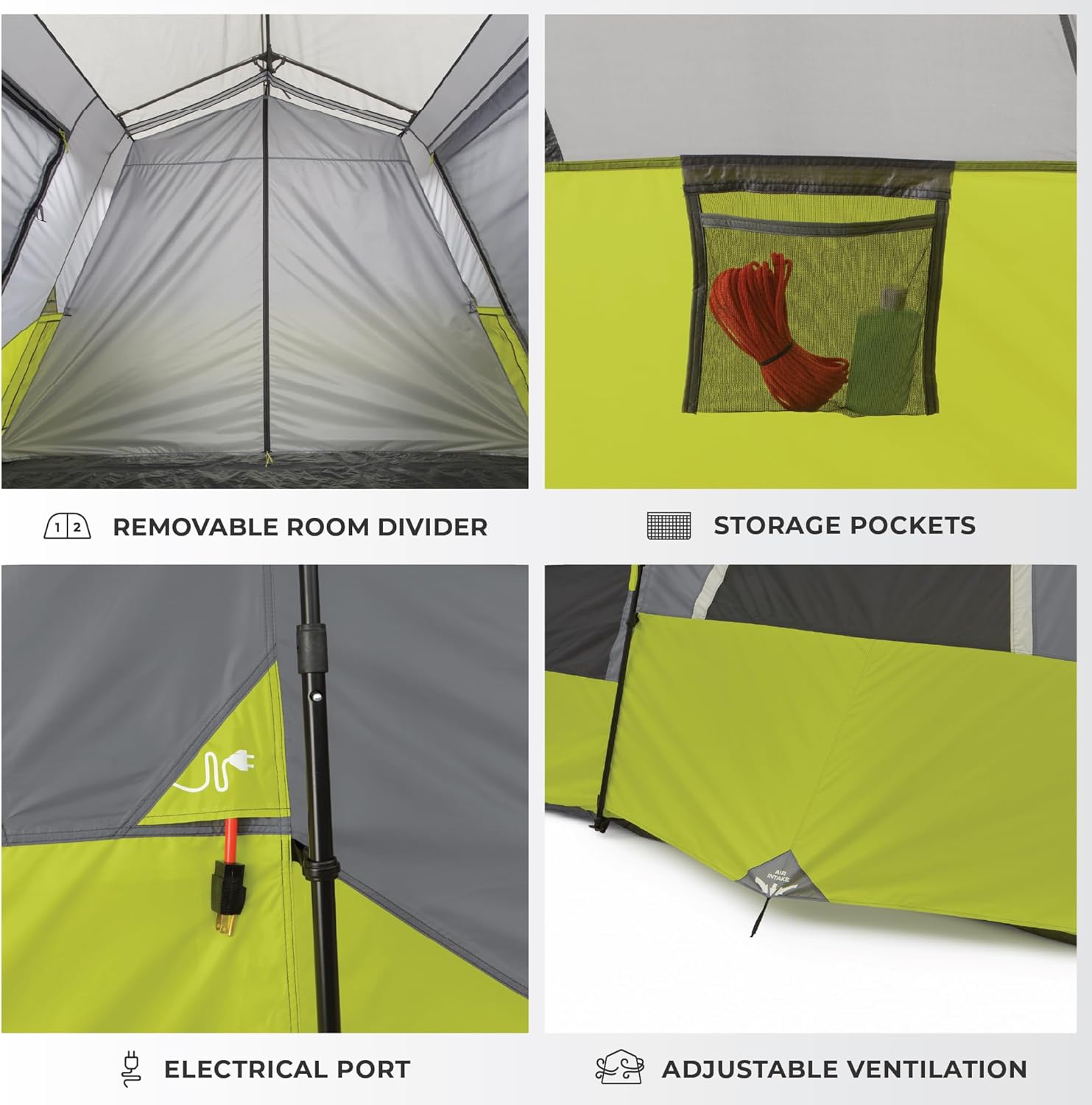
Storage Pockets and Interior Organization
Small pockets along the walls keep flashlights, phones, and sunscreen within arm's reach instead of lost in the dark. With two kids and a wife, clutter management is half the battle. The pockets aren't cavernous, but they hold enough to keep the floor clear and the tent feeling organized even when packed with sleeping gear and weekend supplies.
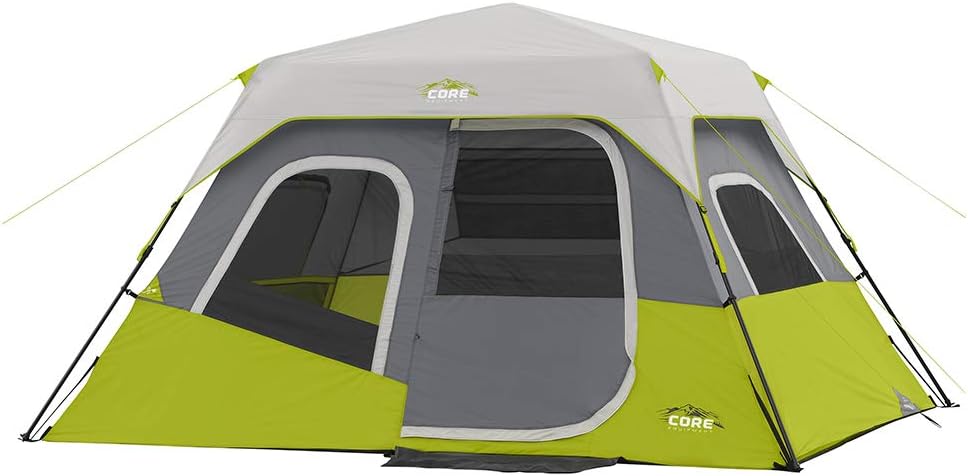
CORE Instant Cabin Tent | 6-Person Family Pop-Up
Instant tents are designed for campers who value speed, simplicity, and convenience at the campsite. With pre attached poles, these tents can be set up in a matter of minutes. Just unfold, extend, and secure. There is no need to sort through loose parts or spend time figuring out complicated instructions. Built with durable materials and sturdy frames, instant tents are made to handle a variety of outdoor conditions while providing a reliable shelter. Sealed seams and weather resistant fabrics help keep the interior dry, while strong pole systems offer added stability. Ventilation is also a key feature, with mesh windows and ceiling panels that promote airflow and help reduce condensation. Inside, the layout is typically designed for comfort and organization, offering plenty of space along with storage options to keep gear within reach. Overall, instant tents provide a straightforward and efficient camping experience, making them a dependable choice for anyone looking to spend more time enjoying the outdoors and less time setting up camp.Previous page Next page 1 SLEEP CAPACITY 2 FEATURES 3 TECH SPECS 4 SETUPLike What You See? Checkout Our Other CORE Tents Instant Tent Add to Cart Dome Tent Add to Cart Instant Lighted Tent Add to Cart Instant Blackout Tent Add to Cart Instant Full Rainfly Tent Add to Cart Instant Tent Add to Cart Straight Wall Cabin Tent Add to Cart Customer Reviews 4.4 out of 5 stars 559 4.6 out of 5 stars 4,497 4.5 out of 5 stars 871 4.4 out of 5 stars 72 4.3 out of 5 stars 142 4.6 out of 5 stars 7,061 4.5 out of 5 stars 1,823 Price $199.99$199.99 $139.99$139.99 $279.99$279.99 $279.99$279.99 $299.99$299.99 $289.99$289.99 $279.99$279.99 Capacity 6 Person 6 Person 6 Person 6 Person 6 Person 9 Person 10 Person Setup Instant Traditional Instant Instant Instant Instant Traditional Style Cabin Dome Cabin Cabin Cabin Cabin Cabin Dimensions 11 ft x 9 ft 10 ft x 9 ft 11 ft x 9 ft 11 ft x 9 ft 11 ft x 9 ft 14 ft x 9 ft 14 ft x 10 ft Sleep Area 99 sq ft 90 sq ft 99 sq ft 99 sq ft 99 sq ft 126 sq ft 140 sq ft Center Height 72 in 66 in 72 in 72 in 72 in 78 in 86 in Lighted ✘ ✘ ✔ ✘ ✘ ✘ ✘ Pack Size 47 in x 9 in x 9 in 25 in x 12 in x 6 in 46 in x 10 in x 10 in 47 in x 9 in x 9 in 48 in x 11 in x 11 in 48 in x 11 in x 11 in 30 in x 13 in x 13 in
Why we love it
- 60-second pop-up setup means more time with the family, less time wrestling poles in the rain
- 99 square feet of floor space fits two queen air beds or three sleeping pads plus gear without cramping
- 72-inch peak height lets adults stand upright, a game-changer when dressing kids at 6 AM in bad weather
Pros
- Instant pop-up frame setup
- Standing-height interior peak
- Full rainfly coverage
- Sealed seams, H2O Block fabric
- Gear loft and organizer pockets
Cons
- Bulky packed size (47 x 9 x 9 in)
- Rated 6-person fits 3-4 realistically
60-Second Pop-Up Frame vs Real-World Setup
The pre-attached pole system lives up to the hype on flat ground. Unfold it, extend the frame, lock the corners, and you're weathered in before the kids finish unpacking the cooler. On uneven dispersed camping spots or when the ground is soft from rain, expect an extra minute or two to level everything out and stake it properly. The frame is solid aluminum, not the flimsy plastic stuff that bends after two trips.
99 Square Feet and the 6-Person Rating Reality
Two queen air beds fit inside with room to walk between them. Three sleeping pads fit edge to edge with maybe a foot of aisle space. The "6-person" rating assumes you're stacking humans like cordwood with zero gear inside, which doesn't happen on a real family camping trip. For two adults, two kids, and backpacks, you're comfortable. For two adults and four kids, you'll be cozy but functional. The 72-inch peak height means standing room for changing clothes or helping the kids get dressed without hunching.

H2O Block Sealing and Rainfly Performance
The fully taped rainfly and sealed seams kept everything dry through a wet Olympic Peninsula weekend where rain fell steady for 36 hours. The 1200mm fabric on the fly is legit; water beads and runs off rather than pooling. One limitation: the rainfly doesn't extend over the door vestibule as far as some pricier cabin tents, so gear stacked just inside the entrance can get damp if wind drives rain sideways. Guylines and stakes are included and adequate, though upgrading to longer pegs helps on softer ground.

Ventilation and Condensation Control
The mesh ceiling panels and lower vents work. On cold mornings in the Cascades when the outside temp was 38 degrees and inside humidity was high, condensation formed on the fly but not on the tent fabric itself. That's the point of the mesh design. Air flows through without the tent feeling drafty. The organizer pockets and gear loft keep small items off the floor, which matters when the floor gets damp and kids start digging through stuff at dawn.


CORE 12-Person Cabin Tent
Cabin tents are designed to provide a spacious, comfortable camping experience for families and groups. With their straight wall construction, these tents maximize interior space, making it easy to stand up, move around, and create separate sleeping or living areas. Many cabin style designs offer multi room layouts, giving campers added privacy and flexibility during extended trips. Built for durability, cabin tents are typically made with rugged polyester fabrics and supported by strong steel or fiberglass frames that hold up well in a variety of outdoor conditions. Despite their size, they’re designed for straightforward set up, with included poles, stakes, and guy lines that help get camp ready with minimal hassle. Comfort and convenience are key features in this category. Adjustable ventilation systems help regulate airflow and reduce condensation, while interior storage options like gear lofts and pockets keep essentials organized and within reach. Many cabin tents also include protective rainflies and sealed seams to help keep the interior dry during wet weather. Overall, cabin tents offer a reliable and roomy shelter solution for campers who value space, comfort, and ease of use, making them a popular choice for family camping and group adventures.Previous page Next page 1 SLEEP CAPACITY 2 FEATURES 3 TECH SPECSThe video showcases the product in use.The video guides you through product setup.The video compares multiple products.The video shows the product being unpacked. aplus content videoLike What You See? Checkout Our Other CORE Tents Straight Wall Cabin Tent Add to Cart Instant Tent Add to Cart Instant Lighted Tent Add to Cart Instant Blackout Tent Add to Cart Straight Wall Cabin Tent Add to Cart Instant Tent Add to Cart Straight Wall Cabin Tent Add to Cart Customer Reviews 4.6 out of 5 stars 857 4.5 out of 5 stars 1,697 4.5 out of 5 stars 871 4.4 out of 5 stars 72 4.5 out of 5 stars 1,823 4.6 out of 5 stars 7,061 4.5 out of 5 stars 243 Price $379.99$379.99 $399.99$399.99 $399.99$399.99 $399.99$399.99 $279.99$279.99 $289.99$289.99 $189.99$189.99 Capacity 12 Person 12 Person 9 Person 9 Person 10 Person 9 Person 6 Person Setup Traditional Instant Instant Instant Traditional Instant Traditional Style Cabin Cabin Cabin Cabin Cabin Cabin Cabin Dimensions 16 ft x 11 ft 18 ft x 10 ft 14 ft x 9 ft 14 ft x 9 ft 14 ft x 10 ft 14 ft x 9 ft 10 ft x 9 ft Sleep Area 176 sq ft 180 sq ft 176 sq ft 176 sq ft 140 sq ft 126 sq ft 90 sq ft Center Height 86 in 80 in 78 in 78 in 86 in 78 in 76 in Lighted ✘ ✘ ✘ ✘ ✘ ✘ ✘ Pack Size 31 in x 13 in x 16 in 49 in x 16 in x 12 in 48 in x 11 in x 11 in 49 in x 11 in x 11 in 30 in x 13 in x 13 in 48 in x 11 in x 11 in 27 in x 11 in x 11 in
Why we love it
- Nearly straight walls maximize usable floor space for two families or a family with serious gear
- 86-inch peak height means adults stand upright without ducking, kids run around freely
- Room divider creates two separate zones for privacy on extended trips or group camping
Pros
- Stands upright inside, no stooping
- Room divider for privacy
- Taped seams, robust rain fly
- Fits four queen air beds
Cons
- Heavy; car camping only
- Setup takes two people
176 Square Feet of Floor Space
Sixteen by eleven feet sounds like a number until you actually pitch it and realize both kids can sprawl on their own sleeping pads without kicking each other awake at 2 a.m. Four queen-size air beds fit edge to edge if you're running a true family camping trip with another couple, or you can load in two beds plus a ton of gear and still move around without bumping the tent walls. The straight-wall design is the real win here; you lose almost no usable space to sloped fabric like you do with a traditional dome.
One quirk: at full 12-person capacity with no air beds, it's a sleeping-bag sardine can. But that's true of any cabin tent. For a real family trip with the kids, gear, and breathing room, plan for 6-8 people max.
86-Inch Center Height and Room Divider
Standing upright inside a tent while breaking down camp or changing clothes before a hike is underrated. At six feet tall, I don't have to crouch, and Sarah can move between sleeping zones without hunching. The included room divider lets you split the tent into two separate spaces, which on a rainy weekend means the kids can nap in one zone while we keep the other organized and dry.
The divider itself is just a hanging panel, not a full wall, so sound carries and privacy is relative. But for a family camping tent, it's enough to keep sleeping areas distinct and reduce the chaos of four people waking up at different times.

H2O Block 1200mm Fabric and Fully Taped Rainfly
When the rain rolled in over the Cascades last October, the fly stayed tight and the seams held. The 1200mm waterproof rating on the fabric and fully taped seams mean water isn't creeping in at stress points, which matters when you're camped in a dispersed site with no shelter nearby and the kids are already tired. Sealed windows and guylines included give you real weather security, not just marketing language.
Condensation on the inside can still happen on cold mornings, especially with four bodies and wet gear in the tent. Ventilation pockets help, but opening a window or cracking the fly is part of the routine on shoulder-season trips.

Steel Stakes and Guyline System
High desert camping and rocky mountain sites demand solid anchoring, and this tent includes steel stakes that actually bite into hard ground. The guylines are long enough to reach out and stabilize the tent in wind without needing to move your stakes twice. Setup needs two people to get the poles up and the fly secured properly, especially on your first trip, but once you've done it twice the routine is straightforward.


FanttikOutdoor Camping Tent 4/6/8/10 Person
The video showcases the product in use.The video guides you through product setup.The video compares multiple products.The video shows the product being unpacked. Instant Cabin Tent Merchant VideoPrevious page Next pagePrevious page Next pagePrevious page Next pageFanttikOutdoor Instant Cabin Tent Series Zeta C6 Pro Khaki Add to Cart Alpha C6 Ultra Add to Cart Beta C6 Apex Buying Options Zeta L11 Duo Pro Black Add to Cart Zeta C4 Buying Options Zeta V11 Pro L Add to Cart Zeta L8 Max Add to Cart Customer Reviews 4.6 out of 5 stars 1,067 4.4 out of 5 stars 71 4.5 out of 5 stars 33 4.9 out of 5 stars 28 4.2 out of 5 stars 39 4.4 out of 5 stars 36 3.9 out of 5 stars 129 Price $159.99$159.99 $369.99$369.99 $263.99$263.99 $129.99$129.99 $103.99$103.99 $89.99$89.99 $99.99$99.99 Product Type Instant Cabin Tent Instant Cabin Tent SUV Tent Double Camping Chair Instant Dome Tent Camping Table Camping Chair Main Points 60S Instant Set Up 60S Instant Set Up 60S Instant Set Up Instant Set Up 60S Instant Set Up 20S Instant Set Up 25° Gentle Rocking Number of Users 6 Person 6 Person 6 Person 2 Person 4 Person 4 Person 1 Person Material Polyester Polyester Polyester Steel&Poly 600Dx300D PE Polyester Steel&Aluminum Aluminum&Polyester Package Dimensions 43'' x 7.5'' x 7.5'' 49.2'' x 9.8'' x 9.8'' 46.85" x 9.65" x 9.65" 38.2" ×11.4" ×7.5" 35.04" x 7.09" x 7.09" 28.3" x 7.9" x 4.7" 20.88" x 6.69" x 5.91" Product Dimensions 10' x 9' x 66'' 11.7' x 10' x 93'' 10' x 9' x 80'' 56" x 24" x 36" 9' x 7' x 59" 27.8" x 27.6" x 26.9" 25.2" x 25.2" x 38.1" Product Weight (lbs) 19.03 33.44 22.05 12.4 10 9 4.5
Why we love it
- Polyester
- Imported
- 60 Seconds Set Up: You can set up the instant camping tent in under 60 seconds, thanks to its pre-installed poles and seamless construction. The quick and easy installation makes it the ideal companion for beginner campers, allowing you and your family to enjoy more time with nature

UNP 6-Person Family Tent, 10'x9', Double Layer
UNP Tent Guides / Camping Technical specs Sleeping Capacity : 6-personPackaged Weight : 20 lbsPacked Size : 24.6 x 8.26 x 8.26 inchesFloor Dimensions: 10'x9'Peak Height : 78"(H)Number of Poles : 4 steel poles 3 (FRP) fiber glass polesFloor Fabric/Rainfly Fabric:185T PolyesterPole Material : steel Fiber Reinforced Polymer Near-vertical walls and a rectangular floor plan maximize livable space Ripstop panels down low offer privacy and wind reduction without sacrificing breathability Fly attaches with buckles for a quick and secure setup Innovative low-vent design works with adjustable high vents in the rainfly to circulate air inside with a chimney effectWhat's in the package 1 x Bigger Carry bag1 x pole pouch1 x stake pouch1 x tent body1 x rainflyPlease extrude air and dry it thoroughly before packing. Seam-sealed, cut-in floor Vertical walls and rectangular floor plan maximize livable space UNP Tent Guides / Camping Technical specs Sleeping Capacity : 6-personPackaged Weight : 20 lbsPacked Size : 24.6 x 8.26 x 8.26 inchesFloor Dimensions: 10'x9'Peak Height : 78"(H)Number of Poles : 4 steel poles 3 (FRP) fiber glass polesFloor Fabric/Rainfly Fabric:185T PolyesterPole Material : steel Fiber Reinforced Polymer Near-vertical walls and a rectangular floor plan maximize livable space Ripstop panels down low offer privacy and wind reduction without sacrificing breathability Fly attaches with buckles for a quick and secure setup Innovative low-vent design works with adjustable high vents in the rainfly to circulate air inside with a chimney effectDetails Design You can also hang on a light or small fan on the top of the tent.available to watch stars in a larger viewtall mesh ceiling for sufficient ventilation Easy to extend a cord from your device in the tent to an outside power source. You can store your mobile phone, wallet and keys and other things in the mesh pocket. Four steel body poles and three roof fiberglass poles firmly make the structure strong and windproof. Details Design Electrical Access Port Mesh pockets Solid Steel PolesD-shaped doors Wide-mouth door orientation gives all sleepers equal access to the doors—no need to crawl over a tent mate to get in and out Interior Size and Side Windows 10ft x 9ft x78in: fit 6 sleeping bags or 1 queen air mattress5 side windows, high density net . large and good for view and ventilation Rainproof and Waterproof Thanks to the taped seam and waterproof fabric, the water stays outside.
Why we love it
- 6-person capacity with 90 sq ft floor fits two air mattresses or six sleeping bags comfortably
- 78-inch peak height lets adults stand upright for changing clothes or moving around camp
- 5 mesh windows plus mesh ceiling maximize airflow and reduce condensation on cool mornings
Pros
- Standing-height interior for adults
- Mesh ceiling cuts condensation buildup
- Buckle-on rainfly deploys in minutes
- Sturdy steel poles handle wind
- Two air mattresses fit flat
Cons
- 20-pound packed weight, car-camping only
- Full capacity feels snug with two adults
6-Person Capacity Meets Real Family Size
Rated for six people, this family camping tent actually fits two adults, two kids, and a reasonable amount of gear without everyone packed shoulder-to-shoulder. The 10-by-9 floor gives you enough room for two air mattresses side by side, which is how we run it with Sarah and the kids on weekend trips. At full capacity with six sleeping bags, it gets tight, but for a family of four with a dog or extra bags, the space breathes.
78-Inch Peak Lets You Move Without Ducking
Most family tents force you to crouch or shuffle on your knees. This one's peak height means I can actually stand up straight and change into dry clothes after a wet hike, which matters more than it sounds when you're trying to keep morale up on a rainy afternoon in the Cascades. The rectangular floor and near-vertical walls maximize usable space compared to a dome design, so the corners don't waste dead air.

Five Mesh Windows and Chimney Venting Cut Morning Condensation
The low-vent design paired with adjustable high vents in the rainfly creates airflow that moves moisture out before it pools on sleeping bags. On shoulder-season trips through the Olympic Peninsula where humidity sits heavy, this circulation actually works. Five large mesh windows mean you're not waking up to a soaked tent interior on cool mornings, and the mesh ceiling gives you star visibility on clear nights. The tradeoff is that in heavy rain, some moisture still builds if you're not cracking the vents intentionally.

Seam-Sealed Fly with Buckle Attachment Deploys Fast
When weather turns on a camping trip, every minute counts with kids getting anxious. The rainfly buckles on instead of sliding over poles, which cuts setup time and means you can deploy it solo if needed. The taped seams and 185T polyester hold up to Pacific Northwest rain without leaking at the seems, and the cut-in floor keeps ground moisture out even on dispersed camping spots where the ground's already damp. Steel poles and fiberglass roof poles give the structure enough rigidity to shed water cleanly without sagging under wind load.

A 5-person tent rating usually means three people comfortably with gear, and that is the gap between what marketing claims and what actually works in a Cascades downpour. After 14 years of pitching 5 person camping tents in Oregon rain, wind, and state-park weekends with two kids, I have learned what separates a tent that earns a second season from one that leaks at the seams after the first trip. Here are the ones that held up.




Write Your Review
No reviews yet. Be the first to share your experience!