


ECOOPRO Warm Weather Sleeping Bag
Lightweight rectangular bag rated 55-60F, compresses small enough to fit a kid's pack or your overstuffed minivan.
Why we love it
- Fits two kids or one adult comfortably
- Rolls down to the size of a loaf of bread
- Waterproof nylon shell handles damp mornings
Pros
- Waterproof outer shell
- Compact packed size, 1.7 lbs
- Rectangular cut gives kids legroom
- 55-60F rating covers shoulder-season trips
Cons
- Rated temp is a limit, not comfort
- Heavier than a mummy bag for backpacking

WKFAMOUTCAMP Lightweight Bag
Affordable rectangular bag that zips together for couples and packs small, but better suited for warm-weather car camping than serious backpacking.
Why we love it
- Zips to a second bag for shared warmth
- 2.75 lbs packed down with compression sack
- Roomy rectangular cut for restless sleepers
Pros
- Convertible zip-together design
- Lightweight with included sack
- Anti-snag zipper with lock
- Brushed polyester lining
Cons
- 130g fill limits cold-weather use
- Hoodless design loses neck warmth

REDCAMP Ultralight Sleeping Bag 59-77F
Lightweight rectangular bag that zips to a second one, perfect for keeping kids warm on frosty state-park nights without breaking the bank.
Why we love it
- Zips to a second bag for couples or siblings
- Packs down small enough for a minivan or kid pack
- Budget-friendly warmth for shoulder-season camping
Pros
- Two-way zipper for temperature flexibility
- Rectangular cut gives kids room to move
- Zips together with matching bag
- Lightweight at 1.5 to 1.8 pounds
- Compression sack included
Cons
- Synthetic fill gets bulky when damp
- Rated limit, not comfort range

JAICOM Sleeping Bag Liner, 86x35in
Lightweight liner adds 5 degrees of warmth and hygiene to any bag without bulk, or doubles as a solo summer blanket.
Why we love it
- Adds 5F warmth without doubling your bag weight
- Separate foot zipper lets you vent when it's too warm
- Machine washable and dries fast for frequent trips
Pros
- Independent foot zipper for temperature control
- L-shaped double-sided zipper design
- Hook and loop fastener keeps zipper tight
- Fully opens to a large travel blanket
- Ultra-lightweight at 1.2 pounds
Cons
- Not a standalone bag for cold weather
- Thin polyester, not durable alone in brush
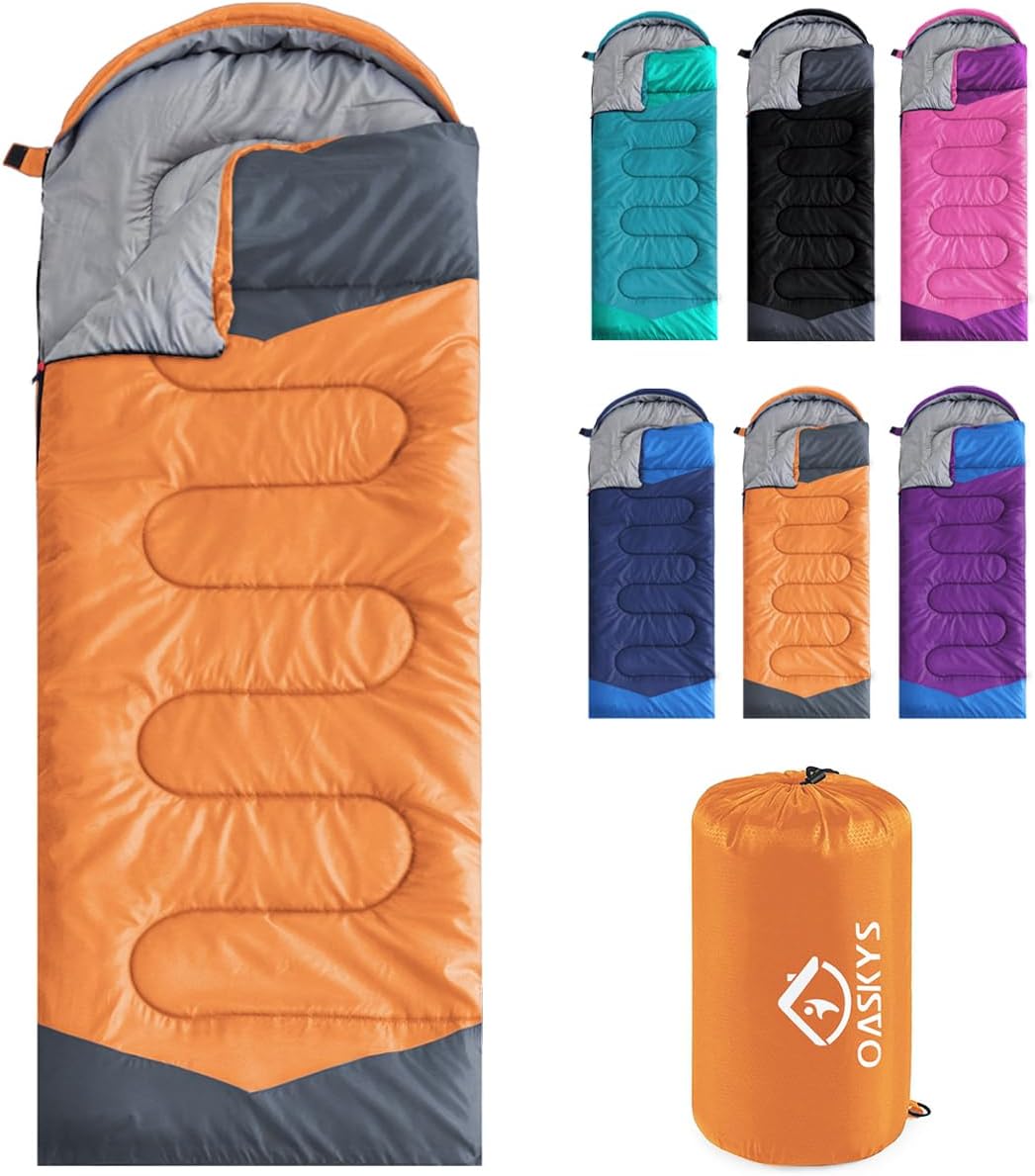
oaskys 3-Season Sleeping Bag 50-68F
Rectangular bag with two-way zipper and waterproof shell, solid for shoulder-season state park nights with kids.
Why we love it
- Two-way zipper converts to quilt for temp control
- Waterproof outer keeps dew and dampness out
- Compression sack fits easily in a packed minivan
Pros
- Two-way zipper for temperature regulation
- Waterproof 210T nylon outer shell
- Includes compression sack with straps
- Anti-snag zipper design
- Half-circle hood with drawstring
Cons
- Rated limit, not comfort range
- Bulky packed size for backpacking

MalloMe Sleeping Bag 50-80°F
Lightweight, waterproof sleeping bag that handles Oregon shoulder-season camping and fits kids and adults without the ultralight-backpacker price tag.
Why we love it
- Waterproof HEX-TECH shell sheds rain on wet dispersed camping trips
- Compression sack packs into minivan with all the other family gear
- Roomy enough for kids to sleep comfortable, not cramped
Pros
- Waterproof HEX-TECH outer shell
- Anti-snag zipper with no catches
- 3-pound weight, easy to carry
- Bottom zipper for foot ventilation
- Adjustable hood fits different sizes
Cons
- 50-80°F range limits cold mountain trips
- Polyester fill isn't down insulation
Synthetic Bags That Breathe in the Heat
Most best summer sleeping bags for warm weather get purchased by people who have never owned one before, and they end up cold in a bag rated for 60 degrees. The problem is not the bag. It is the gap between what “warm weather” means to manufacturers and what it means to you at 2 a.m. with damp skin and an empty stomach. After 14 years of summer trips through the Pacific Northwest, I have learned that the right pick depends on whether you need breathability, how much you move at night, and what moisture looks like where you are camping.
The bags above share one trait: they all use synthetic fill, which means they handle damp conditions better than down and dry faster if they get wet during setup. This matters in coastal camping and high-elevation afternoons when afternoon thunderstorms roll through. Synthetic also costs less upfront and does not require the careful storage that down demands.
Envelope vs Mummy Shape
Envelope bags are rectangular and loose, which means you get more room to move and better air circulation when temperatures push toward the upper end of what the bag claims. Mummy bags cut closer to your body, trapping heat and reducing the loft you actually need to stay warm. For summer camping, envelope shape wins because you spend the night shifting positions and venting heat, not trying to preserve it. The Warm Weather Sleeping Bag from ECOOPRO uses this design and compresses to just 11 inches, which means it fits under a car seat or inside a pack’s main pocket.
Weight Matters on Foot
A summer bag that weighs more than 3 pounds starts to feel like wasted ounces when you are carrying it on your back for five miles through heat. Lighter bags achieve their weight by using thinner fabric shells and less loft overall, which works fine when temperatures stay above 50 degrees. The trade-off is durability. A 1.7-pound bag packed tight absorbs moisture from your pack, and a shell that tears easily means regret. Look for bags with double-stitched seams and a minimum 210-denier shell to survive a full season.
Temperature Ratings Tell Only Part of the Story
A bag rated for 55 to 60 degrees does not mean you will sleep warm at 55 degrees. That rating assumes you are wearing clothes, on an insulated pad with an R-value above 2, and not moving around all night. On a thin foam pad or on a hammock, the same bag will feel cold. Pair summer bags with a quality MalloMe Sleeping Bag rated for 50 to 77 degrees to extend your comfort range without buying a second system.
Drawstring and Zipper Design
A draft collar (the tube at the top that cinches around your shoulders) adds negligible weight and stops air from flowing past your face on cold nights. Look for one that tightens with a single cord and does not trap fabric inside the zipper. Zippers themselves fail more often than any other part of a summer bag. Two-way zippers (open from top and bottom) let you regulate heat without pulling fabric, and locking sliders prevent the zipper from drifting open when you roll over.
Summer bags save weight, but they demand a good pad and dry storage to earn their price.
Synthetic Fill Holds Up in Damp Air
Down lofts beautifully and compresses tight, but the moment it gets wet, it loses nearly all its insulation value. Coastal camping and humid nights turn down into a cold, heavy brick. Synthetic fill (polyester or nylon fibers) retains 80 to 90 percent of its warmth even when damp, which means a summer trip to the Oregon coast or an overnight in the Cascades where mist rolls through at dawn does not wreck your sleep system. Synthetic also dries faster if water touches it during setup or if condensation builds inside the bag overnight.
The downside is weight. Synthetic bags weigh more than down for the same warmth, which is why you see lighter summer bags choosing synthetic only where temperature and humidity align. Fill weight in grams per square meter (gsm) tells you density. A 130 gsm fill provides comfortable warmth for 60-degree nights without excess weight. Higher gsm (150 to 200) suits cooler spring and fall camping.
Washing and Long-Term Storage
Synthetic bags tolerate machine washing on the gentle cycle, which down cannot do. After a season of use, wash your bag in cool water with mild soap to remove sweat and dirt that trap moisture. Hang it to dry completely before storing. Never compress synthetic bags for months at a time; that crushes the fibers and shortens their useful life. Store them loosely in a cotton sack in a dry closet. If a bag has been compressed for over a year, hang it outside for a full day before use to re-loft the fibers.
When Synthetic Fails
Synthetic fill does not last forever. After three to five seasons of regular camping with proper washing, fibers begin to clump and lose their ability to trap air pockets. You will notice a bag feeling colder than it used to, even with the same pad and clothing. This signals that the fill has degraded. At this point, plan to replace rather than repair, because the cost of rebuilding the interior exceeds buying a new bag.
What to Check Before Returning
Fit is the easiest mistake to catch early. Lay the bag flat on your living room floor and lie down inside it. Your head should rest at the base of the hood (if there is one) with about six inches of fabric above your face. Your feet should not press against the end. If either does, the bag will compress unevenly and create cold spots. Most summer bags measure 78 to 86 inches, which fits most adults without excess fabric to drag around.
Check zipper movement before leaving the store if possible. Unzip from top and bottom; the slider should glide smoothly without catching. Pinch the fabric near the slider to confirm there is a draft tube separating you from the zipper teeth. Run your hand inside to confirm no lumps or gaps in the fill. Seams should be tight and uniform, with no loose thread ends.
Pair With the Right Sleeping Pad
A pad with R-value 1.5 to 2.5 works under summer bags rated for 55 to 65 degrees. Below that and you will feel the cold seeping up through the floor no matter how lofty the bag is. A thin foam pad (less than 1 inch thick) or no pad at all turns a 60-degree bag into an ineffective blanket. The bag assumes that insulation underneath blocks ground heat loss. Test your pad and bag together at home on a cool night before committing to a backcountry trip.
Moisture Management Overnight
Summer bags breathe, which means they allow sweat and exhaled moisture to escape. Leave the zipper cracked open (just a few inches) if the night stays above 65 degrees. This prevents your internal moisture from condensing inside the bag and making the fill damp by morning. If you wake up clammy, ventilation was insufficient and the bag is not suited to your local humidity. Plan to move your next camp to higher ground or a more exposed site where air moves through.
Test fit on your bedroom floor before your first trip; cold spots and bad fit are obvious indoors.
Tips From the Trail
- Store it uncompressed between trips. Synthetic fibers hold their loft only if allowed to rest loose. A compression sack is great for travel, but do not leave the bag compressed in your garage for months.
- Wash it once a year, even if it looks clean. Sweat and body oil break down fibers faster than dirt does. A gentle machine wash adds years to the bag’s life.
- Never dry it above low heat. Synthetic melts. Hang drying or low-temperature machine drying only, and always fully dry before storage.
- Zip it carefully and completely. Fabric jamming is the most common repair. Pinch the bottom edge away from the slider before zipping all the way up.
- Pair it with a sleeping pad every single night. Ground cold kills a summer bag faster than any mistake in fill or construction.
- Keep it out of direct sunlight when drying. UV exposure degrades synthetic fibers. Dry in shade or indoors whenever you can.
Questions I Get Asked
Can a summer bag work for spring and fall camping?
Yes, if you pair it with a quality pad and dress in layers. A 55 to 65-degree bag rated for warm weather will handle 45 to 50-degree nights with a 2.0 R-value pad underneath and long underwear on top. Below 45 degrees, a three-season bag is a safer choice because the margin for error closes fast.
How much warmth does a liner actually add?
A lightweight liner adds 5 to 10 degrees of comfort, meaning a 60-degree bag with a liner behaves more like a 50-degree bag. Liners also extend the usable life of your bag by absorbing sweat instead of the fill, so you wash the liner instead of the whole bag.
What is the difference between 50-degree and 60-degree ratings?
The rating is the lower comfort boundary, not the upper limit. A 50-degree bag stays warm down to 50 degrees with the right pad and clothing. A 60-degree bag is designed for 60 degrees and up, and will feel cold below that threshold no matter what you wear. These numbers assume an insulated pad underneath; without it, both bags perform colder.
Can I use a summer bag for car camping?
Absolutely. Summer bags pack small and weigh less than car-camping bags, so there is no reason not to use one at a state park or car campground during warm months. The only advantage of a car-camping bag is wider interior space, but summer bags like the WKFAMOUTCAMP model can couple together to form a double if you need to share warmth.
Do summer bags actually dry faster than down?
Yes. Synthetic dries in 4 to 8 hours on a line in decent weather. Down takes 24 to 48 hours and often never fully dries if humidity is high. On a damp coastal trip, synthetic is the only practical choice.
What tells me my bag is wearing out?
Temperature creep is the clearest sign. If a bag that used to keep you warm at 55 degrees now feels cold at 60 degrees, the fill has degraded and lost loft. Clumping visible inside the bag, persistent dampness after washing, or a zipper that catches constantly are other signals that replacement is coming soon.


Write Your Review
No reviews yet. Be the first to share your experience!