


JEAOUIA Sleeping Bag 50-68F 3LBS
Budget sleeping bag that works for shoulder-season family camping and car trips, though the temp rating runs warm and the fill won't handle real cold.
Why we love it
- Foot zipper lets you dial temps without full unzipping
- Compresses small enough for the minivan or backpack
- Machine washable, no babying required after trips
Pros
- Affordable at under $25
- Lightweight at 3 pounds
- Drawstring hood seals in warmth
- Two-way zipper opens from feet
- Compact packed size
Cons
- Temp rating tops out at 68F, runs warm
- Hollow fiber fill won't handle real cold nights

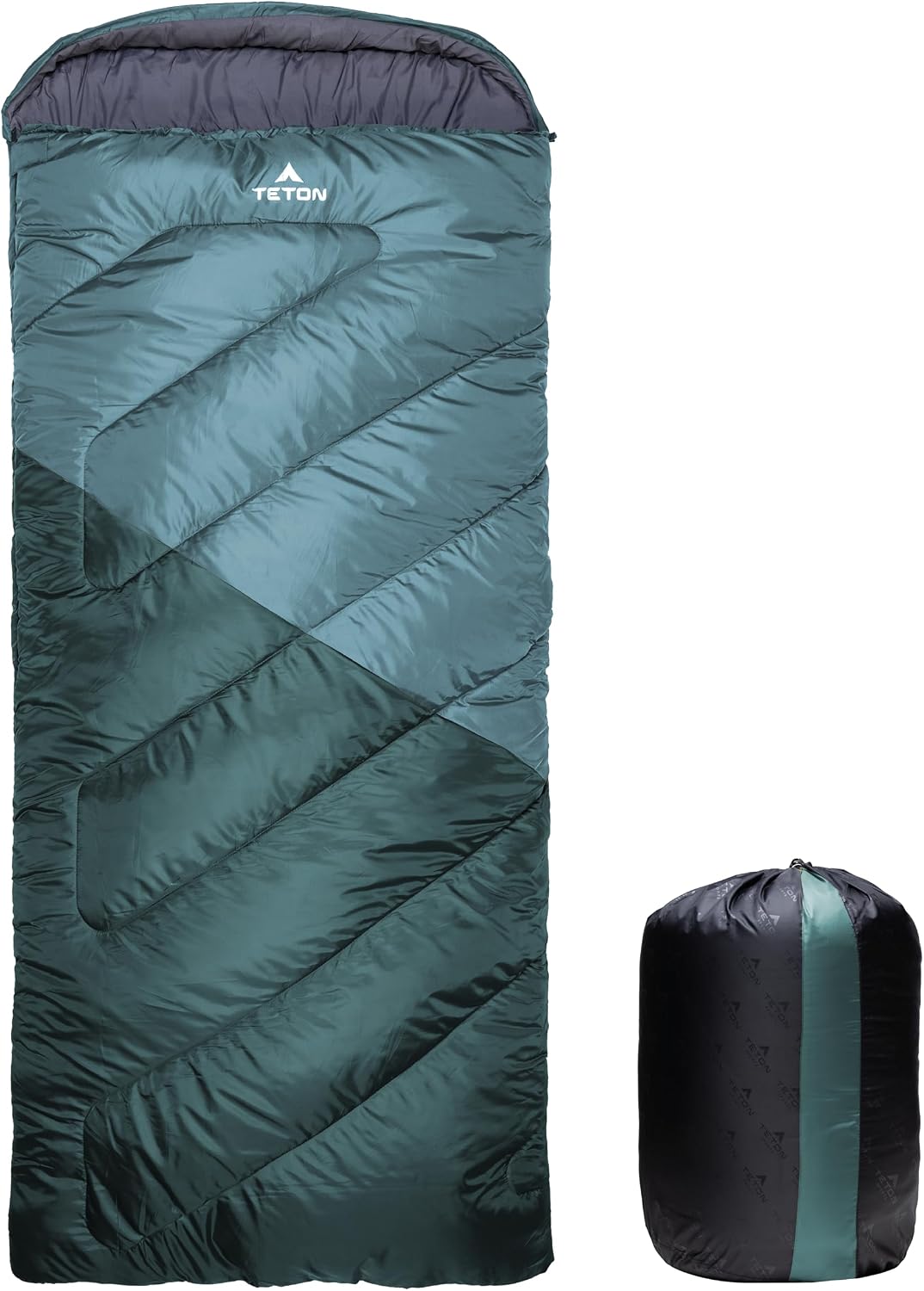
Teton Celsius 25F Sleeping Bag
Flannel-lined bag that keeps kids warm and doesn't fall apart after a wet Oregon weekend.
Why we love it
- Flannel lining beats synthetic slickness on cold nights
- Two-way zippers work with gloves and tired kids
- Unzips flat to blanket when the cabin gets stuffy
Pros
- Soft flannel lining
- Water-resistant taffeta shell
- Draft tubes at shoulders and zipper
- Stuff sack included
- Interior pocket for keys and phone
Cons
- Heavier than ultralight options
- SuperLoft fill needs a quality pad underneath
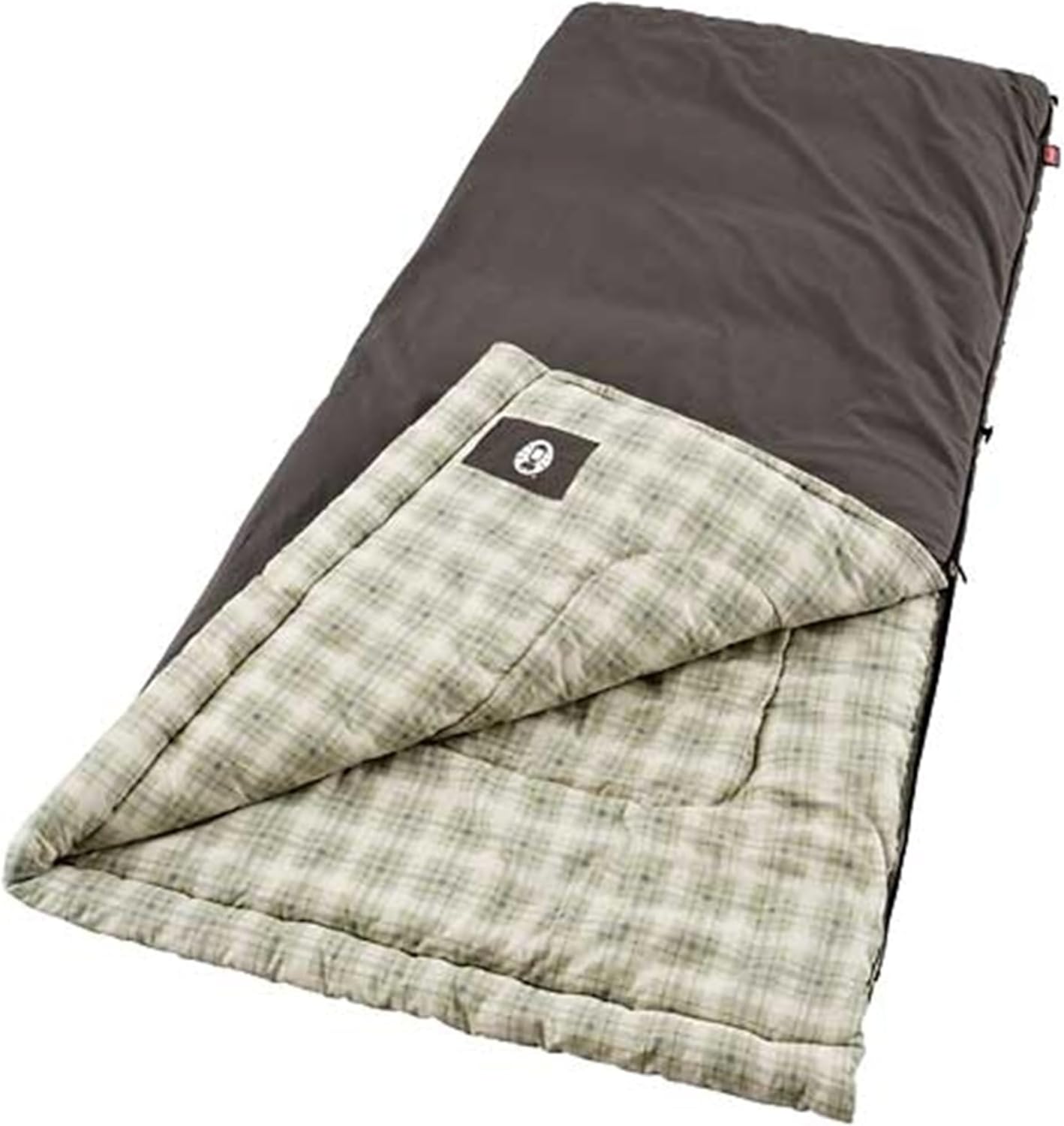
Coleman Heritage Big & Tall 10°F Bag
Roomy XL bag rated to 10°F with flannel comfort; machine washable and built tough for family camping.
Why we love it
- Fits tall adults or two kids bundled close
- Flannel liner beats scratchy nylon on skin
- Machine washable beats campfire smell
Pros
- 5 lbs Holofill insulation traps heat
- Flannel liner instead of cheap nylon
- No-snag zipper holds up to kids
- Machine washable for easy cleanup
- XL size fits adults up to 6'7"
Cons
- Heavy for backpacking trips
- Rectangular cut wastes heat around edges
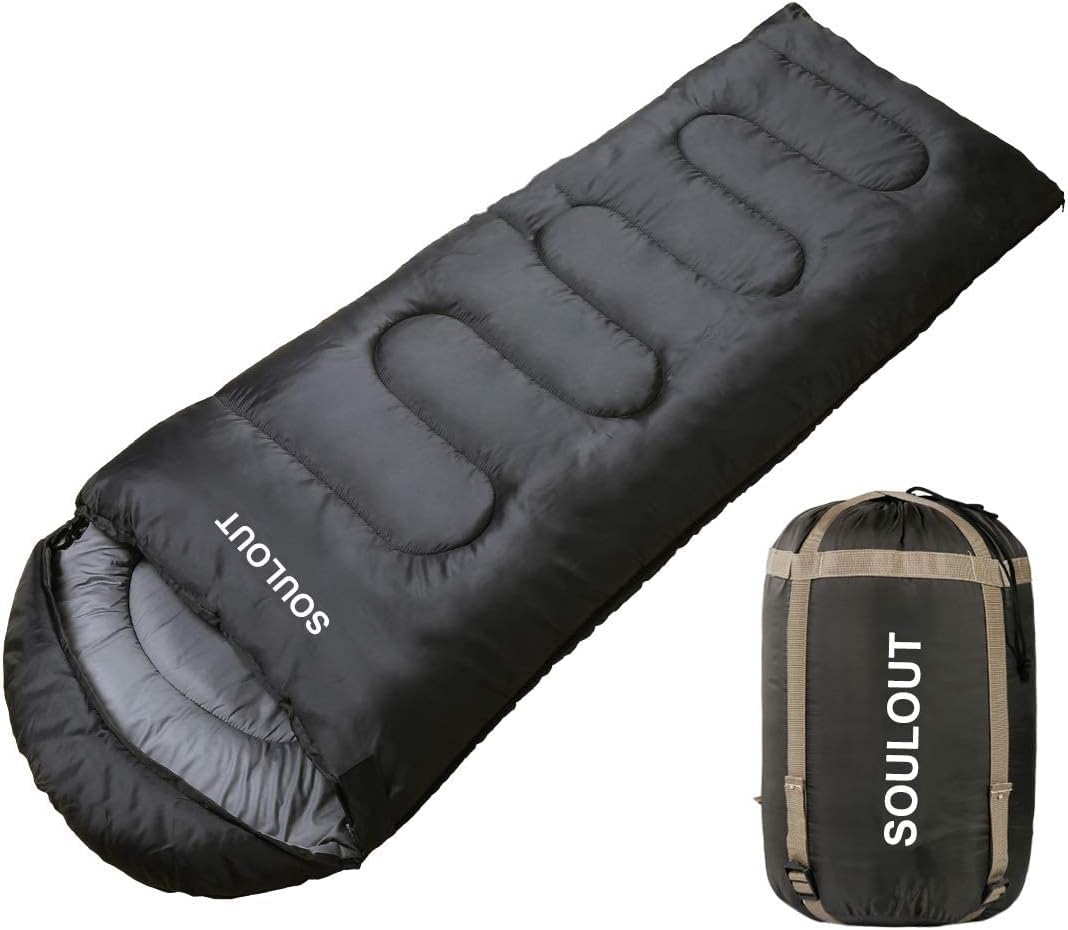
SOULOUT 3-4 Season Sleeping Bag
Roomy rectangular bag that keeps kids warm on chilly state-park nights and survives the minivan without complaint.
Why we love it
- Rectangular cut gives kids room to move
- Water-resistant shell handles damp mornings
- Machine washable, no fuss after muddy trips
Pros
- Spacious envelope design for comfort
- Water-resistant outer shell
- Machine washable synthetic fill
- Includes compression sack
- Good warmth for spring and fall camping
Cons
- Bulky when packed for backpacking
- Rated limit, not comfort temperature

Coleman Brazos 20/30F Sleeping Bag
Rectangular bag rated to 30F that zips together with a second bag and handles the minivan lifestyle better than most.
Why we love it
- Zips to a second bag for couples or kids
- Machine washable after muddy trail trips
- No-snag zipper saves frustration at 6 AM
Pros
- Thermolock draft tube seals warmth
- Fiberlock keeps insulation from shifting
- Rectangular cut gives kids room to move
- Stuff sack included for car storage
- Zips together for shared warmth
Cons
- Bulky packed size for backpacking
- 30F rating is the limit, not comfort

HiZYNICE XXL Cold Weather Sleeping Bag
Roomy XXL bag rated to 0°F with cotton flannel lining—solid choice for family camping in cold shoulder seasons.
Why we love it
- Opens fully flat to use as a mat or blanket
- Anti-snag zippers zip from top or bottom
- Machine washable cotton flannel interior
Pros
- Spacious 90x39 in. interior
- Extreme temperature rating to 0°F
- Draft tube keeps warmth in
- Converts to double bag when zipped together
- Cotton flannel lining
Cons
- Heavy for backpacking trips
- Limited temperature versatility
Temperature Rating vs. How You Actually Sleep
Best sleeping bags come with a temperature number on the tag that almost never matches how cold you’ll feel at 2 a.m. I’ve been cold in bags rated for 10 degrees and comfortable in bags rated for 20 degrees on the same November night in the Cascades. The difference usually sits under the bag, not in the bag. A sleeping pad with real insulation changes everything. So does the clothes you wear and whether you eat dinner or skip it. The number on the hang tag is a limit, not a comfort promise.
Most people buy the wrong rating for the season they camp in. You pick a bag based on one trip, then try using it for every other trip. Car camping in summer doesn’t prep you for the cold shoulder seasons when the real test happens. That’s where these six picks matter: they cover enough range that one of them fits what you actually do.
What the Ratings Really Mean
Sleeping bag temperature ratings come in layers. The comfort rating is where most people sleep warm. The limit rating is where you survive but don’t sleep well. The extreme rating is emergency only. If a bag says 20 degrees, that’s usually the limit, and you’ll actually be comfortable around 30 to 35 degrees. Synthetic bags tend to be rated more conservatively than down bags, so a synthetic 20-degree bag often sleeps warmer than a down bag with the same number. Pair any bag with a pad rated R-value 3 or higher and you move the real temperature down by 10 to 15 degrees.
Synthetic vs. Down
Synthetic fill keeps most of its warmth when wet, which matters on coastal trips and in damp autumn air. It doesn’t clump or lose loft the way down does after a bad wash or a season of storage. It compresses less and weighs more for the same warmth, so it’s the choice for car camping and base camp work. Down fill compresses smaller, lofts higher, and sleeps warmer per ounce once it’s dry. It needs careful storage and careful washing, and one wet night can wreck an entire trip if you can’t dry it. These six picks split across both, so you can see which one matches your camping style.
Shape and Fit Matter More Than Marketing
A rectangular bag gives you room to roll around and isn’t claustrophobic, but it holds heat less efficiently than a mummy cut. A mummy bag with a draft collar and hood keeps you warm on cold nights and lets you close it tight. The zipper draft tube along the full length stops heat loss where most bags fail. Look for a full-length draft collar, not a half-width one. If you’re a side sleeper or you like sleeping with one arm out, a bag that’s too narrow will make you colder because cold air pools in the dead space.
Liners, Pads, and What You Wear
A sleeping pad under the bag insulates as much as or more than the bag itself. A 20-degree bag on a thin pad will feel like a 40-degree bag on a good pad. Wear warm layers inside the bag, not outside it. A hat stops 10 to 15 degrees of heat loss on a cold night. Eat a hot dinner before bed, drink water, and keep moving during the day so you’re not shivering at night. Most people think the bag is the problem when it’s actually the pad, the clothes, or the eating and drinking routine.
A sleeping pad changes the temperature rating more than any fill or construction detail ever will.
Which Insulation Works in Your Climate
The Cascades, the Olympic Peninsula, and the high desert around Bend are three different environments. Down works great on a dry Cascades ridge above 8,000 feet where the air is thin and cold and rain doesn’t show up in July. It falls apart on the wet coast or in September when the weather turns unpredictable. Synthetic works everywhere because it keeps working when wet, but it takes up more space and weighs more. Flannel liners feel nicer and dry faster than taffeta, but taffeta lasts longer and compresses better.
Synthetic Bags for Wet Country
These picks use hollow-fiber and polyester insulation that won’t clump after a damp trip. Polyester shells stay water-resistant longer than cotton without special treatment. Two-layer construction with a draft tube along the zipper keeps warm air from escaping where condensation forms. Machine washable liners and shells mean you can actually clean them without worrying about ruining loft. The trade-off is weight and bulk, but if you camp anywhere the weather surprises you, that trade makes sense.
Down When Conditions Stay Dry
Down insulation lofts higher and compresses smaller than anything synthetic. Five pounds of down can replace eight pounds of synthetic and give you warmer sleep. The catch is storage and care. Down needs to dry completely or it stays damp inside the compressed bag all winter and loses loft. It needs a trip through the gentle cycle with down soap, never regular detergent. If a trip goes wrong and the bag gets soaked, you’re carrying wet down out of the mountains and spending days drying it at home. On stable trips above treeline, down wins. On trips where weather or a river crossing might happen, synthetic is the safer call.
Cotton Blends for Warmth and Feel
Cotton flannel liners feel softer and warmer to skin than polyester. A 100% cotton flannel lining with a polyester taffeta shell balances durability with comfort. Cotton absorbs moisture slower than synthetics, so you stay drier longer on a cool night. It also takes longer to dry, so you can’t wash these bags as often. Look for bags labeled machine washable on the gentle cycle with these liners, because regular laundering breaks down the shell coating faster.
Cotton flannel adds real warmth to a bag because you start with less body heat loss to the liner itself.
Seasonality and What Corners Get Cut
Most of these picks span three seasons, meaning spring, fall, and shoulder-season camping. A 3-season bag handles temperature swings from 30 to 70 degrees across the day and night. A 4-season bag handles winter and extreme cold, but it weighs more and costs more because it needs more insulation, a bigger hood, and a more elaborate draft collar. At the entry level, a 4-season bag often cuts corners on the lining or zipper to hit a price point. At the high end, a 3-season bag is often built better than a cheap 4-season one because the maker isn’t juggling too many features.
The 3-Season Standard
These bags use ratings between 10 and 30 degrees, which covers May through September and October through April in the Pacific Northwest. A 3-season bag with a good pad works for winter car camping. It starts to struggle on cold nights above 10,000 feet or on multi-day winter backpacking trips. The shoulder season transition between spring and summer is where a 3-season bag earns its keep. You can use the same bag for a hot July night (unzip it all the way and lay on top) and a cold October dawn (zip it tight and pull the hood).
4-Season and Winter Reality
True 4-season bags start around 0 degrees comfort rating and go colder. They weigh more, pack larger, and cost more because every layer does real work. An actual winter bag needs a full wrap-around draft collar that seals the zipper completely, a large mummy hood, and insulation on the bottom that doesn’t compress when you lie on it. These six picks are mostly 3-season because that’s what most people camping around here need most days. If you winter camp every month, you’ll want something heavier, and these guides won’t cover it.
The Weight Penalty at Every Rating
Moving from a 20-degree bag to a 0-degree bag adds 2 to 4 pounds. That matters in your pack over 10 miles, but it matters less when you’re sleeping in your car. A synthetic 10-degree bag weighs more than a down 10-degree bag because synthetic needs more loft to do the same job. A bag that compresses to the size of a loaf of bread will fit anywhere, but it probably cuts the draft collar or the hood size to hit that compression number. Check the packed size before buying, then pack it into the tent or car you actually own.
How to Check One at Home Before a Trip
Lay the bag flat on a bed and zip it fully. There should be no gaps along the zipper or around the hood. If the draft collar doesn’t touch your neck when you close the hood, it won’t seal heat in. Lie in the bag on your back, then on your side. Check if you can roll onto your shoulders without your arms pressing against the walls. On a mummy bag, you should have room to cross your arms on your chest without feeling squeezed. If you can’t close the hood around your head with one arm inside, the bag is too narrow.
Check the seams where the zipper meets the foot box. Any puckering or gaps means heat loss. Run the zipper from top to bottom with your eyes closed to feel if it catches or sticks. A zipper that binds or pulls hard will fail in the cold when you’re half asleep trying to get out. Check inside the bag for lumps in the insulation. Some bags shift fill on corners or seams, and you’ll feel cold spots at night where insulation bunched up.
Look at the shell fabric under light. Thin taffeta tears easily. A shell that feels papery will delaminate after a few trips. Pick a bag heavier than you think you need if you plan to use it three seasons a year for ten years. The bags that last are the ones built thick enough to survive compression and washing.
Tips From the Trail
- Air it out between trips. Unzip the bag completely and hang it in shade for a full day after each use. This dries internal moisture and lets the insulation relax back to full loft. Compression kills loft, and loft is where warmth lives.
- Store it loose, not compressed. Keep the bag out of its stuff sack during winter storage. Use a large mesh bag or hang it in a closet. Compression over months breaks down insulation fibers and voids the warranty on many bags.
- Wash it right or don’t wash it at all. Use cold water and a down-specific soap for down bags. Use mild detergent and the gentle cycle for synthetic. Rinse twice. Warm water and regular detergent break down the shell coating and ruin the fill.
- Pair it with an R-value 3 pad minimum. The pad does as much work as the bag on a cold night. A thin closed-cell pad or a thin inflatable pad will undercut a great bag’s rating by 15 to 20 degrees.
- Check the zippers in your car the night before. A zipper that binds at home will jam in the dark at camp when you need to pee. Slide the zipper smoothly a few times before you leave, and bring a small bar of dry bag wax to fix a stick.
- Eat a hot dinner and drink water before bed. A cold bag often means a cold body, not a cold bag. Your body generates heat from digestion and metabolism. Skipping dinner and dehydrating will make you cold inside even a warm bag.
Questions I Get Asked
Do temperature ratings actually mean comfort or just survival?
Most bag ratings you see are survival numbers, not comfort. A 20-degree bag is the limit where you can technically stay alive, but you’ll be shivering and miserable. Real comfort is usually 10 to 15 degrees warmer than the tag says. Check the product description or spec sheet for comfort vs. limit ratings, and assume the comfort number if only one is given.
How much does a liner actually add to warmth?
A good liner adds 5 to 10 degrees of warmth, not 20. It works by adding a dead air layer and by stopping moisture from getting to the insulation. On a cold night, a liner lets you sleep an extra hour before you start shivering. It’s not a substitute for a better bag, but it’s useful for shoulder season trips when you want to travel light.
Can I use a summer bag for winter camping?
Only if you layer. A 50-degree bag plus four heavy blankets and a sleeping pad rated R-5 might work for a car camping night in January, but you’ll be working hard the whole time. Better to buy a 20-degree bag and use it year-round than juggle two bags and spend half the winter uncomfortable.
What’s the real difference between flannel and polyester linings?
Flannel feels warmer and softer. Polyester dries faster and lasts longer. Flannel linings add 3 to 5 degrees of warmth because they trap dead air better. Polyester is more durable on rocks and rough ground. If you camp in wet places or on rough terrain, polyester wins. If comfort and warmth matter more than durability, flannel is worth the trade.
Should I buy a bag or a quilt?
A bag with a zipper works better for cold nights and for staying organized inside a tent. A quilt lets you adjust the coverage and works great on warm nights. Most people starting out should buy a bag because the zipper gives you a learning curve you can control. Quilts demand you know your exact sleeping position and temperature preference.
Why does my bag feel colder after I wash it?
Washing breaks down the structure of synthetic fill and flattens down. Spin-drying is usually the culprit. Wash on gentle, rinse twice, and air-dry completely in a low tumble dryer or lay flat in sun for two days. Most bags recover full loft after three to four days of air drying, but if you spin-dried it hard, some loft loss is permanent.


Write Your Review
No reviews yet. Be the first to share your experience!