


ECOOPRO Warm Weather Sleeping Bag
Budget envelope bag that fits two kids or an adult, rated for warm weather but genuinely compact for family car camping.
Why we love it
- Squeezes two small kids or one adult comfortably
- Rolls down to 11 inches, fits in the minivan easy
- Machine washable after muddy trail weekends
Pros
- Fits two children side by side
- Ultra-lightweight at 1.45 lbs
- Waterproof nylon outer shell
- Compresses small for tight packing
Cons
- 55-60°F rating limits shoulder-season use
- Thin material won't handle heavy abuse

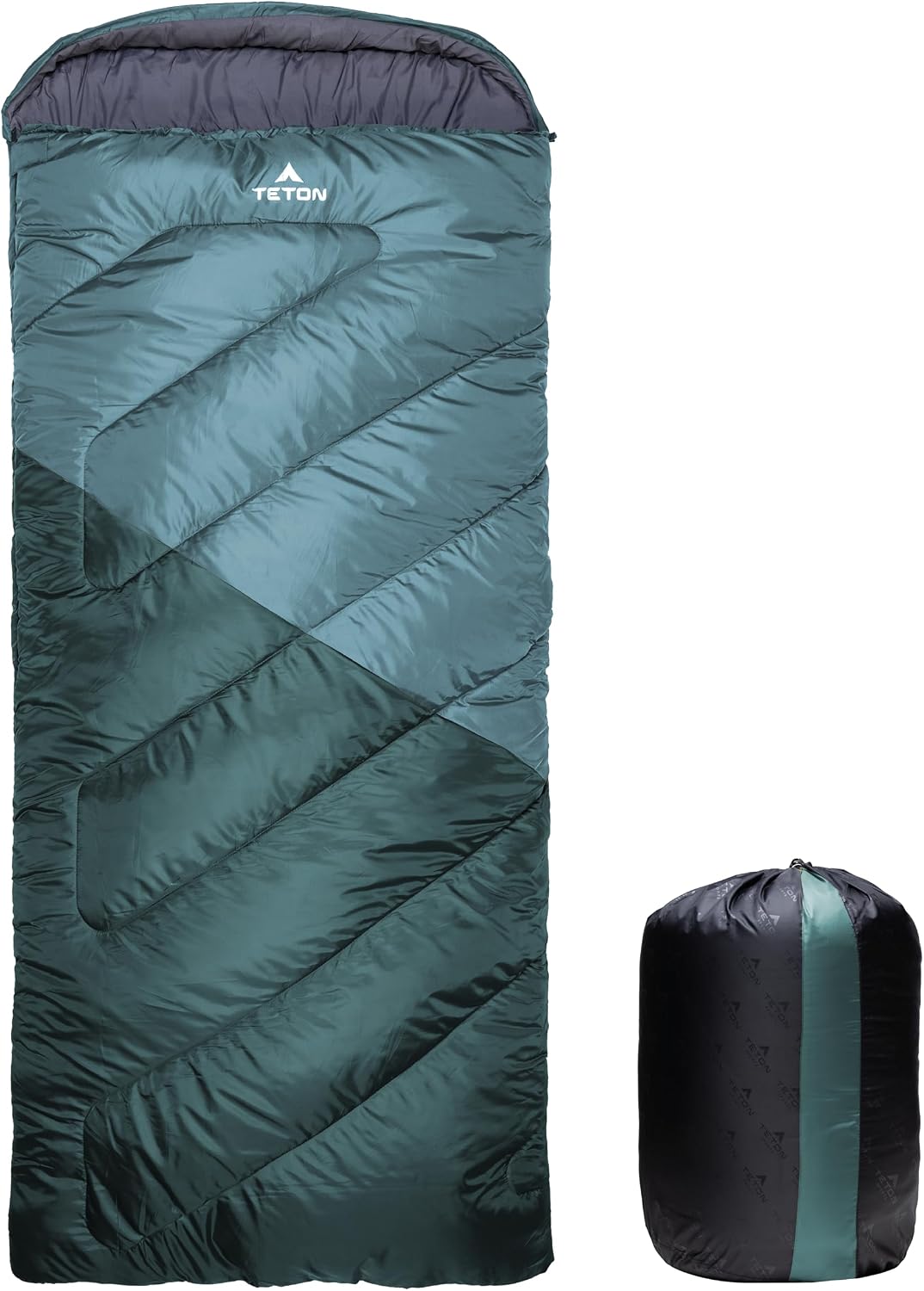
Teton Celsius 25F Sleeping Bag
Flannel-lined bag that keeps kids warm and doesn't fall apart after a wet Oregon weekend.
Why we love it
- Flannel lining beats synthetic slickness on cold nights
- Two-way zippers work with gloves and tired kids
- Unzips flat to blanket when the cabin gets stuffy
Pros
- Soft flannel lining
- Water-resistant taffeta shell
- Draft tubes at shoulders and zipper
- Stuff sack included
- Interior pocket for keys and phone
Cons
- Heavier than ultralight options
- SuperLoft fill needs a quality pad underneath

Naturehike 650FP Down Sleeping Bag
Hybrid mummy-rectangular cut keeps kids warm on frosty nights and packs light enough for real backcountry trips.
Why we love it
- Hybrid design gives kids room to move legs
- 650-fill down compresses to minivan-friendly size
- Rated to 33F for shoulder-season family camping
Pros
- 650-fill down insulation
- Hybrid mummy-rectangular cut
- Ultralight at 1.67-1.95 lbs
- Compression sack included
- YKK zippers
Cons
- Down loses warmth if it gets wet
- Rated limit, not comfort temp

Sea to Summit Hamelin 30F Synthetic
Synthetic bag that handles damp Pacific Northwest weather without the down-soaking risk, rated for shoulder-season trips with room to move.
Why we love it
- Stays warm when damp, unlike down
- Converts to quilt for camp mobility
- Packs light for family backpacking
Pros
- Body-mapped insulation targets core warmth
- Full-length side zipper doubles as quilt
- Synthetic fill performs wet or dry
- Shoulder snaps let kids wear it around camp
- Contour shape fits side sleepers
Cons
- Bulkier packed than equivalent down
- 30F rating is limit, not comfort zone

Farland 3-4 Season Sleeping Bag, 32F
Budget rectangular bag that zips together for couples or families, with enough warmth for cool-weather car camping and a machine-washable synthetic fill that shrugs off damp trips.
Why we love it
- Zip two bags together for family sleeping space
- Synthetic fill handles wet conditions without losing warmth
- Machine washable, no special care needed after muddy trips
Pros
- Roomy rectangular cut for restless sleepers
- Zips to a matching bag for couples or families
- Machine washable synthetic fill
- Lightweight for car camping trips
- Comes with compression sack
Cons
- Rated limit temperature, runs cold at 32F
- Heavier than backpacking-focused bags

Coleman Brazos 20/30F Sleeping Bag
Rectangular bag rated to 30F that zips together with a second bag and handles the minivan lifestyle better than most.
Why we love it
- Zips to a second bag for couples or kids
- Machine washable after muddy trail trips
- No-snag zipper saves frustration at 6 AM
Pros
- Thermolock draft tube seals warmth
- Fiberlock keeps insulation from shifting
- Rectangular cut gives kids room to move
- Stuff sack included for car storage
- Zips together for shared warmth
Cons
- Bulky packed size for backpacking
- 30F rating is the limit, not comfort
What the Rating Actually Means at This Price
Best sleeping bags under $300 cover a lot of ground, from entry-level three-season bags to solid synthetic and down options that can handle cold nights. The trick is matching the temperature rating to how you actually camp, not just what a tag promises.
I have seen too many people buy a 20-degree bag for summer car camping, then complain it is too warm. Just as often, someone grabs a 40-degree bag for a spring Cascades trip and freezes at 2 a.m. The picks here split across ratings and fills, so you need to know which one fits your season.
Comfort versus Limit
A temperature rating has two numbers. Comfort is where most sleepers rest warm without tossing. Limit is where the bag barely keeps you alive. Manufacturers often advertise the limit. At this price point, a bag rated 30-degree comfort is not the same as a 30-degree limit. The Sea to Summit Hamelin Synthetic Sleeping Bag is rated 30-degree, and that is a comfort rating for side sleepers in mild conditions. A Coleman Brazos at 20-degree sits lower on the warmth scale but costs less. Know which number you are reading.
Down Holds Heat Better, But Not When Wet
Down fill compresses smaller and weighs less than synthetic for the same warmth. The Naturehike Ultralight Down Cold Weather Sleeping Bag uses 650 fill power duck down and weighs under 2 pounds. That matters on a backpacking trip. But down loses loft when damp, and the Pacific Northwest is damp. A synthetic bag like the Sea to Summit keeps working even after a wet night, which is why I reach for it on coastal trips.
Synthetic Costs Less and Forgives Abuse
Synthetic insulation does not compress as small as down, and it weighs more for the same rating. But it does not clump after a bad wash, and it dries faster. At this price, synthetic bags often have better draft collars and hood coverage than down models in the same range. The Teton Celsius Regular has a flannel lining and a half-circle mummy hood that keeps your pillow clean.
Shape Affects How Warm You Actually Sleep
Mummy bags hug your shoulders and head, trapping dead air close to your body. Rectangular bags give you room to move but lose heat in the corners. At this price, some bags blend both: mummy upper body, rectangular lower. The Naturehike does this. A side sleeper often sleeps warmer in a bag with a wider shoulder box, even if the rating is lower, because you are not fighting the cut all night.
A $120 bag that fits your body and season beats a $250 bag that does not.
What Gets Cut at This Price
Entry Tier: Under $50
At the bottom, you lose fill quality and shell durability. A bag under $50 usually has lower denier nylon (thinner, tears easier), basic fiber fill, and zippers that catch. The ECOOPRO Warm Weather Sleeping Bag at $25 is honest about what it is: a summer bag for car camping or a guest bag. The 55 to 60-degree comfort range is real. Do not take it on a cold-weather trip and expect it to perform.
Mid Tier: $50 to $150
This is where most campers should shop. You get usable draft tubes, better nylon (400T or higher), and fill that does not shift after a season. The Teton Celsius at $85 and the Farland at $30 both sit in this range, though Farland is closer to entry. A Teton gives you a flannel lining and two-way zippers that work in gloves. The Coleman Brazos at $54 has a Thermolock draft tube and comes with a stuff sack. These bags last three to five seasons with basic care.
Right at the Limit: $150 to $300
At the top of this budget, you get premium down (650 fill power or higher), recycled or high-denier shells, and construction details like body-mapped insulation. The Naturehike at $120 edges into this space with 650 fill down and a hybrid mummy-rectangular cut. The Sea to Summit at $176 uses recycled materials and a contour shape designed for side sleepers. These bags handle abuse better and compress smaller. They are worth the step up if you camp more than a few times a year.
Spending more buys durability and packed size, not always warmth.
Checking Your Fit Before the Return Window Closes
Lie Down in It at Home
Do not unroll a bag on the living room floor and call it tested. Lay it out on the bed or carpet, climb in, and move around. Can you roll on your side without the bag twisting? Does the hood seal around your head without pressing on your face? A mummy bag that feels snug standing up can feel claustrophobic when you are trying to sleep. Spend 10 minutes in the bag before you decide to keep it.
Check the Zipper Path
Run the zipper up and down a few times. Does it catch? Does it slide smoothly with the draft tube? A stuck zipper at 3 a.m. in the cold will ruin your night. YKK zippers are standard at this price and usually reliable. Test it in both directions and with the bag slightly twisted, the way it will be when you are inside.
Measure Your Actual Length
Sleeping bags come in regular and long. Regular bags fit people up to about 5 foot 10 inches. If you are taller, your feet hang out or press against the footbox, and you lose warmth at your toes. The Sea to Summit fits users up to 6 foot 1 inch. Do not guess your height. Stand against a wall and measure.
Pair It With the Right Pad
A sleeping pad under the bag is not optional. The pad blocks cold from below, where it steals more heat than the air above. A pad with an R-value of 2 to 3 works for three-season camping. For 20-degree bags, step up to R-value 4 or higher. Lay the pad out, put the bag on top, and lie down. This is your actual setup.
Tips From the Trail
- Store it uncompressed. Loft dies under long-term compression. Hang your bag in a closet or fold it loosely in a bin. Compress it only for travel.
- Wash down in cold water, no detergent. Hot water and soap break down the oils that make down loft. Use a down-specific cleaner if you must wash it at all.
- Fluff it before every trip. Lay the bag in the sun or tumble it in a warm dryer for 10 minutes. Loft recovers when the fill has room to expand.
- Avoid the sleeping bag sack between seasons. Use the stuff sack only when you are packing for a trip. A bag left in a stuff sack for months will not recover its loft.
- Dry synthetic bags on low heat. High heat can melt the nylon shell. Hang-dry when you can, and use a dryer only if you set it to low or delicate.
- Inspect the seams after a wet trip. Water seeps through stitching, not just through fabric. Dry the bag fully before storing it, or mildew will grow inside.
Questions I Get Asked
Does a 20-degree rating mean I can sleep outside at 20 degrees?
No. A 20-degree comfort rating means most sleepers stay warm when the outside temperature is 20 degrees, assuming you use an insulated pad and wear base layers. If you are a cold sleeper, you need a lower number. If you are a warm sleeper, you can go higher. The limit rating (where the bag barely keeps you alive) is usually 10 to 15 degrees lower.
How do I know if a down bag’s fill power claim is real?
Fill power is hard to verify without lab equipment, but a few signs help. A 650 fill power bag should compress into a stuff sack about the size of a large grapefruit. If it compresses to the size of a loaf of bread, the fill power is probably lower. Also, read reviews from people who have owned the bag for a season. Clumping or loss of loft shows up quickly.
Can I use a summer bag in spring if I add a liner?
A liner adds about 10 degrees of warmth, so a 55-degree summer bag with a liner works for about 45-degree nights. That covers late spring and early fall. But a liner also traps moisture, so your bag stays damp longer. If you camp in spring regularly, buy a 30-degree or 40-degree bag instead of layering workarounds.
What happens if I compress a down bag for months?
The down clusters flatten and do not fully recover. You lose some loft permanently. If you must store a down bag compressed, take it out every few months and fluff it in the dryer. Synthetic bags recover better from compression, but even they benefit from uncompressed storage.
Is a double sleeping bag warmer than two single bags?
A double bag keeps two people warmer than sleeping in separate bags because you share body heat and the bag does not have a cold seam between you. But a double bag is heavier, bulkier, and harder to dry. For backpacking, two light singles make more sense. For car camping, a double bag or two bags zipped together works well.
How often do I need to wash a sleeping bag?
Rarely. Wash a bag only when it smells or looks dirty, usually once every few years. Sweat and skin oils build up inside, but washing damages the insulation more than dirt does. Use a sleeping bag liner to keep the inside clean, and wash the liner instead.


Write Your Review
No reviews yet. Be the first to share your experience!