


HTMEYBG 3-Season Sleeping Bag
Budget rectangular bag rated 50-68F, lightweight enough for car camping with kids but runs cold at the limit.
Why we love it
- Unzips flat as a blanket for picnics or layering
- 3.3 lbs packs small in the minivan without taking space
- Bottom zipper vents heat when shoulder season warms up
Pros
- Rectangular cut gives kids room to move
- Nylon shell sheds light rain and spills
- Hollow microfiber washes easy, dries fast
- Compression sack included for storage
- Two-way zipper for temperature control
Cons
- Rated temps are limits, not comfort zones
- Synthetic fill loses loft if damp

Elevon Double Sleeping Bag 50-68F
Rectangular double bag that zips flat for car camping and family trips, machine washable and budget-friendly.
Why we love it
- Machine washable for easy cleanup after muddy trips
- Zips open fully to work as a blanket or emergency quilt
- Includes two pillows and compression sack, ready to go
Pros
- Roomy rectangular cut fits two adults comfortably
- Waterproof polyester shell handles damp conditions
- Lightweight at 3 lbs, packs to 7.9" x 14.2"
- Dual zippers for easy entry and foot ventilation
- Drawstring hood cinches down for cold nights
Cons
- Rated 50-68F, not suitable for shoulder-season cold
- Bulky for backpacking, built for car camping

JEAOUIA Sleeping Bag 50-68F 3LBS
Budget sleeping bag that works for shoulder-season family camping and car trips, though the temp rating runs warm and the fill won't handle real cold.
Why we love it
- Foot zipper lets you dial temps without full unzipping
- Compresses small enough for the minivan or backpack
- Machine washable, no babying required after trips
Pros
- Affordable at under $25
- Lightweight at 3 pounds
- Drawstring hood seals in warmth
- Two-way zipper opens from feet
- Compact packed size
Cons
- Temp rating tops out at 68F, runs warm
- Hollow fiber fill won't handle real cold nights

ECOOPRO Warm Weather Sleeping Bag
Budget envelope bag that fits two kids or an adult, rated for warm weather but genuinely compact for family car camping.
Why we love it
- Squeezes two small kids or one adult comfortably
- Rolls down to 11 inches, fits in the minivan easy
- Machine washable after muddy trail weekends
Pros
- Fits two children side by side
- Ultra-lightweight at 1.45 lbs
- Waterproof nylon outer shell
- Compresses small for tight packing
Cons
- 55-60°F rating limits shoulder-season use
- Thin material won't handle heavy abuse

Coleman Brazos 20/30F Sleeping Bag
Rectangular bag rated to 30F that zips together with a second bag and handles the minivan lifestyle better than most.
Why we love it
- Zips to a second bag for couples or kids
- Machine washable after muddy trail trips
- No-snag zipper saves frustration at 6 AM
Pros
- Thermolock draft tube seals warmth
- Fiberlock keeps insulation from shifting
- Rectangular cut gives kids room to move
- Stuff sack included for car storage
- Zips together for shared warmth
Cons
- Bulky packed size for backpacking
- 30F rating is the limit, not comfort
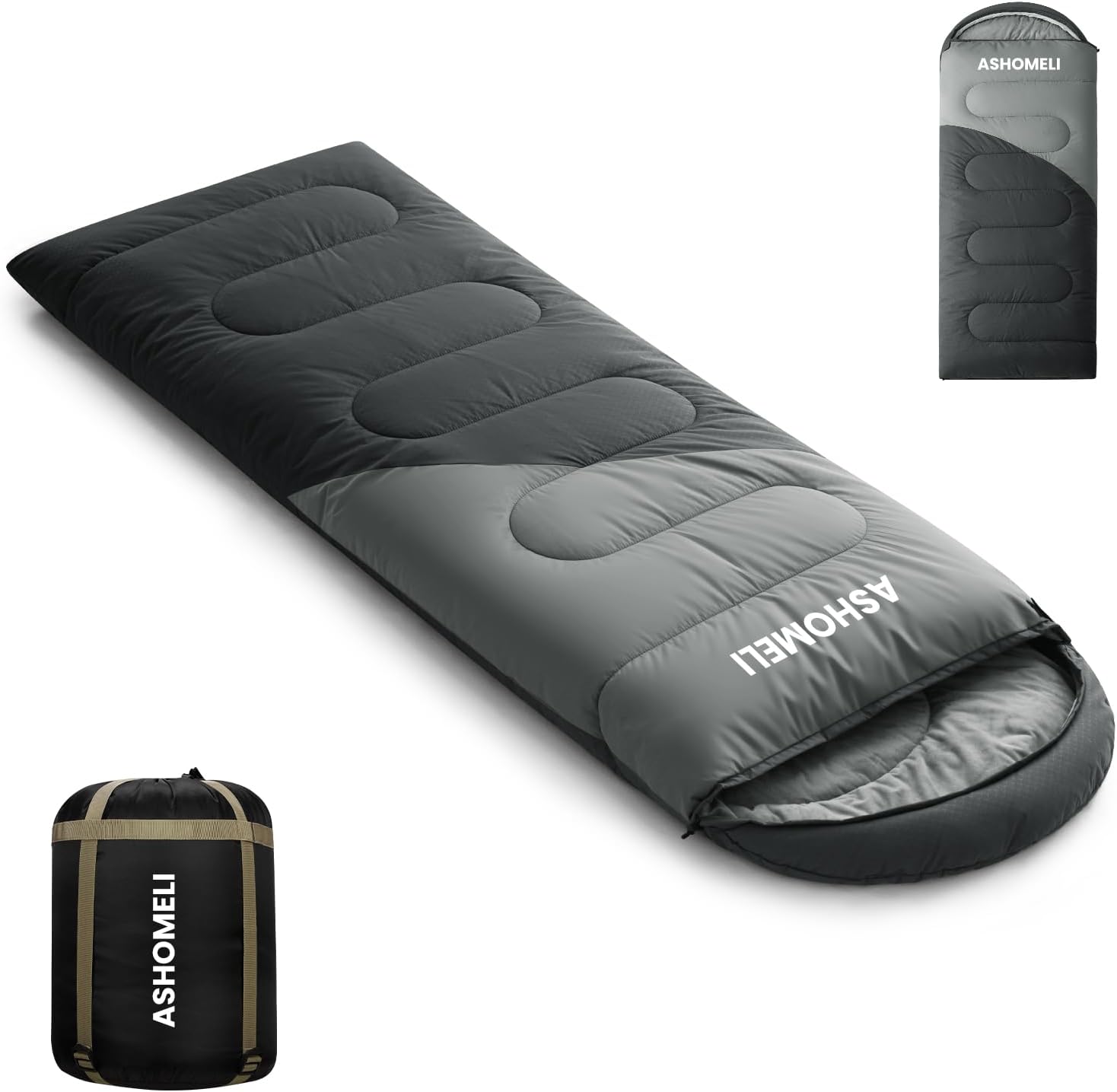
ASHOMELI 32F Sleeping Bag
Synthetic bag rated to 32F with a roomy cut and included pillow, built for family car camping and occasional trail nights.
Why we love it
- Rated to 32F for shoulder-season trips
- Soft fleece lining won't irritate a kid
- Foot zippers let you vent on warmer nights
Pros
- Water-resistant outer shell
- Spacious cut for side sleepers
- Full insulation sheet retains heat
- Included inflatable pillow
- Lightweight and packs small
Cons
- 32F is a limit, not a comfort zone
- Synthetic fill is bulkier than down
What Actually Separates a $20 Bag From a $30 One
The gap between best sleeping bags under $30 is not small. At this price ceiling, you are choosing between hollow-fiber bags that pack light and synthetic bags that handle damp, between three-season designs and bags that stretch into late fall. Every dollar spent moves you from entry-level to something with real draft protection and a zipper that does not snag on the first night.
Most buyers at this price point fail because they treat the temperature rating like a guarantee instead of a floor. A 50-degree bag does not mean you will be comfortable at 50 degrees. It means you might survive it. The bags above have real reviews from real campers, not marketing claims, and that honesty is what separates a regretted purchase from a reliable piece of gear.
Fill Type and How It Behaves When Damp
Hollow fiber and polyester lofts dominate this price tier. They do not compress as small as down, but they keep working when wet. I learned this the hard way after a coastal trip where morning condensation soaked the inside of a down bag. Synthetic insulation bounces back. It dries faster, too. At under $30, you are not getting premium polyester. You are getting hollow fiber that holds its shape through a season of car camping and weekend hikes. Check the weight. If it is under 3.5 pounds and still claims three-season warmth, the fill is thin and will compress over time.
Temperature Ratings and What They Actually Mean
The number on the tag is the limit temperature, not the comfort temperature. A 50-degree bag means you might not freeze at 50 degrees if you wear layers and pair it with an insulated pad. Comfort is usually 10 to 15 degrees warmer. The bags here range from 50 degrees to 20 degrees, and that difference is not just a number. A 20-degree-rated bag uses twice the insulation and weighs more. A 50-degree bag is for shoulder season, not winter. Match the rating to when you actually camp, not to the coldest night you might encounter once a year.
Zipper and Draft Collar Design
At this price, most bags have a simple two-way zipper and a drawstring hood. A few add a draft tube, which is a thin baffle that runs the length of the zipper to stop heat leakage. That feature matters more than people think. Heat escapes along the zipper seam faster than anywhere else. The Coleman Brazos includes a Thermolock draft tube, which is why it holds warmth better than bags with the same rating but no tube. The drawstring hood on most bags here is adequate. Pull it tight and you seal off the top. It is not a premium design, but it works.
Packed Size and What You Give Up
A bag that compresses to 7 by 14 inches will not fit in a small backpack. The JEAOUIA Sleeping Bag packs down to that size and weighs 3.3 pounds, which is light enough for weekend trips. The trade-off is that the shell is thin polyester and the lining is pongee, not brushed fabric. Thin materials do not last as long. A heavier bag with a durable shell will survive more trips. At under $30, you are choosing between packability and durability, not having both.
Temperature ratings are survival numbers, not comfort numbers. Buy for the season you actually use, not the exception.
Synthetic Versus Hollow Fiber at This Price Point
The distinction matters because it shapes how the bag behaves in the field. Synthetic bags use polyester fibers that trap air in a matrix. Hollow fiber is a simplified version of the same idea, with less air-trapping architecture. Both work at this price, but they fail differently. A synthetic bag loses warmth when wet but retains some loft. Hollow fiber loses loft and becomes clammy. If you camp in the Pacific Northwest where morning condensation is inevitable, synthetic wins. If you camp in dry climates, hollow fiber is lighter and cheaper.
The ECOOPRO Warm Weather Sleeping Bag uses a polyester lining and a nylon shell, which is a more durable combination than pure hollow fiber. It compresses to 11 inches and weighs 1.7 pounds, making it ideal for backpackers who prioritize weight. The trade-off is that a lighter synthetic bag uses thinner material and will not last as many seasons. Durability and weight are inversely linked at this price.
Shape, Length, and Who These Bags Fit
Most bags under $30 are rectangular, which means they do not taper at the feet. Rectangular bags are warmer because they have more dead air space, but they pack larger. Mummy-cut bags taper at the feet and hips, which reduces wasted volume and makes them lighter. At under $30, you will find mostly rectangular bags because the construction is simpler. Check the length. Most bags fit people up to 5 feet 11 inches. If you are taller, the bag will not cover your feet. If you are shorter, you have dead air at the bottom that you have to heat with your body. The JEAOUIA bag is 86.6 inches long, which is standard. If you are over six feet, you will need a longer bag, and that usually means stepping up in price.
A few bags here include features like foot zippers or side zippers, which let you regulate temperature without unzipping the whole bag. That matters on shoulder-season nights when you get warm. A full unzip is better for hot weather, but a foot zipper is better for precision control. The trade-off is that more zippers mean more weight and more places for failure.
Rectangular bags are warmer but bulkier. Mummy bags are lighter but colder. Choose based on your pack, not the catalog photo.
What Gets Cut at This Price
At under $30, the first thing to go is the shell fabric. Most bags use a thin polyester that is water-resistant, not waterproof. It sheds light rain but will soak through if you lay the bag on wet ground for hours. The second thing to go is the lining. Budget bags use a thin pongee or polyester lining that tears if you snag it with a fingernail. Premium bags use brushed polyester or fleece that is soft and durable. The third thing to go is the insulation quality. You get hollow fiber or basic polyester, not premium lofts that hold warmth longer. The zipper is usually a basic two-way slider that works but is not smooth. No premium coatings, no self-healing zippers.
What does not get cut is the basic design. These bags have hoods, drawstrings, and draft protection because those features cost almost nothing to add. What you save money on is durability and refinement. A bag at the bottom of this range will work for a few seasons of casual camping. A bag at the top of this range, closer to $30, will last longer and handle more abuse. The Coleman Brazos at $53.99 is above the ceiling but shows what happens when you add a real draft tube and machine-washable construction. Everything below that is a compromise on durability.
Tips From the Trail
- Store it uncompressed at home. Compression bags are for packing, not storage. Leaving your bag compressed in a stuff sack for months will crush the insulation permanently. Hang it or lay it flat in a closet between trips.
- Wash by hand in cool water. Machine washing can damage the seams and shell. Use a gentle detergent, soak for 20 minutes, rinse thoroughly, and lay flat to dry. Never use heat.
- Pair it with a pad. A sleeping bag alone on cold ground will not keep you warm. The insulation underneath you is compressed and useless. An R-value 3 pad is the minimum for three-season camping. Four-season trips need R-value 5 or higher.
- Test it at home before the trip. Set it up in your living room, get inside, and see if the hood closes properly and the zipper runs smoothly. Do not discover problems on the trail.
- Dry it completely after a wet trip. Moisture trapped inside will cause mildew and odor. Hang the bag open in the sun or lay it flat indoors for a full day before packing it away.
Common Questions
Will a 50-degree bag work for spring camping?
Yes, if you pair it with an insulated pad and wear layers. A 50-degree rating assumes you are on an insulated surface and wearing a base layer. On cold ground without a pad, you will be cold. Spring nights in the Cascades can drop to 35 degrees, so add a liner or a fleece layer inside the bag to stay comfortable.
How much does the temperature rating change if I use a sleeping pad?
A good pad with an R-value of 3 to 4 effectively adds 10 to 15 degrees to your comfort range. The pad prevents heat loss to the ground, which is where most body heat escapes. Without a pad, the rating drops by 20 degrees or more because the insulation underneath you is useless.
Can I wash a synthetic bag in the machine?
Some bags are machine-washable, but most under $30 are not. Check the tag. If it says hand-wash only, follow that. Machine washing can damage the seams and shell fabric. The Coleman Brazos is machine-washable, which is a feature that costs more.
Will a bag at the bottom of this price range last multiple seasons?
It depends on use. A bag used for 10 car-camping trips a year will last 4 to 5 seasons. A bag used for weekly backpacking will last 2 seasons before the insulation starts to clump and the shell frays. Budget bags are not designed for heavy use. If you camp frequently, spend the extra money on durability.
What is the difference between a 50-degree and 20-degree bag?
A 20-degree bag has roughly twice the insulation and weighs 2 to 3 pounds more. The difference is the loft height and the amount of fill. A 50-degree bag is for spring and fall. A 20-degree bag is for winter and high altitude. Do not buy a 20-degree bag if you only camp in summer. The extra weight and bulk are wasted.
Do the compression sacks that come with these bags actually reduce the packed size?
Yes, but not as much as the marketing claims. A bag that compresses to 8 inches with a compression sack will expand to 12 inches in your pack because the sack itself takes up space and the straps add bulk. The compression sack works, but the gain is modest. Do not buy a bag based on the compressed size alone.


Write Your Review
No reviews yet. Be the first to share your experience!