


ECOOPRO Warm Weather Sleeping Bag
Budget envelope bag that fits two kids or an adult, rated for warm weather but genuinely compact for family car camping.
Why we love it
- Squeezes two small kids or one adult comfortably
- Rolls down to 11 inches, fits in the minivan easy
- Machine washable after muddy trail weekends
Pros
- Fits two children side by side
- Ultra-lightweight at 1.45 lbs
- Waterproof nylon outer shell
- Compresses small for tight packing
Cons
- 55-60°F rating limits shoulder-season use
- Thin material won't handle heavy abuse

North Face Stormbreak 35F Sleeping Bag
Synthetic bag rated to 35 degrees that handles damp Pacific Northwest conditions without the down-bag headache.
Why we love it
- Synthetic fill performs when wet, no down clumping
- Two-way zipper vents on warmer shoulder-season nights
- Packs to 7x14 inches for minivan trips
Pros
- Heatseeker Pro synthetic insulation
- Two-way full-length zipper
- Water-repellent recycled polyester shell
- Compression stuff sack included
- Lightweight for a synthetic bag
Cons
- 35F is a limit, not comfort rating
- Synthetic bags pack bulkier than down

REDCAMP Cotton Flannel Sleeping Bag
Durable cotton flannel bag that handles Oregon shoulder-season camping without breaking the budget.
Why we love it
- Cotton flannel lining stays comfortable in damp conditions
- Two bags zip together for family sleeping setup
- Stuff sack packs small enough for minivan trips
Pros
- Cotton flannel lining breathes well
- Hollow fiber fill handles 5-32°F range
- Waterproof exterior wipes clean easily
- Right or left zipper option
- Two-person capacity for smaller kids
Cons
- Heavier than modern synthetic bags
- Cotton can retain moisture if wet

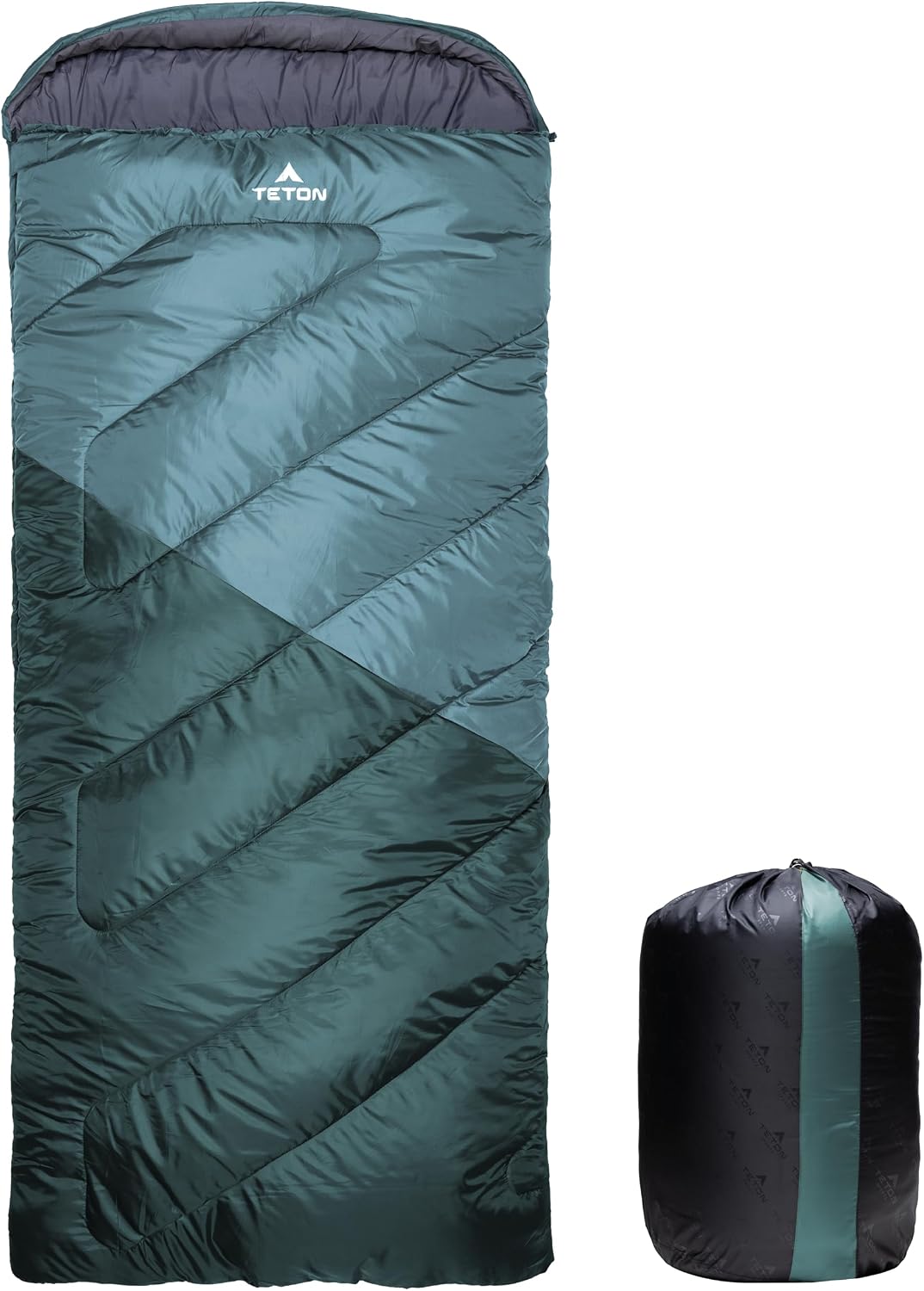
Kanyak 32F Sleeping Bag
Rectangular bag rated to 32F with foot zipper and machine washable synthetic fill, solid for car camping with kids.
Why we love it
- Foot zipper lets you vent when a kid overheats
- Two side zips let you join two bags together
- Machine washable after muddy state park trips
Pros
- Rectangular cut gives kids room to move
- Rated to 32F limit temperature
- Synthetic fill dries faster when damp
- Zips to a matching bag for couples
- Machine washable construction
Cons
- 4 pounds is heavy for backpacking trips
- Rated limit, not true comfort range
What Temperature Rating Actually Means at 2 AM
Picking a best sleeping bag under $500 means understanding what the temperature number on the tag really tells you. That 35-degree or 32-degree comfort rating is not the same as the extreme limit, and it is definitely not the same as how warm you will feel on a cold night with a thin pad underneath you. I have spent 14 years watching people buy bags rated for conditions they do not actually camp in, then spend the night cold and frustrated.
The 4 bags here range from warm-weather summer options to bags that handle three and four season camping. What they share is realistic performance at their stated rating when paired correctly with a sleeping pad and appropriate layers. The gap between marketing and reality is where most buyers get burned.
Comfort versus Limit versus Extreme
Manufacturers list three numbers. The comfort rating is where a standard sleeper (defined as a woman in this industry standard) will sleep warm. The limit is where a standard man will be okay but not comfortable. The extreme is survival, and it is not a camping temperature. If you camp at 20 degrees regularly, you need a bag rated 20-degree comfort, not 20-degree limit. A 35-degree comfort bag like the North Face Sleeping Bags Stormbreak 35F is built for shoulder season, not winter. Know which one you actually need before you open your wallet.
The Sleeping Pad Changes Everything
A bag rating assumes an R-value 5 pad underneath you. Without a pad, that number drops 10 to 15 degrees in real conditions. An air mattress or thin foam pad cuts the rating further. The insulation on the bottom of your bag compresses under your weight and loses loft, so the bag alone cannot keep you warm from below. If you are car camping on a thick air bed, you can get away with a warmer-rated bag. If you are backpacking on a thin foam pad, you need a colder rating and a better pad.
Moisture and Loft Recovery
Synthetic insulation holds its warmth even when damp, which matters on the wet coast or after a season in a compressed stuff sack. Down loses loft when wet and takes days to dry. A synthetic bag like the Camping Sleeping Bag 32F from Kanyak with 210T polyester shell and polyester pongee lining will shed light moisture and bounce back after storage. If you camp in damp conditions or live somewhere humid, synthetic buys you peace of mind.
Weight and Packed Size Matter Differently
A bag that weighs 2 pounds packed is not the same as a bag that compresses to the size of a loaf of bread. The ECOOPRO Warm Weather Sleeping Bag compresses to 11 inches and 1.7 pounds, which is remarkable for car camping or a weekend trip. The North Face Stormbreak weighs 2 pounds in regular length but stuffs to 7 by 14 inches. If you backpack, packed size matters as much as weight. If you car camp, neither matters much, and you can focus on warmth and comfort instead.
A 35-degree bag with a thin pad will not keep you warm at 35 degrees. Know your pad, know your sleeper, know your season.
Fill Type and Real-World Durability
Synthetic and down are not better or worse. They are different, and the choice depends on how you camp and where you live. Synthetic bags cost less, dry faster, and tolerate being packed damp. Down bags compress smaller and last longer if you care for them properly. Both can fail if you wash them wrong or store them compressed.
Synthetic Insulation: Low Maintenance and Honest Performance
Synthetic microfiber insulation like Heatseeker Pro (used in the North Face Stormbreak) is made from recycled polyester and does not clump when wet. It recovers loft quickly after being compressed. You can wash a synthetic bag in a machine on gentle cycle and dry it on low heat without worrying about destroying the insulation. The trade-off is that synthetic bags are bulkier when packed and do not compress as small as down. If you live in a damp climate or pack your bag wet, synthetic is the practical choice.
Cotton and Flannel Linings: Comfort and Care
The REDCAMP Cotton Flannel Sleeping Bag uses cotton lining with hollow fiber fill, which feels soft against skin and breathes well. Cotton absorbs moisture, so the bag itself will hold some damp. Hollow fiber fill is durable but does not compress as tightly as modern synthetics. This bag is built for car camping and casual trips where bulk and weight do not matter. The 4-pound fill option reaches a 41-degree comfort rating, suitable for spring and fall camping in the Pacific Northwest.
What Kills a Bag Faster
Compression storage over months or years damages loft permanently. A bag left compressed in a closet will never fluff back to original warmth. Improper washing, especially hot water or harsh detergent, can strip DWR coating and damage insulation. Sleeping in a wet bag night after night without drying it out encourages mold and fiber breakdown. Store bags uncompressed in a mesh bag or hang them in a closet. Wash by hand or on gentle cycle in cold water with mild soap. Let them air dry completely before packing away.
Store it uncompressed and wash it cold. Those two habits add years to any bag.
Shape, Fit, and Thermal Efficiency
Rectangular bags are roomy and good for car camping. Mummy bags are efficient and built for backpacking. Envelope bags split the difference. The shape affects how much dead air you are heating and how much you will move around inside the bag. A loose fit feels comfortable until you realize you are heating 10 extra cubic feet of air instead of staying snug.
Rectangular Bags for Space and Comfort
The Kanyak and REDCAMP bags are rectangular or semi-rectangular, which means you have room to move and stretch. The Kanyak is 86.6 inches long and 32.48 inches wide, roomy enough for two people or one person who likes to sprawl. Rectangular bags are warmer-rated than they need to be because you are heating more interior volume. They pack larger and weigh more. They are the right choice for car camping, family trips, and anyone who does not want to feel like they are in a sleeping bag coffin.
Tapered Mummy Cuts for Backpacking
The North Face Stormbreak is a tapered mummy cut, wider at the shoulders and narrower at the feet. This shape minimizes dead air and means the insulation works harder for you. You lose some mobility but gain warmth efficiency and a smaller packed size. A mummy bag is the right choice if you backpack regularly and weight and bulk matter. The Stormbreak comes in short, regular, and long lengths so you are not paying for insulation you do not need.
Draft Collars and Zipper Systems
A draft collar is a tube of insulation around the neck opening that stops warm air from leaking out. Most bags under $500 skip this feature, which costs warmth on very cold nights. The Stormbreak includes a full-length 2-way center zip that lets you vent from the bottom on warmer nights and unzip for more flexibility. The Kanyak has three zippers and a foot zipper, giving you fine control over ventilation. Check whether the zipper is metal or plastic. Metal lasts longer but conducts cold. Plastic is lighter but can jam or split with age.
What Gets Cut at This Price
At the entry level, you get basic insulation and standard construction. Bags under $50 use thin polyester shells and lower-quality fill. They work for summer car camping and emergency use, but they will not keep you warm on a cold shoulder-season night. The ECOOPRO at $25 is honest about what it is: a warm-weather envelope bag for temperatures above 55 degrees.
Entry Tier: Summer and Emergency Use
Bags in the $25 to $40 range use thin nylon shells and basic polyester lining. They compress small and weigh little, which is why people buy them. They work for summer camping, car camping in mild weather, and emergency blankets in vehicles. The ECOOPRO compresses to 1.7 pounds and 11 inches, which is remarkable. Do not expect it to keep you warm below 55 degrees, and do not expect it to survive years of heavy use. It is a single-season bag for warm trips or a backup.
Mid-Tier: Three-Season Camping
The Kanyak and REDCAMP bags sit in the $35 to $40 range and are built for three-season camping. The Kanyak rates to 32 degrees comfort (41 degrees for women), which covers spring, summer, and fall in most regions. The REDCAMP 4-pound version also hits 41 degrees. Both use polyester shells and polyester or cotton lining. Both come with compression sacks. These bags will last multiple seasons with reasonable care. The Kanyak has customer reviews numbering over 1,000, which suggests real-world durability.
Higher End: Winter and Backpacking
The North Face Stormbreak at $140 uses recycled polyester shell with DWR finish and Heatseeker Pro insulation. It weighs 2 pounds in regular length and compresses to 7 by 14 inches. It rates to 35 degrees comfort, which is shoulder-season territory, not winter. But the construction is noticeably better. The vertical quilting adds stretch in the legs, the 2-way zip is smooth, and the stuff sack is included. If you backpack regularly or camp in damp conditions, the extra $100 buys durability and performance you will notice.
Tips From the Trail
- Measure your actual sleeping pad R-value. Do not guess. An air mattress is R-5 to R-7. Closed-cell foam is R-3 to R-5. An inflatable pad depends on the valve and insulation layer. Know what is under you before you buy the bag.
- Test fit at home before the return window closes. Lie in the bag on your mattress at home. Does the zipper catch? Is the hood too loose or too tight? Can you move your legs? If something feels wrong, return it and try another.
- Wash cold and air dry completely. Hot water and dryers damage insulation and DWR coating. Use mild soap, gentle agitation, and hang it to dry. This takes time but adds years to the bag.
- Store uncompressed in a mesh bag or hanging. Compression over months kills loft permanently. Hang it in a closet or lay it flat in a large mesh storage bag between seasons.
- Pair a warmer-rated bag with a good pad. A 35-degree bag with an R-5 pad will keep you warm at 35 degrees. Without the pad, it will not. Do not blame the bag for a bad system.
- Know the difference between comfort and limit. A 32-degree limit bag is not a 32-degree camping bag. You need the comfort rating for the season you actually camp in.
Common Questions
How much warmth does a sleeping bag liner add?
A liner adds 5 to 15 degrees depending on the material. A silk liner adds less, a fleece liner adds more. Liners are useful for extending the range of a bag you already own or keeping a bag clean on long trips. They are not a substitute for buying the right rated bag in the first place.
Can I use a sleeping bag under $500 for winter camping?
Only if you buy the right rating and pair it with a good pad. Most bags under $500 top out at 35 to 41 degrees comfort, which is not winter territory. True winter bags (0 to 20 degrees comfort) cost more. If you want to winter camp on a budget, buy a 20-degree synthetic bag and a high R-value pad. That combination will work, but it will cost closer to $300 to $400.
Is a temperature rating the same for men and women?
No. The comfort rating is based on a standard woman. A standard man is comfortable at a higher (warmer) temperature. If you are a cold sleeper of any gender, buy a bag rated 10 degrees colder than the season you camp in. If you are a warm sleeper, you can go warmer.
What does DWR mean and why does it matter?
DWR is durable water-repellent coating on the shell fabric. It sheds light rain and condensation without making the bag waterproof (which would trap moisture inside). Non-PFC DWR is safer for the environment. Over time and with washing, DWR coating wears off. You can reapply it, but the bag will never be as water-resistant as new.
Will a sleeping bag rated for 32 degrees keep me warm at 32 degrees?
Only if 32 degrees is your comfort temperature, you have an R-5 pad, you are wearing appropriate layers, and you are not a cold sleeper. The 32-degree rating on the Kanyak is a limit for a standard man, not a comfort number. If you want to be comfortable at 32 degrees, you need a bag rated 20 degrees or colder.
How long does a sleeping bag last?
Synthetic bags last 5 to 10 years with proper care. Down bags can last 20 years if stored uncompressed and never get wet. A bag that is washed in hot water, stored compressed, or used roughly will fail in 2 to 3 years. The fill does not wear out as much as the shell and zippers do. Repair a zipper or patch a hole and the bag can last longer.


Write Your Review
No reviews yet. Be the first to share your experience!