


NEMO Disco 30F Down Sleeping Bag
Down bag built for side sleepers who need room to move and fine-tuned warmth control on cool nights.
Why we love it
- Spoon shape gives elbow and knee room for restless sleepers
- Thermo Gill vents let you dial warmth without cold drafts
- Packs to the size of a water bottle for trail trips
Pros
- 650-fill hydrophobic down insulation
- Roomy spoon-shaped cut for side sleepers
- Dual-stage Thermo Gill vents for temperature control
- Blanket Fold draft collar blocks cold air
- 100% recyclable shell and fully recyclable at end of life
Cons
- 30F is a limit rating, not comfort temperature
- Down requires careful drying after damp trips

HLITMOUT 3-in-1 Down Bag 20°F
Rectangular down bag that works as a sleeping bag, blanket, or quilt. Roomy enough for kids and converts to gear that fits the minivan.
Why we love it
- Detachable hood turns it into a blanket for car trips
- Rectangular cut gives kids room to move around
- Two-way zippers let you open it up on mild nights
Pros
- 680FP down fill compresses small
- Rectangular shape fits kids comfortably
- Two bags zip together for family sleeping
- Detachable hood adds versatility
- Two-way zipper for temperature control
Cons
- 2.42 lbs is heavy for backpacking
- Down needs careful drying after wet trips

NEMO Forte 35F Synthetic Bag
Synthetic bag that stays warm even when damp, with a roomy spoon cut that lets kids actually sleep comfortably on cold nights.
Why we love it
- Spoon shape gives kids room to move without losing warmth
- Synthetic fill performs when wet from morning dew or rain
- Two-stage vents let you dial in comfort as temps shift
Pros
- Roomy spoon-shaped cut for side sleepers
- Synthetic fill stays warm when damp or wet
- Thermo Gill dual-stage vents extend usable range
- 100% recyclable at end of life
- Pillow pocket for jacket or pad stuffing
Cons
- Heavier and bulkier than equivalent down bags
- 42F comfort rating means layering below freezing
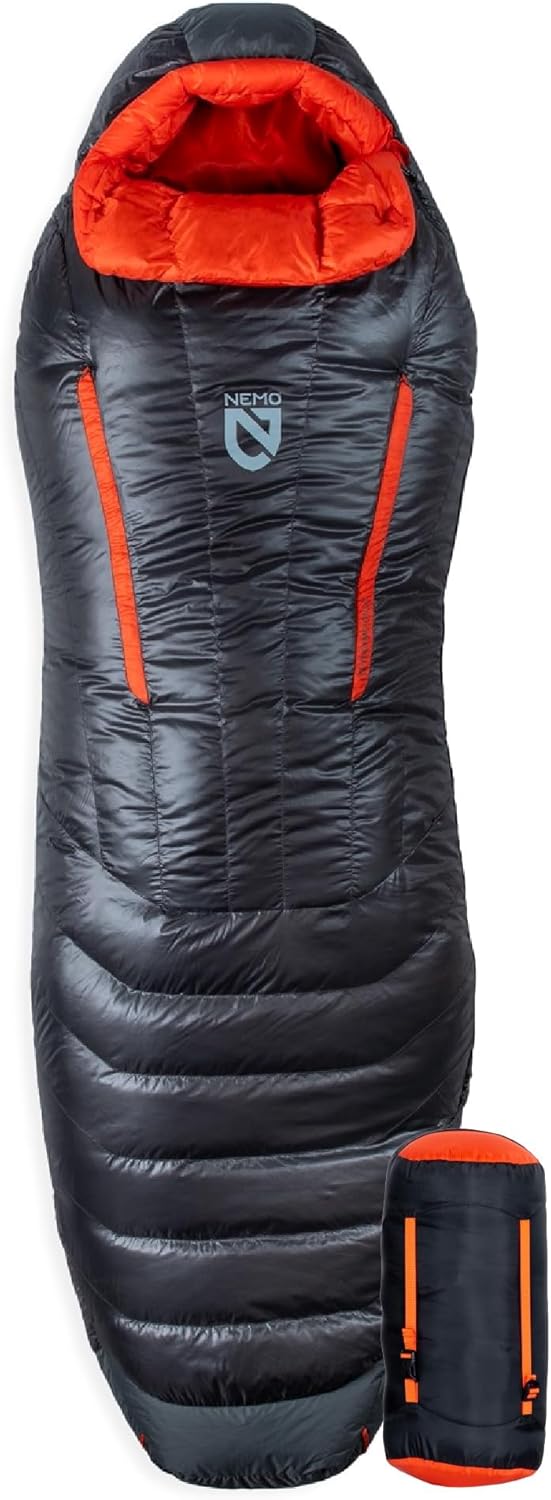
NEMO Riff 15F Down Sleeping Bag
Premium 800 fill down bag built for side sleepers who want serious warmth without the mummy-bag squeeze.
Why we love it
- Spoon shape gives elbows and knees room to shift
- Thermo Gills let you dial warmth without cold drafts
- Packs smaller than comparable bags, easier for car trips
Pros
- 800 fill down insulation
- Roomy spoon-shaped cut for side sleepers
- Thermo Gill vents for fine temperature control
- Ultralight and highly compressible
- Blanket Fold draft collar seals out cold
Cons
- Pricey for a 15-degree bag
- Down requires careful drying after damp trips
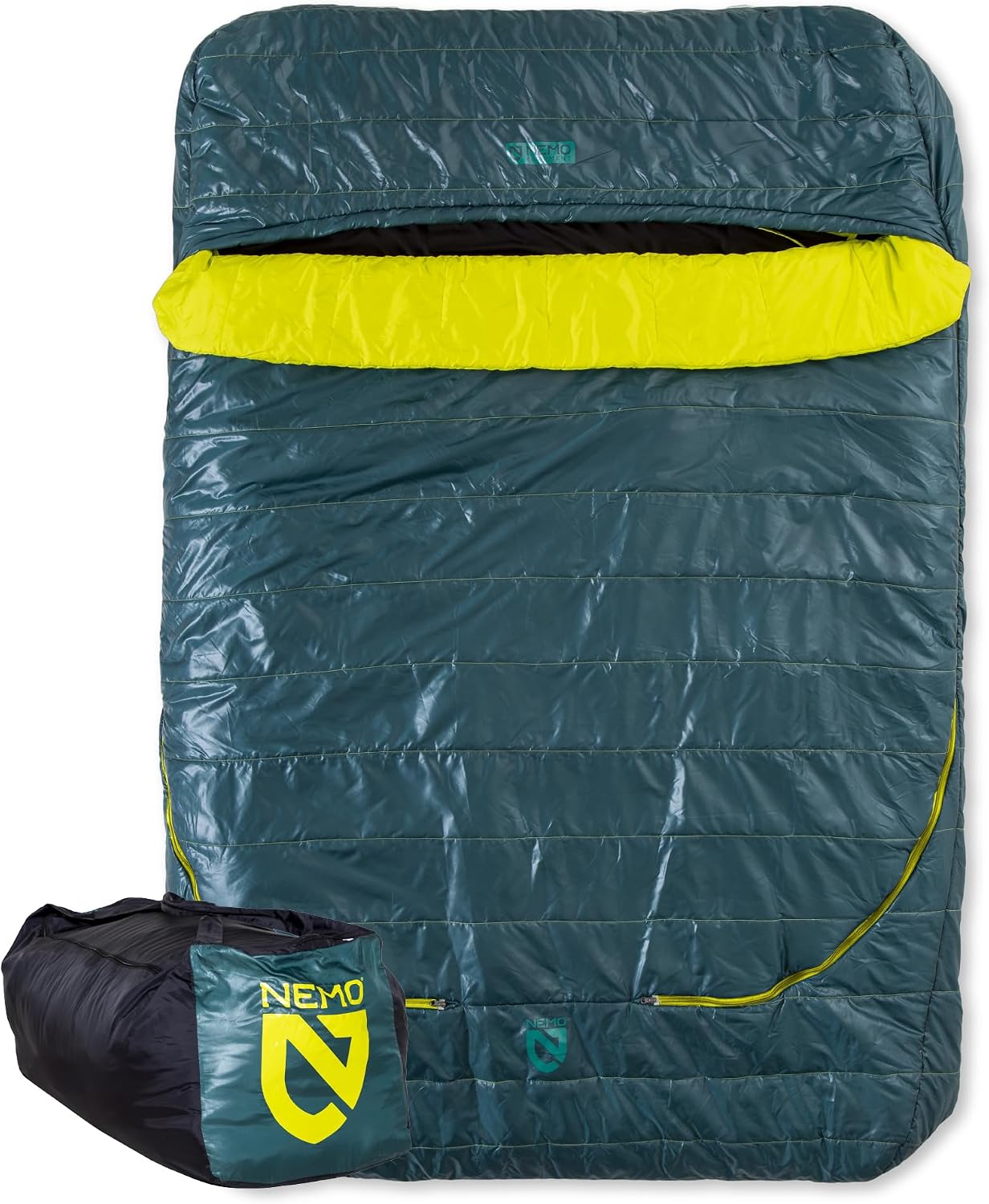
NEMO Jazz Sleeping Bag 32F
A car-camping bag built for families that actually keeps kids warm on cold nights and survives the minivan.
Why we love it
- Removable sheet washes separately for hygiene
- Pad sleeve keeps insulation in place all night
- Zips to a second bag for shared warmth
Pros
- Removable, machine-washable sheet
- Integrated pad sleeve anchors insulation
- Blanket Fold draft collar regulates heat
- Zips together for couples or family
- 100% recycled synthetic fill handles damp
Cons
- Heavy for backpacking trips
- Pricey for occasional family campers

NEMO Tracer Sleeping Bag Liner
Lightweight liner that adds genuine warmth to any bag and actually gets tossed in the wash without falling apart.
Why we love it
- Boosts any bag's warmth on shoulder-season trips
- Machine washable, survives stuffing wet in the van
- 100% recycled polyester stays odor-free longer
Pros
- THERMOLITE EcoMade hollow-core fibers
- Machine washable construction
- POLYGENE odor control finish
- Packs extremely compact
Cons
- Not a standalone sleeping bag
- Liner-only, needs host bag
NEMO’s Range: Finding Your Fit
Best NEMO sleeping bags are not one thing. NEMO makes down bags for ultralight backpacking, synthetic bags for damp weather, liners for shoulder season, and models cut for side sleepers. The line spans from entry-level bags under $100 to premium down setups over $300. What matters is matching the bag to how you actually sleep and where you actually camp.
Most people pick wrong because they chase a temperature number or a price point without checking the cut and fill. A 20-degree bag that does not fit your shoulders leaves you cold at 35 degrees. A synthetic bag in dry conditions loses to down on weight and packability. NEMO’s lineup forces the real choice: down or synthetic, mummy or spoon, ultralight or livable.
Down Versus Synthetic Fill
Down compresses smaller and weighs less, which is why NEMO’s ultralight line uses it. A 800-fill down bag packs to the size of a loaf of bread. The trade-off is wet performance. I have watched down clump after a condensation night on the coast and a careless wash. Synthetic bounces back from moisture and tolerates rough handling. The NEMO Equipment Jazz Synthetic Sleeping Bag uses synthetic for that reason, and it stays lofted even in damp car-camping conditions. Synthetic weighs more and packs bulkier, but it does not require the storage care down demands.
Mummy Cut Versus Spoon Shape
Mummy bags taper at the feet and hips, which traps heat and cuts weight. If you sleep on your back, a mummy works. If you sleep on your side, the taper digs into your hip and shoulder. NEMO’s spoon-shaped bags curve outward at the hip and shoulder, giving side sleepers room without losing warmth. The NEMO Equipment Riff Down Sleeping Bag is spoon-cut and rated ultralight. A rectangular bag gives the most interior room but weighs more and packs larger. For backpacking, spoon is the middle ground.
Temperature Rating and Pad Pairing
A 20-degree rating is the limit number, not the comfort number. It is where the bag keeps you alive, not where you sleep well. Comfort is roughly 15 degrees higher. A 20-degree bag sleeps comfortable around 35 degrees if you pair it with a pad rated R-value 3 or higher. Without a good pad, ground cold kills the bag’s rating faster than air temperature. Most people blame the bag when the real problem is the pad. Check the bag’s specs for the assumed pad R-value. NEMO lists it.
Packed Weight and Bulk
Ultralight bags cut weight by using thinner fabrics, less insulation, and shorter lengths. A 20-ounce bag sounds light until you realize it has a 5-foot-10 inch length limit and a draft collar you have to work around. The NEMO Equipment Forte Synthetic Sleeping Bag weighs more than ultralight models but gives you a full draft collar and usable shoulder room. For overnight trips, the weight difference is negligible. For a week-long trip, it matters.
A bag rated 20 degrees sleeps comfortable around 35 degrees. The pad matters as much as the bag.
Down Bags: Fill Power and Care
Fill Power and Loft Recovery
Fill power is the volume one ounce of down occupies, measured in cubic inches. 800-fill down is standard in NEMO’s backpacking line. Higher fill power (900+) compresses smaller but costs more and requires more careful handling. Lower fill power (650) is heavier and bulkier but more forgiving. The real number is how much loft the down keeps after months of storage. Down stored compressed loses loft permanently. I have seen a 800-fill bag drop to 650-fill performance after a season in a stuff sack. NEMO bags come with a storage sack, not a compression sack. Use it.
Washing Without Destroying Loft
Down is not delicate, but hot water and detergent designed for synthetics will strip the natural oils and kill loft. Machine wash in cold water with down-specific soap, then dry on low heat with tennis balls to fluff the clumps. A commercial laundry with a large-capacity dryer is safer than a home machine. One bad wash can take a year off the bag’s life. I have seen friends ruin good bags by using regular detergent and high heat. Read the tag. NEMO tags are clear about it, but people skip them.
Condensation and Interior Moisture
Down loses loft when wet, but condensation inside the bag is different from rain outside. On a cold night, your breath and skin moisture condense on the inner shell. Down next to that shell gets damp and stops insulating. A breathable inner liner or a sleeping bag liner reduces this. The NEMO Equipment Tracer Sleeping Bag Liner sits inside the bag and wicks moisture away from the down. It also lets you sleep in a down bag without washing it for weeks. For extended trips or shared bags, a liner is cheap insurance.
A sleeping bag liner cuts washing frequency and protects down from interior moisture.
Synthetic Bags: Durability and Weather
Wet Performance and Drying Speed
Synthetic insulation does not clump when wet. It loses some loft but retains maybe 60 to 70 percent of its warmth even soaked. Down loses nearly all warmth when wet. If you camp in coastal rain or high-altitude afternoon storms, synthetic is the safer choice. The downside is weight. A synthetic bag rated 20 degrees weighs 3 to 4 pounds. A down bag at the same rating weighs 2 to 2.5 pounds. Synthetic also does not compress as small. If you are car camping or base camping, that weight penalty is invisible. If you are hiking 10 miles to camp, it matters.
Durability Against Rough Use
Synthetic insulation tolerates compression better than down. You can stuff a synthetic bag into a tight pack without worrying about permanent damage. Kids can jump on it, drag it through dirt, and not break it. Down is more fragile. Seams can tear, shells can rip, and the down inside will migrate out. NEMO’s synthetic bags use a tighter weave shell that resists snags. If durability is the priority, synthetic wins. If weight and packability are the priority, down wins. Most people underestimate how much they care about durability until they have repaired a down bag in the field.
Washing and Storage
Synthetic bags tolerate machine washing in warm water with regular detergent. You can dry them on medium heat without risk. They do not need special care or a storage sack. Toss them in a closet compressed and they bounce back. This simplicity matters for families with kids or for people who camp frequently and do not want to fuss with gear maintenance. The trade-off is that synthetic bags never pack quite as small as down, even after years of use.
What Gets Cut at This Price Range
Entry Level: Lightweight But With Trade-Offs
Bags around $90 to $120 use lighter fabrics and shorter lengths to hit the weight and price target. The insulation is real but thinner. Zippers are reliable but not the smoothest. Draft collars are minimal or absent. You get a working bag, but you will feel the corners cut. This tier is honest for occasional car campers or people trying backpacking for the first time. It is not honest for someone who camps 20 times a year.
Mid-Range: Real Features Start Here
Bags in the $200 range have full draft collars, smooth zippers, and enough insulation thickness that you do not feel the shell fabric. The shells are still thin, but they are durable enough for regular use. This is where most serious backpackers land. You get a bag that works for three seasons, packs reasonably, and does not require obsessive care. The weight penalty versus ultralight is 10 to 15 ounces, which most people do not notice after the first mile.
Premium: Weight and Warmth Without Compromise
Bags over $300 use premium down (800-fill or higher), thicker shells, and precision construction. Zippers glide, seams are reinforced, and draft collars seal completely. The weight is still low because the engineering is efficient, not because something is missing. This tier is for people who backpack 50+ days a year or climb mountains in winter. For everyone else, the improvement is not worth the cost.
Tips From the Trail
- Store down bags uncompressed. Hang them in a closet or lay them flat in a large mesh bag. Compression breaks down loft permanently. NEMO includes a large storage sack with down bags.
- Pair the bag with a pad rated R-value 3 or higher. A 20-degree bag without a good pad sleeps like a 35-degree bag. The pad is half the insulation system.
- Test fit at home before a trip. Lie down in the bag, zip it, and roll around. A tight fit kills circulation and makes you colder. A loose fit wastes heat.
- Wash synthetic bags in warm water with regular detergent. Dry on medium heat. Do not overthink it. Synthetic is forgiving.
- Use a liner with down bags if you camp frequently. It cuts washing to every few trips instead of every trip, and it keeps the down cleaner longer.
- Never store a wet bag compressed. Dry it completely first, even if it takes days. Mold grows in compressed moisture.
Common Questions
Does a temperature rating actually mean I will be comfortable at that temperature?
No. The rating is the survival limit, not the comfort zone. A 20-degree rating means you will not freeze to death at 20 degrees. You will be miserable. Comfort is roughly 15 degrees warmer. A 20-degree bag sleeps comfortable around 35 degrees, assuming a good pad underneath.
Can I use a synthetic bag in winter?
Yes, but it will be heavier and bulkier than a down bag at the same temperature rating. Synthetic bags rated 0 degree exist, but they weigh 4+ pounds and pack to the size of a basketball. Winter backpacking is where down’s weight advantage matters most.
What is the difference between a liner and a sleeping bag?
A liner is a thin fabric sack that sits inside the bag. It adds maybe 5 to 10 degrees of warmth, reduces washing frequency, and protects the insulation from body oils and sweat. It is not a standalone bag. Liners are useful for extending a bag’s season or keeping it clean, not for replacing one.
How long does a sleeping bag actually last?
A down bag used 30 days per year lasts 10 to 15 years if stored properly and washed carefully. Synthetic bags last 8 to 12 years. The insulation does not wear out. Zippers, shells, and seams fail first. Regular maintenance extends life significantly.
Should I buy a bag rated colder than I need?
No. A 0-degree bag used for 40-degree camping is heavier, bulkier, and overkill. Buy for the coldest night you actually expect, then pair it with a good pad and appropriate layers. Overshooting the rating is wasted money and packed weight.
Can I wash a NEMO down bag at home?
Yes, in cold water with down-specific soap, then dried on low heat with tennis balls. A commercial laundry is safer because the dryer is larger and more consistent. If you use a home machine, use cold water and down soap. Hot water and regular detergent will damage the down.


Write Your Review
No reviews yet. Be the first to share your experience!