

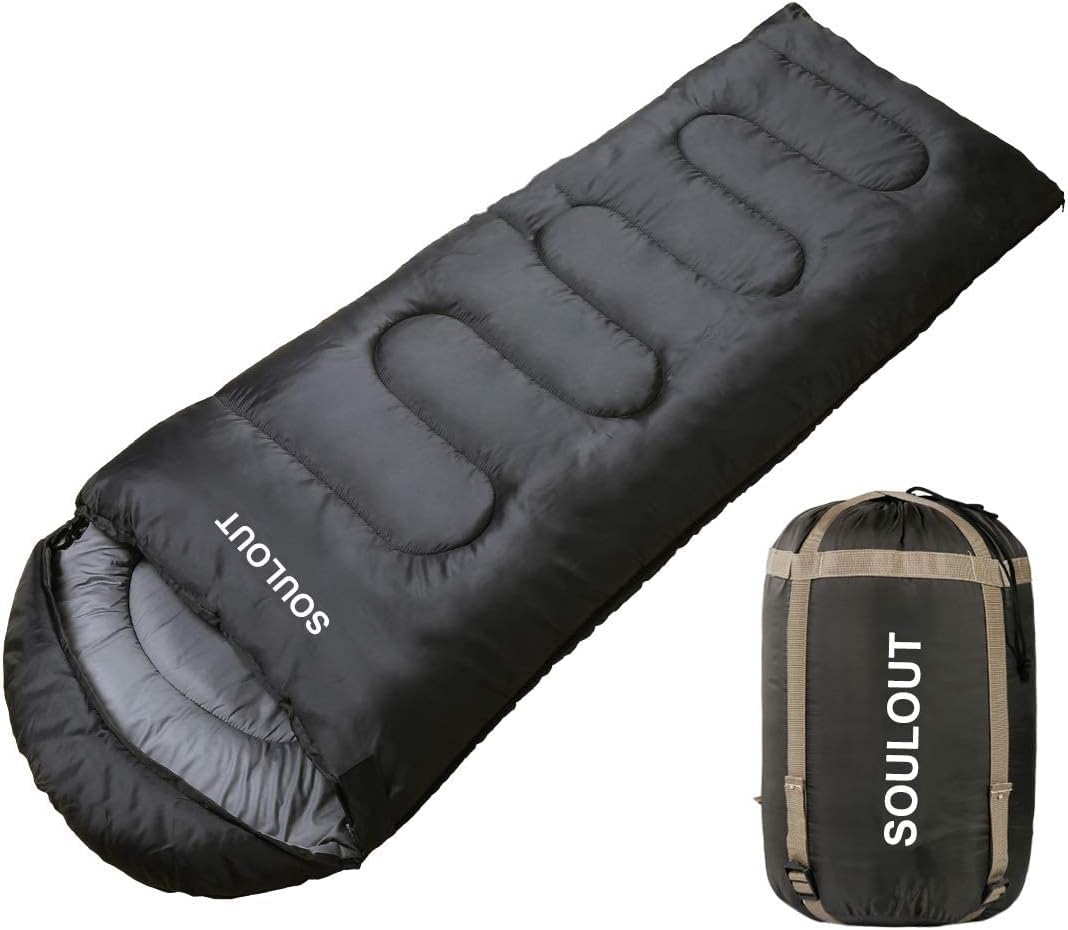
SOULOUT 3-4 Season Sleeping Bag
Roomy rectangular bag that keeps kids warm on chilly state-park nights and survives the minivan without complaint.
Why we love it
- Rectangular cut gives kids room to move
- Water-resistant shell handles damp mornings
- Machine washable, no fuss after muddy trips
Pros
- Spacious envelope design for comfort
- Water-resistant outer shell
- Machine washable synthetic fill
- Includes compression sack
- Good warmth for spring and fall camping
Cons
- Bulky when packed for backpacking
- Rated limit, not comfort temperature

Teton Celsius XXL Sleeping Bag
Roomy rectangular bag that keeps kids warm on frosty nights and stuffs into a minivan without complaint.
Why we love it
- Interior storage pocket keeps keys and phone within reach
- Draft tubes and shoulder collar trap heat on cold mornings
- Stuff sack included; packs down for occasional overnighters
Pros
- Anti-snag two-way zipper
- Soft flannel lining comfortable for kids
- Water-resistant taffeta shell
- Roomy cut lets you layer or move around
- Compression sack included
Cons
- Heavy for backcountry trips
- Rated limit, not comfort temperature

Teton Celsius 20F Sleeping Bag
Synthetic bag that handles damp weather and keeps kids warm through frosty nights without breaking the bank.
Why we love it
- Flannel lining stays soft even after stuffed wet in the minivan
- Draft tubes and hood seal warmth on cold shoulder-season trips
- Priced right for a family that camps most weekends
Pros
- Synthetic fill performs when damp
- Two-way zipper opens fully to blanket mode
- Draft collar and hood trap heat
- Stuff sack included, packs down tight
- Machine washable after muddy trips
Cons
- Rated as a limit, not a comfort zone
- Bulkier packed than down at same warmth

TETON Deer Hunter -35F Bag
A roomy, heavily insulated bag built for car camping in shoulder-season cold, with enough warmth to keep kids comfortable on frosty state-park nights.
Why we love it
- Double-layer canvas shell survives wet minivan packing
- Cinch hood and draft tubes lock warmth on cold mornings
- Rated to -35F, so you stay warm without layering games
Pros
- Roomy rectangular cut, fits kids without cramping
- Heavy-duty canvas shell withstands repeated use
- Flannel lining soft and warm against skin
- Draft collar and hood cinch seal heat in cold
- Rated to -35F for true cold-weather camping
Cons
- Heavy and bulky, car camping only
- Not packable for backpacking trips

Coleman Brazos 20/30F Sleeping Bag
Rectangular bag rated to 30F that zips together with a second bag and handles the minivan lifestyle better than most.
Why we love it
- Zips to a second bag for couples or kids
- Machine washable after muddy trail trips
- No-snag zipper saves frustration at 6 AM
Pros
- Thermolock draft tube seals warmth
- Fiberlock keeps insulation from shifting
- Rectangular cut gives kids room to move
- Stuff sack included for car storage
- Zips together for shared warmth
Cons
- Bulky packed size for backpacking
- 30F rating is the limit, not comfort
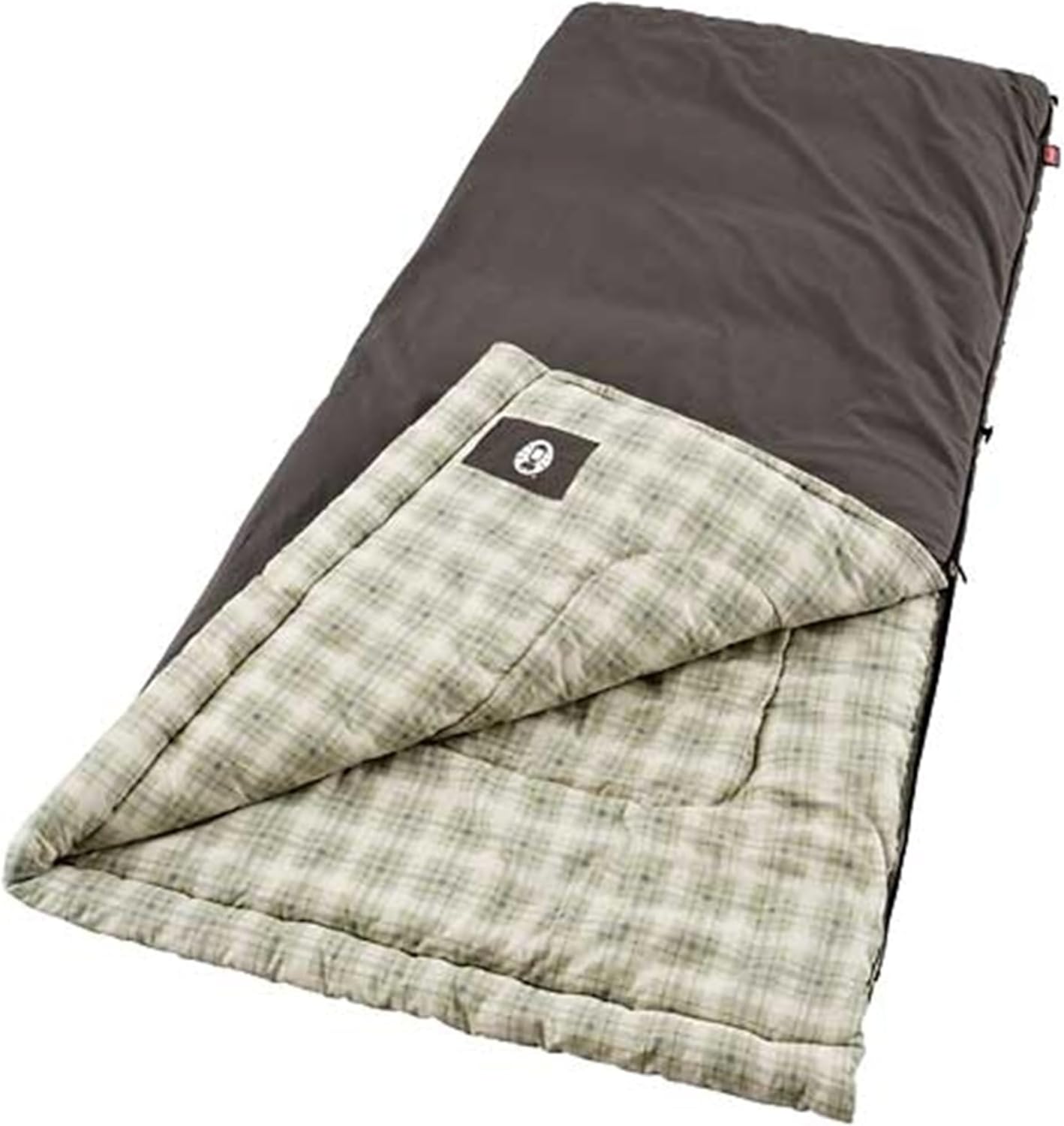
Coleman Heritage Big & Tall 10°F Bag
Roomy XL bag rated to 10°F with flannel comfort; machine washable and built tough for family camping.
Why we love it
- Fits tall adults or two kids bundled close
- Flannel liner beats scratchy nylon on skin
- Machine washable beats campfire smell
Pros
- 5 lbs Holofill insulation traps heat
- Flannel liner instead of cheap nylon
- No-snag zipper holds up to kids
- Machine washable for easy cleanup
- XL size fits adults up to 6'7"
Cons
- Heavy for backpacking trips
- Rectangular cut wastes heat around edges
What Actually Keeps You Warm at 15 Degrees
The difference between a best low temp sleeping bag and a bag that leaves you shivering at 2 a.m. comes down to three things most people misunderstand: what the temperature rating actually means, how much your pad contributes to warmth, and whether the insulation is doing what the hang tag promised. After 14 years of cold nights in the Cascades and high desert, I have learned that a bag rated to 15 degrees does not keep you comfortable at 15 degrees. That number is the survival limit, not the comfort zone.
The picks above share one trait: they hold their insulation loft through the night and do not lose R-value when damp air gets inside. That matters because a bag that compresses unevenly or clumps down on one side will leave you cold in one shoulder while the other stays warm. You need synthetic fill that resists moisture, down that is truly baffled, or a shell that sheds condensation before it soaks the insulation.
Temperature Rating vs. Comfort
A temperature rating on the tag is the 50th percentile survival threshold, not where you sleep well. It is the point where a standard adult can survive the night without dying of hypothermia. Comfort is typically 10 to 15 degrees warmer than that number. If you camp at 20 degrees and want to sleep, buy a bag rated for 0 to 10 degrees. The rating also assumes you are wearing a base layer, using an insulated pad, and lying still. Movement, sweat, and poor pad contact all lower your actual warmth.
Synthetic vs. Down in Damp Conditions
Synthetic insulation keeps insulating when damp and dries faster after a wet trip. It does not compress as tightly as down, so a synthetic bag of the same rating will pack larger and weigh more. Down fill compresses to almost nothing and weighs less, but loses loft if it gets wet and takes days to dry in the field. The 3-4 Season Sleeping Bag for Adults & Kids uses synthetic for that reason: Pacific Northwest trips are damp, and a synthetic bag bounces back even after a condensation night.
Draft Collar and Hood Design
A full draft collar that cinches around your shoulders stops warm air from escaping up and out. A mummy hood that draws tight around your face keeps head heat from radiating away. Bags without both of these leak warmth in the cold hours before dawn. Look for a hood that cinches on two sides, not just one, and a collar that sits high enough to overlap the bag’s opening when you are lying on your side.
Pad Pairing and R-Value
The insulation under you compresses to zero R-value, so your pad does the work. A bag rated to 15 degrees assumes you are using a pad with an R-value of at least 3 to 4. Without that pad, the rating is meaningless. A closed-cell foam pad or an inflated pad with good baffles matters more than the bag itself in cold ground. If you sleep on the ground or a thin pad, drop your target rating another 10 degrees.
A cold night teaches you faster than any review: temperature ratings are survival numbers, not comfort numbers.
Fill Power and Loft Retention
Fill power is a measure of how much space one ounce of down occupies. Higher fill power (800+) means lighter weight and better compressibility. But fill power only matters if the down stays lofted through the night. Down clumps when it gets wet, and it also clumps when compressed for months in a stuff sack. The TETON Sports Deer Hunter Sleeping Bag uses a synthetic fiber blend instead of down, which is why it does not require the careful storage and fluffing that down bags demand.
Synthetic insulation does not recover loft as quickly after compression, but it does not lose it permanently either. If you pack a synthetic bag tight every weekend, it will still insulate. A down bag packed tight for a season can take weeks of airing to regain full loft. The baffles inside the bag matter too. Baffle design determines whether insulation shifts to the sides and leaves cold spots on your back and shoulders. Sewn-through baffles are cheaper but create thermal bridges. Box baffles or overlapping baffles hold insulation more evenly.
Down Bags: Fill Power and Care
Down fill power ranges from 550 to 900+. A 700-fill down bag is lighter than a 600-fill, but only if you keep it dry and store it uncompressed. Down requires a dry bag inside your pack, careful washing, and several hours of low-heat drying. If you wash down in cold water or dry it on high heat, the oils strip out and loft dies. A down bag that gets rained on mid-trip will not dry in the field. For Cascades camping where fog and drizzle are constant, synthetic is the safer choice.
Synthetic Insulation and Durability
Synthetic bags handle abuse and moisture better than down. They can be machine-washed, air-dried in a few hours, and compressed tight without permanent damage. The trade-off is weight and packed size. A synthetic bag rated to the same temperature as a down bag will weigh more and take up more room in your pack. For car camping and weekend trips where weight is not the limiter, synthetic wins. For backcountry trips where every ounce matters, down is the choice, but only if you can keep it dry.
Mummy Shape, Rectangular, and Hybrid Cuts
Sleeping bag shape determines how efficiently it holds heat and how much room you have to move. A mummy cut tapers at the feet and shoulders, trapping a small volume of air around your body. A rectangular bag gives you room to move but wastes heat because you are heating a larger space. The Coleman Heritage Big & Tall 10-Degree Flannel Sleeping Bag is rectangular, which is why it suits car camping and stationary camps, not backpacking.
Mummy bags are more efficient in the cold because they minimize dead air space. They are tighter around the shoulders and hips, which some sleepers find claustrophobic. If you toss and turn or sleep on your side, a mummy bag that is too narrow will feel suffocating and you will sleep poorly. A semi-rectangular or tapered hybrid cut splits the difference: it is more efficient than a full rectangle but roomier than a true mummy. Test the fit in a store or buy from a retailer with a return window.
Shoulder and Hip Girth for Side Sleepers
A mummy bag cut narrow at the shoulders will press on your arms and restrict shoulder movement. If you sleep on your side, you need a bag with enough shoulder room that your arm does not press against the insulation. Dead air space is good, but pressure on your arm is bad. Lie down in the bag if you can, or ask the retailer about shoulder girth before buying. A bag that feels tight in the store will feel worse at 2 a.m. when you are cold and tired.
Foot Box and Length
A tapered foot box saves weight and keeps heat in, but only if your feet fit. If your feet are large or you sleep with your knees bent, a tight foot box will compress the insulation under your feet and leave them cold. A roomier foot box lets you move, but it also means you are heating more space. Most bags come in regular and long lengths. If you are over 6 feet tall, a regular bag will compress the insulation at your feet, making you colder.
The best bag shape is the one you can actually sleep in without fighting it all night.
Getting the Fit Right Before the Return Window Closes
A bag that fits wrong will sleep cold no matter how high the rating. Before you commit, lie down in it at home in your regular sleep clothes. Set your alarm for the middle of the night and check whether your shoulders are pressing against the insulation or your feet are bunched. If you buy online, open the bag immediately and test it in the house. Most retailers give you 30 days to return, and you need to know by then whether the fit works.
Checking Shoulder and Hip Room
Lie on your back and on your side. Your shoulders should not touch the insulation. Your hips should have a hand’s width of space. If the bag feels snug in the store, it will feel tight after an hour in the cold. A bag that is too tight will wake you up from the pressure, and you will sleep poorly. If you are between sizes, go up. A slightly loose bag sleeps warmer than a tight one because you can shift position and maintain heat.
Pad R-Value Pairing
Check your pad’s R-value before you buy. If you own a pad with an R-value of 2 or less, add 10 degrees to the temperature where you plan to camp and buy a bag rated for that number. A 20-degree bag on a low-R pad will not keep you warm at 20 degrees. If you are buying a bag and a pad together, aim for a pad with at least R-3 for three-season camping and R-4 or higher for winter or high-altitude trips.
Moisture Management and Condensation
Your body releases moisture into the bag all night. In cold conditions, that moisture condenses on the inside of the shell and can soak the insulation. Synthetic insulation resists this better than down. If you are using a down bag in damp conditions, air it out in the morning sun if you can, or crack the bag open during the day to let moisture escape. A sleeping bag liner can trap some of that moisture and make washing easier, but it will not prevent condensation inside the bag.
Tips From the Trail
- Fluff your bag before bed. Shake it out and let it loft for 10 minutes before you get in. Compressed insulation will not trap warmth until it expands.
- Store it uncompressed at home. Hang it in a closet or lay it flat in a large mesh bag. Long-term compression damages synthetic and down loft permanently.
- Wear a hat and dry socks to bed. You lose most body heat through your head and feet. A wool beanie and dry socks will raise your effective warmth by 10 degrees or more.
- Use a sleeping pad liner to reduce washing. A liner traps sweat and skin oils, so you wash the liner instead of the bag. Most bags last twice as long with a liner.
- Wash synthetic bags in cold water on gentle cycle. Dry on low heat or hang dry. High heat damages synthetic insulation and shells.
- Air down bags for days after washing. Down takes a long time to dry completely. Hang it in the sun or lay it flat indoors for at least two days before packing it away.
Questions I Get Asked
Does a 20-degree rating mean I will be comfortable at 20 degrees?
No. A 20-degree rating is the survival threshold, not the comfort zone. Most people sleep comfortably at 20 degrees in a bag rated to 0 or 10 degrees. Buy for the temperature you want to be comfortable at, not the temperature you think you might camp in.
Can I use a summer bag with a liner to camp in cold weather?
Not reliably. A liner adds maybe 5 to 10 degrees of warmth in ideal conditions, and that assumes the liner fits perfectly and traps all your body heat. If you camp in cold weather regularly, buy a bag rated for that temperature. A liner is a backup, not a solution.
What happens to a down bag if it gets rained on?
Down loses loft when wet and takes days to dry in the field. If your down bag gets soaked, your warmth drops immediately. You will need to dry it in the sun for hours or risk hypothermia. A synthetic bag will still insulate when damp, which is why many campers prefer synthetic in wet climates.
How do I know if my pad is good enough for the bag I bought?
Check your pad’s R-value, usually printed on the tag or available from the manufacturer. For a 15-degree bag, use a pad with R-3 or higher. For 0 degrees or colder, use R-4 or higher. If your pad is lower, your bag will not perform at its rated temperature.
Should I buy a bag rated warmer than I need?
Only if you run cold. Most people sleep warmer than the average, so a bag rated for your coldest expected night is enough. Buying a warmer bag means carrying extra weight and bulk for trips where you do not need it. Buy for the season you camp in most, not the one worst-case scenario.
Can I wash my sleeping bag in a home washing machine?
Synthetic bags can be machine-washed on gentle cycle in cold water. Down bags should be hand-washed or taken to a professional cleaner that specializes in down. Home machine washing can damage down baffles and clump the fill. Check the care label before you wash.


Write Your Review
No reviews yet. Be the first to share your experience!