

ShinHye Double Sleeping Bag Queen
Roomy double bag with windproof base and two pillows, built for family car camping in cool weather.
Why we love it
- Bottom Velcro blocks drafts better than standard double bags
- Queen-sized interior fits two adults or parent with kid
- Includes two flannel pillows, packs to 17x13 inches
Pros
- Bottom Velcro windproof design
- Spacious 92x62 inch interior
- Two flannel pillows included
- Waterproof polyester shell
- Opens fully into blanket
Cons
- Hollow cotton fill runs heavy
- No temperature rating listed

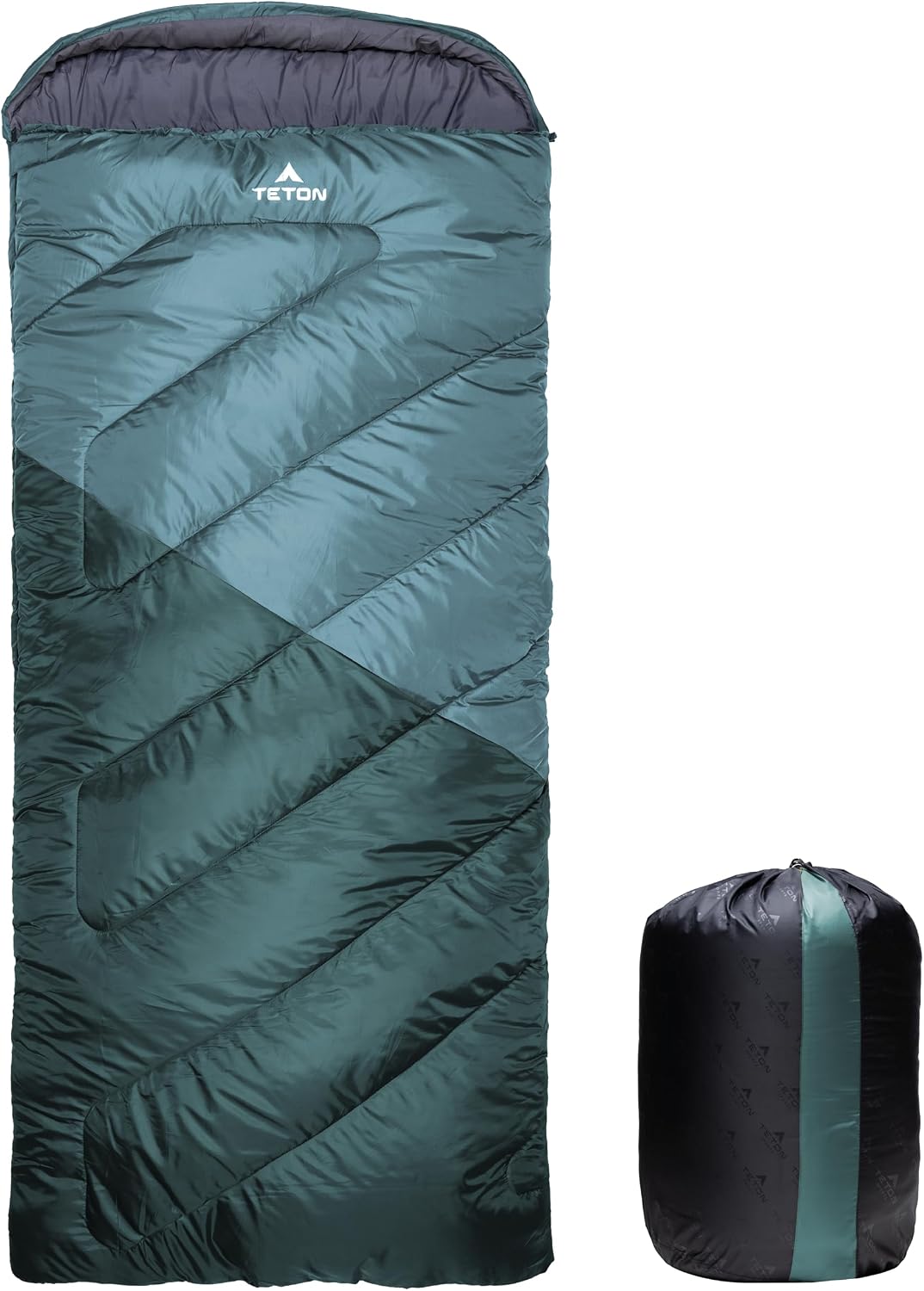
TETON Mammoth Queen Sleeping Bag
A roomy double bag that keeps the whole family warm on frosty nights without the bulk of two separate bags.
Why we love it
- Fits two adults or an adult and two kids comfortably
- Dual-layer construction traps heat on cold mornings
- Unzips fully to blanket for flexible camping styles
Pros
- Queen-size interior fits family groups
- Zipper and shoulder draft tubes
- Two-way anti-snag zippers
- Soft poly-flannel lining
- Stuff sack included
Cons
- Heavy at 14 pounds for backpacking
- Bulky when packed for tight spaces

Swtmerry Double Sleeping Bag 5-25C
Two-person rectangular bag with included pillows, zips apart for flexibility, and handles real family camping down to freezing.
Why we love it
- Unzips into two separate bags for solo trips
- Roomy enough for two adults or a kid sprawled out
- Waterproof shell handles damp minivan storage
Pros
- Wraparound zipper design
- Includes two pillows
- Water-resistant outer shell
- Separates into two bags
- Compression carry bag included
Cons
- Bulky when packed for backpacking
- 0C extreme rating, not a true cold bag

Ledge Alaska 0 Degree King Sleeping Bag
A roomy king-size bag rated to 0 degrees that zips apart for two separate comforters, built for families who car camp and need real warmth on cold nights.
Why we love it
- Zips into two comforters for flexible sleeping
- Rated to 0 degrees for genuine cold-weather nights
- Cotton flannel lining stays comfortable in camp
Pros
- 0-degree temperature rating
- Zips apart into two separate bags
- King size fits two adults or family nest
- Machine washable construction
- Cotton flannel lining for comfort
Cons
- Heavy at 23 pounds, car camping only
- Bulky packed size limits backpacking

FJALLNOK Queen Cotton Flannel 32-59F
Roomy queen-size bag with soft flannel lining and draft tube that keeps families warm on cool camping nights without the bulk.
Why we love it
- Queen width fits two adults or a parent plus kid
- Soft cotton flannel interior stays comfortable for car camping
- Draft tube along zipper stops cold air on frosty mornings
Pros
- Two-way anti-snag zipper for heat or ventilation
- Zips to a second bag for couples or extra warmth
- Machine washable synthetic fill handles damp trips
- Lightweight at 7 lbs for occasional backcountry overnighters
- Full-length draft tube traps warmth efficiently
Cons
- Heavy for regular backpacking with kids
- Cotton flannel adds weight compared to polyester linings

QEZER Down Mummy 28F Sleeping Bag
Lightweight down bag that keeps kids warm on cool nights and packs small enough for the minivan.
Why we love it
- 600-fill down compresses to a pocket-sized 13x7 inches
- Mummy cut with foot box fits restless kids comfortably
- Dual zippers let you open it up on warmer mornings
Pros
- 600-fill down insulation
- Compact 3.2 lb packed weight
- Detachable dual zippers
- Tear-resistant nylon shell
- Wide foot box design
Cons
- Rated limit is 28F, not comfort range
- Down loses loft if it gets damp
Room Enough for Two Without Losing Warmth
King size sleeping bags solve a real problem: a standard bag leaves a cold seam down the middle when two people share it, or you end up buying separate bags and packing twice the weight. After 14 years of car camping with Sarah and watching families squeeze into undersized doubles, I know which bags actually keep both sleepers warm and which ones trap cold air in the gap.
Most people think bigger just means more fabric. They do not realize that a bag designed for one person but stretched wide loses thermal efficiency, or that zipper placement on a true double matters for sharing body heat. You can feel the difference at 2 a.m. when one person is still warm and the other is hunting for the draft.
Interior Space and Thermal Shape
A rectangular floor plan is the baseline for any king size bag. The interior width matters far more than the overall size number. The Teton Mammoth Queen Size Double Sleeping Bag measures 94 by 62 inches, which is larger than a queen mattress, so two adults can actually move without elbows colliding. Width keeps the loft consistent across the interior. A bag that is only 60 inches wide forces sleepers to press against each other, which compresses the fill underneath and kills insulation on the sides. Look for at least 90 inches of width to get room without sacrificing warmth on the edges.
Dual Zippers and Draft Control
Side-by-side zippers on a king size bag let each sleeper regulate ventilation independently and move in and out without waking the other. Many budget doubles use a single center zip, which means one person overheating has to unzip the whole bag and flood it with cold air. A full-length draft tube running the entire zipper length prevents air leakage, and a drawstring hood that cinches around the head or shoulders stops heat loss from the top opening. The Alaska 0 Degree King Size Sleeping Bag by Ledge has separate top and bottom sections that unzip completely, which makes washing easier and means you can adjust each side independently on cold nights.
Fill Type and Seasonality
Synthetic fill dominates the king size market because it resists moisture and performs reasonably well even when damp. A bag rated for 3 season use typically carries polyester or hollow-core synthetic that compresses to about 15 to 18 inches and weighs 7 to 8 pounds. Down occasionally appears in smaller mummy-cut models but rarely in king size doubles because the weight and bulk become impractical for car camping, and down loses loft quickly if the bag gets wet during transport or storage. If you camp in dry climates or have a vehicle, the packed size is less critical and synthetic’s reliability in variable conditions makes more sense than chasing ounces.
Flannel Lining and Comfort
Brushed cotton flannel or poly-flannel lining is standard on king size bags and directly affects how the bag feels against skin. It reduces friction so the bag does not bunch up as you move, and it creates a warmer microclimate inside. A 210T polyester shell with a brushed cotton interior feels softer than raw nylon and dries faster if exposed to condensation. The combination also means you can throw the bag in a washer on gentle cycle, which is impossible with many down bags.
Two people sleeping in one bag only work if the bag was designed for two from the ground up, not stretched from a single.
Packed Size and What It Takes to Fit
A king size bag compresses to roughly 17 by 13 inches or so, which is five to six times the size of a mummy bag. This is not backpacking gear. It is car and base camp territory. Before you buy, measure your vehicle and the space you actually have. A family of four with two doubles and some other gear can fill a mid-size SUV fast. The trade-off is that you sleep like an adult instead of like you are in a mummy case at a crowded campground, so many families accept the bulk.
Weight ranges from 7 pounds for a lightweight synthetic to 23 pounds for a cold-weather dual-wall design like Ledge’s. For vehicle camping, 8 to 12 pounds per bag is realistic. If weight matters because you are loading a kayak or splitting a pack on a trail, this is not the right form factor. Go with individual mummy bags instead.
Synthetic Versus Down in a Large Format
Synthetic bags dominate the king size market for good reason. They handle humidity and the moisture from two people breathing inside a sealed bag better than down does. Synthetic loft compresses easier without permanent damage, so you can stuff the bag aggressively in the off season. The shell material is often a 190T to 210T polyester, which is durable enough to slide across a tent floor or the back of a vehicle repeatedly without tears.
Down appears in the lineup only in smaller, lighter-weight bags, and mostly in the mummy shape where it shines. The Down Mummy Sleeping Bag for Adults with 600 Fill Power by QEZER weighs 3.2 pounds and compresses to 13.78 by 7.48 inches, which is perfect for a solo backpacker. But a king size down bag would be unwieldy in a car and risky if you get caught in unexpected moisture during setup or takedown. The 600-fill down in QEZER’s bag is high quality and provides excellent loft per ounce, but it is purpose-built for a different use case. Stick with synthetic for car camping doubles.
What Gets Cut at This Scale
King size bags span a range of $50 to $200, and the gaps between price tiers are real. At the bottom, you get a simple rectangular bag with a basic synthetic fill, a single center zip, and minimal draft tubes. The exterior shell is thinner and the lining is basic poly. It works fine for mild seasons when you layer underneath and pair it with a pad. The Swtmerry Double Sleeping Bag for Adults with 2 Pillows is entry-level and includes pillows with purchase, which adds value for family camping where comfort matters more than ounces.
Mid-range bags add dual zippers, full-length draft tubes, and higher-density fill. Shell denier jumps to 210T and the lining becomes brushed flannel. A bag around $150 to $160 like the Teton Mammoth feels noticeably warmer and more durable than entry-tier doubles, and the dual-layer construction and independent zippers let you adjust heat without waking your partner.
At the top end around $200, you get a cold-weather specific design like the Ledge Alaska with separate top and bottom sections that unzip completely for washing, a dual-wall offset construction, and heavier fill weight. These bags are rated for 0 degrees and handle extreme cold, which most family camping never reaches. For regular three-season trips, mid-range is where the value sits. You are paying for reliability and comfort, not for a feature set you will never use.
A king size bag rated for spring and fall sleeps one person comfortably in winter if you stop expecting miracles from synthetic fill.
Tips From the Trail
- Store it uncompressed and open. Synthetic fill loses loft permanently if you leave it stuffed in a compression sack year-round. Hang it in a closet or drape it loosely in a storage bin between seasons.
- Wash in cold water on gentle cycle. Use mild detergent and put the flannel side facing outward to protect the waterproof shell coating. Dry on low heat or air dry completely before storing.
- Pair it with a closed-cell foam pad or air mattress. The pad stops ground cold from stealing heat through the bottom of the bag, and it protects the bag from sharp objects and punctures.
- Set it up off the ground. A tarp or tent floor prevents moisture from condensing on the bag’s underside during humid nights. Elevating the bag slightly improves air circulation.
- Check the zippers before a trip. Run them end to end a few times to make sure they glide smoothly. If a zip sticks, do not force it. Clean the track with a dry cloth or use a zipper lubricant made for sleeping bags.
- Ventilate after packing away damp. If the bag was packed wet or got damp during use, unroll it in the sun or in a well-ventilated space for a few hours before storing to prevent mold.
Common Questions
Will a king size sleeping bag fit in a car tent or dome tent?
Most dome tents and car camping shelters are designed for a queen mattress, not a king bed. Measure your tent floor before buying. A 94 by 62 inch bag will fit snugly in a large family tent or a car shelter, but not in a standard two person dome. If the bag is too wide, you lose the insulating air gap around the edges and compress the sidewalls, which kills warmth.
How much warmth does a second sleeper add?
Two people sharing a bag raise the internal temperature by 5 to 10 degrees over a single sleeper. This means a bag rated for three season solo use can handle mild winter camping when two people are inside. That said, do not trust the temperature rating alone if you are pushing it cold. Pair the bag with an insulated pad underneath and layer clothing inside, and test it in mild conditions first before relying on it in real cold.
Can I zip two separate sleeping bags together?
Some bags have compatible zippers designed to couple with each other. Most king size doubles come with matching left and right zippers, but they do not usually connect to a separate bag from a different brand or model. Check the product specs before assuming you can link two bags. If you want the option to couple or separate, look for bags that explicitly advertise this feature.
What size pad do I need for a king size bag?
A standard air mattress or foam pad sized for a queen bed works under a king size sleeping bag. Make sure the pad is at least 5 inches thick and has an R-value of 2 or higher to block ground cold. A thin yoga mat underneath will not do the job. An R-value of 3 to 4 is ideal for shoulder season camping in the mountains.
How often should I wash a king size sleeping bag?
Wash your bag every two to three years or after a particularly muddy or sweaty trip. Frequent washing is not necessary and can wear out the fabric faster. Spot-clean stains with a damp cloth when you can, and air the bag out after every camping trip to let moisture escape before storing.
Does a king size bag sleep warmer than two singles?
A true king size bag designed for two sleepers will sleep warmer than two separate bags because it traps shared body heat and eliminates cold seams between two zippers. Two people in separate bags touching each other lose warmth where the bags meet because there is no fill in between. The real benefit is that you stay together instead of drifting apart during the night, and one person overheating does not force the other into a cold draft from an opened zip.


Write Your Review
No reviews yet. Be the first to share your experience!