


Primlect Nap Mat, 55x35in, Thickened
All-in-one nap mat with detachable pillow and soft minky blanket, machine washable and built tough for daycare and family camping.
Why we love it
- Elastic bands stay put after washing unlike velcro
- Thickened padding keeps small kids warm on cool nights
- Rolls up compact, fits in a minivan with other gear
Pros
- Removable pillow and washable minky blanket
- All seams reinforced for durability
- Thick padded mat with minky dot lining
- Elastic band closure doesn't lose grip
Cons
- Sized for toddlers, not older kids
- Not rated for true backpacking trips

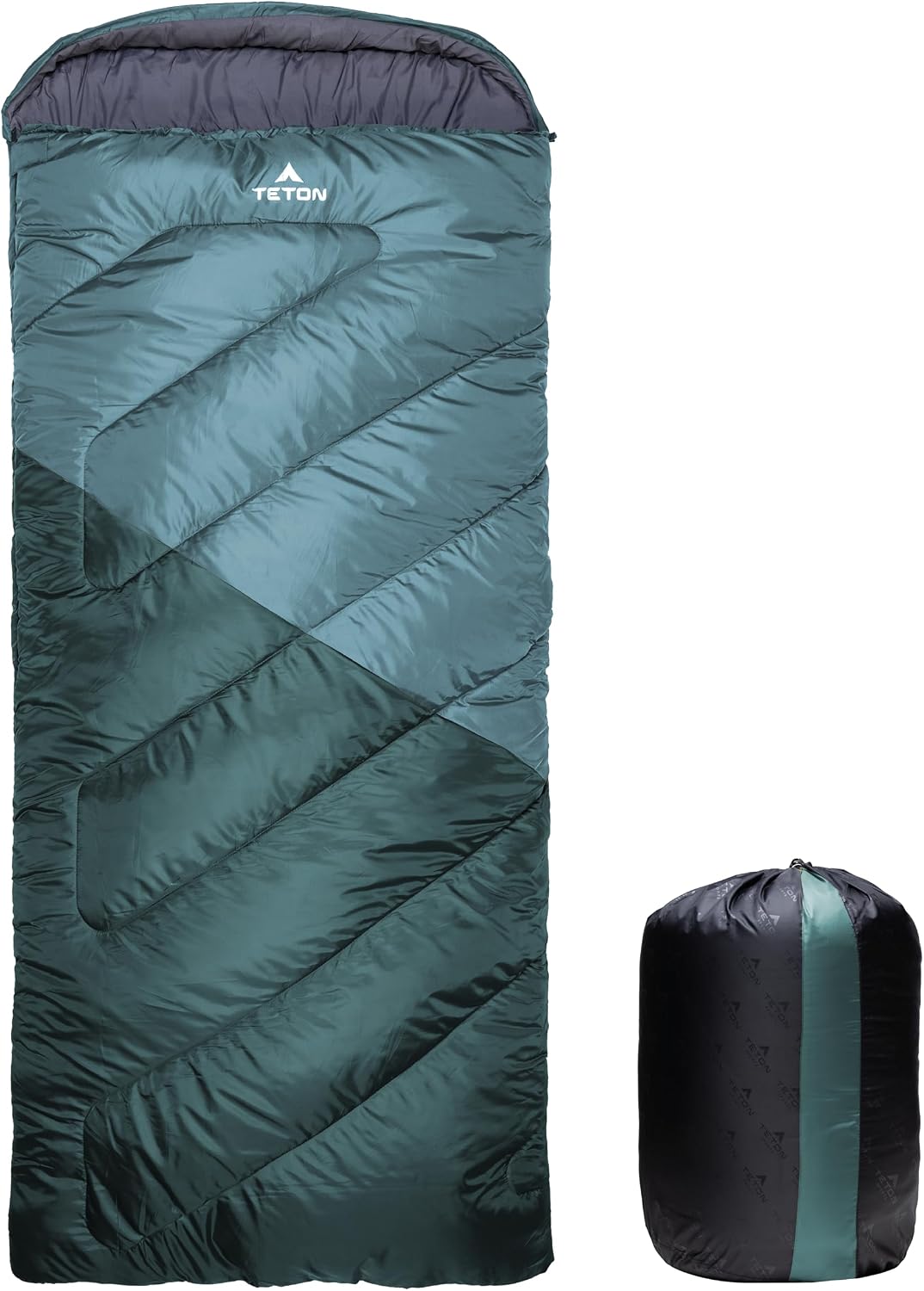
Teton Celsius Junior 20F Bag
Synthetic junior bag that keeps kids warm on frosty state-park nights and survives wet stuffing into a minivan.
Why we love it
- Two-way zipper lets kids vent or cocoon alone
- Flannel lining stays soft after wash cycles
- Draft tube seals warmth on 30-degree mornings
Pros
- Two-way anti-snag zipper
- Full-length draft tube
- Flannel-lined interior
- Includes stuff sack
- Affordable synthetic fill
Cons
- Synthetic fill bulk when packed
- 20F is limit temperature, not comfort

OGERY Kids Sleeping Bag 3-Season
Lightweight bag with a two-way zipper and washable synthetic fill, built to handle frosty state park nights and survive the minivan.
Why we love it
- Two-way zipper lets kids regulate warmth
- Machine washable, survives damp gear days
- Anti-snag zipper designed for small hands
Pros
- Two-way zipper for temperature control
- Machine washable synthetic fill
- Anti-snag zipper for kids
- Lightweight and portable
- Cotton flannel lining for comfort
Cons
- 3-season rated, not winter cold
- May run cool at rated temperature
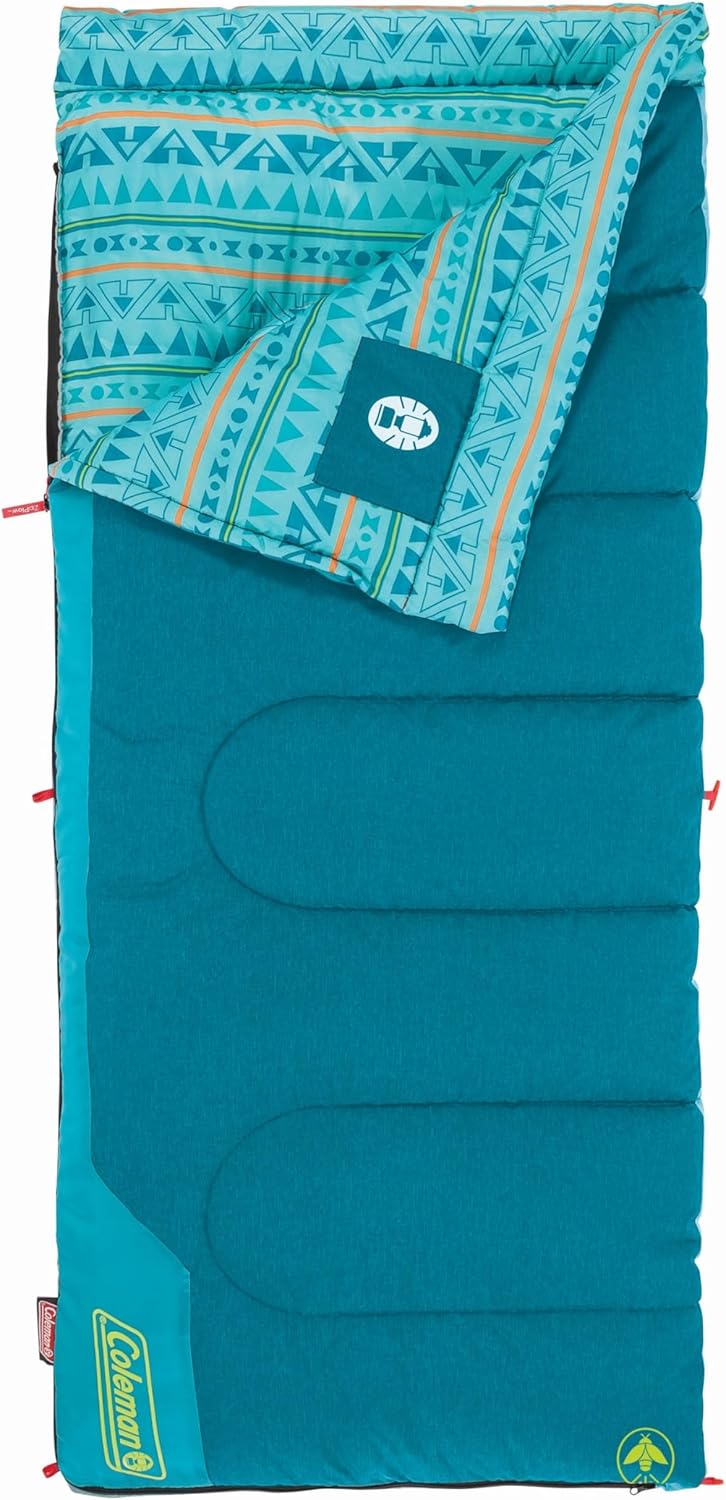
Coleman 50°F Youth Sleeping Bag
Glow-in-the-dark bag sized for kids up to 5 feet tall, rated to 50°F and machine washable for easy care after muddy trips.
Why we love it
- Machine washable after wet, muddy camping trips
- Glow-in-the-dark design helps find kids at night
- Fits kids up to 5 feet, grows with them for years
Pros
- Sized specifically for children
- Machine washable synthetic fill
- No-snag zipper rated for kids
- Glow-in-the-dark interior
- Stuff sack included
Cons
- 50°F rating is limit, not comfort zone
- Rectangular cut adds packed bulk

Oaskys 3-Season Sleeping Bag 50-68F
Rectangular bag rated for spring and fall camping; waterproof shell and two-way zipper let you dial warmth up or down on family trips.
Why we love it
- Two-way zipper converts to quilt for venting
- Waterproof outer keeps moisture out on dewy nights
- Compression sack makes it car-camp convenient
Pros
- Two-way zipper for temperature control
- Waterproof 210T nylon shell
- Includes compression sack
- Double-filled synthetic insulation
- Anti-snag zipper design
Cons
- Rated as a limit, not a comfort range
- Bulky for serious backpacking trips

Bollepo Kids Sleeping Bag 66in
Rectangular kids bag with glow-in-the-dark design, soft polyester exterior and cotton lining, sized for ages 3 and up with a removable pillow pocket.
Why we love it
- Glow-in-the-dark dinosaurs ease bedtime anxiety
- Removable pillow pocket adds comfort on cold nights
- Cotton interior stays soft through repeated camping trips
Pros
- Glow-in-the-dark dinosaur design
- Removable pillow pocket included
- 100% cotton interior lining
- 66-inch length fits growing kids
- Polyester exterior sheds moisture
Cons
- No temperature rating listed
- Rectangular cut takes up minivan space
Sizing a Bag a Kid Will Not Swim In
The gap between a good kids sleeping bag and a bad one usually comes down to fit, not materials. I have watched families buy bags meant for teenagers and watch their 8-year-old disappear into 18 inches of dead air at the foot. That kid sleeps cold all night, and the parents think the bag failed. It didn’t. The bag was just too big. A properly sized bag holds its insulation value because the fill stays lofted around the child’s actual body, not compressed by empty space.
Most kids sleeping bags span an age range rather than a specific height, which creates real confusion when your child is between sizes. The decision comes down to whether you buy to current fit or leave growing room. Both choices have consequences, and knowing which trade-off makes sense for your family saves you from a return and a second purchase mid-season.
Length and the growing-room gamble
A bag that fits now but still has 6 inches of room at the foot will work for one season of growth. The bag’s thermal rating assumes the child’s whole body generates heat and warms the interior. When half the insulation sits empty below the feet, the bag cannot trap that warmth efficiently. Worse, a child who moves around will slide down inside the bag as the night goes on, ending up even colder. If your child is at the bottom of an age range and steady growers, buy to current height and upgrade next year. If your child is slowing down and you camp year-round, a bag with 2 to 3 inches of growing room makes sense. The OGERY Kids Sleeping Bag fits kids up to 4 feet 7 inches and features a bottom zipper for temperature control, giving you flexibility as they grow.
Shoulder and hip girth matter more than you think
A rectangular bag that is wide enough for you might still feel snug around a child’s shoulders, and a mummy cut designed for kids works better than an adult narrow bag cut down. Width is where compression happens. If a bag is 35 inches across the chest and your child is 22 inches around, the fill cannot hold loft evenly. The child ends up lying on deflated material on one side and drowning in loft on the other. Lay your child on a flat surface, measure across their chest at the armpits, then add 3 to 4 inches. That is the usable width you need.
What to test before committing
Before the return window closes, have your child actually lie in the bag at home. They should be able to turn side to side without the bag feeling like a full-body hug. Their head should fit comfortably inside the draft collar if one exists, without the collar pressing against their chin or forehead. If the zipper reaches their neck when they are fully inside, that is too tight. The Teton Junior sleeping bags come with two-way anti-snag zippers that kids can manage even in the dark, so check that your child can actually operate the zipper with the bag around them, not just on a flat surface.
Synthetic vs Down and What Matters When Kids Are Wet
Synthetic insulation holds warmth even when damp. Down loses loft completely when wet, then takes days to dry. For family camping in the Pacific Northwest or coastal trips, where humidity creeps into everything, synthetic gives you a bag that still works after a rainy night or a spill. Down is lighter and more compressible, but only if you can keep it dry. Most families with kids choose synthetic because the performance gap when things go wrong is real and immediate.
The oaskys Camping Sleeping Bag uses double-filled polyester with a 210T anti-tearing shell, designed for 3-season use and 10 to 20 degrees Celsius. Synthetic fill is forgiving of the mess that comes with kids. A damp bag dries faster, handles machine washing better, and does not clump or lose loft permanently if it gets compressed in a backpack wet.
Polyester fill behavior in use
Most kids bags use hollow-fiber polyester or similar synthetic blends. These materials bounce back their loft much faster than down after compression, and they maintain warmth even when the interior is damp from breath and body moisture. The trade-off is that a synthetic bag weighs more than an equivalent down bag and does not compress as small. If you are packing it in a car or backpacking with older kids who can carry some weight, that is acceptable. If your child will be wearing it on their back, the bulk and weight matter more.
Washing, drying, and long-term storage
Synthetic bags machine wash on gentle cycles and air dry in 2 to 4 hours in dry weather. Hang it loosely in indirect sunlight and shake it occasionally to restore loft. Never put a synthetic bag in a dryer on high heat, which can melt the fibers. Down bags require hand washing in cold water with special down cleaner, then 12 to 24 hours of air drying, and they are not forgiving of mistakes. For a parent buying a first bag for kids, synthetic is the practical choice. Between seasons, store the bag loosely in a mesh bag or cotton pillowcase. Never leave it compressed in the stuff sack for months on end, because even synthetic loses efficiency under constant compression.
Three-Season Bags and Temperature Reality
A 3-season rating means the bag works in spring, summer, and fall. Most kids bags in this category carry a temperature range of 40 to 50 degrees Fahrenheit at the comfort limit. That does not mean the bag is only for warm weather. The Coleman 50 degree Youth Sleeping Bag explicitly covers that lower end. What it means is that the rating was tested at that temperature with the child in light base layers and on an insulated pad. Colder than that and the child will be cold unless they wear more layers or you add a sleeping liner inside the bag.
The confusion comes from mixing up comfort rating with survival rating. A 50-degree comfort rating is where a child sleeps well all night without shivering. Drop below that and sleep quality suffers. If you camp regularly in early spring or late fall when nights hit 30 to 40 degrees, buy a bag rated for that range, not one you plan to supplement with a liner. A liner adds 5 to 10 degrees of warmth but never gives you the reliability of a bag actually designed for the temperature.
Pad pairing makes the number real
A sleeping bag is not an island. Its rating assumes the child sleeps on an insulated pad that keeps ground cold from stealing body heat upward. Without a pad, even the warmest bag sleeps cold because the child’s weight compresses the insulation below them and heat escapes through the ground. An R-value 3 or 4 pad pairs well with most kids bags rated for 40 to 50 degrees. For a 20-degree bag, you need R-value 5 or higher. The Teton Junior bags come with guidance to use a pad for maximum warmth, which is honest engineering, not a flaw.
Draft collars and hoods seal heat where it matters
A draft collar is a drawstring-tightened opening around the neck that stops warm air from spilling out when the child moves. A hood extends the insulation over the head and face. Kids bags vary. Some have both, some have one or neither. If your child tends to pull blankets over their head or gets cold at night, a bag with both features performs better in shoulder seasons. In summer, a hood matters less. In late fall and early spring, it is the difference between a comfortable night and an uncomfortable one.
What Gets Built Into a Kids Bag at This Level
Kids sleeping bags at entry prices use hollow-fiber polyester fill, nylon or polyester shells rated 190 to 210 denier, and cotton or flannel liners. At this price point, the shell holds up to real use, the zipper usually works without snagging, and the bag holds its shape through multiple seasons if stored correctly. What you do not get is down fill, high-denier ripstop shell, or premium draft sealing. Those features move the price up significantly and are not necessary for weekend family camping.
The Bollepo Kids Sleeping Bag adds a novelty angle with its glow-in-the-dark dinosaur design, which appeals to kids and makes finding the bag in a dark tent easier. Functionally, the polyester exterior and cotton interior perform identically to other entry-tier synthetic bags. The key question is whether the gimmick keeps your child engaged or feels unnecessary. The Primlect Toddler Nap Mat with Pillow functions more as preschool gear for naptime, with a detachable pillow and all-in-one design, but it stretches the definition of camping bag.
Zipper construction and kid-friendliness
Two-way anti-snag zippers let a child open and close the bag from inside without fabric catching. Single-way zippers work but can snag and frustrate a child trying to adjust the bag at 2 a.m. Some bags come with a draft tube that runs the length of the zipper to block heat loss along the seam. That small feature noticeably improves warmth. Check whether the bag your child chooses has it. An OGERY bag specifically highlights its anti-snag construction for small hands, which matters more than you might think.
Stuff sacks and portability
A compression sack shrinks a synthetic bag to a manageable size for packing. It should include adjustable straps so a child can eventually carry it on their own. A bag without a sack or with a cheap sack that tears on the first trip will frustrate you. The Teton Junior comes with a durable stuff sack explicitly designed for easy packing. That is a small detail that separates a bag that lives in your gear pile for years from one that gets sold at a garage sale.
A bag that is too big sleeps cold because the insulation sits empty around the child’s body, not lofted where it counts.
Checks to Run at Home First
Before the first camping trip, take the bag out of its sack and let it air out for 24 hours indoors. The fill needs to fluff back to its designed loft after compression. Then lay it flat on your child’s bed and have them lie in it fully clothed to get a feel for the fit. Check that they can roll side to side, that the foot box is not cramped, and that the zipper works smoothly with the bag around them. If the zipper catches or feels stuck, that is a sign the fabric is under too much tension or the zipper itself has an issue. A stuck zipper in a tent at 11 p.m. is no fun.
Next, simulate a cold night. Have your child wear the base layers and light pajamas you plan to use camping, then get in the bag for 30 minutes. They should feel warm but not sweaty. If they are shivering or already warm enough that they kick off the bag, the fit or rating is not right for your plans. Make any adjustments now before you are in a tent.
Machine wash and dry test
Run the bag through a gentle machine wash cycle with mild detergent before the first use. This removes any manufacturing residue and tests whether the bag can handle the care routine you will actually use. Air dry it fully indoors or outdoors in indirect sun. Check that the seams hold, the fill does not bunch, and the bag returns to its original loft. If seams leak fibers or the bag does not bounce back, return it now rather than discovering the problem after a muddy camping trip.
Growing-room accountability
Mark your child’s height on a wall and note it with the month and year. When you buy the bag, measure how much room is left at the foot. In 6 months, check growth and decide whether you can safely add another season with this bag or need to buy up sooner. This is not a precision exercise. You are just being honest about whether the bag will still fit by next summer. A child who grows 3 inches in a year will outgrow a bag with only 2 inches of built-in room faster than one with 4 inches.
Synthetic bags dry fast and hold warmth when damp, making them the practical choice for families camping in wet climates.
Tips From the Trail
- Store it uncompressed between seasons. Hang the bag in a mesh or cotton storage sack in a closet or under a bed. Compression over months flattens synthetic fill permanently, degrading warmth for the next season.
- Shake it out before bed every night. Kids move around in bags more than adults. Shake and fluff the bag after you unpack it and again before your child gets in to redistribute the fill evenly.
- Pair it with a real sleeping pad. A bag is 50 percent as warm without a pad underneath. The ground steals heat faster than the air. Do not skip this step hoping the bag alone will be enough.
- Wash it once a season if you camp regularly. Dirt, sunscreen, and sweat accumulate in the fibers and reduce loft over time. A gentle wash and thorough drying in sun restores performance and extends the bag’s life by years.
- Let your child pick the color or design. A bag that excites them gets used on more trips. If they see a glow-in-the-dark dinosaur design and want to sleep in it, that buy beats a more practical color they ignore.
- Buy their size, not the next size up. Resisting the temptation to go big saves money and buys a bag that actually performs. You upgrade when they grow, not before.
Questions About Kids Sleeping Bags
How much warmth does a liner actually add to a kids bag?
A liner adds roughly 5 to 10 degrees of warmth depending on its material and fit. It works by trapping a layer of still air between the liner and the bag, but only if the liner fits snugly inside. A loose liner that bunches up provides almost no benefit. Liners are useful for extending the season of a 3-season bag into shoulder months, but they are not a substitute for buying a colder-rated bag if you know you will camp in cold weather regularly.
Can kids sleep in an adult sleeping bag if we pair it with a pad?
Not effectively. The excess space means the bag cannot trap body heat efficiently, and your child will slide around inside it as they move at night. The insulation stays lofted in the empty space, not compressed around their body where it counts. A sized-right kids bag outperforms an adult bag regardless of the pad because fit is where thermal efficiency lives.
Do temperature ratings for kids bags match adult standards?
Kids bags are tested under the same ISO standard as adult bags, but the baseline weight and metabolism is different. A 50-degree comfort rating on a kids bag is tested with a child in light layers, while an adult 50-degree bag assumes more body mass. In practice, kids bags rated for the same temperature often sleep a bit warmer because kids usually wear more layers and move around less at night, generating more stable body heat.
What is the lifespan of a kids sleeping bag with regular use?
A well-cared-for synthetic bag lasts 5 to 8 seasons of weekend use before the fill loses noticeable loft. That usually ends up being about 3 to 5 years because your child outgrows it before the bag wears out. Proper storage between seasons and occasional washing add years to the lifespan.
Should I buy a bag rated for colder temperatures so it works longer as they grow?
No. A bag rated 20 degrees when your child only camps in 40 to 50-degree weather will make them uncomfortable because they cannot regulate the warmth effectively. They will kick off the bag or sweat, then get cold when they unzip. Buy for the temperatures you actually use. Upgrade as they grow and your trips shift to different seasons or elevations.
How do I know if my child is truly cold or just restless at night?
Feel their neck and back in the morning. If they are sweaty, they are overheated. If they are cold to the touch, the bag is not enough. If they slept fine but woke up several times, restlessness is usually about excitement or the novelty of sleeping in a tent, not cold. One or two trips will show you the pattern.


Write Your Review
No reviews yet. Be the first to share your experience!