

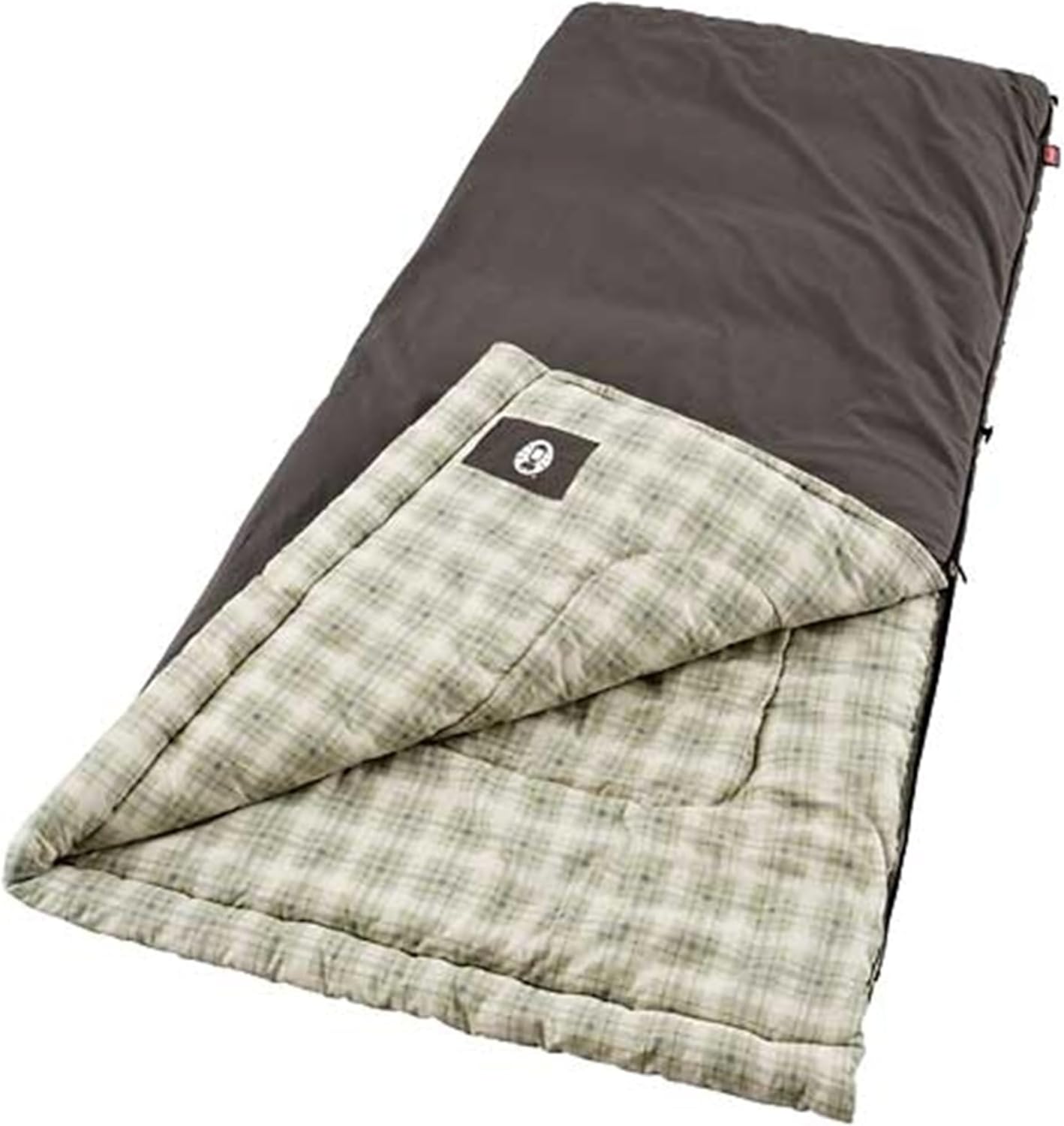
Coleman Heritage Big & Tall 10°F Bag
Roomy XL bag rated to 10°F with flannel comfort; machine washable and built tough for family camping.
Why we love it
- Fits tall adults or two kids bundled close
- Flannel liner beats scratchy nylon on skin
- Machine washable beats campfire smell
Pros
- 5 lbs Holofill insulation traps heat
- Flannel liner instead of cheap nylon
- No-snag zipper holds up to kids
- Machine washable for easy cleanup
- XL size fits adults up to 6'7"
Cons
- Heavy for backpacking trips
- Rectangular cut wastes heat around edges

BISINNA XXL 3-Season Sleeping Bag
Roomy rectangular bag that fits big adults and handles family camping without fussing over packed size or weight limits.
Why we love it
- Envelope cut gives real shoulder room for side sleepers
- Synthetic fill stays warm even when slightly damp
- Machine washable after muddy trips with the kids
Pros
- Roomy 90x39 inch interior
- Lightweight at 3.4 pounds
- Water-repellent shell
- Includes compression sack
- Synthetic fill dries quickly
Cons
- Rated to 50F extreme, plan layers below
- Bulky when packed for backpacking

XplrKamp Cotton Flannel 19F Bag
Roomy rectangular bag with cotton flannel lining and 300g fill, rated to 19F. Built for family car camping and fits a kid alongside you on cold nights.
Why we love it
- 20% more interior space fits a child or lets you move around
- Cotton flannel lining stays soft through machine washes
- Two-way zipper unzips fully flat as a blanket when needed
Pros
- XXL size for families or restless sleepers
- Machine washable synthetic fill
- Cotton flannel interior stays comfortable
- Two-way zipper for temperature control
- Compression sack included
Cons
- 5.3 pounds, too heavy for serious backpacking
- Rated limit of 19F, not comfort temperature

Kelty Tru.Comfort Doublewide 20F
Two-person bag that actually fits kids without overheating the adults. Wide, removable top layer, and durable enough for minivan camping trips.
Why we love it
- Removable top layer lets you dial warmth
- Wide enough for a kid to crash between you
- Synthetic fill dries fast after damp trips
Pros
- Queen-width interior with 84 inches length
- Removable zip-off top layer for temperature
- Two-way foot vents customize comfort
- Machine-washable synthetic insulation
- Oversized hood fits two standard pillows
Cons
- Heavy at 9 lbs 8 oz for backpacking
- 20F rating is limit, not comfort zone
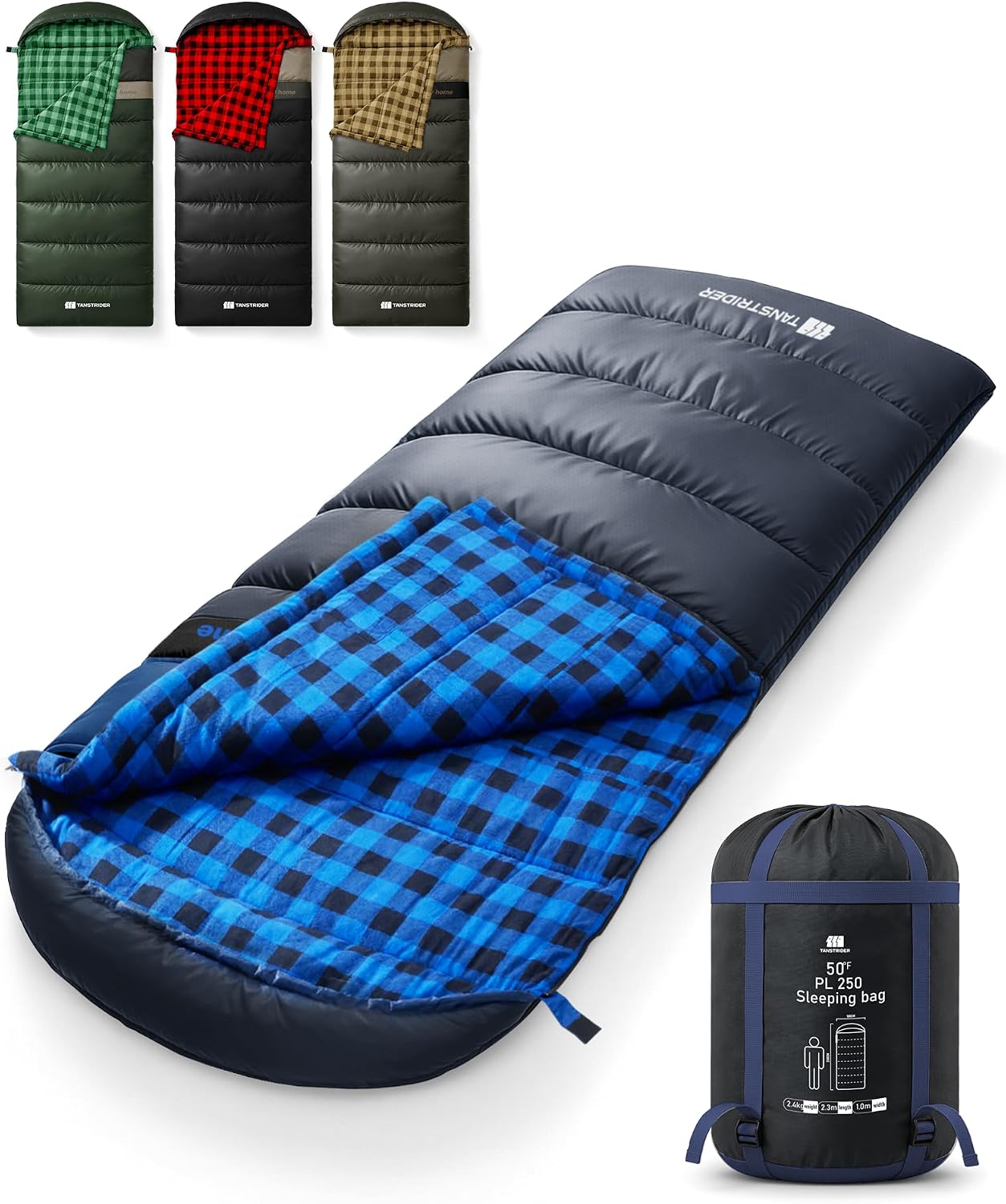
TANSTRIDER XXL Flannel Sleeping Bag
Oversized rectangular bag with flannel lining and machine-washable construction, built for side sleepers and families who want comfort over ultralight specs.
Why we love it
- Unzips flat to double as a picnic blanket or tent mat
- Flannel lining stays warm and soft through shoulder-season trips
- Machine washable, so campfire smell washes right out
Pros
- Generous 90x39 inch rectangular design
- Two-way zipper for foot ventilation
- Waterproof polyester exterior shell
- Flannel lining for comfort
- 5.3 lb carry weight for car camping
Cons
- 40-50°F rating limits winter use in cold climates
- Rectangular cut is bulkier than tapered mummy bags

VENTURE 4TH 3-Season Sleeping Bag 30F
Rectangular 3-season bag that handles frosty state-park nights and survives getting stuffed wet into the minivan. Solid choice for family camping.
Why we love it
- Two-way zipper lets kids adjust warmth
- Water-resistant shell dries fast after damp trips
- Rectangular cut gives more room than mummy bags
Pros
- 30F temperature rating for shoulder season
- Water-resistant polyester shell
- Two-way zipper for temperature control
- Machine washable synthetic fill
- Includes compression sack
Cons
- Heavy for backpacking trips
- Synthetic fill bulkier when packed
Room to Move Without Wasting Heat
The difference between a cramped sleeping bag and best extra wide sleeping bags is the difference between a restless night and actually sleeping. I have watched too many people buy a regular rectangular bag thinking extra width is a luxury, then spend the first hour of every trip repositioning themselves because their shoulders hit the sides or their hips have nowhere to go. Width matters more than most reviews admit, because a bag that binds you kills loft efficiency and keeps you cold.
Most XXL bags on the market are just longer versions of standard cuts. True extra wide designs start at 39 to 40 inches of interior shoulder room, which gives you genuine space to shift position without losing the insulation layer. The bags above range from 39 to 40.5 inches wide and 84 to 90 inches long, designed specifically for people who need both dimensions or who sleep hot and need room to ventilate.
Interior Width and Dead Air Space
Width is not padding. A wider bag lets you lie flat on your back, curl on your side, or sprawl without your body compressing the insulation on the edges. The VENTURE 4TH Backpacking Sleeping Bag in XXL is 90 inches long by 39 inches wide, which gives side sleepers room to tuck a knee or shift weight without pinching the insulation seams. Narrower bags force you to stay centered, which works fine if you are a still sleeper but costs heat if you move.
Rectangular Versus Tapered Cuts
Rectangular design maintains full width the entire length, so your feet get the same shoulder room as your torso. This is warmer for restless sleepers because you are not fighting a narrowing bag as you shift. Tapered design narrows toward the foot box to save weight, which is fine for backpacking but means you lose width where your legs move most. The BISINNA XXL Sleeping Bag holds 90.55 inches by 39.37 inches across its full length, so you get consistent interior space whether you are lying straight or curled.
Shoulder Girth and Torso Fit
A wide bag needs a wide shoulder box to keep insulation where it counts. Bags that are wide but have a standard-cut shoulder will bunch at the sides and leave cold spots. Look for bags that start wide at the shoulders and maintain that width through the chest and hip area. The Coleman Heritage Big and Tall is built for larger frames with 40-inch width and 84-inch length, so the proportions stay consistent from shoulder to hip.
Synthetic Versus Flannel Liners
Flannel liners add comfort on bare skin and are easier to wash, but they absorb moisture and add weight. Synthetic liners shed moisture faster and pack smaller, which matters if you are moving the bag between trips. Most extra wide bags in this range use polyester shells with flannel or brushed poly liners, which balances durability, washability, and packability. Neither choice dramatically changes warmth, so pick based on whether you prioritize comfort against skin or ease of cleaning.
Temperature Ratings and Pad Pairing
A temperature rating on the hang tag is not what you will feel at 2 a.m. on a cold night. Most bags are rated to ISO 23537 standard, which measures comfort (where you sleep warm) and limit (where you survive but are uncomfortable). The comfort number is what matters for real camping. A bag rated 20 degrees comfort is actually warm at 20 degrees if you are wearing a base layer and using a pad with R-value 3 or higher.
Extra wide bags in this group range from 10-degree winter ratings down to 3-season (30 to 40-degree comfort). The wider the bag, the harder it is to achieve a cold-weather rating because the extra interior volume takes longer to warm with body heat. A 20-degree extra wide bag needs more insulation than a standard 20-degree mummy bag to reach the same temperature performance. If you camp in the Cascades or high desert in shoulder seasons, look for bags rated 10 to 20 degrees with a sleeping pad rated R-value 3 or above underneath.
Fill Type and Moisture Behavior
Synthetic fill (polyester, hollow fiber) is the standard for extra wide bags because it resists moisture and maintains loft when damp. If your bag gets wet from condensation or a spill, synthetic keeps working. Down is warmer per ounce but loses all loft when wet, and extra wide bags already carry more weight than mummy cuts, so the weight penalty of synthetic is less noticeable. All six bags above use synthetic fill, which is the right choice for the Pacific Northwest where humidity is constant.
Synthetic fill compresses over time, especially if you store a bag stuffed in a compression sack for months. Rolling it loosely or hanging it flat between trips keeps the loft alive longer. A 5-pound synthetic fill bag can lose 10 to 15 percent of its loft after a season of heavy compression. If you use your bag every other weekend, this matters less. If it sits in a stuff sack for six months, you will notice the difference when you unpack it next season.
What to Check Before Buying
- Measure your actual shoulder width. Lie on a flat surface and have someone measure from the outside of one shoulder to the outside of the other. Add 6 inches. That is the minimum interior width you need to move freely.
- Test the zipper on both sides. If the bag has a left-side or right-side zipper, lie in it and try to open and close it from inside without twisting. A stuck zipper will wake you up in the cold.
- Check the foot box depth. Wide bags sometimes skimp on foot room to save fabric. Lie in the bag and make sure your toes do not touch the end, and there is room to flex your feet.
- Feel the draft collar and hood. On cold-weather bags, the draft collar should seal around your neck without gaps. A loose collar lets warm air escape and defeats the insulation above it.
- Look at the stitching on the seams. Bags under $100 sometimes use single-stitch construction that fails after a season of use. Double-stitched or taped seams last longer.
A wide bag that binds you will keep you cold all night, no matter what the rating says.
Fit and Sizing for Bigger Bodies
Extra wide does not mean extra long, and extra long does not mean extra wide. A person 6 feet 3 inches tall needs at least 86 inches of length, but if they have broad shoulders or sleep on their side, 39 inches of width is not enough. The bags here range from 84 to 90 inches long and 39 to 40.5 inches wide, so you need to match both numbers to your body. Lying in a bag at a store (if the store allows it) or ordering from a retailer with a good return window is the only way to know if the fit works for you.
A bag that is too tight in the shoulders will compress the insulation on the sides and create cold spots along your upper arms. You will wake up at 3 a.m. cold even though the bag is rated warm enough. A bag that is too narrow at the hips forces you to lie on your back all night, which puts pressure on your lower back and keeps you from sleeping deeply. If you are a side sleeper, extra width is not optional.
Return the bag if it does not work. Most online retailers give you 30 days, and sleeping bags are not like shoes. You cannot break them in. If you are uncomfortable after two nights in the field, the bag is not right for your body, and keeping it will waste money and ruin trips.
Sleeping Pad Pairing and Ground Insulation
An extra wide bag loses heat to the ground just like any other bag, and the wider interior means more surface area in contact with your pad. If you use a thin pad (R-value under 2), you will feel cold from below even in a well-insulated bag. Pair a 10 to 20-degree bag with a pad rated R-value 3 or higher. Pair a 30-degree 3-season bag with R-value 2 minimum, and preferably R-value 2.5 or above if you are camping in spring or fall when ground temperature drops fast.
Wide bags also need wider pads to avoid rolling off the edges during sleep. A standard sleeping pad is 20 inches wide, which is fine under a standard bag but leaves your sides unsupported in a 39-inch-wide bag. Look for pads 25 inches wide or larger, or use two narrower pads side by side if you are sleeping two in an extra wide bag.
Tips From the Trail
- Store it uncompressed between trips. Hang the bag in a closet or lay it flat in a storage box. Compression sacks are for transport, not long-term storage. A compressed bag loses loft faster than you would think.
- Wash it once a year if you use it regularly. Sweat, dirt, and body oils break down synthetic fill over time. Use cold water, gentle detergent, and air dry completely before storing.
- Use a sleeping bag liner on warm nights. A liner keeps sweat off the insulation and extends the time between washes. On a 30-degree bag used in summer, a liner lets you unzip the top and ventilate without losing warmth.
- Fluff the bag in the sun before your first trip of the season. Lay it out in sunlight for a few hours to restore loft that was lost during storage. UV does not damage synthetic fill the way it does down.
- Avoid storing it damp. If the bag is wet when you pack it away, mildew will grow inside and ruin the insulation. Dry it completely, even if it takes two days.
- Check the zipper before you leave home. Zippers fail in the field, and a stuck zipper at night is a cold emergency. Run it up and down a few times and look for snags or separated teeth.
The right width for your body is worth more than an extra insulation rating.
Common Questions
Do temperature ratings on extra wide bags match standard bags?
No. An extra wide bag rated 20 degrees is warmer than a standard bag rated 20 degrees because the rating assumes a certain body size and shape. Wider bags have more interior volume, so they take longer to warm up, and the rating is usually conservative to account for that. Always pair an extra wide bag with a good pad and test it in cool weather before relying on it for a cold trip.
Can I use an extra wide bag if I am average-sized?
Yes, but you will be cold. A bag that is too wide lets your body heat dissipate into dead air space. You will spend the night shivering and repositioning yourself to try to warm the bag. Buy the width that matches your actual shoulder width, not a size larger.
How long do synthetic bags last?
With good care, a synthetic bag lasts 5 to 10 years of regular use. The insulation degrades slowly, losing about 10 percent of its loft every 2 to 3 years depending on storage and washing frequency. The shell and zipper often fail before the insulation does. If the zipper breaks or the shell tears, the bag is done.
What is the difference between comfort and limit ratings?
Comfort rating is the temperature at which a typical sleeper feels warm and sleeps well. Limit rating is the lowest temperature at which the bag will keep you alive but uncomfortable. Never buy a bag based on the limit rating. If you camp at 20 degrees, buy a bag rated 20-degree comfort, not 20-degree limit. The difference is 10 to 15 degrees.
Should I buy a wider bag if I am a hot sleeper?
Yes. Hot sleepers need room to ventilate. A wide bag lets you unzip the sides or open the foot box without losing all the insulation. A tight bag traps heat and humidity, and you will overheat even in cool weather. Extra width also lets you use a lighter-rated bag for the season you actually camp in, which saves weight and money.
Can I wash an extra wide bag in a home washer?
Most can, but check the label. Bags with synthetic fill and polyester shells are usually machine washable on gentle cycle with cold water. Use a large-capacity washer or a laundromat machine, because a home washer is often too small. Dry on low heat or air dry completely. Never dry clean a sleeping bag.


Write Your Review
No reviews yet. Be the first to share your experience!