


JEAOUIA Sleeping Bag 50-68F 3LBS
Budget sleeping bag that works for shoulder-season family camping and car trips, though the temp rating runs warm and the fill won't handle real cold.
Why we love it
- Foot zipper lets you dial temps without full unzipping
- Compresses small enough for the minivan or backpack
- Machine washable, no babying required after trips
Pros
- Affordable at under $25
- Lightweight at 3 pounds
- Drawstring hood seals in warmth
- Two-way zipper opens from feet
- Compact packed size
Cons
- Temp rating tops out at 68F, runs warm
- Hollow fiber fill won't handle real cold nights

MalloMe Sleeping Bag 50-80°F
Lightweight, waterproof sleeping bag that handles Oregon shoulder-season camping and fits kids and adults without the ultralight-backpacker price tag.
Why we love it
- Waterproof HEX-TECH shell sheds rain on wet dispersed camping trips
- Compression sack packs into minivan with all the other family gear
- Roomy enough for kids to sleep comfortable, not cramped
Pros
- Waterproof HEX-TECH outer shell
- Anti-snag zipper with no catches
- 3-pound weight, easy to carry
- Bottom zipper for foot ventilation
- Adjustable hood fits different sizes
Cons
- 50-80°F range limits cold mountain trips
- Polyester fill isn't down insulation

PTEROMY 3-Season Sleeping Bag
Machine-washable synthetic bag rated 50-80F, built for families who need warmth that survives the minivan and a real wash cycle.
Why we love it
- Machine washable, no loft loss after cleaning
- Two-way zipper lets kids ventilate when overheated
- Drawstring hood keeps small heads warm on frosty nights
Pros
- Machine washable synthetic fill
- Two-way zipper for temperature control
- Adjustable drawstring hood and neck
- Compact with included compression sack
- Velcro draft collar keeps heat in
Cons
- 50-80F comfort range limits cold-weather use
- Heavier than mummy bags for backpacking

Oaskys 3-Season Sleeping Bag
Budget-friendly bag rated for shoulder-season Oregon camping with a two-way zipper and compression sack included.
Why we love it
- Converts to quilt mode for flexible temp control
- Waterproof outer keeps morning dew off gear
- Includes compression sack for easy pack storage
Pros
- Two-way zipper for temperature adjustment
- Waterproof material resists damp conditions
- Compression sack with straps included
- Affordable entry price around $22
- Half-circle hood adjusts for head warmth
Cons
- Polyester fill not ideal for wet Oregon springs
- Temperature rating 50-68F limits cool nights
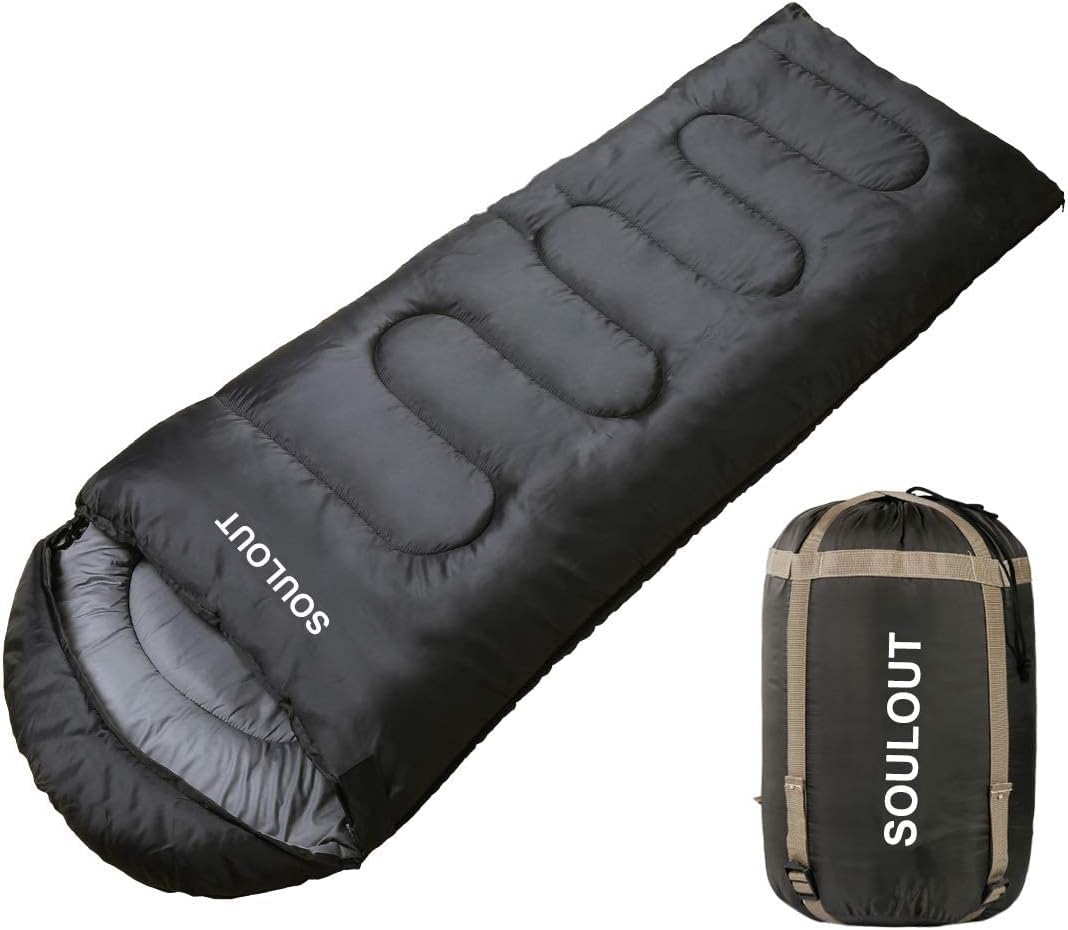
SOULOUT 3-4 Season Sleeping Bag
Roomy rectangular bag that keeps kids warm on chilly state-park nights and survives the minivan without complaint.
Why we love it
- Rectangular cut gives kids room to move
- Water-resistant shell handles damp mornings
- Machine washable, no fuss after muddy trips
Pros
- Spacious envelope design for comfort
- Water-resistant outer shell
- Machine washable synthetic fill
- Includes compression sack
- Good warmth for spring and fall camping
Cons
- Bulky when packed for backpacking
- Rated limit, not comfort temperature

ECOOPRO Warm Weather Sleeping Bag
Budget envelope bag that fits two kids or an adult, rated for warm weather but genuinely compact for family car camping.
Why we love it
- Squeezes two small kids or one adult comfortably
- Rolls down to 11 inches, fits in the minivan easy
- Machine washable after muddy trail weekends
Pros
- Fits two children side by side
- Ultra-lightweight at 1.45 lbs
- Waterproof nylon outer shell
- Compresses small for tight packing
Cons
- 55-60°F rating limits shoulder-season use
- Thin material won't handle heavy abuse
What Separates a Real Deal From a False Bargain
A best budget sleeping bag is not a sleeping bag that costs less. It is a bag that holds its temperature promise on a cold night without falling apart after a season of use. I have owned plenty of cheap bags that failed both tests, and I have owned budget bags that outperformed bags twice their price. The difference sits in fill type, stitching quality, and whether the manufacturer cut the right corners or the wrong ones.
Most people buying at this price point make one of two mistakes: they chase the lowest number on the tag, or they assume synthetic is always worse than down. Neither is true. A 50-degree synthetic bag that actually sleeps warm at 50 degrees beats a 20-degree down bag that clumps after one damp trip and leaves you shivering at 35 degrees.
Synthetic Fill vs. Down at This Price
Synthetic hollow-fiber fill is what most budget bags use, and for good reason. It retains warmth when damp, does not require special washing, and costs less to manufacture. The trade-off is weight and packed size: a synthetic bag weighs more and compresses larger than an equivalent down bag. At a budget price, you are getting polyester lining over hollow-fiber insulation, often with double-layer stitching to prevent cold seams. The MalloMe Sleeping Bags for Adults Cold Weather uses 3D synthetic fiber fill rated for 50 to 77 degrees, which is honest about its range and does not pretend to be a winter bag.
Down at a budget price is rare and usually a warning sign. Down loses loft when compressed and wet, requires hand washing or dry cleaning, and a cheap down bag often uses low-fill-power down that clumps easily. If you see a budget bag claiming down, check the fill power. Anything under 500 fill power is not worth the care it demands.
Temperature Rating: What the Number Actually Means
The hang tag says 50 degrees or 68 degrees, but that number is the comfort rating, not a guarantee. It is the temperature at which an average sleeper in light clothing, on an insulating pad, should sleep warm without sweating. A limit rating sits about 10 to 15 degrees colder and represents survival, not comfort. Most budget bags list only the comfort number, which is honest. The JEAOUIA Sleeping Bags for Adults Backpacking rates at 50 to 68 degrees comfort with a 41 to 77 degree limit, which tells you the bag is designed for three-season use. Do not take a 50-degree bag into a 30-degree night and expect it to work.
Weight and Packed Size Matter Less Than You Think
Budget bags weigh more than premium bags because synthetic fill takes up volume. A typical synthetic bag at this price sits between 2.5 and 3.5 pounds and compresses to a stuff sack the size of a loaf of bread. That is heavier than a down bag, but not so heavy that it ruins a weekend trip. The real question is whether you are car camping or backpacking. For car camping, weight does not matter. For backpacking, you need to know the trade-off: a lighter bag at this price often means thinner insulation or a shorter length.
Zipper and Draft Collar Quality
A budget bag cuts costs on the zipper and draft collar, and that is where you feel it. A cheap zipper snags, separates, or fails after a season. A cheap draft collar leaves a gap at your neck that lets warm air escape. Look for a two-way zipper that runs smoothly and a half-circle or full hood with an adjustable drawstring. The PTEROMY Sleeping Bags for Adults Lightweight includes an adjustable drawstring hood and a bottom zipper for ventilation, which are features that usually appear only in more expensive bags.
A budget bag that keeps you warm is not a bargain; a budget bag that fails in the cold is a waste.
Synthetic Fill Behavior in Real Conditions
Hollow-fiber synthetic insulation does one thing better than down: it stays warm when wet. If you are camping in the Pacific Northwest coastal rain or in a tent that gets damp from morning condensation, synthetic matters. The fill does not clump or lose loft the way down does. It recovers its warmth even after absorbing moisture. The downside is that it takes longer to dry if the bag gets soaked, and you cannot restore loft by shaking it out the way you can with down.
Synthetic bags at a budget price are machine washable, which is a real advantage. You do not need special down soap or a dry cleaner. Toss it in cold water, gentle cycle, and hang it to dry. That ease of care means you will actually clean it instead of letting it get grimier every season. A synthetic bag that is washed once a year will last longer than a down bag that never gets cleaned because the owner is afraid of ruining it.
When Synthetic Fails and What to Watch For
Synthetic fill loses loft over time, especially if compressed for months between trips. A budget bag that sits in a stuff sack all winter will feel thinner in spring than it did in fall. Store it uncompressed, in a mesh bag or laid flat in a closet, and it will hold its loft better. Also watch for the lining: cheap polyester lining tears easily if you have sharp gear in the tent or if you are rough with the bag during packing. A reinforced lining adds cost, but bags at this price often skip it.
Shell Fabric and Seam Sealing
The outer shell is usually 210T polyester, which is lightweight and water-resistant but not waterproof. Water-resistant means it sheds light rain and morning dew. Waterproof means it can sit in a puddle. Budget bags use water-resistant shells and rely on a tent to keep the bag dry. The seams are where water sneaks in. Double-stitched seams are standard at this price, which is good. Seam-sealed seams are rare and usually cost more. If you are camping in wet conditions, keep the bag inside the tent and use a sleeping bag liner to add another layer of protection.
Synthetic bags do not care about damp; they care about compression and time.
Shape, Length, and Fit for Different Sleepers
Budget bags come in two shapes: rectangular and mummy. Rectangular bags are wider and more spacious, which is comfortable for side sleepers and people who move around at night. Mummy bags are tapered, which is warmer because there is less dead air space, but they feel tight if you are not used to them. A budget rectangular bag sleeps warmer than a budget mummy bag at the same temperature rating because the wider interior lets you move without creating cold spots.
Length matters more than people think. Most budget bags are 75 to 80 inches long, which fits people up to about 6 feet. If you are taller, your feet will either stick out or compress the insulation at the foot, which kills warmth. If you are shorter, you get extra length that you do not use, which wastes weight and money. Check the stated length before buying, especially if you are under 5 foot 6 inches or over 6 feet 2 inches.
Side Sleepers and Pressure Points
A side sleeper compresses the insulation on one side of the bag, which creates a cold spot on that hip or shoulder. A rectangular bag with thicker insulation handles this better than a thin mummy bag. You can also pair a budget bag with a sleeping pad that has high R-value on the sides, which is where your body loses heat fastest. A pad with an R-value of 3 or higher will make a 50-degree bag feel like a 40-degree bag because the ground is no longer pulling heat from your hip.
Checking Fit at Home Before the Return Window Closes
Lay the bag flat on your bed or floor and climb in fully clothed. Lie on your back, then on your side. Can you roll over without the bag twisting? Does the hood fit your head without gaping? Does the zipper run smoothly from top to bottom? Can you reach the foot zipper if you want to ventilate? These tests take five minutes and tell you whether the bag actually fits your body and your sleeping style. If something feels wrong at home, it will feel worse on a cold night in a tent.
Pad Pairing and What You Wear Underneath
A sleeping bag rating assumes you are on an insulating pad. Without a pad, a 50-degree bag will feel like a 70-degree bag because the ground steals heat from your back. The pad R-value matters: an R-value of 2 or higher is needed to reach the bag’s rated temperature. If you are using a thin foam pad with R-value around 1, you need to add a liner or wear heavier layers underneath the bag.
What you wear inside the bag also changes the effective temperature. A 50-degree bag with a person in a fleece jacket and long pants will sleep warm at 45 degrees. The same bag with someone in cotton shorts will feel cold at 55 degrees. Budget bags assume you are wearing light clothing, like a t-shirt and shorts. If you sleep cold, wear more. If you sleep hot, wear less. The bag does not change; your setup does.
Liner Use and When It Actually Helps
A sleeping bag liner adds warmth by trapping a thin layer of air between you and the bag. A liner can add 5 to 10 degrees of effective warmth, which is real but not huge. Liners also protect the bag from body oils and sweat, which extends the bag’s life. At a budget price, a liner costs less than washing your bag frequently. Use a liner if you are camping in conditions colder than the bag’s rating, or if you want to extend the bag’s lifespan by reducing how often you wash it.
What Gets Cut at This Price
Budget bags cost less because manufacturers save money on materials and labor. Understanding what is cut helps you know what to expect. The zipper is usually lighter duty than a premium bag, which means it may snag or separate sooner. The draft collar is often a simple drawstring rather than a full baffled hood. The lining is thin and tears easier. The stitching is usually adequate but not reinforced at stress points. None of these things make the bag unusable; they just mean it will not last as long as a bag that costs twice as much.
Entry-Level Synthetic: What You Actually Get
At the bottom of the budget range, you get a rectangular bag with hollow-fiber fill, a basic drawstring hood, and a two-way zipper. The shell is water-resistant polyester. The lining is thin. The stitching is straight and adequate. The bag will sleep you warm at its rated temperature if you are on a pad and wearing appropriate clothing. It will not last 20 years, but it will last a few seasons if you care for it. This is the entry point for people who camp once or twice a year and do not want to spend more.
Mid-Budget: Thicker Insulation and Better Details
Moving up within the budget range, you get thicker insulation, a better zipper, and a more thoughtful design. The hood might be a half-circle instead of just a drawstring. The foot zipper might be easier to reach. The stitching might be double-layered at seams. The shell might be a heavier denier polyester that tears less easily. These bags cost a bit more but sleep warmer, last longer, and feel less flimsy.
Top of Budget: Where You Should Aim
At the top of the budget range, you get bags that rival bags costing 50 percent more. The insulation is thick enough to sleep warm at the rated temperature without layers. The zipper is smooth and durable. The hood is full and adjustable. The stitching is reinforced. The shell is durable polyester. You are paying for quality that will last through multiple seasons, not just one trip. If you camp regularly, this tier is worth stretching for.
Tips From the Trail
- Store uncompressed between trips. Leaving a synthetic bag in a stuff sack for months crushes the fill and reduces loft. Hang it in a closet or lay it flat, and it will recover its warmth.
- Wash it in cold water, gentle cycle. Hot water and vigorous washing break down synthetic fibers. Cold water and a mesh bag protect the lining and fill.
- Hang dry completely before storing. A damp bag left in a bag develops mold and smell. Give it at least 24 hours to dry completely in sunlight if possible.
- Pair it with an R-value 2 or higher pad. A thin foam pad will make any budget bag feel 10 to 15 degrees colder. Invest in the pad as much as the bag.
- Check the zipper before each trip. A stuck zipper ruins a night. Run it smoothly a few times and lubricate with zipper wax if it catches.
- Keep sharp gear away from the lining. A single tear in the lining lets insulation escape. Use a stuff sack for any sharp edges.
Common Questions
Do temperature ratings on budget bags actually match what I feel?
Not always. A 50-degree comfort rating assumes an average sleeper on an insulating pad. If you sleep cold, you will feel cold at 50 degrees. If you sleep hot, you will feel warm. Also, the rating assumes light clothing. Wear a heavy jacket and the bag will feel warmer. The limit rating (the colder number) is closer to honest because it represents survival, not comfort.
Will a budget synthetic bag hold up for multiple seasons?
Yes, if you care for it. Wash it once a year, store it uncompressed, and keep sharp gear away from it. A budget synthetic bag will last three to five seasons of regular use. A down bag might last longer, but it requires more careful washing and storage. The trade-off is worth it if you camp in damp conditions.
Can I use a budget bag in winter?
Only if it is rated for winter. Most budget bags are three-season bags rated for 40 to 80 degrees. Taking a 50-degree bag into a 20-degree night will not work, no matter how many layers you wear. If you need a winter bag, buy one rated for 0 to 20 degrees, and expect to pay more.
What is the difference between water-resistant and waterproof?
Water-resistant means the shell sheds light rain and dew but will eventually soak through if you sit in heavy rain for hours. Waterproof means it resists water indefinitely. Budget bags are water-resistant. Keep your bag inside the tent and you will not have a problem. Leave it outside in the rain and it will get damp.
Should I buy a sleeping bag liner?
A liner adds 5 to 10 degrees of warmth and extends the bag’s life by keeping sweat and oils off the insulation. If you camp in conditions colder than your bag’s rating or you camp frequently and want to wash the bag less often, a liner is worth it. If you camp a few times a year in season, you can skip it.
How do I know if a budget bag will fit me?
Check the stated length and width. Most budget bags are 75 to 80 inches long and 30 to 35 inches wide. If you are taller than 6 feet, look for a long bag. If you are a side sleeper, look for a wider bag. Lay down in it at home if you can, and test the zipper and hood fit before the return window closes.


Write Your Review
No reviews yet. Be the first to share your experience!