

Tuphen Sleeping Bag 5-25C
Rectangular bag that zips open flat, survives wet minivan packing, and keeps kids warm on frosty nights without breaking the bank.
Why we love it
- Two-way zipper opens fully as a blanket
- Microfiber dries fast after damp trips
- Packs to 3 pounds, fits any backpack
Pros
- Two-way zipper design
- Waterproof outer shell
- Zips together with matching bags
- Machine washable synthetic fill
- Compact packed size
Cons
- Microfiber heavier than down
- Rated temp is limit, not comfort

Tanstrider XXL 4-Season Sleeping Bag
Roomy rectangular bag with draft collar and two-way zipper, built for car camping with kids and damp Pacific Northwest nights.
Why we love it
- Draft collar and hood seal warmth on frosty mornings
- Two-way zipper lets kids vent without losing heat
- Machine washable after wet trips and minivan stuffing
Pros
- Insulated draft collar and hood
- Two-way zipper with zipper guard
- XXL roomy rectangular cut
- Machine washable synthetic fill
- Compression sack included
Cons
- Heavy for backpacking trips
- Rated 23F limit, plan layers below

TANSTRIDER 4 Season Sleeping Bag 40F
Rectangular bag with enough room for a kid to move around and a waterproof shell that survives being stuffed damp into the minivan.
Why we love it
- Roomy 86.6 by 31.5 inches fits kids comfortably
- Two-way zipper lets you vent feet on warmer nights
- Machine washable, survives muddy weekend trips
Pros
- Waterproof polyester shell
- Two-way zipper for temperature control
- Generous interior space for movement
- Includes compression carry sack
- Machine washable synthetic fill
Cons
- Heavy at 4 lbs for backpacking
- Rated limit, not comfort temperature

Naturehike 650FP Down Sleeping Bag
Hybrid mummy-rectangular cut keeps kids warm on frosty nights and packs light enough for real backcountry trips.
Why we love it
- Hybrid design gives kids room to move legs
- 650-fill down compresses to minivan-friendly size
- Rated to 33F for shoulder-season family camping
Pros
- 650-fill down insulation
- Hybrid mummy-rectangular cut
- Ultralight at 1.67-1.95 lbs
- Compression sack included
- YKK zippers
Cons
- Down loses warmth if it gets wet
- Rated limit, not comfort temp

Friendriver XL Sleeping Bag
Budget rectangular bag with enough room for a kid to move around, waterproof exterior, and synthetic warmth that handles damp conditions.
Why we love it
- XL cut gives kids space to shift without feeling trapped
- Waterproof shell sheds morning dew on state park trips
- Light enough to pack in the minivan without regret
Pros
- Spacious XL interior
- Fully waterproof construction
- Lightweight for car camping
- Synthetic fill performs when damp
- Budget-friendly price
Cons
- 0-degree claim likely a limit, not comfort rating
- Bulky packed size for backpacking trips
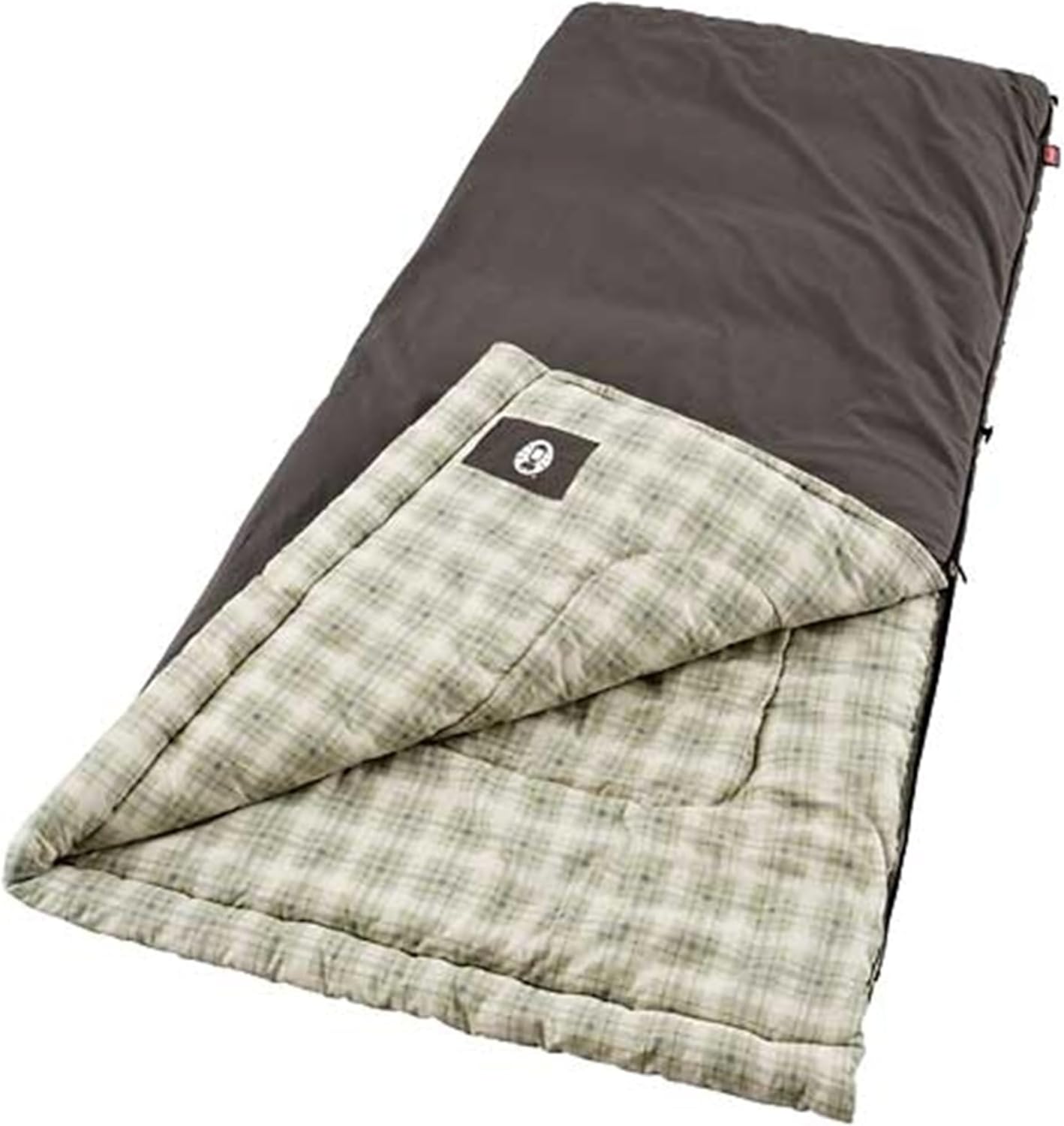
Coleman Heritage Big & Tall 10°F Bag
Roomy XL bag rated to 10°F with flannel comfort; machine washable and built tough for family camping.
Why we love it
- Fits tall adults or two kids bundled close
- Flannel liner beats scratchy nylon on skin
- Machine washable beats campfire smell
Pros
- 5 lbs Holofill insulation traps heat
- Flannel liner instead of cheap nylon
- No-snag zipper holds up to kids
- Machine washable for easy cleanup
- XL size fits adults up to 6'7"
Cons
- Heavy for backpacking trips
- Rectangular cut wastes heat around edges
What Temperature Rating Actually Means
A 4 season sleeping bag is not a single product type, and that is where most buyers stumble. The label sounds like one bag handles everything, but what you get depends entirely on whether you need spring and fall shoulder seasons, or winter nights down to freezing. The picks above range from synthetic bags rated to 40 degrees Fahrenheit down to down-filled bags that handle 0 degrees. The difference is not just the number on the tag. It is the weight you carry, the bulk in your pack, how the bag behaves when damp, and whether you will actually sleep warm or just survive.
The real cost of picking the wrong rating shows up at 2 a.m. on a cold mountain night. A bag rated for 40 degrees will not keep you warm at 30 degrees, no matter what the marketing says. The rating is the limit of where the bag still works, not the comfort zone. You need a pad underneath, layers inside, and realistic expectations about what the number means in the field.
Comfort vs. Limit: Know the Difference
Sleeping bag temperature ratings follow ISO 23537, and the standard splits two numbers. The comfort rating is where most people sleep warm. The limit rating is the lowest temperature where the bag keeps you alive. A bag marked 20 degrees has a comfort range around 30 to 40 degrees, depending on the fill and shape. Below that, it still works, but you are not comfortable. This matters because marketing often leads with the limit number to make the bag sound warmer than it is. Read the fine print or look for both numbers before you buy.
Fill Type Shapes Your Season Range
Down fill compresses tighter and weighs less than synthetic, which makes it the choice for backpacking trips where every ounce matters. A Naturehike Ultralight Down Cold Weather Sleeping Bag with 650 fill power packs to the size of a loaf of bread and weighs under 2 pounds. The trade-off is that down loses loft when wet, and drying it in the field is nearly impossible. If you camp in coastal rain or wet snow, down becomes a liability. Synthetic fill stays lofty when damp and dries faster, which makes it the safer choice for unpredictable weather. It weighs more and packs larger, but it performs when conditions turn ugly.
Mummy vs. Rectangular Shape
Mummy-cut bags wrap tight around your shoulders and torso, which traps body heat efficiently and is why they dominate 4 season gear. A rectangular bag leaves dead air space and loses warmth around the sides. Mummy bags are harder to move in and feel claustrophobic to some people, but if you are buying a 4 season bag for cold weather, the shape matters more than comfort in mild conditions. The Coleman Heritage Big and Tall 10 Degree Flannel Sleeping Bag uses a mummy construction with synthetic insulation and is built for serious cold, not for summer car camping.
Draft Collar and Hood Construction
A full draft collar around the neck and a drawstring hood are not optional features on a 4 season bag. They seal the opening where your head is, which is where most heat escapes. A poorly designed hood leaves gaps, and a loose collar lets cold air funnel down your chest. Look for bags where the collar is sewn to the bag itself, not just a loose tube, and where the hood drawstring tightens all the way around your face. The TANSTRIDER bags in the list include adjustable half-circle hoods and saddle-shaped draft collars specifically designed to block wind at the neck.
Packed Weight and What It Costs
If you are backpacking in winter, a 4 season bag is one of the heaviest pieces of gear you own. The difference between a 2 pound down bag and a 5 pound synthetic bag is real over a week-long trip. The lightest options use premium down and ultralight shells, which costs more and requires careful handling. Heavier synthetic bags are more durable and forgiving, which matters if you are learning or if your trips are short enough that a few extra pounds do not break your back.
The weight trade-off also affects how warm the bag actually is. A bag rated to 0 degrees needs more insulation than a 20 degree bag, and that insulation has to go somewhere. A 3 pound ultralight 4 season bag is either cutting corners on loft or using premium down at a premium price. A 5 pound bag might have thicker synthetic insulation or a heavier shell that will last longer under real use.
Down Fill Power and Durability
Down quality is measured in fill power, which is how much volume one ounce of down occupies. A 650 fill power down is middle-of-the-road, and a 800 or 900 fill power down is premium. Higher fill power means more warmth per ounce, which translates directly to lighter weight. The Naturehike bag uses 650 fill power, which is respectable for the price point. The trade-off is that lower fill power requires more down to reach the same temperature rating, so the bag is heavier. If you are buying down, expect to pay more for 800 or 900 fill power bags, and expect them to last longer under repeated compression.
Synthetic Insulation and Wet Weather
Synthetic bags use polyester or microfiber insulation, and the quality varies. A cheap synthetic bag uses thin, low-denier polyester that compresses easily and loses loft after a season. A better synthetic bag uses thicker polyester or proprietary blends like Holofill that recover loft better. The Coleman bag uses 5 pounds of Holofill 808 insulation, which is a mid-range synthetic that balances warmth, weight, and durability. Synthetic bags are machine washable, which down bags are not, and that matters if you are using the bag frequently or storing it damp.
Shell Material and Seam Sealing
The outer shell of a 4 season bag should be ripstop nylon or polyester, at least 20 denier, to resist punctures and abrasion. A lighter shell saves weight but tears more easily. Check whether the seams are sealed, which adds weight but stops moisture from wicking in along the stitching. Bags under $50 often skip seam sealing, and you will feel the difference on a wet night. The Naturehike bag uses 400T 20D ripstop nylon with YKK zippers, which is a solid spec for the price.
Getting the Fit Right Before the Return Window Closes
A 4 season bag that is too large will not keep you warm, because you will have dead air space around your body that the bag cannot heat. A bag that is too small will restrict your movement and create pressure points that cut off circulation. Before you commit, measure yourself inside the bag at home. Lie down flat and try to move your legs and arms. You should have about 2 inches of space around your shoulders and hips, not more. If the bag feels tight around your chest or shoulders when you are lying down, it is too small.
Most 4 season bags come in standard and long lengths. If you are over 6 feet tall, a standard bag will cut off circulation at your feet, which makes you colder, not warmer. The Coleman bag fits people up to 6 feet 7 inches, which is longer than most. If you are shorter than 5 foot 8, a standard bag might have excess length that you cannot fill with body heat. Check the dimensions before you order, and do not assume that a longer bag is always better.
Sleeping Pad R-Value and Temperature
A sleeping bag rating assumes you are on an insulated pad with an R-value of 5 or higher. Without a pad, the rating is meaningless. The ground pulls heat from your back faster than air pulls it from your front, so the pad is half the equation. If you use a thin pad with an R-value of 2, subtract 10 to 15 degrees from the bag’s comfort rating. If you use two pads stacked, add 5 to 10 degrees. The bag rating is not a promise, it is a baseline that only works if the rest of your setup is right.
Layering Inside the Bag
A 4 season bag works best when you wear a base layer and a mid-layer inside it. Cotton holds moisture and makes you colder, so wear synthetic or merino wool. A balaclava or wool hat inside the bag keeps your head warm without overheating your face. Avoid wearing all your clothes inside the bag, because compression reduces the insulation value. A light layer under and inside the bag is better than stuffing yourself into it fully dressed.
Checking the Zipper and Draft Tube
Before you buy, run the zipper up and down slowly. It should move smoothly without catching. A stuck or grinding zipper will fail on a cold night when you need to open or close the bag fast. Check that the draft tube, which is the foam strip behind the zipper, runs the full length of the bag and seals against the slider. A gap in the draft tube is a cold leak. On the bags in the list, look for YKK zippers and anti-snag guards, which are signs of better construction.
Tips From the Trail
- Store it uncompressed between trips. Leaving a bag stuffed in a compression sack for months crushes the insulation permanently. Hang it in a closet or lay it flat in a storage bag. Down needs air to recover its loft.
- Wash it only when it is visibly dirty. Washing removes the natural oils that make down water-resistant and synthetic insulation more fragile. Use a gentle cycle in cold water and dry it on low heat, fluffing it every 15 minutes.
- Pair it with a sleeping pad, not a blanket. A pad insulates from below, where the ground steals heat fastest. A blanket on top does almost nothing. The pad is half the warmth.
- Test the bag at home before a cold trip. Spend a night in it in your backyard or living room to see how it actually feels. A bag that reads warm on a spec sheet might feel cold to you at night.
- Dry it completely before storing. A damp bag left in a bag will mildew and lose loft. After washing, air dry it fully, even if it takes a few days.
- Use a liner to keep the inside clean. A lightweight liner reduces how often you need to wash the bag itself and adds a few degrees of warmth without much weight.
A 4 season bag is only as warm as the pad underneath it and the layers inside it.
Matching the Bag to Your Season
A 4 season bag is not one size for all seasons. If you camp mostly in spring and fall when nights drop to 40 degrees, a heavy winter bag is wasted weight. If you camp in the Cascades in winter, a 40 degree bag will not cut it. The picks above cover the range. The synthetic bags rated to 40 degrees are shoulder season bags. The bags rated to 20 or 30 degrees are true 4 season bags. The bags rated to 0 degrees are winter expedition bags. Choose based on the coldest night you actually plan to camp in, not the coldest night you might camp in someday.
Spring and Fall Shoulder Seasons
Nights in April and October in the Pacific Northwest drop to the 40s, and you need a bag that handles that without overheating in the afternoon. A synthetic bag rated to 40 degrees with ventilation options, like foot zippers or a flat-open design, gives you the flexibility to unzip and cool down. The TANSTRIDER bags include two-way zippers and the option to unzip the feet separately, which is exactly what you need when the temperature swings 20 degrees between noon and midnight.
Winter and Deep Cold
Winter camping in the mountains means nights below 20 degrees, and you need a bag built for that. A 20 degree rated bag with a full mummy cut, a draft collar, and a hood is your baseline. If you are camping below 10 degrees, look for a bag rated to 10 degrees or lower, with down fill or premium synthetic insulation. The Coleman bag is rated to 10 degrees and is built for winter use. A 0 degree bag like the Friendriver option is overkill for most people but necessary if you camp in extreme cold or at high elevation.
Year-Round Car Camping
If you car camp year-round and do not care about weight, a rectangular synthetic bag rated to 20 degrees is your best bet. It is cheaper than a mummy bag, more comfortable for side sleepers, and easy to wash. You do not need ultralight construction, and you do not need down. A heavier synthetic bag will last longer under the abuse of being packed and unpacked every weekend.
The coldest night you will actually sleep in should drive your rating choice, not the coldest night you might someday experience.
FAQ
What does a 4 season bag actually mean?
A 4 season bag is rated to handle cold weather from fall through spring, typically down to 20 degrees Fahrenheit or below. It is not a single bag that works equally well in all seasons. It is a bag designed for the shoulder seasons and winter, with a mummy cut, draft collar, and enough insulation to keep you warm when temperatures drop. Summer bags are separate and lighter.
Can I use a 4 season bag in summer?
You can, but it will be uncomfortable. A 4 season bag is designed for cold nights and will overheat in warm weather. Many 4 season bags have ventilation options like foot zippers or flat-open designs that let you unzip and cool down, but you will still be warmer than you need to be. If you camp in summer and winter, buy two bags or buy a 3 season bag for summer and a 4 season bag for winter.
Does the temperature rating on the tag match real-world performance?
Not always. The ISO standard for temperature ratings is consistent, but real performance depends on your body, your pad, your layers, and your sleep position. A bag rated to 20 degrees will keep a warm sleeper comfortable at 20 degrees on a good pad, but a cold sleeper might need 30 degrees to feel warm. Test the bag at home first, and if you run cold, buy a bag rated 10 degrees colder than you think you need.
Is down or synthetic better for 4 season camping?
Down is lighter and compresses smaller, which matters for backpacking. Synthetic is warmer when wet and dries faster, which matters for unpredictable weather. If you camp in dry cold, down is the better choice. If you camp in wet or coastal conditions, synthetic is safer. Most people benefit from synthetic for 4 season use because winter weather is often damp, and down loses loft when wet.
How much should I spend on a 4 season bag?
A decent synthetic 4 season bag starts around $40 and goes up to $150 for better construction and insulation. A down 4 season bag starts around $100 and goes up to $300 or more for premium fill power and ultralight shells. Budget bags cut corners on draft collars, seam sealing, and insulation quality. Mid-range bags balance warmth, durability, and price. Premium bags save weight and last longer. Choose based on how often you use it and what conditions you camp in, not just the price tag.
What should I do if a 4 season bag feels cold on a winter night?
First, check your pad. A thin or worn pad is the most common reason a bag feels colder than its rating. Second, add a liner, which adds 5 to 10 degrees of warmth. Third, wear a base layer and mid-layer inside the bag, not outside it. Fourth, make sure the draft collar is tight and the hood is sealed. If the bag is still cold after all that, it is the wrong rating for the temperature you are camping in.


Write Your Review
No reviews yet. Be the first to share your experience!