

Coleman Brazos 20/30F Sleeping Bag
Rectangular bag rated to 30F that zips together with a second bag and handles the minivan lifestyle better than most.
Why we love it
- Zips to a second bag for couples or kids
- Machine washable after muddy trail trips
- No-snag zipper saves frustration at 6 AM
Pros
- Thermolock draft tube seals warmth
- Fiberlock keeps insulation from shifting
- Rectangular cut gives kids room to move
- Stuff sack included for car storage
- Zips together for shared warmth
Cons
- Bulky packed size for backpacking
- 30F rating is the limit, not comfort

Sea to Summit Boab 30F Synthetic
Roomy synthetic bag that keeps kids warm on frosty state-park nights and survives being stuffed wet into the minivan.
Why we love it
- Full-length zipper converts to blanket for restless sleepers
- Synthetic fill performs when damp, unlike down on coastal trips
- Regular Wide size fits side sleepers without cramping
Pros
- Roomy, tapered rectangular cut
- Full-length zipper through footbox
- Synthetic fill dries fast when damp
- Machine washable, easy cleanup after trips
- Recycled materials, non-PFAS DWR treatment
Cons
- Bulky packed size for backpacking
- 30F rating is limit, not comfort zone

Sea to Summit Hamelin 30F Synthetic
Synthetic bag that handles damp Pacific Northwest weather without the down-soaking risk, rated for shoulder-season trips with room to move.
Why we love it
- Stays warm when damp, unlike down
- Converts to quilt for camp mobility
- Packs light for family backpacking
Pros
- Body-mapped insulation targets core warmth
- Full-length side zipper doubles as quilt
- Synthetic fill performs wet or dry
- Shoulder snaps let kids wear it around camp
- Contour shape fits side sleepers
Cons
- Bulkier packed than equivalent down
- 30F rating is limit, not comfort zone

Sea to Summit Spark Pro 30F Down
Ultralight down bag that actually keeps kids warm on cold nights without weighing down your pack.
Why we love it
- 900+ fill power down compresses tiny for the minivan
- Mummy shape with draft collar seals warmth on frosty mornings
- PFC-free shell sheds light rain on wet coastal trips
Pros
- 900+ fill power down insulation
- Contoured mummy with insulated hood
- Front draft collar traps neck warmth
- 10D nylon shell with PFC-free DWR
- Hybrid box baffles in torso for warmth
Cons
- Premium price point around $549
- Down loses loft if it gets soaked

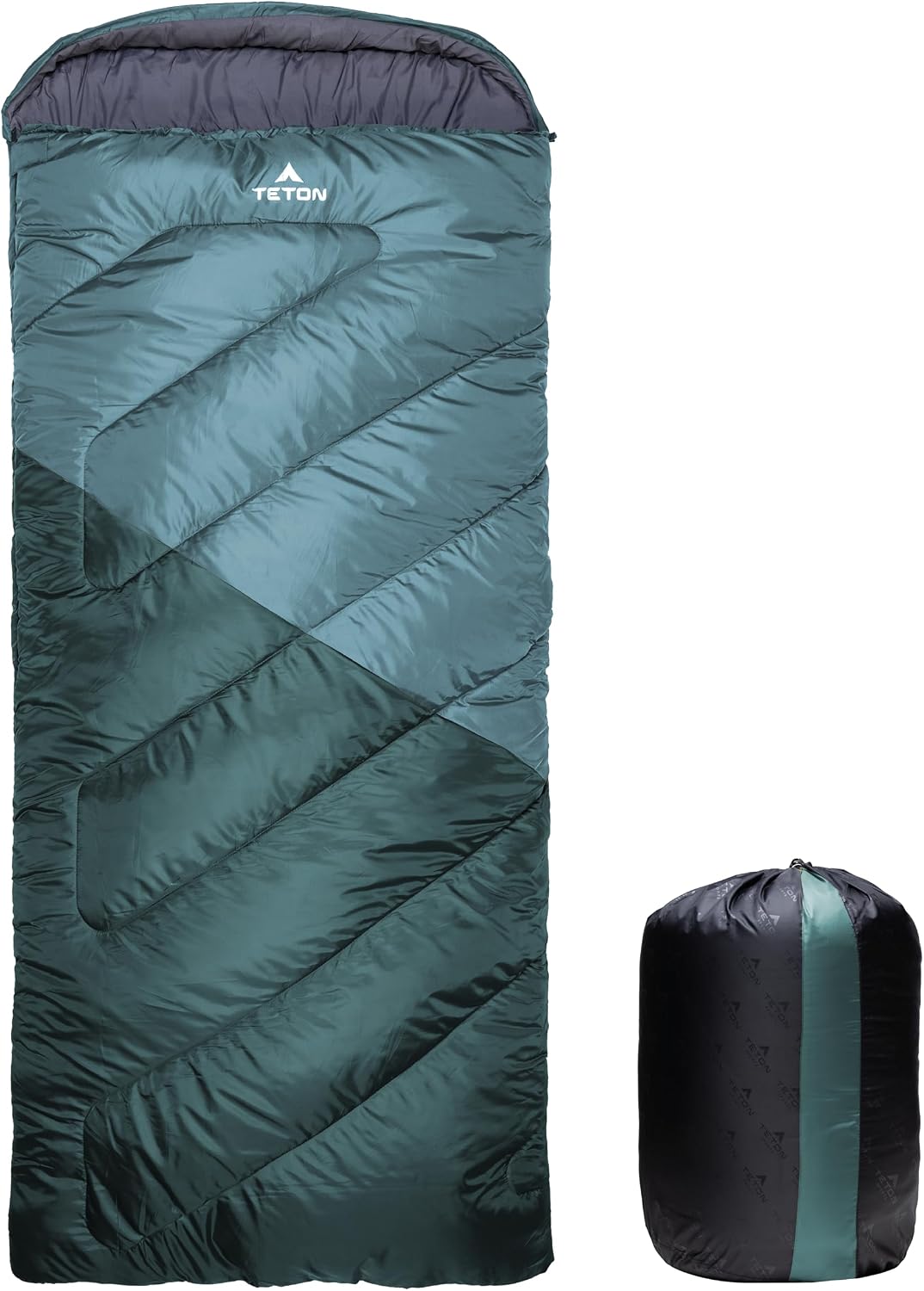
Teton TrailHead 20F Sleeping Bag
Synthetic mummy bag that stays warm when damp and packs small enough for the minivan, at a price that won't hurt the family budget.
Why we love it
- Synthetic fill handles wet coastal trips better than down
- Draft collar and hood seal warmth on frosty mornings
- Stuff sack keeps gear organized in a packed car
Pros
- Lightweight synthetic insulation
- Full-length anti-snag zipper
- Oversized mummy fit for comfort
- Draft collar and hood included
- Compression sack in the box
Cons
- Synthetic bulk adds packed volume
- 20F rating is survival limit, not comfort
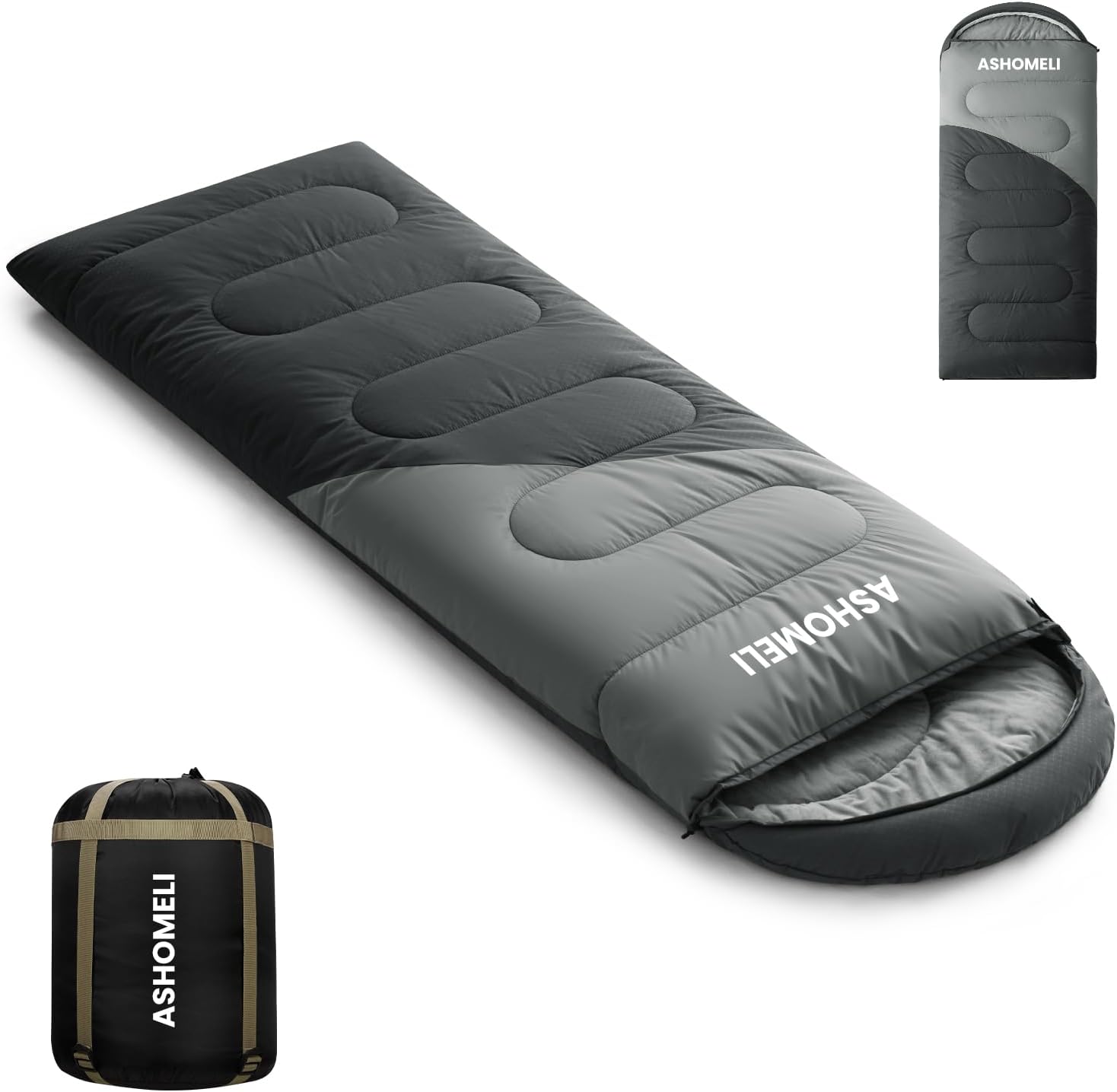
ASHOMELI 32F Sleeping Bag
Synthetic bag rated to 32F with a roomy cut and included pillow, built for family car camping and occasional trail nights.
Why we love it
- Rated to 32F for shoulder-season trips
- Soft fleece lining won't irritate a kid
- Foot zippers let you vent on warmer nights
Pros
- Water-resistant outer shell
- Spacious cut for side sleepers
- Full insulation sheet retains heat
- Included inflatable pillow
- Lightweight and packs small
Cons
- 32F is a limit, not a comfort zone
- Synthetic fill is bulkier than down
What 30-Degree Really Means at 2 a.m.
A 30-degree sleeping bag sits at a threshold where the rating number matters less than what you pair it with. That 30-degree number is the ISO comfort rating: the temperature at which an average sleeper stops shivering. It is not survival cold, and it is not the temperature where the bag quits working. Get that wrong, and you end up cold on a shoulder-season trip when you thought you were covered.
The six bags above span a wide range of fill types, shapes, and construction methods, but they all share the same rated floor. What separates them is how much skill they demand from you, how much weight they add to your pack, and what happens when conditions dip below that number or moisture creeps in.
The Comfort Rating Versus the Limit
Manufacturers rate bags using ISO standards. The 30-degree comfort rating assumes you are wearing a base layer, sleeping on an insulated pad with an R-value of at least 2.5, and wearing a hat. Strip any of those away, and the real floor drops fast. A pad matters more than the bag itself at this temperature. If you sleep on the ground or on a thin foam pad, you are giving up 10 to 15 degrees of real warmth because the insulation underneath collapses under your weight.
Down Versus Synthetic at This Rating
Down insulation compresses smaller and weighs less, which is why the Sea to Summit Spark Pro Ultralight Down Sleeping Bag, 30-Degree, Regular appeals to backpackers willing to pay for ultralight. Down loses all loft when wet, though, and drying it takes days. Synthetic insulation keeps working when damp, which makes the Sea to Summit Hamelin Synthetic Sleeping Bag, 30-Degree, Regular the smarter pick for wet coastal air or spring snowmelt. Synthetic is heavier and bulkier at the same rating, but that trade-off is worth it if your trips see rain or high humidity.
Mummy Cut Holds Heat Better Than Rectangular
A mummy-shaped bag with a hood and draft collar seals the warm air around your head and torso. A rectangular bag leaves dead air space along your sides and lets heat escape at the shoulders. At 30 degrees, that shape difference is real. The Teton 20F and 5F Degree Sleeping Bag uses a mummy cut with a vaulted footbox, which means you are not paying for wasted space. A rectangular bag is more versatile for car camping and sleeping two, but it will not reach its rated warmth at 30 degrees unless you are a warm sleeper or you add a liner.
Draft Collar and Zipper Sealing Stop Heat Leaks
The zipper is where most bags leak warmth. A full-length draft tube runs along the inside of the zipper and blocks cold air from flowing through the teeth. A shoulder or neck draft collar seals the opening around your neck when the bag is closed. At 30 degrees, a bag without both of these is fighting an uphill battle. Look for bags that mention a draft collar by name, and check whether the draft tube is stitched along the full zipper length or only partway.
A 30-degree bag on a thin pad will sleep cold. Pair it with a pad that has an R-value above 2.5, or accept that the real floor is closer to 40 degrees.
Packed Weight and What It Costs
A 30-degree bag that weighs under 2 pounds demands ultralight construction and premium materials. The Sea to Summit Spark Pro hits that target because it uses 900-plus fill power down, which compresses to almost nothing. Most bags at this rating weigh between 2.5 and 3.5 pounds. The Coleman Brazos weighs more because it uses a rectangular cut and synthetic fill, neither of which compresses aggressively. If you are car camping, that extra weight does not matter. If you are hiking 10 miles with the bag on your back, it does.
Ultralight bags also tend to have narrower shoulder girth and shorter zippers to save grams. If you sleep with your arms out or you move a lot at night, a narrower mummy cut will feel claustrophobic. Test the fit before committing. A heavier bag with a roomier cut might be the smarter choice if you sleep hot or you toss around.
Fill Power and Compressibility
Down fill power is measured in cubic inches per ounce. A 900-fill down takes up less space than a 650-fill down at the same weight, which is why premium bags cost more. Synthetic insulation does not have a fill power rating because it does not compress the same way. A synthetic bag will always pack larger than a down bag at the same warmth rating. If your pack volume is tight, down wins. If you are stuffing a bag into a car or a pannier, synthetic bulk is less of a problem.
Restoring Loft After Storage
A 30-degree down bag stored compressed in a stuff sack for months will feel flat and cold when you unpack it. You have to fluff it, either by tossing it in a dryer on low heat for 10 minutes or by hand-shaking it for a few minutes before you get in. Synthetic bags do not lose loft as aggressively, but they still benefit from fluffing. Store both types uncompressed in a mesh bag between trips, not in the stuff sack.
Seasonal Use and When 30 Degrees Is Enough
A 30-degree bag is a three-season workhorse in most of the Pacific Northwest. It handles summer nights at elevation, fall camping down to the first hard freeze, and spring trips when daytime temps climb above freezing. In winter, below 20 degrees, a 30-degree bag is a liability unless you are a very warm sleeper and you are layering inside and underneath. A 30-degree bag is also too heavy for summer backpacking in the Sierra if you are chasing ultralight. For that, a 40 or 50-degree bag makes more sense.
Know what season you actually camp in. If you take 80 percent of your trips between May and October, a 30-degree bag is overkill and you are carrying weight you do not need. If you camp year-round or you head to the mountains in shoulder seasons, a 30-degree bag earns its place.
Most people buy a 30-degree bag because it is a safe middle ground and then use it in summer, where it overheats and traps moisture.
How to Check Fit Before the Return Window Closes
A sleeping bag that is too tight will compress the insulation underneath you, killing its ability to keep you warm. A bag that is too loose wastes heat on warming dead air space. Lay the bag out flat on your bed and climb in fully clothed, as you would on a cold night. Your shoulders should not touch the sides. Your feet should have room to move but not so much that you can fit your hand between your toes and the footbox. The hood should close around your face without pressing on your nose or cheeks.
Mummy bags come in regular and long lengths. Regular typically fits people up to 6 feet tall. If you are taller, a long bag is not optional, it is necessary. A short person in a long bag sleeps colder because more insulation is above your feet doing nothing. Check the stated length limit on the product page before ordering.
Side Sleepers Need Room to Shift
A tight mummy bag that works for a back sleeper will feel like a straitjacket if you sleep on your side. Your shoulder and hip press against the bag wall, compressing insulation and creating pressure points. Look for bags with a contoured shape that widens at the shoulders and hips, or choose a slightly roomier cut if you know you move around. The Sea to Summit Hamelin uses a contour shape designed for side sleepers, which adds weight but gains comfort.
Pad Pairing and R-Value
The bag rating assumes a pad underneath. An R-value of 2.5 is the minimum. Closed-cell foam pads run 2 to 3. Most inflatable pads are 3 to 5. If your pad is below 2.5, the ground steals heat and the bag cannot reach its rated warmth. In winter or on snow, use a pad with an R-value of 4 or higher. Stacking two pads (a foam layer under an inflatable) works too. A pad is not optional at this temperature. It is half the system.
Layering Inside the Bag
Wearing a base layer and a hat inside the bag adds 5 to 10 degrees of real warmth. Wearing cotton loses that gain because cotton absorbs moisture and holds it. Wool or synthetic base layers wick moisture away and keep working when damp. A wool hat is worth more than you think at this temperature because you lose 40 percent of body heat through your head. A sleeping bag liner adds another 5 to 10 degrees and keeps the bag cleaner for longer.
Tips From the Trail
- Fluff the bag before bed. Shake it out for a minute to restore loft. A compressed bag sleeps 10 to 15 degrees colder than its rating.
- Keep the pad R-value above 2.5. The insulation underneath matters as much as the bag itself. A thin pad will undermine even a premium bag.
- Never store it compressed. Roll it loosely or hang it in a mesh bag between trips. Permanent compression damages down and synthetic alike.
- Wash it by hand in cool water. Machine washing and heat drying break down insulation fibers. Use a gentle soap and air-dry flat or on low heat only.
- Close the zipper slowly and watch for snags. A snagged draft tube or liner ruins the seal. Feed the fabric ahead of the slider as you zip.
- Test it at home before the trip. Climb in on your bedroom floor, fully clothed, and sleep for an hour. You will know immediately if the fit or warmth is wrong.
Common Questions About 30-Degree Bags
Does a 30-degree rating mean I can sleep in 30-degree air?
The comfort rating assumes you are wearing a base layer, a hat, and sleeping on a pad with an R-value above 2.5. If any of those are missing, the real floor is higher. A 30-degree bag without a pad is useless below 50 degrees.
Can I use a 30-degree bag in summer without overheating?
Yes, if you unzip it partially or sleep on top of it instead of inside. A fully zipped 30-degree bag in 70-degree air will trap moisture and make you sweat. Use a lighter bag or a quilt for summer, or accept that you will be too warm.
How long does a 30-degree bag last?
A down bag cared for properly lasts 10 to 15 years. A synthetic bag lasts 5 to 8 years before the insulation begins to mat and lose loft. Storage method and washing frequency matter more than the bag itself. Bags stored compressed fail faster.
What is the difference between a 30-degree bag and a 20-degree bag?
A 20-degree bag is heavier, bulkier, and uses more insulation. It is designed for winter or high-altitude trips where nights drop below freezing. For three-season camping, a 30-degree bag is usually enough and saves weight.
Do I need a liner with a 30-degree bag?
A liner adds warmth and keeps the bag cleaner, but it is not mandatory. If you sleep warm or you camp in mild conditions, a liner is overkill. If you camp frequently or you want extra warmth, a liner pays for itself in durability and comfort.
Will a synthetic 30-degree bag stay warm if it gets wet?
Synthetic insulation retains some loft when damp, but it loses warmth. A wet synthetic bag sleeps roughly 10 to 15 degrees colder than its rating. Down loses almost all warmth when wet and takes days to dry. For wet climates, synthetic is the safer choice, but keeping the bag dry is still the goal.


Write Your Review
No reviews yet. Be the first to share your experience!