


HiZYNICE XXL 30F Sleeping Bag
Roomy flannel bag that keeps kids warm on frosty nights and survives being stuffed wet into the minivan.
Why we love it
- Cotton flannel lining stays soft on sensitive skin
- Two-way zipper zips to another bag for family warmth
- Machine washable after muddy trail trips
Pros
- XXL size fits adults and kids comfortably
- Two-way zipper for easy access and ventilation
- Draft tube along zipper prevents heat loss
- Machine washable for practical family use
- Compression sack included for minivan packing
Cons
- Bulky packed size limits backpacking trips
- 30F comfort rating runs cold for shoulder season

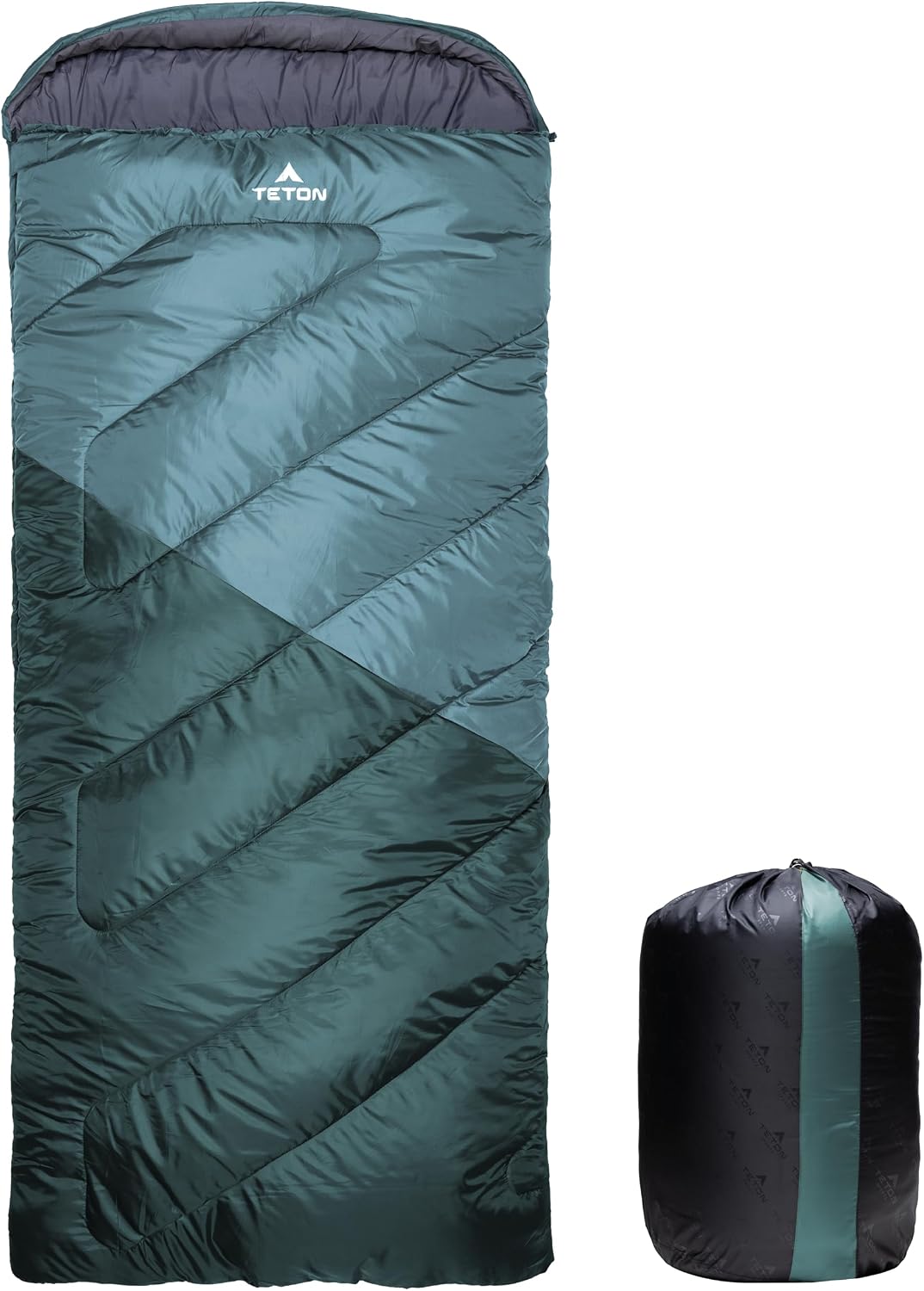
Teton Celsius 25F Sleeping Bag
Flannel-lined bag that keeps kids warm and doesn't fall apart after a wet Oregon weekend.
Why we love it
- Flannel lining beats synthetic slickness on cold nights
- Two-way zippers work with gloves and tired kids
- Unzips flat to blanket when the cabin gets stuffy
Pros
- Soft flannel lining
- Water-resistant taffeta shell
- Draft tubes at shoulders and zipper
- Stuff sack included
- Interior pocket for keys and phone
Cons
- Heavier than ultralight options
- SuperLoft fill needs a quality pad underneath

Bessport Mummy Bag 15-45F
Synthetic mummy bag that handles damp conditions better than down, rated 15-45F for shoulder-season car camping and occasional backpacking trips.
Why we love it
- Synthetic fill performs when damp, no down loft loss
- Compresses to backpack size, light enough for kids
- Machine washable, survives minivan trips unchanged
Pros
- Synthetic fill resists moisture
- Mummy cut traps heat efficiently
- Anti-snag zipper with windshield
- Includes compression sack
- Machine washable
Cons
- Bulkier than equivalent down bag
- Rated limit favors side sleepers

Sea to Summit Hamelin 30F Synthetic
Synthetic bag that handles damp nights and stuffs into a minivan without complaint, rated to 30 degrees for shoulder-season family trips.
Why we love it
- Synthetic fill performs when wet, no down collapse
- Converts to quilt for flexible camp warmth
- Contour shape gives kids room to move around
Pros
- Full-length side zipper with dual sliders
- Shoulder snaps and footbox zipper for layering
- Made with recycled insulation and fabrics
- Body-mapped Revive Loft insulation
- Non-PFAS water-repellent durable finish
Cons
- Heavier than down at same temperature rating
- Bulkier packed size than comparable down bags

QEZER Down Mummy 600 Fill 0F Bag
Compact down mummy rated to 0F, packs small enough for backpacking but warm enough for frosty state-park nights with the kids.
Why we love it
- 600-fill down compresses to 13x6 inches
- Dual zippers let you zip two bags together
- Mummy cut with trapezoidal foot box fits kids
Pros
- 600-fill down insulation
- Dual side zippers for couples or kids
- Compact packed size for minivan trips
- Trapezoidal foot box design
- Tear-resistant nylon shell
Cons
- Down loses loft if it gets damp
- Rated limit, not comfort temperature
What Actually Keeps You Warm at 15 Degrees
A 15-degree sleeping bag sits at the edge of three-season camping. It is not a winter bag, but it is not a shoulder-season bag either. The 15-degree limit rating (not the comfort rating) means the bag will keep an average sleeper alive at 15 degrees if they wear layers and use an insulated pad. Comfort happens a few degrees warmer, usually around 25 to 30 degrees. Most people buying at this rating want cold-weather trips in spring or fall, or high-elevation summer camping where nights drop hard.
The real trap is confusing the limit with comfort. I have watched people freeze in bags that promised 15 degrees because they expected to sleep warm at exactly 15. Then there is the other mistake: buying too much bag for what you actually do. A 15-degree bag adds weight and bulk compared to a 20-degree, and if you never camp colder than 25 degrees, that weight sits in your pack for no reason.
Fill Type Shapes Everything
Down compresses smaller and weighs less than synthetic, but it dies when wet and takes forever to dry. A 600-fill down bag like the Down Mummy Sleeping Bag with 600 Fill Power weighs around 2.3 pounds and stuffs to the size of a loaf of bread. That matters on a five-day backpacking trip. On a wet coastal trip or a trip where the bag might get damp in the tent, down is a liability. Synthetic bags like the Bessport Mummy Sleeping Bag with microfiber insulation stay warm when damp and dry faster. They weigh more and pack bigger, but they do not require the same storage care. Choose based on where you camp, not on what sounds better.
The Rating Number Is Not What You Think
A 15-degree limit rating means the bag holds enough insulation to prevent core heat loss at that temperature, assuming you are wearing a base layer, using an insulated pad with an R-value around 3 to 4, and not moving around all night. A 15-degree comfort rating (different number, rarely stated) is 10 to 15 degrees warmer. Most manufacturers publish the limit, not the comfort zone. If a bag says 15-degree rated, assume you sleep warm around 25 to 30 degrees, not at 15. Temperature ratings also assume still air. Wind, moisture, and poor pad contact all lower the effective rating.
Shape and Fit Control Heat Loss
A mummy cut with a draft collar and hood holds heat better than a rectangular bag at the same rating. The Sea to Summit Hamelin Synthetic Sleeping Bag uses a contoured shape and body-mapped loft, placing insulation where you lose the most heat. Rectangular bags let air move around your shoulders and sides. For 15-degree camping, mummy is the smarter choice unless you are car camping and comfort matters more than efficiency. Check whether the hood adjusts and whether the draft collar sits tight around your neck without strangling you.
Pad R-Value Is Not Optional
A bag rating assumes you sleep on an insulated pad. Ground cold is real. A thin closed-cell pad or an air pad with an R-value below 2 will undercut your bag’s rating by 10 to 15 degrees. At 15-degree camping, pair your bag with a pad rated R3 or higher. If you use two pads (one closed-cell under an air pad), you can reach R4 to R5. The bag alone cannot save you from cold ground.
Fill Power and Synthetic Loft Explained
Fill power measures how much volume one ounce of down occupies. A 600-fill down bag uses less down than a 400-fill bag to reach the same warmth, so it weighs less and packs smaller. The trade-off is cost and durability. Higher fill power down is more expensive and more fragile. Once down clumps (usually from a washing mistake or long compression), it does not recover fully. Synthetic loft does not have a fill power number. Instead, look at the weight of insulation and the denier of the shell and lining. A heavier synthetic bag at 15 degrees usually means thicker insulation, not better quality. The microfiber in budget synthetic bags is adequate for the rating, but it does not compress as small and it does not last as long under repeated compression.
Down bags demand care. Wash in cool water with down soap, never hot water or machine wash cycles that agitate. Dry on low heat or air dry completely before storing. Store uncompressed in a mesh bag, not in the stuff sack. Synthetic bags tolerate machine wash on gentle cycle and can live in the stuff sack between trips. If you forget to air out a synthetic bag after a damp trip, it will smell but it will not fail. Down will mildew.
When Synthetic Wins
Wet climates, coastal trips, and humid environments favor synthetic. If you camp where rain is likely and drying gear is hard, synthetic at 15 degrees keeps you warm even if the bag absorbs moisture. The weight penalty is real, but the peace of mind is worth it for most people. Synthetic also tolerates abuse better. Kids sleeping in synthetic bags, rough handling in a car, and extended storage in a garage all favor synthetic. The lifespan is shorter than premium down, but the upfront cost is lower and the care is simpler.
When Down Makes Sense
Dry climates, alpine trips, and long backpacking routes favor down. If you camp in the Cascades in late summer or early fall, where nights are cold and rain is rare, down’s weight and packability shine. A 600-fill down bag at 15 degrees weighs 2.3 to 2.5 pounds. A comparable synthetic bag weighs 3.5 to 4.5 pounds. Over a five-day trip carrying food and water, that matters. Down also lasts longer if cared for. A down bag stored properly will perform well for 10 to 15 years. Synthetic loft degrades faster, usually losing noticeable loft after 8 to 10 years of regular use.
Draft Collar, Hood, and Zipper Design
A draft collar is a tube of insulation around your neck that stops warm air from escaping when you move. A hood that cinches tight around your face is the other major heat saver. Together, they can add 5 to 10 degrees of effective warmth. At 15 degrees, both are essential. Check that the hood does not restrict your breathing and that the draft collar does not feel like a noose. A two-way zipper (opening from top and bottom) gives you ventilation options on warmer nights. A full-length side zipper, like the one on the Sea to Summit Hamelin, lets you vent without unzipping the whole bag.
Zipper quality matters. A cheap slider that snags or separates will frustrate you at 2 a.m. when you are cold and trying to adjust. Look for anti-snag sliders and a windshield baffle along the zipper to block drafts. Some bags let you couple two bags together. If you camp with a partner, a left-zip and right-zip bag pair can create a double bag, though the seam down the middle will always be a cold spot.
What to Check Before You Buy
Open the bag at home and lie in it for 20 minutes. Does the hood fit your head without pinching? Can you move your arms and legs without the bag twisting? Are there gaps around your shoulders where cold air leaks in? Lay the bag on a bed or floor and look for compressed spots in the insulation. Squeeze the bag gently. If it feels thin in patches, the fill has shifted or settled. Check the zipper by running the slider slowly from top to bottom and bottom to top. A good slider moves smoothly without sticking. A bad one will teach you patience at midnight.
Sizing and Fit Before You Commit
A 15-degree bag comes in regular and sometimes long lengths. Regular is usually 77 to 80 inches. Long is 82 to 84 inches. If you are taller than 6 feet, try the long version. A bag that is too short compresses the insulation at your feet and loses warmth. A bag that is too long is not a problem; extra fabric just means extra weight. Check the width too. Most bags are 30 to 32 inches wide inside. If you are a side sleeper or a big person, a wider bag keeps you from compressing the insulation under your hips and shoulders.
The HiZYNICE XXL bag measures 90 by 39 inches and fits people up to 6 feet 7 inches. It is designed for side sleepers and people who need extra room. The trade-off is weight and packed size. A roomy bag is heavier and bulkier. If you fit a regular bag comfortably, stick with regular. If you are right at the edge, try it on before buying. Many retailers have demo bags you can lie in. If you buy online, check the return window and test the fit at home.
Getting the Fit Right Before the Return Window Closes
Lie in the bag on the surface where you will actually sleep. Use the pad you own or will use. Wear the layers you plan to wear on the trip. A bag that feels snug when you are lying on a bed might feel roomy when you are on a sleeping pad, because pads compress under your weight. Spend at least 30 minutes in the bag. If your shoulders feel compressed or your hips touch the sides, the bag is too narrow. If the hood presses on your face or the draft collar chokes you, the bag is too small in the torso.
Check for pressure points. Lie on your side and see if the bag digs into your hip or shoulder. Pressure points kill sleep and create cold spots where your weight compresses the insulation. A good bag lets you move around without feeling trapped. Unzip the bag fully and lay it flat. Are there lumps or thin spots in the insulation? Gently knead the insulation to distribute it evenly. Some settling is normal, but large voids are a sign of a defect or a bag that has been stored compressed for too long.
Pairing the Bag With Your Pad
A 15-degree bag needs a pad with R-value 3 or higher. An air pad with R3 works. A closed-cell pad under an air pad gives you R4 to R5. If your pad is older or thinner, the combination might not reach the bag’s rating. Test the setup at home first. Sleep on your pad with your bag on a cold night (or in an air-conditioned room) and see how you feel. If you are cold, the pad is not doing its job or the bag is not as warm as promised. Do not wait until you are in the backcountry to find out.
Checking the Insulation After Unpacking
When you open a new bag, especially a down bag, it will be compressed flat. Lay it out in a warm, dry room and let it air for several hours. Down especially needs time to re-loft. Gently fluff the bag by hand, working from the foot toward the head. Look for lumps or clumps in the insulation. A few small clumps are normal in down. Large clumps or thin patches suggest a defect. If the bag does not loft within a few hours, contact the seller before the return window closes.
Tips From the Trail
- Store uncompressed between trips. Compression flattens loft over time, especially in down. Hang your bag in a closet or lay it flat in a mesh storage bag. Compression sacks are for travel, not storage.
- Fluff your bag before each trip. Let it air and warm up for an hour before you pack it. A cold, compressed bag will not insulate as well until the loft recovers.
- Sleep in a liner to reduce washing. A sleeping bag liner keeps skin oils and sweat off the insulation. Wash the liner instead of the whole bag. You can extend the time between full washes from every 2 to 3 years to every 5 to 7 years.
- Wear a base layer and hat. A 15-degree bag assumes you are not naked. A lightweight merino or synthetic base layer and a stocking cap reduce the burden on the bag. You sleep warmer without adding weight.
- Dry a damp bag completely before storing. Even synthetic bags will mildew if stored damp. After a wet trip, hang the bag in the sun or a warm room for a full day before packing it away.
- Check the zipper before every trip. A stuck or separating zipper will ruin a cold night. Run the slider slowly from top to bottom. If it sticks, gently wiggle the slider and try again. Graphite pencil rubbed on the zipper teeth helps if the slider drags.
A 15-degree rating is a limit, not a promise. Pair it with the right pad and layers, and you will sleep warm.
Common Questions
Does a 15-degree bag really keep you warm at 15 degrees?
No. A 15-degree limit rating means the bag prevents dangerous heat loss at that temperature, not comfort. You will be cold at 15 degrees even in a 15-degree bag unless you wear heavy layers and use a good pad. Comfort usually arrives around 25 to 30 degrees. If you want to sleep warm at 15 degrees, buy a 0-degree or 10-degree bag, or plan trips for warmer seasons.
How often should I wash a sleeping bag?
Once every 2 to 3 years with regular use, or after a particularly dirty trip. Washing breaks down the fabric and insulation faster than storage does. Use a down-specific soap or a gentle detergent, cool water, and a front-load washing machine if you have one. Air dry completely before storing.
Can I use a 15-degree bag in summer?
Yes, but you will overheat. Unzip it fully and use it as a quilt, or leave it behind and use a lighter bag. A 15-degree bag is overkill for most summer camping. If your trips span spring through fall, a 20-degree bag is more versatile.
What is the difference between limit and comfort ratings?
The limit rating is the lowest temperature at which the bag prevents dangerous heat loss. The comfort rating is the temperature at which an average sleeper feels warm. A 15-degree limit bag has a comfort rating around 25 to 30 degrees. Manufacturers usually publish the limit, which is why you see 15-degree bags that do not feel warm at 15 degrees.
Do I need a sleeping bag liner?
A liner is optional but smart if you camp frequently. It keeps sweat and skin oils off the insulation, extending the time between washes. A liner also adds a few degrees of warmth. A good liner costs $30 to $60 and will outlast several bags.
What pad R-value do I need with a 15-degree bag?
An R-value of 3 or higher. A single air pad with R3 works. A closed-cell pad under an air pad gives you R4 to R5, which is ideal. Without a pad, a 15-degree bag will not keep you warm even if the air temperature is 15 degrees, because ground cold will steal heat from underneath.
Ground cold kills more sleepers than air cold. The pad matters as much as the bag.


Write Your Review
No reviews yet. Be the first to share your experience!