

ORTHOMTEX 0-25F Sleeping Bag
Waterproof synthetic bag rated 0-25F with zippered combo design; machine washable and kid-tough for family camping.
Why we love it
- Zips to another bag for shared warmth on cold nights
- Machine washable synthetic fill dries fast after damp trips
- Two-way zipper lets you vent on warm evenings or seal tight
Pros
- Waterproof outer shell
- Zips to matching bag for doubles
- Machine washable synthetic fill
- Adjustable hood with drawstring
- Two-way zipper for temperature control
Cons
- Synthetic fill bulkier than down
- Rated temperature is limit, not comfort zone

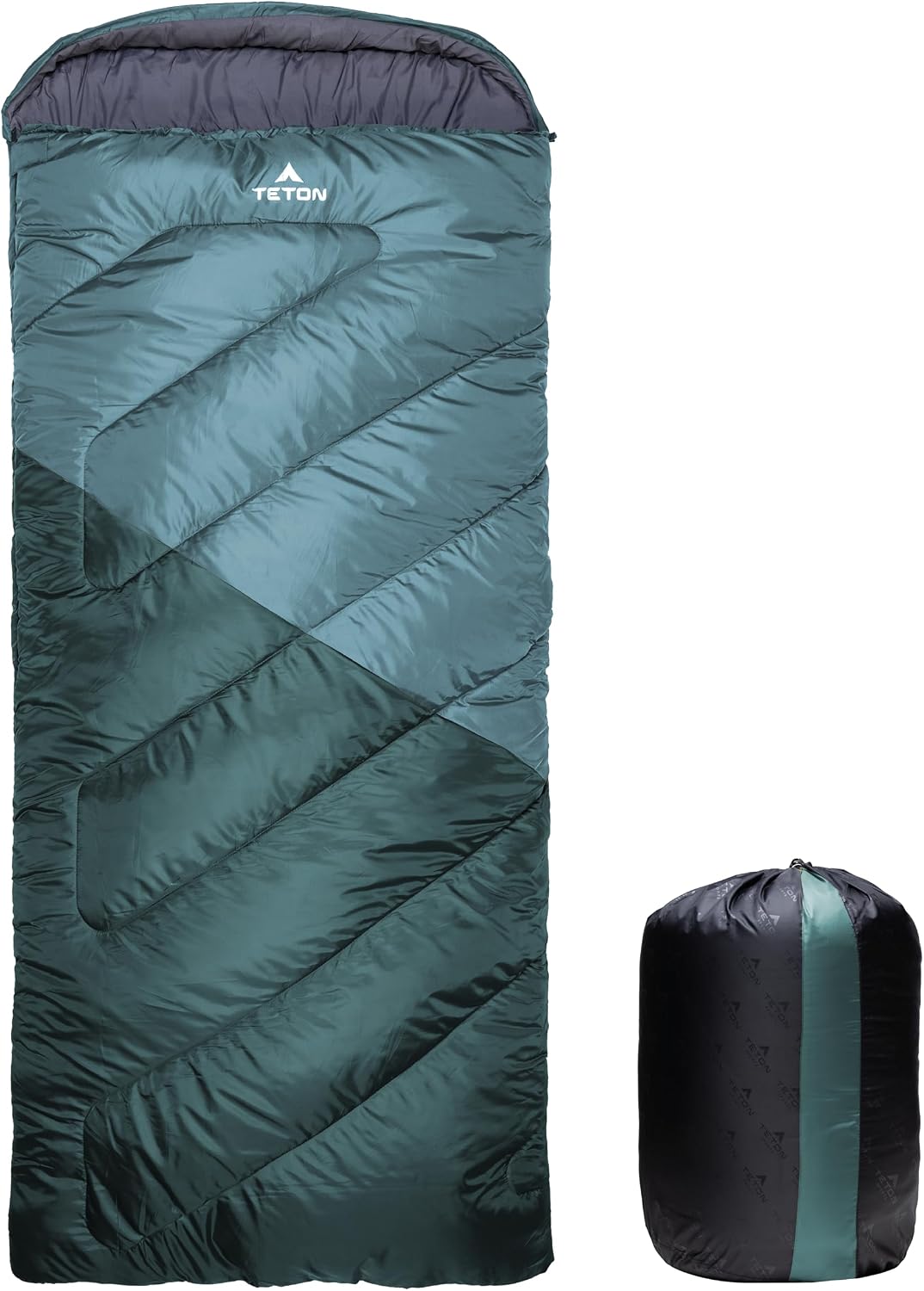
Teton Celsius 25F Sleeping Bag
Flannel-lined bag that keeps kids warm and doesn't fall apart after a wet Oregon weekend.
Why we love it
- Flannel lining beats synthetic slickness on cold nights
- Two-way zippers work with gloves and tired kids
- Unzips flat to blanket when the cabin gets stuffy
Pros
- Soft flannel lining
- Water-resistant taffeta shell
- Draft tubes at shoulders and zipper
- Stuff sack included
- Interior pocket for keys and phone
Cons
- Heavier than ultralight options
- SuperLoft fill needs a quality pad underneath
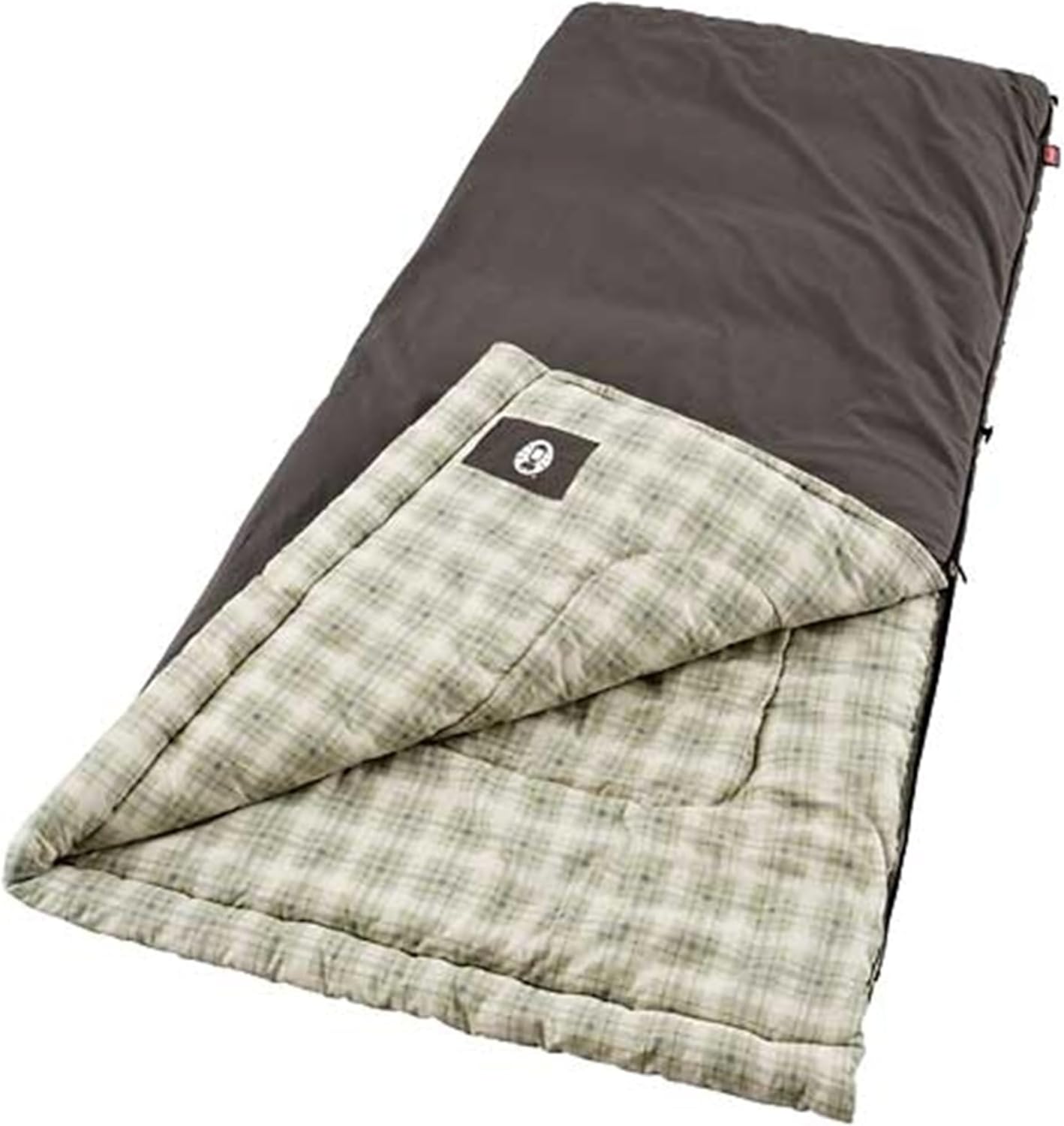
Coleman Heritage Big & Tall 10°F Bag
Roomy XL bag rated to 10°F with flannel comfort; machine washable and built tough for family camping.
Why we love it
- Fits tall adults or two kids bundled close
- Flannel liner beats scratchy nylon on skin
- Machine washable beats campfire smell
Pros
- 5 lbs Holofill insulation traps heat
- Flannel liner instead of cheap nylon
- No-snag zipper holds up to kids
- Machine washable for easy cleanup
- XL size fits adults up to 6'7"
Cons
- Heavy for backpacking trips
- Rectangular cut wastes heat around edges

ZOOOBELIVES 10F Down Sleeping Bag
Hydrophobic down bag that handles Pacific Northwest damp and keeps kids warm on frosty state-park nights without the premium price tag.
Why we love it
- 550-fill down resists moisture on coastal trips
- Roomy mummy cut fits restless sleepers and layers
- Packs to shoebox size, loads easy into the minivan
Pros
- Hydrophobic down fill
- Full-length insulated draft tube
- Contoured mummy hood with face draft collar
- Anatomic 3D foot box
- Two-way anti-snag YKK zipper
- Zips to a matching bag for couples
Cons
- Mummy cut feels snug for side sleepers
- 10F is limit rating, not comfort temperature

QEZER Down Mummy Bag 10F
Lightweight down mummy bag rated to 10F, packs small enough for weekend trips but holds warmth on cold nights.
Why we love it
- 600-fill down compresses to backpack size
- 10F limit rating handles Pacific Northwest cold
- Dual zippers let you zip two bags together
Pros
- 600-fill down insulation
- Compact storage, 3.64 lbs total weight
- Wide trapezoid footbox, comfortable cut
- Dual zippers for pairing with second bag
Cons
- Down loses loft if it gets wet
- 3.64 lbs heavier than ultralight options

ALPS OutdoorZ Redwood -10F Bag
Roomy rectangular bag that keeps kids warm on cold state-park nights and survives being stuffed wet into the minivan.
Why we love it
- Flannel lining feels like a blanket kids actually want to sleep in
- Zips to a second bag for family warmth on frosty nights
- Canvas shell handles wet gear and rough packing without tearing
Pros
- Oversized 38x80 inch cut fits growing kids
- Two-layer TechLoft insulation keeps cold spots away
- Heavy-duty zippers built for real use
- Cotton canvas shell resists wear and tears
Cons
- Heavier than backpacking bags, car-camp only
- Bulk makes it tough to pack tight in tight spaces
What a 10-Degree Rating Actually Means
Best 10-degree sleeping bags sit at a crossroads between three-season comfort and true cold-weather protection. The 10-degree number is not a comfort threshold. It is the limit temperature, the point where the bag stops doing its job. You will be cold at 10 degrees if you rely on the bag alone. That is where most people get burned.
After 14 years of sleeping in bags across the Cascades and the high desert, I have learned the difference between what a hang tag promises and what happens at 2 a.m. when the thermometer drops. These bags handle the shoulder season, late fall hunts, and early spring trips where nights dip below freezing but not into the teens. They work for winter camping if you pair them right.
Temperature Rating vs. Real Warmth
The ISO standard splits temperature into three numbers: comfort, limit, and extreme. A 10-degree limit means the bag will keep you alive at 10 degrees, not comfortable. Comfort for a 10-degree bag sits closer to 20 degrees. Add an insulated pad with an R-value above 3, wear a base layer and a hat, and you move closer to the limit. Skip the pad and you lose 5 to 10 degrees of effective warmth instantly. The ground pulls heat faster than still air.
Down vs. Synthetic at This Rating
Down fill dominates the 10-degree market because it compresses small and lofts high. The ZOOOBELIVES 10 Degree Down Sleeping Bag for Adults uses 550-fill hydrophobic down, which sheds moisture better than standard down and retains loft in damp conditions. Down loses insulation when wet, so a water-repellent treatment matters on the Pacific Northwest coast. Synthetic fill stays warm even soaked, which is why the Teton Celsius Regular appeals to hunters in wet climates. Synthetic is bulkier and heavier at the same rating, but it forgives poor storage and field abuse.
Mummy vs. Rectangular Cut
Mummy bags wrap close to your body and reduce dead air space. A mummy design reaches its 10-degree rating with less insulation and weight than a rectangular bag at the same temperature. The Down Mummy Sleeping Bag for Adults by QEZER packs to 3.64 pounds and compresses to 14.96 by 7.48 inches. Rectangular bags trade efficiency for room. The Coleman Heritage Big and Tall runs 40 by 84 inches and suits side sleepers and people who hate feeling zipped in. Rectangular bags need more insulation to hit the same rating, so they weigh more and pack larger.
Draft Collar and Hood Design
At 10 degrees, a full hood and a draft collar are not optional. The draft collar sits below your chin and blocks cold air from entering when you move. A contoured hood that seals around your face keeps heat from escaping. Bags with adjustable drawcords on both the hood and neck let you tighten the fit as temperatures drop. Cheap bags skip this or make it stiff and uncomfortable. Better bags let you adjust without waking up cold.
Fill Power and Loft Recovery
Fill power is a measure of how much volume one ounce of down occupies. Higher fill power means more insulation in less bulk. A 550-fill bag compresses smaller than a 400-fill bag rated for the same temperature. The ZOOOBELIVES uses 35 ounces of 550-fill down, while the QEZER uses 2.2 pounds of 600-fill down. Both hit a 10-degree limit, but the extra fill power in the QEZER translates to a smaller packed size and less weight.
Down loses loft when compressed for months. A bag stored in a stuff sack in a closet will lose 20 to 30 percent of its loft after a season. Store down bags uncompressed in a mesh bag, hanging or laid flat. Synthetic does not suffer this as much, which is why hunters who pack bags away damp often choose synthetic. After a wet trip, spread the bag in the sun or use low heat in a dryer to restore loft before storing.
Pad Pairing and Heat Loss
The ground is your biggest heat thief. A sleeping pad blocks conductive loss and reflects body heat back. A 10-degree bag paired with a pad rated R-3 will keep you warmer than a 0-degree bag on bare ground. The ZOOOBELIVES specs recommend an insulated sleeping pad to reach the limit temperature. Without one, you lose 5 to 10 degrees of effective warmth. In the Cascades in October, I learned this the hard way. A 20-degree bag on a thin closed-cell pad felt colder than a 10-degree bag on a rigid foam pad.
Mummy bags work best with pads that match their width. A 31-inch mummy bag on a 20-inch pad leaves your sides exposed to cold air. Rectangular bags spread heat across a wider surface, so they work on standard 20-inch pads without much loss. If you already own a pad, measure its width before buying a mummy bag.
A 10-degree rating without a good pad is a false promise. Add R-value and you add real warmth.
Construction Details That Hold Heat
Stitching quality matters. A bag with box baffles or differential cut baffles keeps insulation from shifting and creating cold spots. Cheap bags use simple sewn-through construction, which creates thin lines where insulation is missing. The Coleman Heritage uses FiberLock to prevent shift. The ZOOOBELIVES uses flexible core baffles and an anatomic 3D foot box to reduce heat loss at the feet. Feet lose heat fast because the bag compresses under your weight, so a wider foot box matters.
Zipper draft tubes seal the length of the zipper. A metal zipper without a tube leaks cold air all night. A tube of insulation running the entire length of the slider stops this. Check that the tube is sewn in place, not glued. Glued tubes fail after a few seasons of flexing. The ALPS OutdoorZ Redwood uses heavy-duty #8 zippers with a full draft tube, built for field abuse.
Shell and Lining Materials
The outer shell protects insulation from moisture and abrasion. A 20-denier ripstop nylon is light and durable. A heavier 400-denier nylon or canvas shell resists tears but adds weight. The Coleman uses cotton, which is durable but absorbs moisture. The ALPS OutdoorZ uses 100 percent cotton canvas, which breathes and resists wear but needs to dry completely after a wet trip. Nylon shells dry faster and resist moisture better.
Checking Seams Before Buying
Inspect the seams. Run your finger along the stitching inside and out. Loose threads, gaps, or uneven spacing mean the bag will fail sooner. Look at the foot box. Is it sewn flat or does it have a three-dimensional shape? A flat foot box compresses under your weight and loses insulation. A 3D foot box stays lofted even under pressure. Open the bag fully and check that the lining is smooth with no bunching or loose fabric inside.
When to Use a 10-Degree Bag
A 10-degree bag is built for late fall, winter, and early spring trips where nights drop below 20 degrees but you have shelter and a pad. Car camping in November or December works well. Backpacking in the high desert in October or May works. Hunting trips in late season fit this bag. A 10-degree bag is not a summer bag and not an expedition bag. Use it where you know the forecast and can plan for cold.
If you camp year-round in the Pacific Northwest, a 10-degree bag covers 60 percent of your nights. The other 40 percent are either too warm (June through August) or too cold (deep winter above 8,000 feet). Buy a 10-degree bag if cold-weather camping is your main season. Buy a 20-degree bag if you split time between shoulder season and summer.
Solo vs. Couples
Some of these bags zip together. The ZOOOBELIVES and the QEZER both offer left and right zipper options. Two bags zipped together create a double bag with shared warmth and no cold seam down the middle. This works for couples who camp together. Two separate bags give you flexibility. You can lend one to a friend or use them on separate trips. Zipping bags together works only if both bags have compatible zippers and the same length.
Two 10-degree bags zipped together sleep warmer than one 0-degree bag, and you keep flexibility for solo trips.
Washing and Storage Matters
Down bags need gentle care. Hand wash in cool water with a down-specific soap. Machine washing on delicate works if you use a large commercial machine. Rinse until the water runs clear. Dry on low heat in a large dryer with wool dryer balls to fluff the down. Never dry clean a down bag. The solvents strip the water-repellent coating. Synthetic bags are more forgiving. Most can go in the washing machine on gentle. Air dry or use low heat. Always check the care tag.
Store bags uncompressed. A stuff sack is for travel, not storage. Hang the bag in a mesh storage sack or lay it flat in a closet. Compression for months kills loft. If you must store compressed, use a large breathable sack and refresh the loft before the next trip. Store in a cool, dry place away from direct sun. Down stored damp will mildew. Synthetic stored damp will smell but won’t mildew.
Restoring Loft After Compression
After a season in a stuff sack, down will look flat. Spread the bag in the sun for a few hours or tumble it in a dryer on low heat for 10 to 15 minutes. The down will re-loft. Do this before storing for the off-season. A bag that looks flat will sleep colder than its rating suggests.
Field Repairs
A small tear in the shell or lining can be patched with a stick-on repair patch. Carry a patch kit on trips. A torn baffle is harder to fix in the field. If down escapes, try to contain it with duct tape on the outside. A torn zipper slider can be replaced with a universal slider kit. These fixes are temporary. Plan to send the bag to the manufacturer for proper repair after the trip.
Tips
- Fluff your bag before bed. Shake it out and let it sit for 10 minutes after unpacking. Down needs time to re-loft and trap air. A compressed bag sleeps 5 to 10 degrees colder than its rating.
- Wear a hat to bed. You lose 40 percent of your body heat through your head. A wool beanie keeps warmth in. Your bag’s hood covers the back of your head, but a hat covers the top and sides.
- Use a sleeping pad with an R-value above 3. The pad matters as much as the bag at this temperature. A thin closed-cell pad is better than no pad, but a foam or inflatable pad with R-value 3 or higher is ideal.
- Keep moisture out of the bag. Wet insulation loses insulation value. Change out of damp clothes before getting in. Dry your sleeping pad if it is wet. Hang the bag in the sun during the day to let any condensation evaporate.
- Store uncompressed in the off-season. A mesh storage sack in a closet is better than a stuff sack. Compression for months damages the insulation structure and kills loft.
- Test the fit at home before a trip. Zip the bag fully and lie in it for 10 minutes. Check that the hood seals around your face without gaps. Make sure you can move your legs without the bag binding at the foot.
Common Questions
Does a 10-degree rating mean I will be comfortable at 10 degrees?
No. A 10-degree limit is the survival threshold, not comfort. Comfort for a 10-degree bag is closer to 20 degrees. At 10 degrees, you will be cold and need layers, a hat, and a good pad to stay safe.
Can I use a 10-degree bag in summer?
You will overheat. Open the bag fully as a blanket or leave it in the car. A 10-degree bag is designed for cold weather. Buy a 40 or 50-degree bag for summer camping, or use a liner with your 10-degree bag in warm months.
How long does a 10-degree bag last?
With proper care, a down bag lasts 10 to 15 years. Synthetic lasts 5 to 8 years. Life depends on storage, washing, and use. A bag stored damp or compressed constantly will fail sooner. A bag stored dry and uncompressed will last longer.
What should I wear inside a 10-degree bag?
Base layers and a hat. Long underwear, a fleece or wool mid-layer, and socks keep you warm. Sleep in a clean, dry set. Damp clothes cool you down fast. If you are still cold, wear a down jacket zipped over your torso inside the bag.
Do I need a liner for a 10-degree bag?
A liner adds 5 to 10 degrees of warmth and keeps the bag cleaner. It is useful if you camp frequently or if you want to extend the bag into colder weather. A silk liner is lightweight and packs small. A fleece liner adds more warmth but weighs more.
Can I wash a 10-degree bag at home?
Down bags can be hand washed or machine washed on delicate in cool water. Synthetic bags usually tolerate machine washing on gentle. Always use a down-specific or gentle soap. Air dry or use low heat. Never dry clean a down bag. Check the care tag for specific instructions.


Write Your Review
No reviews yet. Be the first to share your experience!