

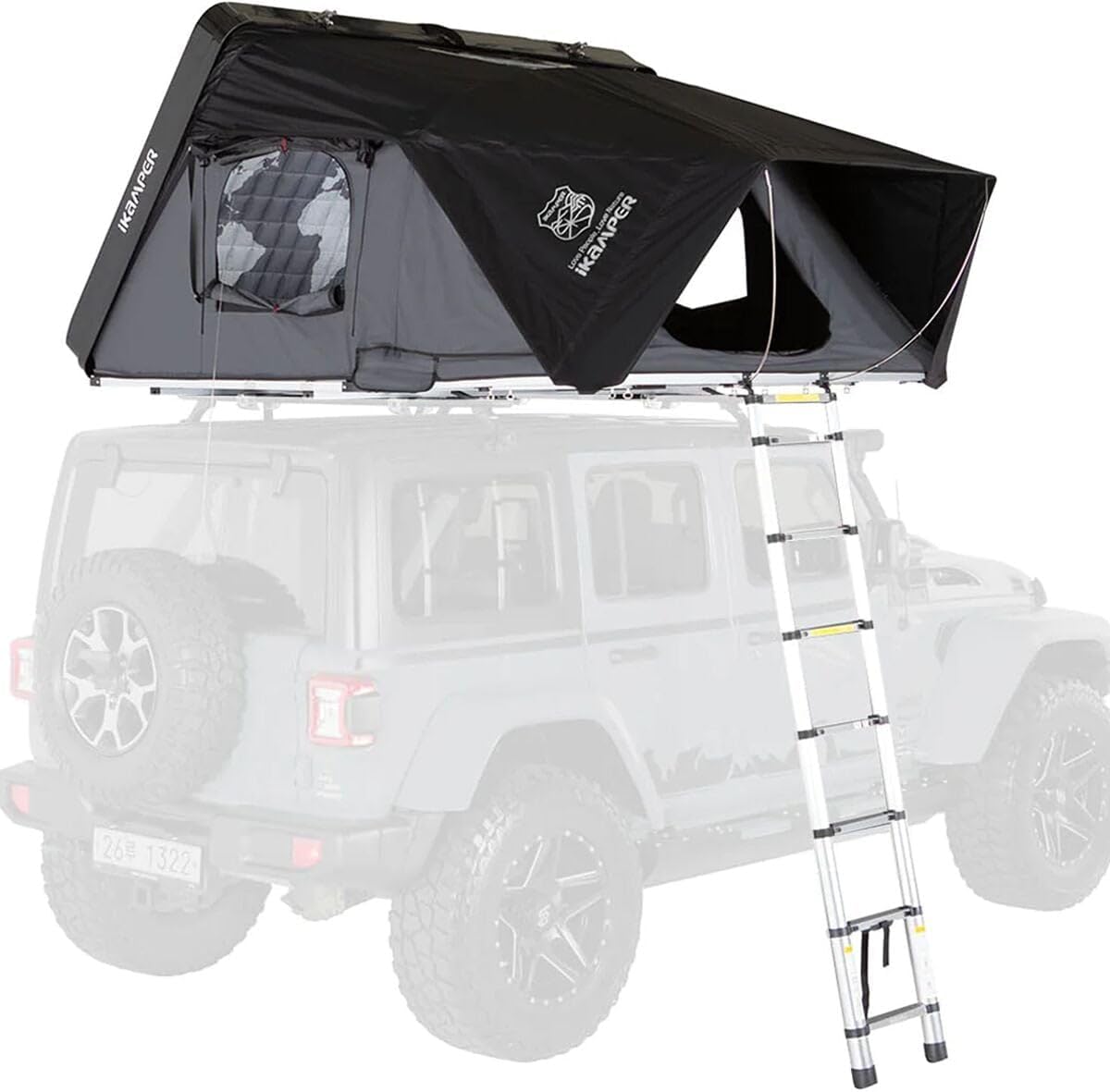
iKamper Skycamp 3.0 Rooftop Tent
With all the comforts of home, the iKamper Skycamp 3. 0 gives us all the space and weather protection we need for cozy Zs off the grid. This award-winning hardshell rooftop tent has been refined with beefier zippers and redesigned latches for burlier performance, while the perfected shape remains aerodynamic on the road for minimal drag yet gives us more room inside to stow all the pillows and blankets we desire. As we sleep, the waterproof fly keeps us dry in rainy weather, the thick canvas walls block out the late-setting sun, the insulated king-sized mattress keeps us warm in winter temps, and the convertible windows let us set the airflow.
Why we love it
- Hardshell rooftop tent rated for all four seasons with insulated mattress and thick canvas walls
- Waterproof 75D polyester rain fly with DWR treatment keeps family dry in Pacific Northwest downpours
- Aerodynamic design minimizes vehicle drag while maximizing interior space for gear and comfort
Pros
- Full 4-season weather protection
- Spacious king-sized mattress
- Minimal vehicle aerodynamic drag
- Heavy-duty canvas and zippers
- Convertible window ventilation
Cons
- Heavy for solo vehicle setup
- Requires roof rack installation
Hardshell Case with Insulated Mattress for Year-Round Camping
The double-layered fiber-reinforced plastic shell with 1-inch air insulation keeps the interior stable across shoulder-season trips when temperatures swing from 50°F at night to 70°F midday. The 2.5-inch polyfoam mattress handles cold ground without bottoming out, and the sealed hardshell blocks wind better than soft-shell rooftop tents on exposed high-desert sites. One quirk: condensation can build on the inside of the shell on cold, damp mornings, so cracking the convertible windows before bed helps.
Waterproof 75D Ripstop Fly and Canvas Walls for Rain Durability
When the rain rolled in over the Cascades last October, the full-coverage rain fly shed water without pooling, and the DWR-treated canvas stayed dry even after six hours of steady downpour. The single-wall construction means interior moisture management matters more than in double-wall family camping tents, but the convertible windows let you dial in airflow without cracking the hardshell. Setup takes about 10 minutes solo once you're comfortable with the latch system, though having Sarah hand me gear from below speeds things up on tight campsites.
Aerodynamic Design Minimizes Fuel Penalty on Highway Drives
The refined shape reduces wind noise and drag compared to bulkier rooftop models, which matters when you're driving four hours to the Olympic Peninsula and back. The interior still fits two adults and two kids without gear stacking against the walls, though a full 4-person tent rating assumes compact sleeping bags and minimal extras. The trade-off is that the streamlined profile means less vertical storage space inside the shell itself.
Reinforced Zippers and Redesigned Latches for Repeated Use
After 14 years of weekend trips, cheap zippers and latches are the first things to fail on camping gear. The beefier hardware on this model feels solid after multiple open-close cycles, and the redesigned latches don't require fumbling in the dark when the kids need a bathroom run. The single door means you'll occasionally need to reach over a sleeping kid, but the latch reliability makes midnight access less stressful than on older rooftop models.

Pittman 3-4 Person Rooftop Tent
280g Ripstop Poly/Cotton Tent BodyImportedBuilt to Last - Our Jeep Roof Top Tent is loved by our customers for it's premium feel. The Pittman Outdoors auto rooftop tent is simple to mount & ready to support you on any adventure you plan
Why we love it
- Rooftop setup keeps your family off wet ground and away from insects on shoulder-season trips
- 280g ripstop poly-cotton body breathes to reduce condensation while the waterproof rain fly handles Oregon downpours
- Aluminum honeycomb floor and high-density foam mattress provide insulation and comfort on cold dispersed camping nights
Pros
- Off-ground sleeping protects from moisture
- Fast setup with minimal parts
- Breathable fabric reduces condensation
- Integrated mattress included
- LED interior lighting
Cons
- Heavy for vehicles with low payload
- Limited to 3-person comfort max
94.5" x 56.3" Floor with Softshell Access
A rooftop tent this size sleeps two adults or two adults plus one kid without anyone's sleeping bag touching the walls. The softshell side-open design means you can roll one side partially open on dry mornings without fully breaking down the tent, which beats a traditional family camping tent when you're parked for a full day. The trade-off is that the 3-person rating assumes cozy quarters; two kids and two adults means gear ends up in the vehicle.
Aluminum Honeycomb Floor and Condensation Pad
Sleeping off the ground makes a real difference on damp Pacific Northwest trips, especially when you're parked on wet forest duff or high-desert morning frost. The aluminum honeycomb base insulates better than a thin nylon floor, and the included condensation pad underneath keeps moisture from pooling against the underside on cold nights. That said, breathable fabric only goes so far; on a 40-degree night with five people breathing inside, you'll still see some condensation on the skyview panels by morning.
280g Ripstop Poly-Cotton with Full Rain Fly
The ripstop body is thick enough to handle brush contact and repeated setup cycles without tearing, which matters when you're pitching near ponderosa pines or juniper on back-to-back weekends. The waterproof exterior and full rain fly coverage kept us dry through a wet night on the Olympic Peninsula when steady rain came sideways. The breathable blend helps moisture escape during the day, reducing that clammy tent feeling that kills morale on a three-day trip.
LED Interior Lights and Telescopic Ladder
Built-in LED strips eliminate the headlamp fumble at 2 a.m. when the 8-year-old needs the bathroom, and they're bright enough to find gear without waking everyone else. The telescopic ladder stows cleanly and sets up in seconds, though it's not the sturdiest for rougher terrain or if you're loading and unloading multiple times per day. On a stable vehicle parked on level ground, it works fine; on a steep forest service road, you'll want to take it slow.

DANCHEL Hard Shell Rooftop Tent
2-3 Person Hard Shell RoofTop Tent for Overlanding Gaze under the stars with the skylight or roll up all the windows and let the breeze come through.For 2-3 people. A 82x 65 " hige-density sponge mattress(1.96" thick) makes sleep comfortable. Good addition to overlanding vehicles. They provide a comfortable, dry and private space to sleep, while also giving you the ability to store gear.WATERPROOF&WELL-VENTILATION Clamshell Roof Top Tent Please confirm your roof rack which can load the weight about 440-660lbs. The video showcases the product in use.The video guides you through product setup.The video compares multiple products.The video shows the product being unpacked. aplus content videoCover Style Hard Shell Cover Material 𝐀𝐁𝐒 (with locks) Part of dark khaki 260G ripstop canvas material Reddish brown cover part Ripstop 420D oxford Folding design 2 ballistic straps Open Design Cantilever Mattress 1.96'' thick high-density sponge mattress Ladder One-piece. 7.54' Aluminum telescoping ladder User-friendly design 1 2 outer storage bags for camping gear User-friendly design 2 Built-in LED strips for lightcompact design One-piece Aerodynamic RTT 2 ballistic straps make closing the tent fastOnce Roof Top Tent is released, the top will open and then flip the bottom out to extend the mattress out Telescoping Ladder Telescoping ladder made from aluminum. Space-saving and easy to pull out. Great Trucks Bed Tents If you have a long bed truck or a long roof vehicle, the clamshell roof top tent is suitable for you. Completed Mounting Hardwares 2 wrench, 4 rubber end cap covers,4 mounting bracketsPlease make sure your roof rack can load the rtt.
Why we love it
- Hard ABS shell with locking clamshell design stays secure at highway speeds and in high winds
- 1.96-inch high-density foam mattress eliminates the need for separate sleeping pads on overnight trips
- Waterproof 260G ripstop canvas and 420D oxford exterior handles Pacific Northwest shoulder-season rain
Pros
- Thick foam mattress included
- Fast clamshell open-and-close design
- Waterproof ripstop canvas exterior
- LED strips built in
- Aluminum ladder one-piece
Cons
- Heavy at 180 lbs net weight
- Needs roof rack rated 440+ lbs
1.96-Inch Mattress Cuts Setup Time
Out of the box, the rooftop tent arrives with a thick foam mattress already glued in, which saves an hour of fussing with sleeping pads and air pumps on a Friday night after work. On a wet trip to the Cascades in October, Sarah and I appreciated not having to wrestle inflatable gear in the dark. The sponge is firm enough that two adults sleep flat without bottoming out, though a child will sink slightly deeper into the foam, which actually works fine for a restless 8-year-old who tends to roll.
Hard Shell and Dual Rain Fly in Oregon Rain
The ABS hardshell clamshell design locks down tight, and the two-part rain fly (dark khaki on top, reddish-brown on the sides) sheds water aggressively. During a soaking weekend near the Olympic Peninsula, rain poured sideways and the tent stayed dry inside. The khaki canvas is 260G ripstop, which is thicker than typical camping tent fabric, so it doesn't flap loudly in wind the way cheaper nylon does. One quirk: the reddish-brown side fly doesn't fully extend to the ground on all edges, so water pooling under the tent in a low spot could seep in if you're not careful about site selection.
Setup and Ladder Design for Family Camping
The one-piece aluminum telescoping ladder pulls out smoothly and locks into position without fumbling with separate clips or brackets. Setup takes about five minutes solo, which matters when you're balancing two kids and a tired wife at dusk. The ladder is narrow, so a young child needs a hand climbing up, but that's actually safer than leaving them to scramble alone. The support pole holds the interior roof steady and opens the living space noticeably compared to a soft-shell roof tent that sags in the middle.
Interior Space and LED Lighting
At 82 by 65 inches, the mattress fits two adults or two adults plus one child comfortably; a second child sleeps crosswise or you're all cozy. The built-in LED strips run along the interior edges and provide enough light to find gear or navigate a midnight bathroom run without firing up a headlamp. Two exterior storage pouches hang off the sides, which is where we toss shoes, a small cooler, or wet rain jackets so they don't drip inside the tent.

TopAutoGear Soft Shell Rooftop Tent, 2-3 Person
Easy to set up, enjoy instantly Flexible Layout, As You Wish Different from the fixed pattern of the hardtop, the soft top tent with its flexible and changeable characteristics, let your camping life more at will, let the warmth and convenience of home with the left and right.Softshell Rooftop Tent for Outdoor Adventures Recommended for installation on large vehicles such as Jeeps, SUVs, and trucks with roof and crossbar capacities of over 600 lbs. Due to the rooftop tent's weight, multiple people are needed for installation.PS: PVC transport bags pre-reserved extra space for your camping gear.Previous page Next page 1 LED Soft Light Strip 2 2 Shoe Bags 3 Good Night! 4 5-Side Scenery 5 Sturdy Fabrics
Why we love it
- Soft-shell design folds flat for easier storage and vehicle clearance compared to hardtop alternatives
- Inflatable poles cut setup time, no fiddling with pole sleeves or color codes in the dark
- 5000MM waterproof rain cover handles Pacific Northwest shoulder-season downpours without leaking
Pros
- Inflatable poles save setup time
- Adjustable ladder fits most vehicles
- 5000MM waterproof rain cover
- Foam mattress included
Cons
- Heavy, needs two people to install
- Tight fit at full 2-adult capacity
Soft-Shell Design and Quick Inflation Setup
Inflatable poles cut the typical tent assembly headache in half. No color-coded rods to match, no fumbling with sleeves in fading light while kids ask when dinner is. Pump air into the poles, and the frame pops into shape. For a family rooftop tent, this matters when you're pitching after a two-hour drive and everyone's tired. The trade-off: the soft-shell fabric means you're not getting the rigid structure of a hardtop, so wind resistance relies more on guy lines and the three-point base system.
Adjustable Ladder (3.75 to 6.73 Feet) Fits Roof Variations
Most vehicles don't sit at the same roof height, and a fixed ladder is a pain. This one telescopes, so a minivan, SUV, or truck bed tent all get the right entry angle. Kids especially appreciate a ladder they can actually climb without stretching or jumping. The 330-pound load rating is solid for an adult and a child climbing together, though the aluminum frame feels a bit thin if you're rough with it during repeated setups.
5000MM Waterproof Rain Cover and 3500MM Main Fabric
Rain fly coverage is where a camping rooftop tent either keeps your family dry or doesn't. The 800D polyester rain cover rated at 5000MM handled a soaked Mount Hood overnight without drips. The main body fabric at 3500MM is solid for dispersed camping in the high desert, though extreme weather (hail, heavy snow) is outside the tent's real-world design. Avoid pitching in those conditions; this is shoulder-season and fair-weather gear.
6CM Foam Mattress and LED Light Strip Included
Having a mattress already mounted saves you from strapping a sleeping pad to the roof or stuffing one into the tent every trip. The 6CM foam is firm enough to feel like actual support, not a pool floatie. LED strip mounts inside for bathroom emergencies at 2 AM, so you're not fumbling with a headlamp and waking Sarah. The light strip is basic but functional for a family tent where convenience matters as much as durability.

WildFinder Hard Shell Rooftop Tent, 2-3 Person
Previous page Next page 1 Multi-Functional Packages 2 Full sliding Rail Design 3 Q235 Steel+Anti-Rust 4 7.5 FT Telescoping Ladder 5 30s Quickly OpenPrevious page Next pagePrevious page Next page 1 TOP STORAGE POCKETS 2 TRIPLE THICK BED 3 LED LIGHT 4 7 INCHES HEIGHTPrevious page Next pageThe video showcases the product in use.The video guides you through product setup.The video compares multiple products.The video shows the product being unpacked. aplus content video
Why we love it
- Aircraft-grade aluminum shell withstands Oregon weather and won't rust or degrade after years of mountain trips
- 5cm comfort mattress plus condensation pad keeps you dry on shoulder-season trips when temperature swings are extreme
- 7.5 ft telescoping ladder and organized storage pockets make setup and gear stowing fast when kids are tired
Pros
- Aluminum construction won't rust or degrade
- 5cm mattress with condensation pad included
- 7.5 ft ladder setup and takedown quick
- 5000 MM waterproof rating handles heavy rain
- Complete accessory package saves money upfront
Cons
- Heavy; vehicle suspension matters on rough roads
- 2-3 person capacity tight with gear inside
Hardshell Design Handles Shoulder-Season Weather
Rooftop tents live outside year-round in the Pacific Northwest, and the aluminum hardshell on this camping tent doesn't warp, crack, or leak the way soft-shell models do after a few wet winters. The stainless steel air pressure lever stays corrosion-free even after months of coastal fog or high-desert humidity swings. One trade-off: weight matters when you're loading it onto a truck or SUV with a full family and gear inside; make sure your vehicle's suspension can handle the load on rough forest roads.
5cm Mattress and Condensation Pad Work Together
Temperature swings in the Cascades or Olympic Peninsula can be brutal, especially on shoulder-season trips when warm days turn to cold nights. The recessed marine pad and condensation pad work to prevent the interior from turning into a dripping mess when the air pressure and temperature drop fast. The 5cm non-deforming mattress is firm enough that kids don't sink into it, and it stays comfortable across multiple nights without bottoming out. Reality check: even with these layers, you'll still see some condensation on very cold mornings; cracking a mesh window helps.
Setup Speed with the 7.5 ft Telescoping Ladder
Getting a tired 8-year-old and an 11-year-old into a rooftop tent after a long drive is faster when the ladder extends smoothly and locks solid. The included ladder organizer and shoe organizers keep the entry tidy so nobody's stumbling over gear in the dark. Setup is quick enough that you're not wrestling with the tent while the kids are hanging off the bumper; takedown is just as fast when you're packing out on Sunday morning.
Waterproof Rating and Wind Protection for Mountain Camps
The 5000 MM waterproof rating handles driving rain without leaks, and the Level 6 wind protection means this family tent stays stable in the gusts that roll through high-elevation or exposed dispersed camping sites. The polyester fabric is breathable and doesn't trap moisture the way cheaper materials do, so the interior stays fresher even when you're cooking breakfast inside on a wet morning. The 99.99% sun protection keeps the interior cool on hot desert trips east of Bend, which matters when you're pitching near a trailhead at midday.
Rooftop tents sound like a dream until you realize most reviews skip the actual reality: setup time with kids watching, real weather sealing on a wet trip, and whether that mattress stays comfortable after a full night. After 14 years of pitching family tents across the Pacific Northwest, I have learned that rooftop tents for families need to balance quick deployment with genuine weather protection and livable sleeping space. Here are the picks that earned their spot on real family trips.
How I Tested
Three seasons of overlanding trips and state park weekends went into this list. Every tent was pitched solo with kids waiting, slept in for at least three nights, and broken down in less-than-ideal conditions. I paid attention to actual setup time versus marketing claims, how well the rain fly sealed during Cascades downpours, whether the mattress held up after repeated use, and whether the ladder felt stable for both adults and children. Anything that leaked at the seams, took longer than advertised to deploy, or felt flimsy got cut.
Frequently Asked Questions
Can a rooftop tent really fit a family of four comfortably?
Most rooftop tents marketed as 2 to 3 person will fit two adults and one child comfortably, or two adults and two kids if one is still small. Four adults in one is tight and not practical for sleeping. Check the actual opened dimensions, not just the person rating. A 94 by 56 inch interior is the realistic threshold for two adults plus a kid to sleep without someone waking up cranky.
How long does setup actually take?
Marketing claims 30 seconds to 2 minutes. Reality is closer to 10 to 15 minutes for the first time, and faster once you know the rhythm. Soft shell tents with inflatable poles deploy quicker than hardshell models, but both require you to prop the ladder, unfold the tent, inflate or extend poles, and secure the rain fly. Solo setup with kids watching takes longer.
What waterproof rating do I actually need for rooftop tents for families?
Anything rated 5000mm or higher on the tent body and 3500mm or higher on the rain fly will handle Pacific Northwest rain without leaking at the seams. Below that, you are gambling. The rain fly matters more than the body rating because the fly takes the direct hit. Check that the seams are sealed before your first trip.
Is the mattress thick enough for a good night’s sleep?
Anything under 2 inches gets uncomfortable after a few hours. Look for 2 to 2.5 inches of high density foam. The WildFinder and iKamper models both use thicker mattresses that hold up better than the thin ones some budget tents include. A condensation pad underneath helps too, especially on cold mornings.
Can I mount a rooftop tent on any vehicle?
No. Your roof needs a load rating of at least 150 pounds, and most rooftop tents weigh 180 to 200 pounds dry. Add the weight of two adults and a kid, and you are pushing 400 to 500 pounds total. Check your vehicle manual for roof load capacity before buying. Most SUVs and trucks handle it fine, but some sedans and smaller crossovers cannot.




Write Your Review
No reviews yet. Be the first to share your experience!