

Camping with dogs changes everything about tent setup. You need floor space for a dog bed or crate, ventilation that does not let them overheat, and a rain fly that actually keeps mud and wet fur from turning your sleeping area into a swamp. After 14 years of family trips and several seasons pitching tents with our dog along, I know which camping tents with dogs actually work for that extra living thing in your shelter.
Our Top Picks
These are the ones that earned a spot after real trips with kids and a dog sharing the floor space. Each one has the room, ventilation, and weather protection that makes a difference when you have four legs and fur involved.

North Face Wawona 6 Tent
Easy set up Color-coded poles and trims make setup simpleMassive interior height Stand comfortably or sit in chairs insideIntegrated storage Internal organization pockets keep essentials at handPremium built Hybrid double-wall construction and a large mesh front door
Why we love it
- Standing-height interior fits the whole family comfortably, even on rainy days when everyone's stuck inside
- Hybrid double-wall construction sheds Pacific Northwest rain without the condensation mess of a fully sealed tent
- Dual vestibules give you room to stash wet gear, muddy boots, and backpacks without cramping the sleeping area
Pros
- Standing-height peak
- Dual vestibules
- Hybrid double-wall
- Color-coded setup
- Freestanding design
Cons
- Heavy for backpacking
- Pricey for weekenders
- Tight at full capacity
Standing-Height Interior and Real 6-Person Fit
At 7.5 feet tall at the peak, you can actually stand up straight inside this family camping tent without ducking. That matters when you're dealing with an 8-year-old who needs to change into dry clothes, or when Sarah's organizing the kids' sleeping bags while rain hammers the fly outside. The floor is 60 square feet, which sounds roomy on paper but gets tighter once you fit two sleeping pads, a cot for the kids, and a couple of duffel bags. Rated for six, it sleeps four comfortably with gear; five if everyone's okay with shoulders touching.
Hybrid Double-Wall and Shoulder-Season Rain
The hybrid construction uses a full mesh ceiling with a partial fly on top, which sounds risky in a downpour but actually works. Last October on the Olympic Peninsula, rain came sideways for eight hours and the interior stayed dry. The mesh breathes enough that you don't wake up to a puddle of condensation on the floor like you would in a fully sealed tent. The fly covers the front vestibule completely and extends down the sides, but the rear half of the tent relies on the mesh-to-fly seal. In heavy, wet snow, you'd want to monitor that, but for typical Oregon rain, the design keeps moisture out while letting humidity escape.
Dual Vestibules and Gear Storage
Two vestibules mean the front one holds muddy boots and wet rain jackets while the rear one gives you extra space for backpacks or the cooler. On a recent trip to the high desert east of Bend, the front vestibule was deep enough to keep the morning sun off the tent face, which helped on those cold-start mornings. The trade-off is that neither vestibule is huge; a full-size cooler doesn't fit inside, so you're still managing gear outside during a downpour. For a 6-person tent, the vestibule design is practical without being oversized.
Setup Speed and Freestanding Design
Color-coded poles and clips make assembly straightforward. Solo, you're looking at about 10 minutes from bag to standing tent; with Sarah's help, closer to 5. The hub system feels solid and doesn't rattle once everything's tensioned. Since it's freestanding, you can pitch it anywhere without relying on stakes, which saved us on a rocky dispersed site near Mount Hood where the ground was too hard to drive stakes deep. You still want to stake it down in wind, but the option to set up first and adjust later is a real convenience with two kids and a full pack.

Big Agnes Copper Spur HV UL 3-Person Ultralight
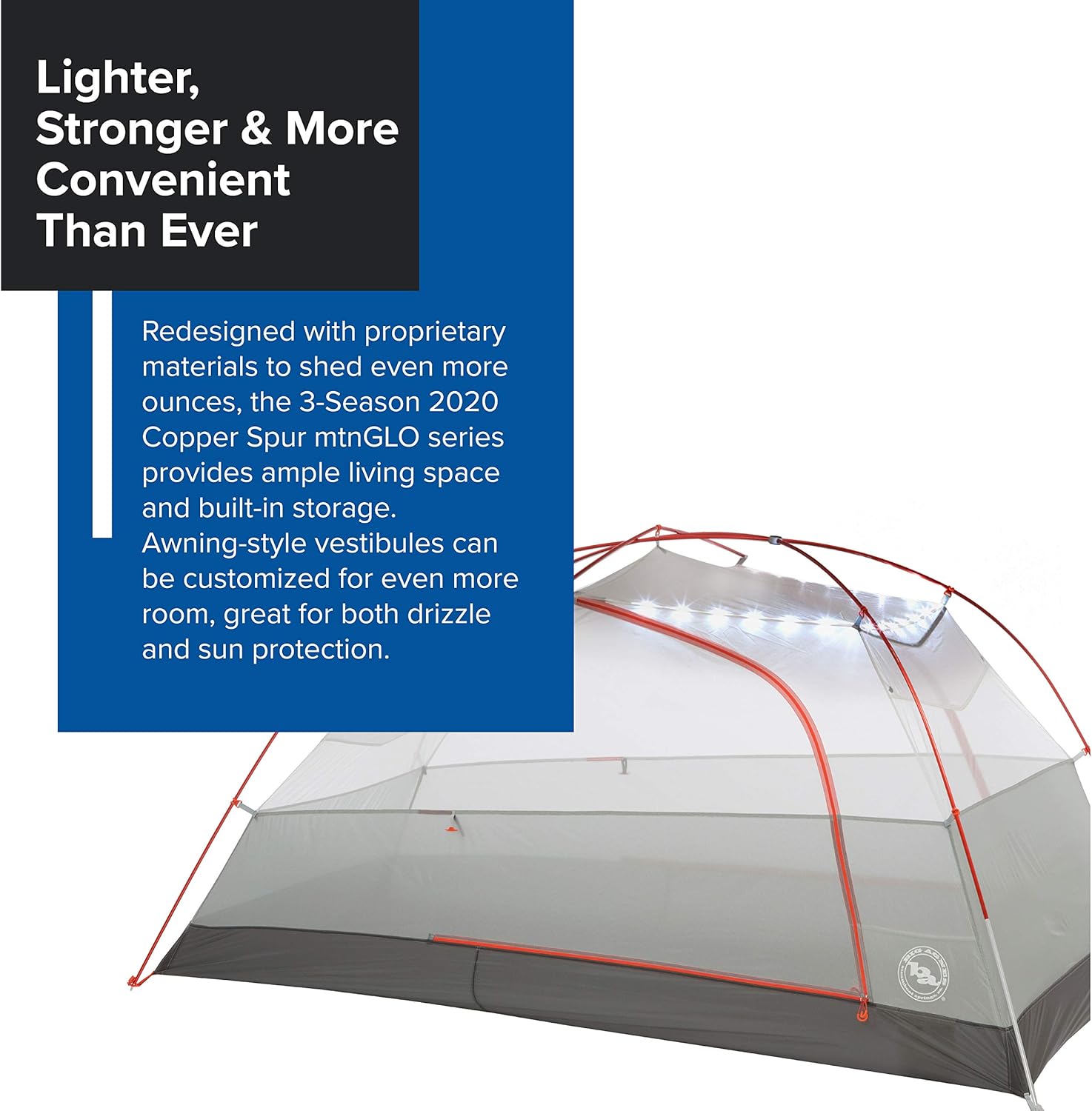
Already one of our most-popular, full-featured, ultralight backpacking tents, the Copper Spur HV UL series just got better. Redesigned with new features inside and out, using proprietary materials that are lighter, stronger, and equipped with hardware that makes set-up even easier. The high volume design provides ample living space in this freestanding structure. Traditional, media, and 3D bin pockets help to organize your gear without cramping your sleep space or capacity to sit up inside. Awning-style vestibules can be customized to expand living space, great for both drizzle and sun protection. Your ultimate UL home away from home.Quick Stash door-keeper makes stowing unzipped doors quick and easy. Pre-bent span pole with 4-way hub design increases strength, stability, and shedding. Stake out the vestibule awnings for extra shade, easy access, and even more room.Copper Spur HV UL Copper Spur HV UL mtnGLO Copper Spur HV UL Footprint Gear Loft Buying Options Buying Options Buying Options Buying Options Customer Reviews — 4.7 out of 5 stars 351 — — Campsite Essentials Take shelter. Take shelter & leave a light on. Protect your tent floor. Stash more of your stuff.
Why we love it
- Freestanding design pitches anywhere without stakes or trekking poles
- Dual doors and vestibules minimize rain intrusion during shoulder-season storms
- High-volume hub and pre-bent poles shed water and snow while maximizing interior space
Pros
- Freestanding dome pitches solo easily
- Dual vestibules handle wet gear well
- Two doors for bathroom access
- Lightweight for backpacking trips
- Built-in LED light system included
Cons
- Heavy for true ultralight solo backpacking
- Footprint sold separately, adds cost
Dual Doors and Vestibules for Wet Oregon Conditions
Rain rolls in fast on the Olympic Peninsula, and having two separate doors means Sarah and I aren't doing the awkward tent-entry shuffle at 6 a.m. with the kids still asleep. The awning-style vestibules are generously sized, enough to stash muddy boots, wet rain jackets, and a backpack without crowding the sleeping area. On a soaked shoulder-season trip last October, the camping tent's double-zipper design kept wind-driven rain out of the living space entirely.
One quirk: the vestibule awnings need to be staked out to really expand the covered space. Without stakes, they're functional but not as protective in heavy downpours. Still, for family camping, having two exits is a game-changer when someone needs the bathroom at 3 a.m.
Freestanding Dome Design Pitches Anywhere
This 3-person tent doesn't require trekking poles or ground anchors to stand upright, which matters on dispersed camping trips in the high desert east of Bend where the ground is rocky and stake placement is a guessing game. The pre-bent span pole with the 4-way hub design creates a rigid frame that handles wind without flex or flutter. Pitched it solo in a breezy Cascades meadow and the structure felt rock-solid even without all stakes driven.
The trade-off is weight. At this capacity and feature set, it's not a true ultralight option for solo backpacking, but for weekend family trips where the car is nearby, the stability is worth it.
Interior Storage and mtnGLO LED System
The 3D mezzanine pocket at the foot of the tent keeps sleeping bags and jackets off the floor, and the overhead ceiling pocket holds phones, headlamps, and snacks without creating dead space. The built-in LED light system is genuinely useful: no more fumbling for a headlamp to find a lost sock or check the time at night. Three AAA batteries power it, and it's bright enough to read by without waking everyone else.
Setup is straightforward with the color-coded poles and TipLok buckles, though the first assembly took a few minutes to understand the keyed pole-tip locking system. After that, pitching is quick and intuitive.

Ultralight Fabric and Rain Fly Coverage
The proprietary double ripstop nylon resists punctures from pine needles and rocky ground without the weight penalty of heavier fabrics. After multiple trips, the floor and fly show no tears or wear spots, even with two kids and full gear loads. The rain fly covers the tent completely, including the vestibule areas, which is critical in Pacific Northwest downpours.
One note: a footprint is sold separately and highly recommended, especially on rocky or sharp-stick terrain. Without it, the floor is vulnerable to puncture damage over time.


Coleman Skydome 4/6/8 Person Tent, Screened Porch
The video showcases the product in use.The video guides you through product setup.The video compares multiple products.The video shows the product being unpacked. Coleman Skydome Camping TentPrevious page Next pagePrevious page Next page 1 WeatherTec System 2 Dark Room Technology 3 Screen Room FeaturePrevious page Next pagePrevious page Next page
Why we love it
- Sets up in under 5 minutes with pre-attached poles, no assembly needed
- Nearly vertical walls give 20% more headroom than traditional dome tents for comfortable standing room
- 8x3.5 ft screened porch doubles as extra sleeping space, gear storage, or lounging area
Pros
- Vertical walls maximize headroom
- Screened porch adds flexibility
- Fast setup with pre-attached poles
- Solid rain protection system
- Wide door for easy gear loading
Cons
- Heavy for backpacking trips
- Screen porch not insulated
Vertical Walls and Peak Height for Real Headroom
At 8 x 10.5 feet with nearly vertical sidewalls, this family camping tent actually lets you stand upright without ducking. That 20% headroom gain over traditional domes sounds like marketing until you're changing clothes on a rainy morning or an 11-year-old needs to get dressed without crawling. Peak height lets both kids move around without bumping the ceiling, which matters when someone needs the bathroom at 2 a.m. in the dark.
Screened Porch as Gear Staging Area and Extra Bunk
The 8 x 3.5 ft screened room is the real MVP for family trips. On a wet Oregon shoulder-season trip, this becomes your mudroom where boots, wet jackets, and backpacks live instead of soaking the main sleeping area. An 8-year-old can nap here while the rest of the family sits around the cooler, or it converts to a fifth sleeping spot if a friend tags along. Rain still drips off the fly overhead, so gear stays dry even when the porch is open to air.

WeatherTec System with Taped Seams and Tub Floor
Pitched in driving rain on Mount Hood and the camping tent kept water out through the night. The tub-like floor, welded corners, and taped seams on both the fly and tent body handle sustained rain without pooling or leaks at the seams. The frame tests to 35 mph winds, which matters more than it sounds during the gusty shoulder season. One quirk: the color-coded red corner and sleeve help with fly orientation in the dark, but you still need to align it correctly on your first setup.

Quick Setup and Wider Door for Family Chaos
Pre-attached poles and hub-style setup mean this 4-person tent stands in under 5 minutes solo, even faster with Sarah holding one end. The wider door makes loading sleeping pads, the cooler, and a tired kid's backpack way easier than fighting a narrow opening. E-port access lets you run an extension cord inside for a battery pack or fan on humid nights, which is clutch in summer dispersed camping.


Coleman Skydome Dark Room 4-Person Tent
The video showcases the product in use.The video guides you through product setup.The video compares multiple products.The video shows the product being unpacked. Coleman Skydome Camping TentPrevious page Next pagePrevious page Next page 1 WeatherTec System 2 Dark Room Technology 3 Screen Room FeaturePrevious page Next pagePrevious page Next page
Why we love it
- Dark Room Technology blocks 90% of sunlight so kids actually sleep past dawn on camping trips
- 5-minute setup with color-coded poles means less fussing, more time with the family
- 10x4 ft screen porch adds flexible space for gear, extra sleeping, or bug-free lounging
Pros
- Genuinely dark interior for sleeping kids
- 5-minute setup with color-coded poles
- 10x4 ft screen porch for extra space
- Solid rain fly and sealed seams
- 6 ft peak height for standing room
Cons
- Heavy for backpacking or hiking trips
- Screen porch adds bulk when packed
Dark Room Technology and Real Sleep-In Mornings
On a recent Mount Hood weekend in late September, Sarah and I watched the sun come up at 6:30 AM while the kids actually stayed asleep until 8. That Dark Room fabric blocks enough light that mornings feel like evenings inside the tent. The 90% sunlight reduction is real, not marketing math. One quirk: on super bright days, the interior still gets warm despite the darker fabric, so ventilation matters when you're sitting around mid-morning.
Screen Porch as the Secret Family Feature
That 10x4 ft screen room has become the MVP of our camping setup. On the Olympic Peninsula last spring, we used it as a gear staging area during a downpour, a bug-free lounge spot after dinner, and even as an extra sleeping space when our 8-year-old wanted to "camp alone" ten feet from us. It converts the family camping tent from just a sleeping box into actual living space. The only catch: it adds real packed volume, so it won't fit in tight car-camping situations where you're hauling four people's gear in a minivan.

WeatherTec System and Pacific Northwest Rain
The taped seams on both the fly and tent body, combined with the 3,000mm waterproof rating, held up solid through two full days of Oregon rain on a dispersed camping trip east of Bend. The tub-style floor and welded corners kept water out even where the fly met the ground. Setup in wet conditions is straightforward because the color-coded pole sleeves mean you're not fumbling in the rain trying to figure out which pole goes where. The frame is rated for 35 mph winds, and we haven't stress-tested that limit, but it's held steady in gusty high-desert nights.

Interior Space and Realistic Capacity
Two queen airbeds fit inside the 10x12 ft 6 in. floor without touching the walls, which is the honest truth Coleman's marketing states. With two adults and two kids, we're comfortable. Nearly vertical walls give 20% more headroom than traditional dome camping tents, so you can actually sit up without your head brushing fabric. The wide door makes it genuinely easier to wrestle airbeds and sleeping bags in and out, especially with tired kids. Gear pockets and a loft keep small items from rolling around, though in real use, most of our stuff stays in the screen porch anyway.


Coleman 8-Person Carlsbad Dark Room Tent
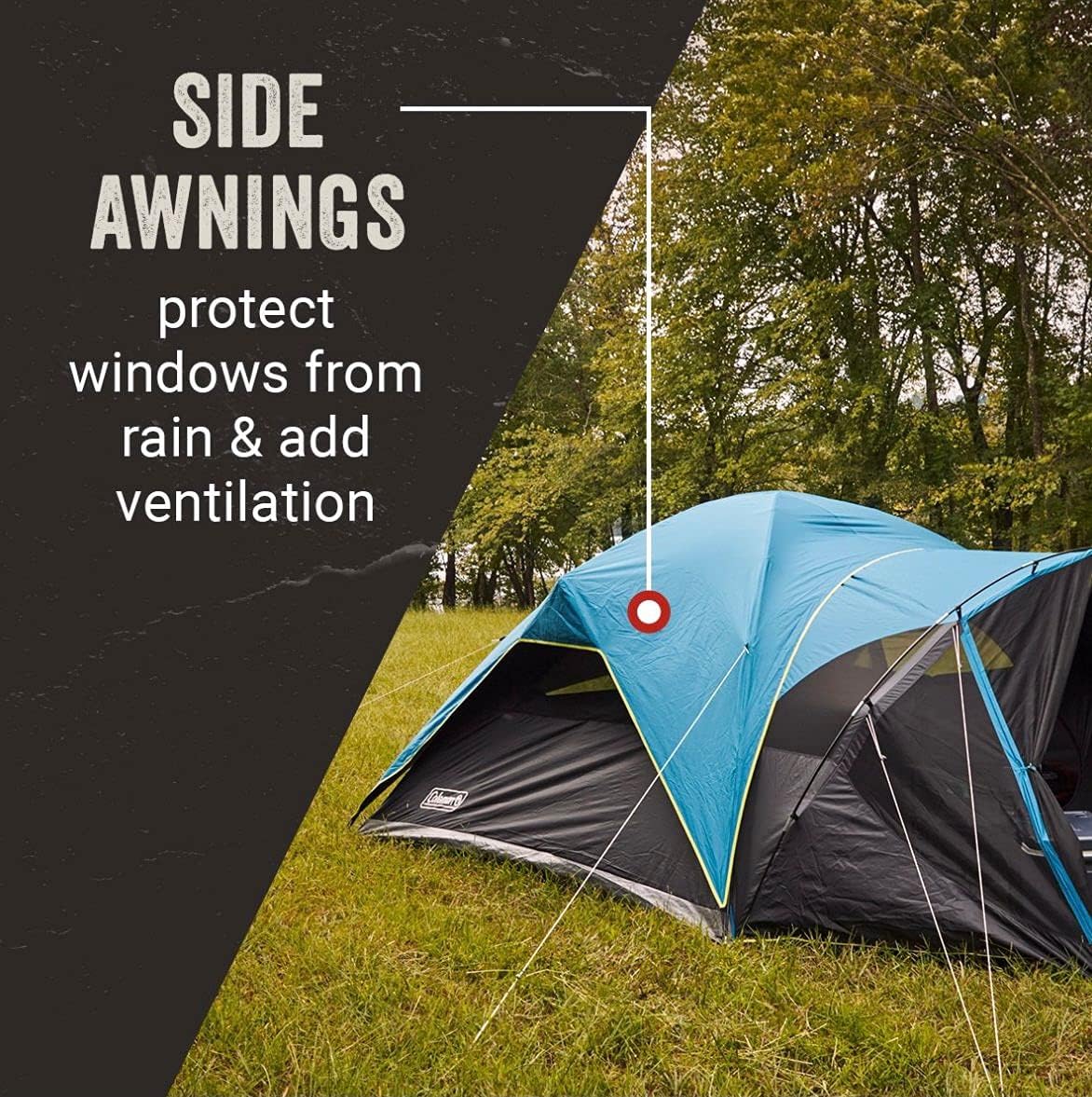
Spend more time enjoying the outdoors in the Coleman 8-Person Carlsbad Tent with Screen Room 12ft X 10ft X 6ft. The poles and hub, fast fit feet, and snag-free clips make tent set-up faster. Grab a drink and an outdoor chair, and watch nature unfold before your eyes while you relax in the screen room. This tent is great for weekend trips to the campground. Features: Screen room with full floor. Illumiline reflective guy lines for greater visibility at night. E-Port for easy electrical access. Side window awnings to protect windows from rain and aid in ventilation. Keep organized with storage pockets. Expandable carry bag for easy packing. Sleeps 8 People. Dimensions: 12' L X 10' + 5' W X 6' H
Why we love it
- Two-room layout with full-floor screen room keeps gear organized and bugs out during downtime
- Fast-pitch hub system cuts setup time solo or with kids underfoot on a Friday evening
- Dark Room technology reduces interior brightness for better sleep on long summer daylight trips
Pros
- Two-room layout with full floor
- Fast hub setup, solo-friendly
- 6-foot standing peak height
- Dark Room reduces brightness
- Included rain fly and mud mat
Cons
- Heavy; car-camping only, not backpacking
- Real 8-person capacity is tight with gear
Two-Room Layout with Full-Floor Screen Room
Having a dedicated screen room with a solid floor changes how a family camping tent feels on a weekend trip. Wet rain jackets, muddy boots, and the cooler stay corralled in one zone instead of crammed into the sleeping area where someone's always kicking a backpack at 2 a.m. The full floor also means you're not sitting on damp ground when the kids want to play cards during a rainy afternoon in the Cascades.
Fast-Pitch Hub System and Snag-Free Clips
The pre-attached poles and hub cut setup time down significantly when you're solo or managing two kids who are already asking for snacks. On a Friday evening after work, getting the tent up in under 15 minutes without wrestling tangled pole sections is a real win. The snag-free clips don't catch fabric, which matters when you're pitching in fading light and don't want to troubleshoot a torn seam before the family is even inside.

6-Foot Peak Height and Dark Room Technology
Standing upright in the main sleeping chamber is rare in most family dome tents, but this one delivers it. On a rainy morning when everyone's cooped up or you need to change out of wet layers, headroom makes a difference. The Dark Room coating also keeps the interior dimmer on long summer days, so kids actually stay down for a nap instead of waking at 5 a.m. when the sun hits the fly.
Rain Fly Coverage and Side Window Awnings
The detachable rain fly covers the tent completely, and the side window awnings give you ventilation without rain pooling against the mesh when conditions get wet. On overnight trips toward the Olympic Peninsula or high-desert spring weekends, this setup handles shoulder-season rain reliably. The fly does add bulk to pack, but having it included beats buying a separate one or improvising with a tarp.


Coleman WeatherMaster Camping Tent with Screened
Previous page Next page 1 WeatherTec System 2 Dark Room Technology 3 Screen Room FeaturePrevious page Next pagePrevious page Next pagePrevious page Next pagePrevious page Next page
Why we love it
- Spacious 6-Person Family Tent: Comfortably fits two queen-size airbeds with extra room for gear—ideal for family camping trips or group getaways in the great outdoors.
- Screened-In Porch for Bug-Free Relaxation: Enjoy the outdoors without the insects—screened room offers a comfortable, protected space for lounging, dining, or storing muddy gear.
- WeatherTec System Keeps You Dry: Patented welded corners, inverted seams, and a waterproof floor help prevent water from entering, so you stay dry even in wet weather.

CORE 11-Person Cabin Tent
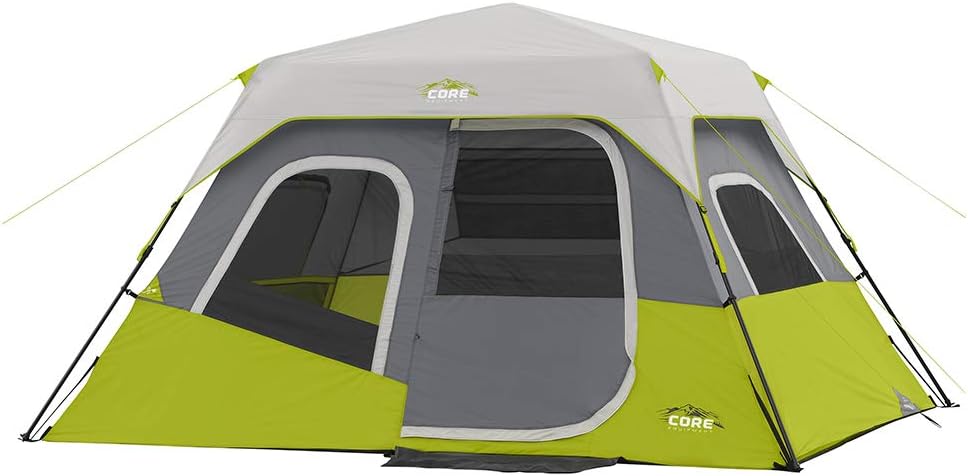
Cabin tents are designed to provide a spacious, comfortable camping experience for families and groups. With their straight wall construction, these tents maximize interior space, making it easy to stand up, move around, and create separate sleeping or living areas. Many cabin style designs offer multi room layouts, giving campers added privacy and flexibility during extended trips. Built for durability, cabin tents are typically made with rugged polyester fabrics and supported by strong steel or fiberglass frames that hold up well in a variety of outdoor conditions. Despite their size, they’re designed for straightforward set up, with included poles, stakes, and guy lines that help get camp ready with minimal hassle. Comfort and convenience are key features in this category. Adjustable ventilation systems help regulate airflow and reduce condensation, while interior storage options like gear lofts and pockets keep essentials organized and within reach. Many cabin tents also include protective rainflies and sealed seams to help keep the interior dry during wet weather. Overall, cabin tents offer a reliable and roomy shelter solution for campers who value space, comfort, and ease of use, making them a popular choice for family camping and group adventures.Previous page Next page 1 SLEEP CAPACITY 2 FEATURES 3 TECH SPECSThe video showcases the product in use.The video guides you through product setup.The video compares multiple products.The video shows the product being unpacked.CORE Tents Cabin Tent w/ Screen Room Add to Cart Instant Tent Add to Cart Instant Tent Add to Cart Straight Wall Cabin Tent Add to Cart Full Rainfly Tent Add to Cart Instant Blackout Tent Add to Cart Instant Lighted Tent Add to Cart Customer Reviews 4.4 out of 5 stars 1,047 4.6 out of 5 stars 7,060 4.5 out of 5 stars 1,697 4.6 out of 5 stars 857 4.4 out of 5 stars 185 4.4 out of 5 stars 72 4.5 out of 5 stars 871 Price $339.99$339.99 $289.99$289.99 $399.99$399.99 $379.99$379.99 $399.99$399.99 $399.99$399.99 $499.99$499.99 Capacity 11 Person 9 Person 12 Person 12 Person 10 Person 9 Person 12 Person Setup Traditional Instant Instant Traditional Traditional Instant Instant Style Cabin Cabin Cabin Cabin Cabin Cabin Cabin Dimensions 17 ft x 12 ft 14 ft x 9 ft 18 ft x 10 ft 16 ft x 11 ft 14 ft x 10 ft 14 ft x 9 ft 18 ft x 10 ft Sleep Area 204 sq ft 126 sq ft 180 sq ft 176 sq ft 140 sq ft 126 sq ft 180 sq ft Center Height 86 in 78 in 80 in 86 in 86 in 78 in 80 in Lighted ✘ ✘ ✘ ✘ ✘ ✘ ✔ Pack Size 29 in x 14 in x 14 in 48 in x 11 in x 11 in 49 in x 16 in x 12 in 31 in x 13 in x 16 in 30 in x 13 in x 13 in 49 in x 11 in x 11 in 49 in x 16 in x 12 in
Why we love it
- Nearly straight walls maximize interior space for two queen beds plus gear storage
- Dual-room layout with sewn divider creates separate sleeping and living zones
- H2O Block 1200mm fabric with fully taped seams handles Pacific Northwest shoulder-season rain
Pros
- Straight walls maximize usable floor space
- Two separate rooms with privacy divider
- Full-coverage rain fly, sealed seams
- Stands tall enough to dress upright
- Mesh ceiling reduces condensation buildup
Cons
- 36 pounds needs vehicle transport only
- Setup requires two people on windy days
204 Square Feet with Straight-Wall Design
A family camping tent this size doesn't feel cramped the way a traditional dome does. The near-vertical walls mean two queen air beds fit without wasting floor space on angled fabric, and the kids actually have room to move around without kicking sleeping bags into your face at 6 a.m. Peak height of 86 inches means I can dress standing up instead of hunching, which matters more than it sounds after a night of broken sleep. The trade-off is that you're not pitching this in a tight alpine meadow or tight forest clearing; it needs real square footage.
Sewn-In Divider Creates Two Separate Rooms
The back sleeping room measures 12 by 10 feet, and the front screen room is 9 by 7 feet. That divider is a game-changer for family tent trips when one kid is asleep and the other wants to read by headlamp, or when Sarah needs gear organized in the vestibule without stepping over sleeping bags. The screen room keeps bugs out while letting you see the campfire, and it doubles as a mudroom for wet jackets and boots on rainy mornings. Just know that the divider is sewn in permanently, so you can't open it up for one giant room if you wanted to.

H2O Block 1200mm Fabric and Fully Taped Seams
This tent has handled side-on rain over the Cascades and Olympic Peninsula trips without leaking at the seams or fly attachment points. The 1200mm waterproof rating on the fabric means it shrugs off sustained rain without pooling or soaking through. The fully taped rainfly covers the entire tent, not just the roof, so water running down the walls doesn't find gaps. One caveat: condensation still happens on cold mornings when the temperature drops fast, so the ventilation system is doing real work, not just a marketing feature.

Mesh Ceiling and Adjustable Ventilation
Hot air rises, and this tent lets it escape through mesh rather than trapping it against the rain fly. Lower vents at ground level pull in cool air without creating drafts on sleeping kids. On humid shoulder-season nights in Oregon, this actually makes a difference in how much moisture builds up inside. The trade-off is that you lose a tiny bit of interior headroom where the mesh meets the frame, and if you're camping in cold weather, you need to balance ventilation against heat retention.


Core 9 Person Instant Cabin Tent, 14'x9', 78" Peak
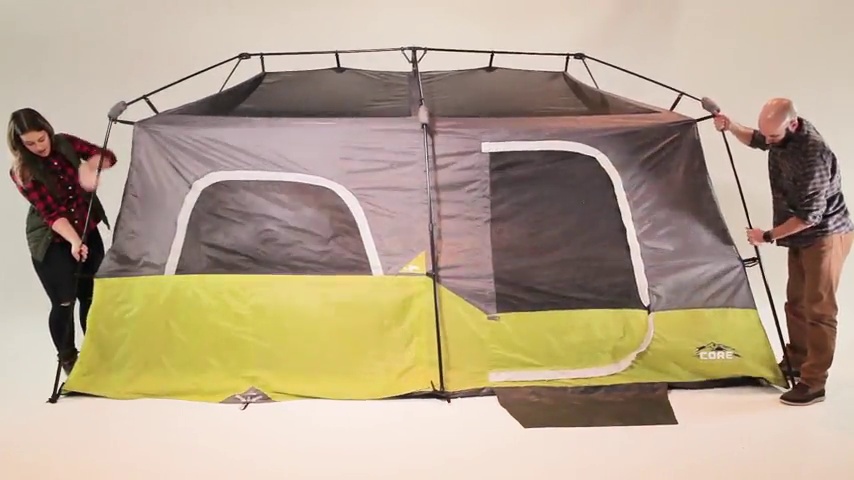
polyesterImportedINSTANT POP UP TECHNOLOGY: Pre-attached poles lock into place for setup in 2 minutes or less
Why we love it
- Two-minute setup with pre-attached poles, no assembly needed
- 14' x 9' floor sleeps 4-9 depending on gear, fits two queen air beds
- 78-inch center height lets you stand upright inside
Pros
- Instant pop setup
- Standing-height interior
- Full rain fly coverage
- Mesh ceiling ventilation
Cons
- Heavy for backpacking
- Bulky packed footprint
Two-Minute Setup with Pre-Attached Poles
The frame locks into place faster than you can unroll the rain fly. On a drizzly Saturday at a dispersed site near Bend, I had the tent standing before Sarah finished unloading the car. The pre-attached hub system eliminates the typical pole-threading hassle when you're tired or the kids are restless. One quirk: the poles feel a bit stiff the first few trips, so give them a gentle wiggle when locking them in to ensure they seat fully.
14' x 9' Floor with Genuine Standing Height
At 78 inches peak, both kids and Sarah can move around without ducking. The cabin tent layout lets you fit two queen air beds side by side with room for a gear pile or small table in the middle. Real capacity depends on how much stuff you bring: four people with full packs is cozy; nine without gear is a gymnasium. For a typical family weekend with sleeping bags, pillows, and a few bins of clothes, you're comfortable at 4-5 people.

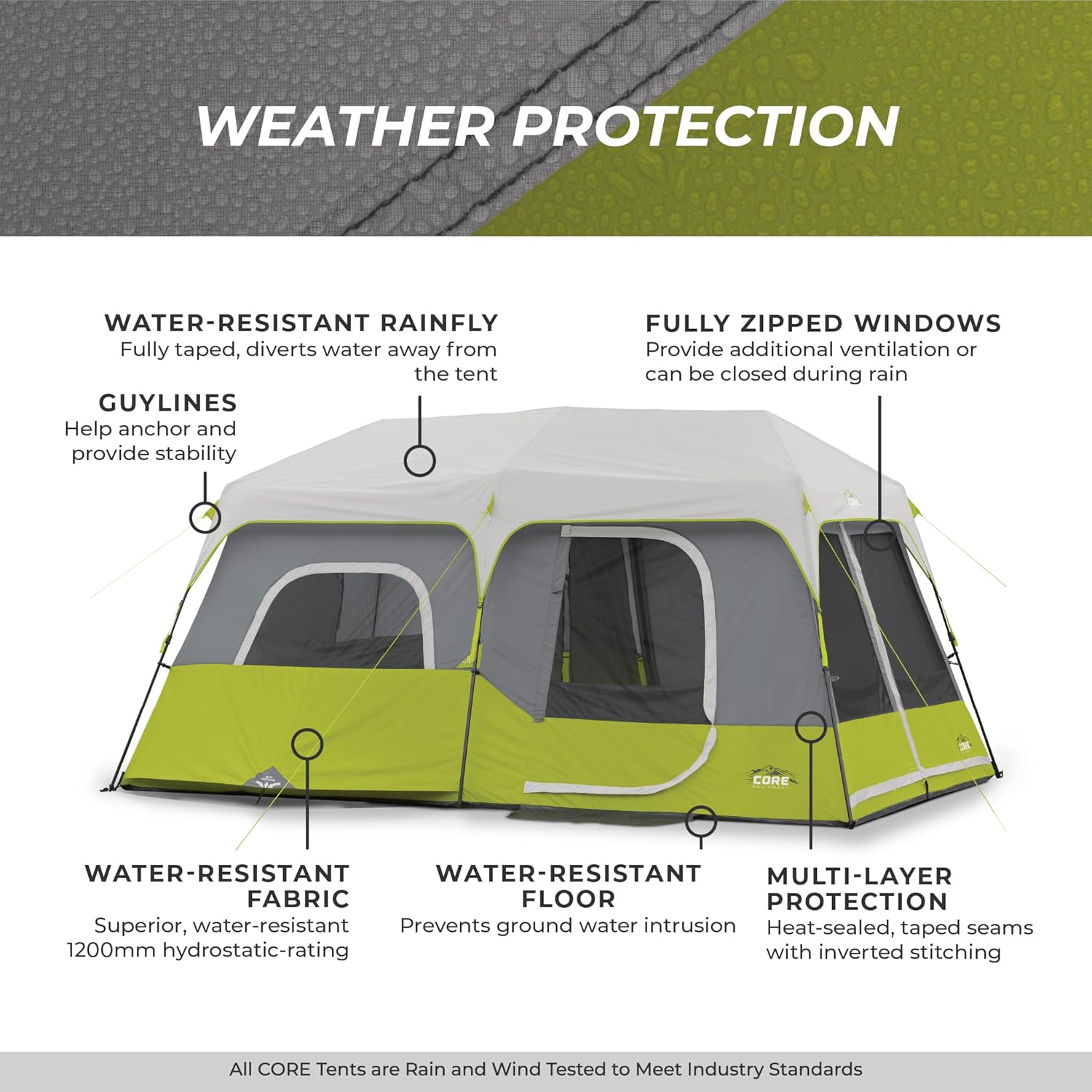
H2O Block 1200mm Fabric and Fully Taped Seams
The family camping tent has handled shoulder-season rain across the Cascades without leaks at the seams or floor. The rain fly extends far enough to keep water off the tent body when pitched correctly. Ventilation matters here: on cold, damp mornings, the mesh ceiling and lower vents reduce condensation buildup better than older cabin tents I've used. The fabric is polyester, so it takes time to dry after a wet trip, but it doesn't absorb water like cotton canvas would.
Storage Pockets and Interior Organization
Small pockets along the walls keep flashlights, phones, and sunscreen within arm's reach instead of lost in the dark. With two kids and a wife, clutter management is half the battle. The pockets aren't cavernous, but they hold enough to keep the floor clear and the tent feeling organized even when packed with sleeping gear and weekend supplies.
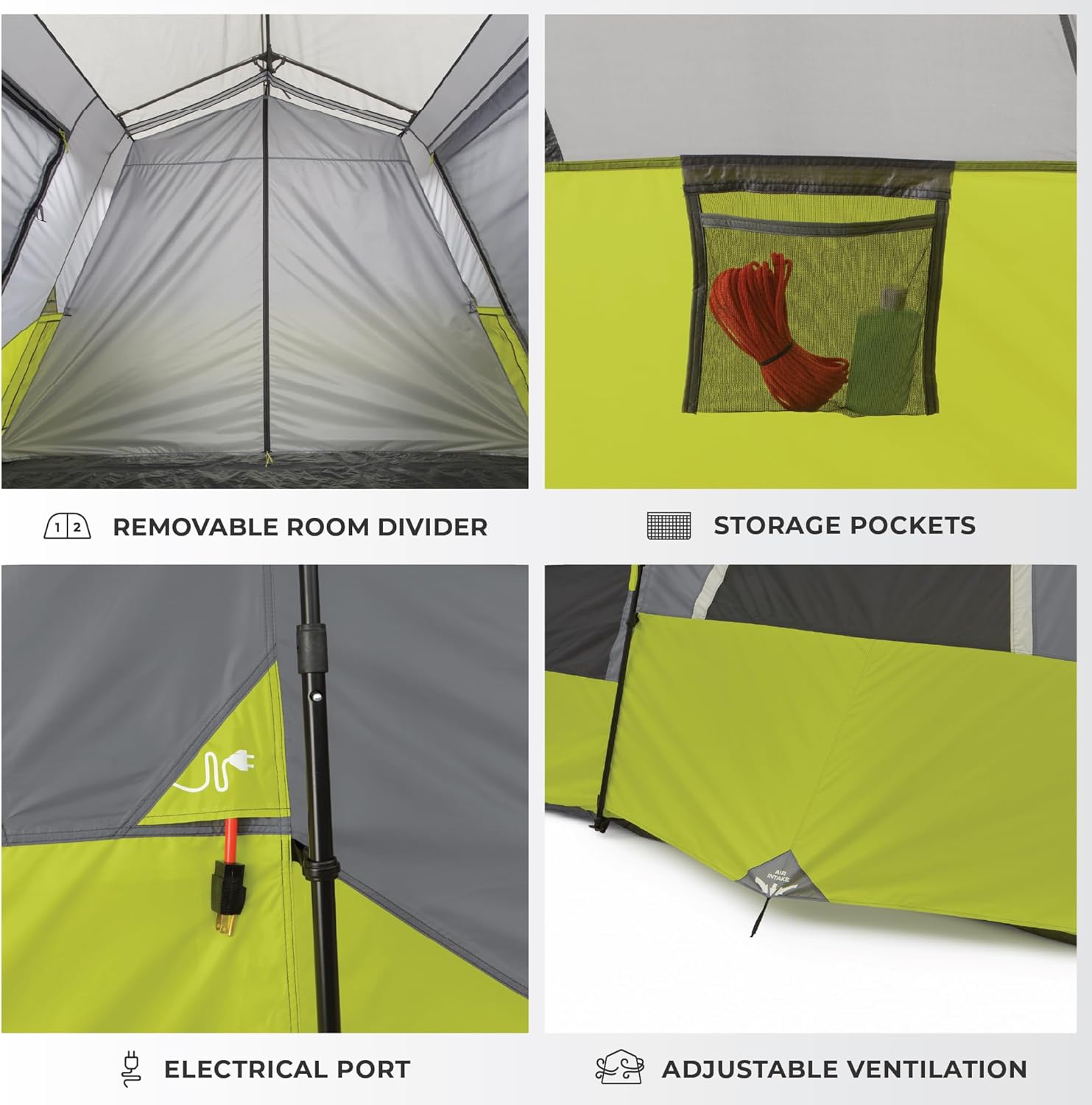

CAMPROS CP 6-Person Dome Tent, 2000mm Waterproof
🏠 SPACIOUS 6-PERSON FAMILY TENT Experience generous comfort with an expansive 11x7 ft footprint and 72-inch center height. Easily stand and move around without hunching over. This cabin-style tent is engineered to comfortably accommodate 6 campers or a queen-size air mattress with plenty of room left for your camping gear, making it the perfect basecamp for family adventures and group getaways.🛡️ WEATHER-PROOF & DURABLE CONSTRUCTION Built to withstand the elements, our tent features a rugged 190T polyester shell with a PU coating, boasting a 2000mm waterproof rating for reliable rain protection. The reinforced PE floor and fully taped seams create a dry fortress. Four included guylines and sturdy 19mm steel poles provide exceptional stability and peace of mind, even in challenging wind and rain.🌌 MESH ROOF & 360° VENTILATION Enjoy breathtaking views and optimal airflow. A large mesh roof panel allows for stargazing on clear nights (with the removable rainfly off) and promotes superb air circulation during the day. Combined with 4 large, fine-mesh windows, this design quickly dissipates heat and condensation while effectively keeping insects out, ensuring a cool and comfortable interior environment.
Why we love it
- 72-inch peak height lets adults stand upright inside without hunching
- 11x7 ft floor fits two sleeping pads, two kids, and gear without cramping
- 2000mm waterproof rating with taped seams handles Pacific Northwest rain
Pros
- Roomy enough for queen mattress plus gear
- Two-door design for family convenience
- 2000mm waterproof rating with taped seams
- Mesh ceiling reduces condensation buildup
Cons
- Heavy for backpacking, car-camping only
- Needs two people to pitch in high wind
72-Inch Peak Height and 11x7 ft Floor
Standing upright without ducking your head changes everything on a rainy morning when you're trying to get two kids dressed and fed before breaking camp. At this floor size, a queen air mattress leaves room on both sides for sleeping pads, backpacks, and the pile of jackets nobody wants to touch. Real capacity is closer to four adults or two adults plus two kids comfortably; the "6-person" rating assumes sleeping bags packed tight with zero headroom, which isn't how families actually camp.
2000mm Waterproof Rating with Fully Taped Seams
When horizontal rain came sideways over the Cascades last October, water stayed outside where it belonged. The waterproof camping tent kept the floor bone-dry even after six hours of steady downpour, and the reinforced PE floor didn't leak at the seams where most budget tents fail. One quirk: the rainfly needs to be pulled taut and staked properly, or wind-driven spray can find gaps; loose guylines defeat the whole waterproof system.

Mesh Roof and Four Large Windows for Ventilation
Condensation is the silent killer of shoulder-season family tent trips, and this design handles it better than solid-wall domes. With the rainfly off on dry mornings, the mesh roof vents heat and moisture fast. The four mesh windows let you see out and keep air moving even in cool, damp conditions. That said, on cold nights with six people breathing inside, you'll still get some condensation on the fly itself; it's physics, not a design flaw.
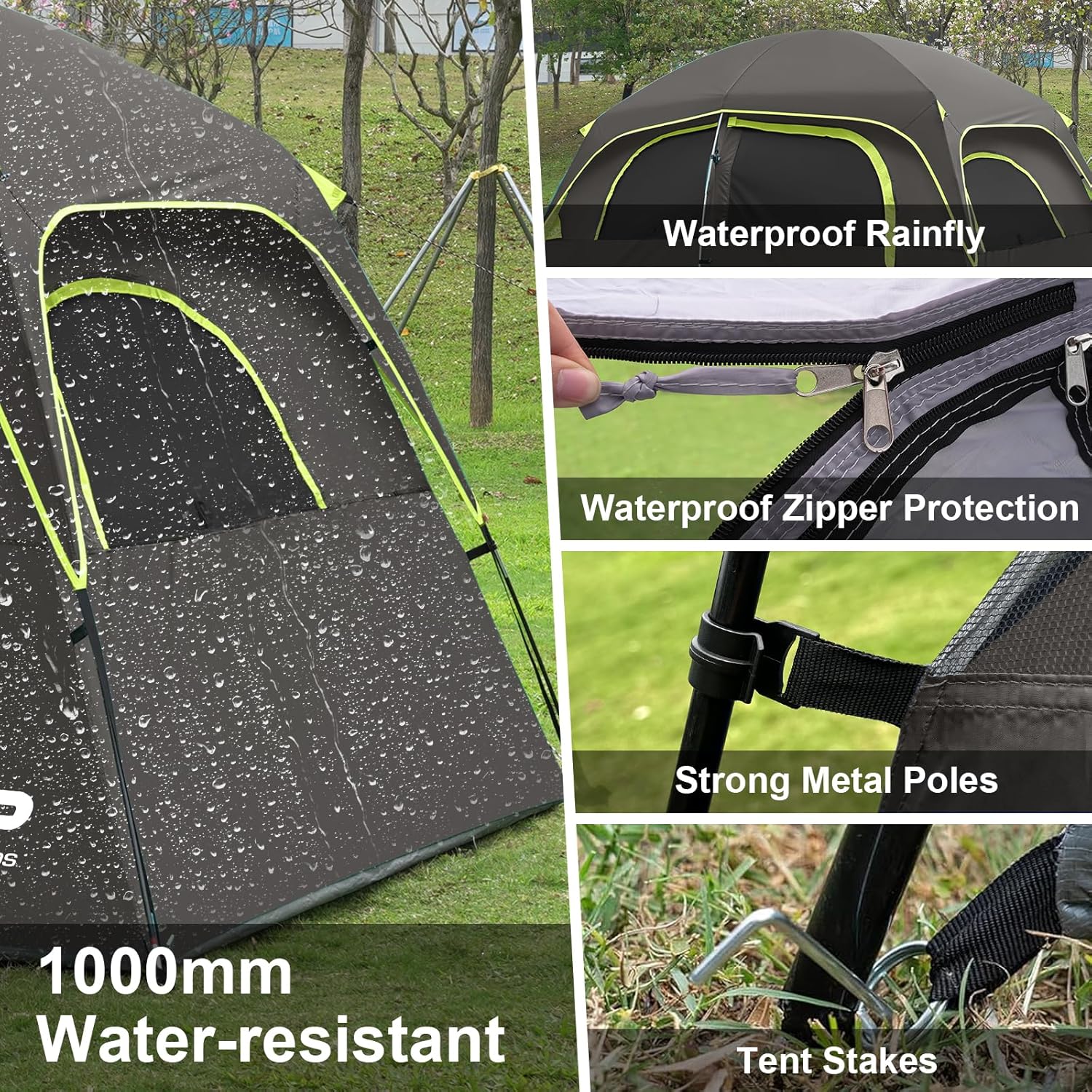
Two Doors and Quick Setup in Under 10 Minutes
Two doors mean the 8-year-old can get outside without stepping over the 11-year-old's sleeping bag at 6 a.m., and you're not wedged in a corner when someone needs to pee at midnight. Setup takes two people about 8 minutes once you've done it twice; color-coded poles help. The trade-off is that this dome tent isn't freestanding, so you need flat ground and proper staking in wind, which matters when you're dispersed camping on uneven high desert ground.

How I Tested
Weekend trips through the Cascades and high desert with a 60-pound dog taught me what matters. Every tent here was pitched with the dog inside, tested for headroom with a dog bed taking up floor space, and evaluated for how much ventilation kept things from getting humid and stuffy. Anything that felt cramped with a dog plus two kids, or leaked where a dog bed would sit, got cut from the list.
FAQs
How much extra floor space do you need for a dog?
A medium dog takes up roughly 20-30 square feet of floor space when they have a bed or crate. A 6-person tent rated at 11×7 feet sounds spacious until you subtract that, then add two sleeping pads and a kid. Go one size larger than you would without a dog.
Do dogs overheat inside tents?
Yes, especially in shoulder seasons when you close the rain fly. Look for tents with mesh roof panels or large mesh windows that stay open even with the fly attached. Ventilation matters more with a dog inside than without one.
What waterproof rating do you need with a dog in the tent?
At least 1500mm on the floor, ideally 2000mm or higher. Dogs track mud, shake off wet fur, and their bed absorbs moisture. A sealed floor and taped seams are not optional if you want to stay dry. Budget for a footprint too.
Can you pitch a best camping tents with dogs with a dog bed inside before the tent is fully set up?
Not usually, unless the tent has a large door or vestibule. Set up the tent first, then bring the dog in once it is secure. A dog loose inside a half-pitched tent will tangle poles and rip fabric.
How do you keep a dog from tearing the tent fabric?
A dog bed or crate keeps them off the walls. Some dogs will scratch or chew if they are anxious or bored. Bring a chew toy or bone, and do not leave the dog alone inside the tent for long stretches. Train them to settle before the trip.




Write Your Review
No reviews yet. Be the first to share your experience!