

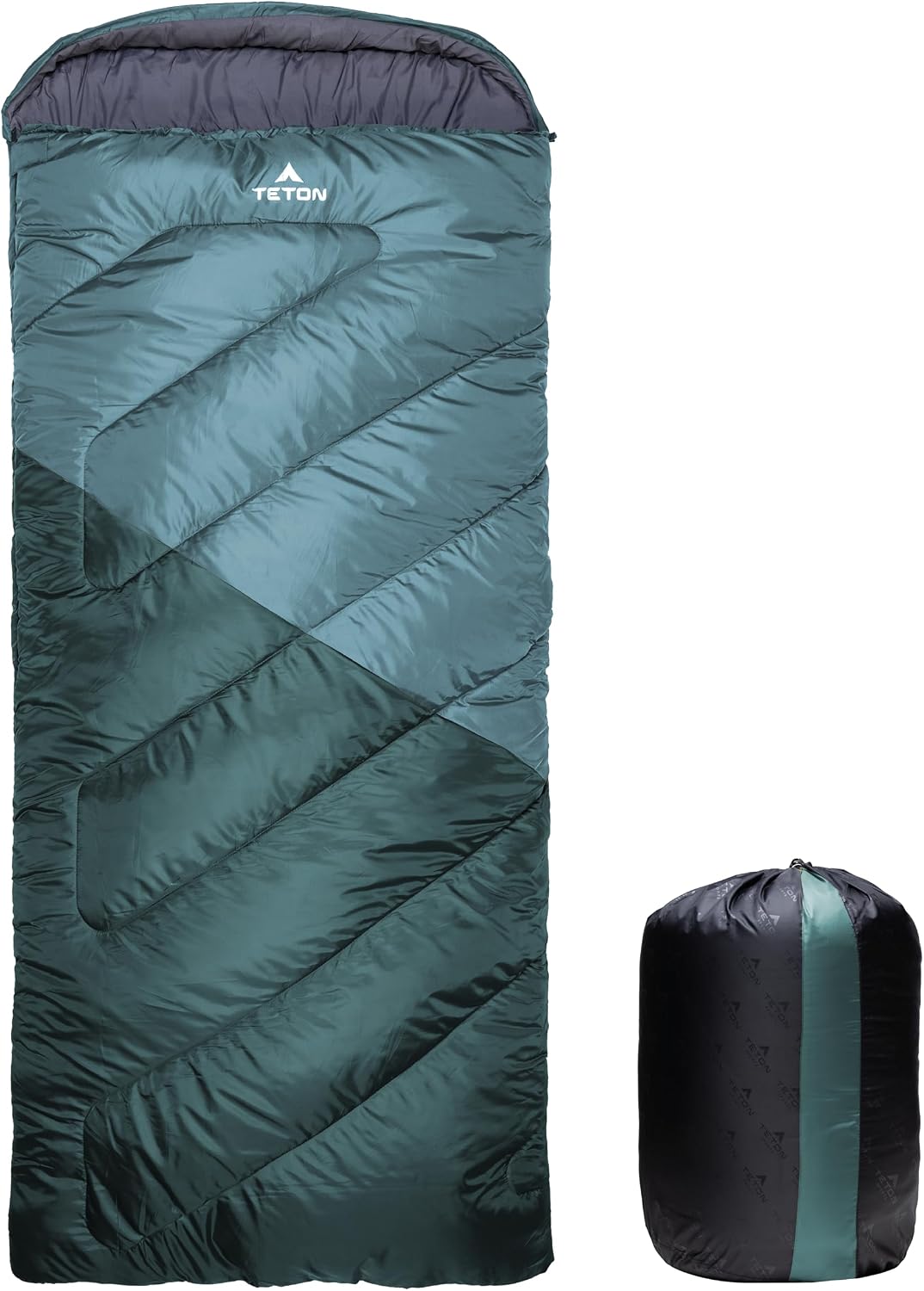
TETON Deer Hunter -35F Bag
A roomy, heavily insulated bag built for car camping in shoulder-season cold, with enough warmth to keep kids comfortable on frosty state-park nights.
Why we love it
- Double-layer canvas shell survives wet minivan packing
- Cinch hood and draft tubes lock warmth on cold mornings
- Rated to -35F, so you stay warm without layering games
Pros
- Roomy rectangular cut, fits kids without cramping
- Heavy-duty canvas shell withstands repeated use
- Flannel lining soft and warm against skin
- Draft collar and hood cinch seal heat in cold
- Rated to -35F for true cold-weather camping
Cons
- Heavy and bulky, car camping only
- Not packable for backpacking trips

TETON Deer Hunter 0F Sleeping Bag
Warm synthetic bag built for car camping and family trips in cold weather, with a roomy cut and flannel lining that kids actually like.
Why we love it
- Flannel lining keeps it cozy for kids on frosty nights
- Double-layer construction stands up to minivan packing
- Cinchable hood traps warmth when temps drop fast
Pros
- Mummy hood with cinch drawstring
- Double-layer canvas and fiber construction
- Spacious cut, comfortable for kids
- Flannel-lined interior
- Draft tubes at shoulder and zipper
Cons
- Rated limit, not true comfort zone
- Heavy for backpacking trips

Guide Gear Canvas Hunter -30F Bag
Heavy-duty canvas bag rated to -30F with room to move, built for car camping and occasional cold-weather trail trips with the family.
Why we love it
- Canvas shell shrugs off dampness on coastal trips
- 9 lbs of fiberfill keeps kids warm on frosty nights
- Roomy rectangular cut beats mummy-style constraints
Pros
- Canvas shell and brushed-cotton lining
- Attached hood with drawstring
- 9 lbs fiberfill insulation
- Rectangular shape with room to move
- Two-way zipper for venting
Cons
- Heavy for backpacking trips
- Bulky packed size for minivan storage

Browning McKinley -30° Sleeping Bag
Oversized rectangle bag with a real hood that actually traps heat, roomy enough for kids or gear without the mummy-bag squeeze.
Why we love it
- Rectangle cut gives kids room to move, not trapped like a mummy
- Hooded design seals warmth on cold mountain shoulder-season nights
- Packs down small enough for the minivan between trips
Pros
- Genuine hood, not just marketing fluff
- Two-layer offset construction eliminates cold spots
- Oversized 90x36 inch interior for comfort
- Solid -30 degree rating for real cold
Cons
- Heavy for backpacking, built for car camping
- Ripstop outer scratches easily on rough ground
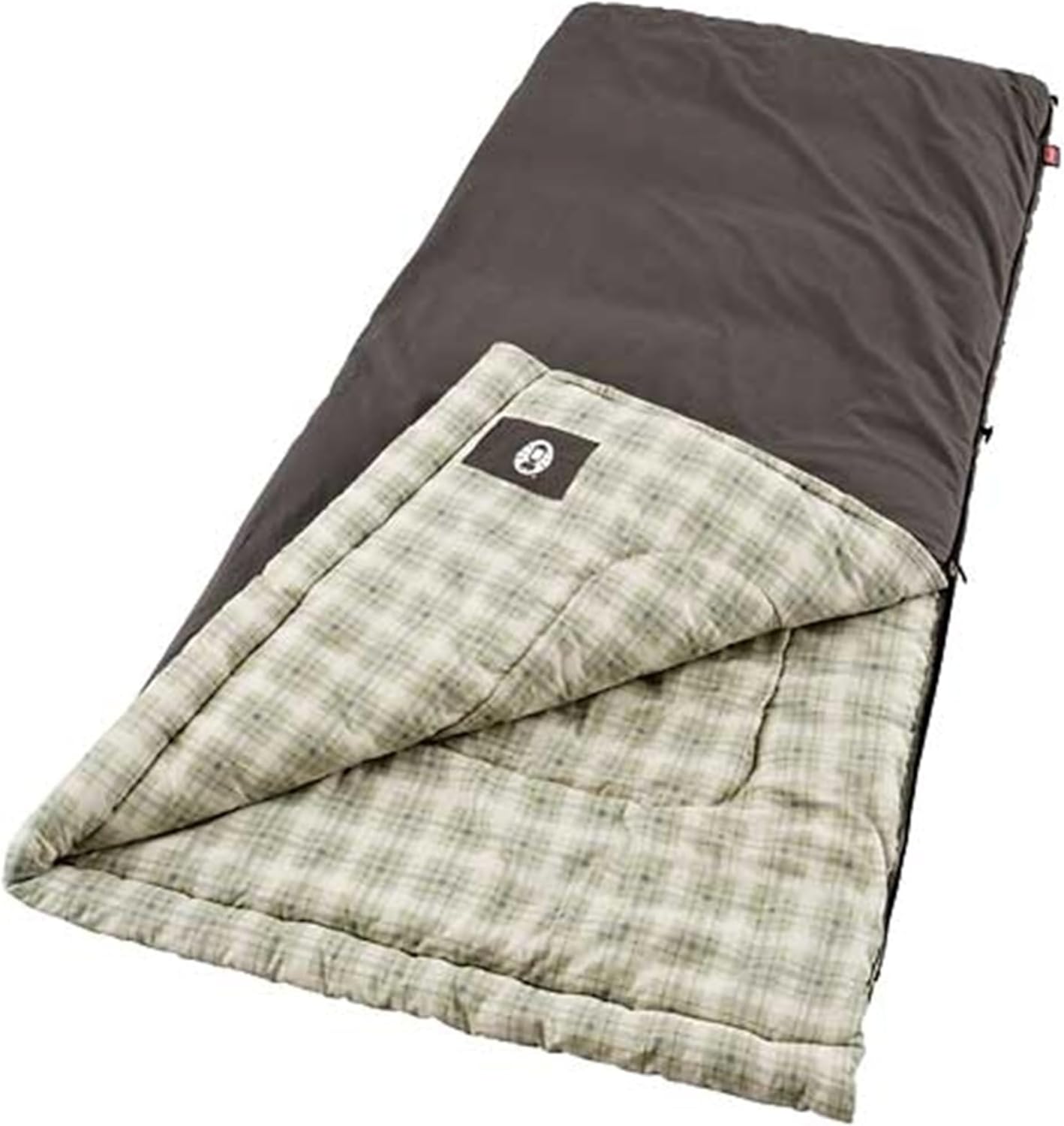
Coleman Heritage Big & Tall 10°F Bag
Roomy XL bag rated to 10°F with flannel comfort; machine washable and built tough for family camping.
Why we love it
- Fits tall adults or two kids bundled close
- Flannel liner beats scratchy nylon on skin
- Machine washable beats campfire smell
Pros
- 5 lbs Holofill insulation traps heat
- Flannel liner instead of cheap nylon
- No-snag zipper holds up to kids
- Machine washable for easy cleanup
- XL size fits adults up to 6'7"
Cons
- Heavy for backpacking trips
- Rectangular cut wastes heat around edges
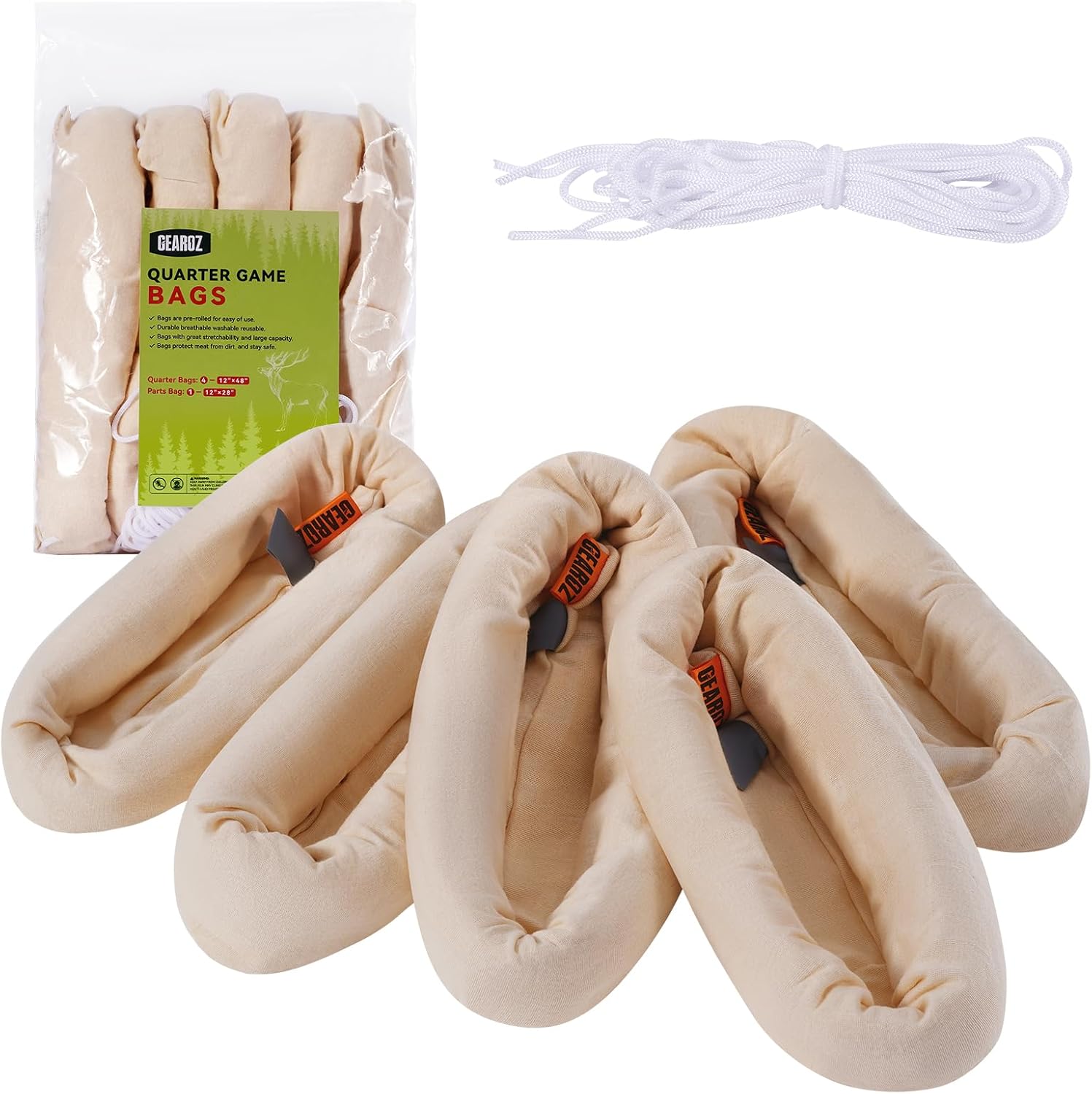
GearOZ Game Bags 5-Pack Hunting
Heavy-duty cotton game bags for storing harvested meat during hunting season, with breathable fabric to prevent spoilage.
Why we love it
- Breathable cotton keeps meat cool without drying
- Reflective strip helps locate bags in low light
- Washable and reusable for multiple hunting seasons
Pros
- Breathable cotton fabric prevents spoilage
- Reflective strip for visibility in darkness
- Durable, tightly knitted pure cotton construction
- Washable and reusable across seasons
- Includes rope for secure bag closure
Cons
- Heavy for backpacking or extended trips
- Limited use outside of hunting season
What Actually Keeps You Warm on a Hunt
Most best elk hunting sleeping bags sit in a truck bed or a base camp where weight and packed size matter far less than they do on a backpacking trip. That changes what you should look for. You need a bag that handles the damp cold of September high country and the brutal freeze of late season, one that tolerates being crammed into a vehicle or left half-unrolled in a tent, and one that won’t betray you at 2 a.m. when the temperature drops 20 degrees faster than the forecast promised.
The picks above range from canvas-shell rectangles built for stationary cold to synthetic bags that shrug off moisture. What they share is honest temperature ratings, draft collars and hoods that actually seal, and the durability to survive real hunting abuse. A bag rated to 0 degrees that sleeps warm at 10 degrees is worth far more than one that reads good on paper and fails in the field.
Canvas versus Synthetic Shell
Canvas shells like those on the Teton Deer Hunter and Guide Gear models are heavy, durable, and feel substantial in cold air. They breathe enough to shed condensation without the slick plastic feel of nylon, and they stand up to brush, sharp gear, and rough handling. The trade is weight and packed bulk. Synthetic shells with ripstop nylon, like the Browning McKinley, compress smaller and weigh less, but they require more care around sharp objects and can feel clammy in damp conditions. For a stationary hunt where the bag lives in your tent or truck, canvas wins on durability and feel. For backcountry elk hunting where you move camp, synthetic makes more sense.
Temperature Rating versus Real Warmth
A 0-degree rating is a comfort number, not a survival number. It means you should sleep warm in a 0-degree environment if you are wearing a base layer, on an insulated pad, and in good health. A minus-30-degree rating is the extreme limit, where you will survive but not sleep well. Most elk hunters need a bag rated between 0 and minus-15 degrees, depending on when and where they hunt. The Coleman Heritage is rated to 10 degrees and uses 5 pounds of Holofill insulation, which is honest for car camping in cold weather. The Guide Gear Sleeping Bag and Browning McKinley both carry minus-30-degree ratings and 9 pounds or more of fill, which is overkill for most hunts but valuable insurance on late-season trips into the high country.
Draft Collar and Hood Coverage
A bag can be rated to 10 degrees and still fail if it leaks heat around your shoulders and neck. Look for a full draft collar that cinches tight and a hood with a drawstring. The Teton Deer Hunter models include a half-circle mummy hood and shoulder draft tubes, which is adequate. The Browning McKinley and Guide Gear bags both have full hoods with separating zippers, which seals better in extreme cold. The Coleman Heritage has a less aggressive hood design, which is fine for September hunts but marginal for late season.
Interior Room and Fit
A rectangular bag gives you more room to move and shift during a long night, which matters when you are stationary in a camp. Mummy bags are more thermally efficient but can feel claustrophobic and make it harder to adjust your layers if you overheat early and cool down later. The Guide Gear and Browning McKinley are both oversized rectangles with 90-inch lengths and 36-inch widths, which suits most adults. The Teton bags run smaller and more mummy-shaped, which works well for hunters who are lighter or prefer a snug fit. The Coleman is designed for tall people up to 6 feet 7 inches, with an 84-inch length and 40-inch width.
Synthetic Fill Behavior in Damp Conditions
Synthetic insulation like Holofill and TechLoft retains warmth even when damp, which matters in the Pacific Northwest and coastal ranges where morning frost meets afternoon drizzle. Synthetic does not compact as much as down when wet, but it does absorb moisture, which adds weight. The Coleman and Browning bags both use synthetic fill and include flannel liners that feel dry against your skin. Neither will perform as well as a dry down bag, but both will keep you alive and warm if you sleep in damp clothes or wake to condensation inside the tent. If you hunt in the high desert east of Bend or the Cascades in clear weather, this is less critical. If you hunt the Olympic Peninsula or coastal ranges, synthetic is worth the weight penalty.
Canvas Shell Care and Long Term Durability
A canvas-shell bag like the Teton or Guide Gear will outlast most hunters if you care for it. Canvas does not develop the micro-tears that nylon gets from sharp gear, and it does not degrade under UV the way some ripstop does. The trade is that canvas is harder to wash and takes longer to dry. Store it uncompressed in a cool, dry place between seasons. If it gets wet, hang it in a garage or shed to air dry fully before rolling it away. Spot-clean canvas with cool water and mild soap rather than machine washing, which can damage the stitching and seams. A synthetic bag can go in the washing machine on gentle cycle, which is convenient but means you have to do it more often because the bag absorbs sweat and oils faster.
Pairing a Bag with an Insulated Pad
A sleeping pad is not optional. The insulation underneath you is as important as the insulation around you, because your body weight crushes the loft under you and kills its R-value. A bag rated to 0 degrees needs a pad with an R-value of at least 3 to 4 to reach that temperature. A bag rated to minus-15 or colder needs an R-value of 5 or higher. A foam pad or a self-inflating pad works fine for stationary hunting where weight is not a concern. If you are backpacking to your hunt, a lightweight inflatable pad saves pounds. Pair the pad R-value and the bag rating together, not separately. A minus-30-degree bag on a 2.0 R-value pad will not keep you warm at minus-20 degrees.
What Gets Cut at This Price
Elk hunting bags range from under $100 to over $300, and the differences are real. At the entry level, you get solid insulation and a functional design, but the shell might be thinner nylon, the zipper might snag occasionally, and the hood might not seal as tightly. In the middle range, you get better materials, more thoughtful construction, and bags that handle rough use. At the top end, you get canvas shells, offset insulation construction that eliminates cold spots, and details like separating zippers and insulated chest baffles that matter on the coldest nights.
Near the Bottom
A bag in this tier has synthetic insulation, a polyester or thin nylon shell, and a basic hood. The Coleman Heritage Big and Tall sits here and delivers genuine warmth for the price. You get 5 pounds of Holofill insulation, a flannel liner, and a machine-washable design. The trade is that the shell is not as durable as canvas and the hood is less aggressive. This bag suits car camping and base camp hunting where you are not moving it around constantly.
Middle Ground
Here you get canvas or ripstop nylon shells, better insulation quality, and more thoughtful seam construction. The Teton Deer Hunter models and Guide Gear bags live in this range. You get 9 pounds of fill, a full hood with drawstring, shoulder draft tubes, and a shell that stands up to real use. The Teton bags use fiber fill and canvas, which is traditional and durable. The Guide Gear uses canvas with brushed flannel lining. Both will last many seasons if you care for them.
Right at the Limit
The Browning McKinley sits here with a minus-30-degree rating, TechLoft Silver insulation, offset construction to eliminate cold spots, and a ripstop nylon shell. You get separating zippers, an insulated chest baffle, and a compression sack included. This is the bag for late-season hunts in extreme cold or for hunters who want insurance against the worst weather. You pay for the engineering and the materials, but the bag will keep you alive in conditions where a cheaper bag might fail.
Tips From the Trail
- Fluff your bag before bed. Even synthetic insulation loses loft when compressed in storage. Spend 10 minutes shaking and fluffing the bag in your tent before you climb in, especially if it has been rolled up for weeks.
- Keep your sleeping pad under you and your bag on top. Do not let the bag touch the ground. Cold rises from the earth faster than it sinks from the air, and your pad is your first line of defense.
- Wear a hat to bed in cold weather. You lose more heat from your head than anywhere else. A wool or fleece hat that you can pull over your ears is worth more than a warmer bag.
- Store the bag uncompressed between seasons. Compression permanently damages synthetic and down loft over time. Use a large mesh storage bag or hang it in a closet. Never leave it compressed in its stuff sack for months.
- Dry a damp bag in the sun before packing it away. If you wake to condensation inside the tent, hang the bag in the sun for a few hours once you get home. Moisture left in the fill breeds mold and breaks down the insulation.
A bag rated to 0 degrees on a 2.0 R-value pad will not keep you warm at minus-10 degrees. The pad matters as much as the bag.
Checks to Run Before Committing
Unroll the bag at home before your first hunt and spend a night in it. Turn your heat down to 50 degrees and sleep in the bag on top of your actual hunting pad. You will learn immediately whether the rating is honest and whether the fit works for your body. Check that the zipper slides smoothly without catching on the fabric, that the hood drawstring tightens without pinching, and that you can move your arms and legs without feeling trapped. If the bag feels too tight or too loose, now is the time to return it, not after you have slept in it in the field.
Inspect the seams and stitching before the first trip. Sleeping bag seams are taped or sealed to prevent heat loss, but sometimes the tape peels or a stitch comes loose. Run your fingers along the seams and look for gaps or loose threads. A small defect will grow into a leak after a few nights of use and sweat. If you find damage, contact the manufacturer before you leave. Most offer repairs or replacements if the bag is defective out of the box.
Test the bag’s temperature rating on a shoulder-season trip before you trust it on a late-season hunt. September in the Cascades is often 30 to 40 degrees at night, which is perfect for testing a 0-degree bag. If the bag keeps you warm and comfortable, you know the rating is honest. If you are cold, you have time to adjust your layers or return the bag before the real cold arrives.
Make sure the bag fits your truck bed or tent. Rectangular bags take up more floor space than mummy bags. If you are hunting from a truck, measure your bed and make sure the bag will fit without bunching up or hanging off the edge. A bunched bag loses insulation value because the fill compresses unevenly.
Sleep in your bag at home on a cold night before you take it hunting. You will learn more in one night than from any review.
FAQ
Does a temperature rating guarantee I will sleep warm?
No. A temperature rating is a standard based on a test subject in a controlled environment wearing specific clothing and on a specific pad. Your actual warmth depends on your metabolism, the pad you use, what you wear, and how much you ate that day. A bag rated to 0 degrees is designed to keep a healthy adult warm at 0 degrees on a 3.5 R-value pad, wearing a base layer and hat. If you are cold-blooded, on a 2.0 pad, or in damp conditions, you will be cold.
Can I use a summer bag with a liner to hunt in winter?
Not reliably. A liner adds maybe 5 to 10 degrees of warmth in ideal conditions, and less if the bag is damp or you are moving around. A summer bag rated to 40 degrees with a liner might reach 30 degrees on a good night, but that is not enough for most elk hunts. Buy a bag rated for the temperature you will actually face.
How do I know if a synthetic bag is actually down?
Check the product description and the fill weight. Synthetic insulation is always labeled by type: Holofill, TechLoft, PrimaLoft, Thinsulate. Down is labeled as down or goose down, and the fill power is stated as a number (like 700 fill power). If the description says fiber fill or does not specify, it is synthetic. Synthetic bags are heavier for the same warmth, so a 5-pound synthetic bag will keep you warmer than a 2-pound down bag.
Can I wash a canvas-shell bag in the washing machine?
No. Canvas will absorb water and take weeks to dry, and the agitation can damage seams and stitching. Hand wash canvas with cool water and mild soap, then hang it to air dry in a garage or shed. A synthetic-shell bag can go in the machine on gentle cycle with cold water and mild detergent, but do not use fabric softener or bleach.
What do I do if my bag gets wet on a hunt?
Hang it to dry as soon as you get home, even if it is only damp. If the bag is soaking, hang it in the sun for a few hours first to let surface water drip off, then move it to a shaded, well-ventilated space to finish drying. Do not put it in the dryer or near direct heat, which can damage synthetic insulation. A bag left wet in a closet will grow mold within days.
Is a minus-30-degree bag overkill for elk hunting?
For most hunts, yes. A minus-30-degree bag is heavy, expensive, and warmer than you need unless you are hunting above 10,000 feet in late season or in extreme conditions. A 0-degree bag covers 99 percent of elk hunts. A minus-15-degree bag is the sweet spot if you hunt late season regularly and want insurance against the worst nights.


Write Your Review
No reviews yet. Be the first to share your experience!