


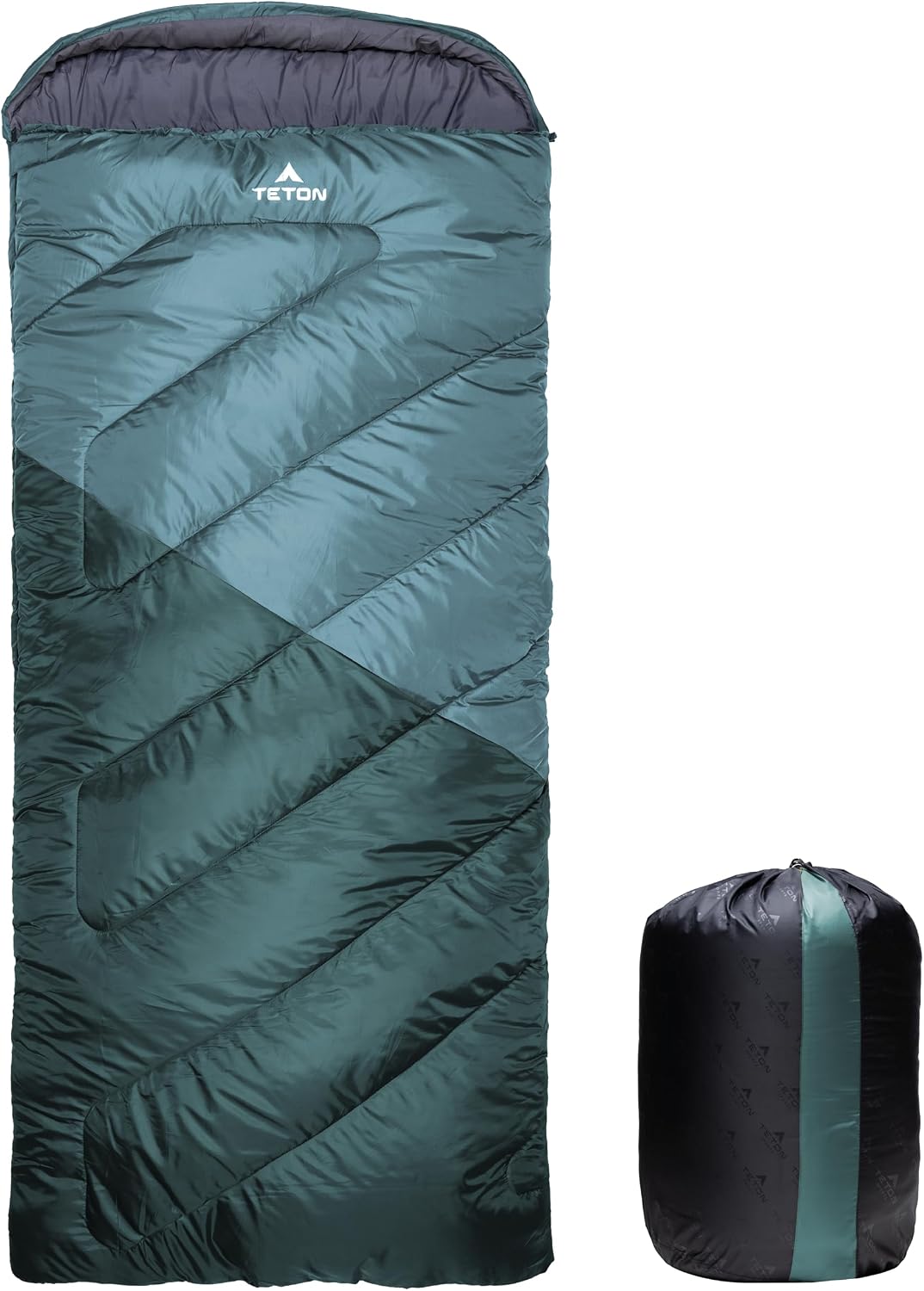
Teton Celsius XXL 0F Sleeping Bag
Rectangular family bag with room to spare, warm draft tubes, and washable synthetic fill that shrugs off damp coastal trips.
Why we love it
- Rectangular cut fits kids without cramping
- Draft collar and tube trap heat on frosty nights
- Synthetic fill handles wet gear and minivan stuffing
Pros
- Two-way anti-snag zipper
- Draft collar and tube design
- Machine washable synthetic fill
- Compression sack included
- Roomy cut for couples or families
Cons
- 7 pounds limits backpacking use
- Bulky packed size for car trips

VENTURE4TH 3-Season Sleeping Bag 30F
Rectangular bag that keeps kids warm on chilly nights and survives being stuffed wet into the minivan.
Why we love it
- Two-way zipper lets you dial in airflow
- Machine washable after muddy trail trips
- Roomy cut gives kids space to move
Pros
- Water-resistant polyester shell
- Two-way zipper for temperature control
- 30F temperature rating for shoulder season
- Compression sack included
- Lifetime replacement guarantee
Cons
- Synthetic fill is bulkier when packed
- Not designed for solo backpacking trips

BISINNA XXL 3-Season Sleeping Bag
Roomy rectangular bag built for bigger frames and families who need real sleeping space on weekend trips.
Why we love it
- Extra width lets you move around without feeling boxed in
- Waterproof shell handles wet minivan rides and damp mornings
- Lightweight enough to pack for a trail overnighter
Pros
- Oversized rectangular cut
- Water-repellent polyester shell
- 3.4 lbs total weight
- Includes compression sack
- Skin-friendly flannel lining
Cons
- Rated for 50F, not true cold weather
- Bulk makes it car-camping focused

Naturehike XXL Flannel Sleeping Bag 32F
Roomy rectangular bag with flannel lining that handles frosty state-park nights and stuffs into a minivan without complaint.
Why we love it
- Cotton flannel lining stays soft against skin
- Machine washable after damp coastal trips
- Two-way zipper lets you vent or cocoon
Pros
- Spacious cut fits bigger sleepers comfortably
- Flannel interior comfortable against skin
- Machine washable synthetic fill
- Rated 32F comfort for shoulder-season camping
- Compression sack included
Cons
- Heavy at 5.5 lbs, car camping only
- Rectangular shape packs larger than mummy

oaskys XXL 41-59F Sleeping Bag
Extra roomy rectangular bag that keeps kids warm on cool nights and survives the minivan stuffed wet.
Why we love it
- Room to move means restless sleepers actually stay warm
- Two-way zipper lets you dial in airflow as temps drop
- Packs small but spreads out where it counts: the interior
Pros
- XXL rectangular cut fits tall adults and fidgety kids
- Water-resistant shell shrugs off damp ground and dew
- Two-way zipper for flexible temperature control
- Lightweight at 4.6 lbs for occasional overnighters
- Compression sack included for car camping storage
Cons
- Rated as a limit, not a comfort zone at 41 degrees
- Synthetic fill bulk makes this a car-camping bag
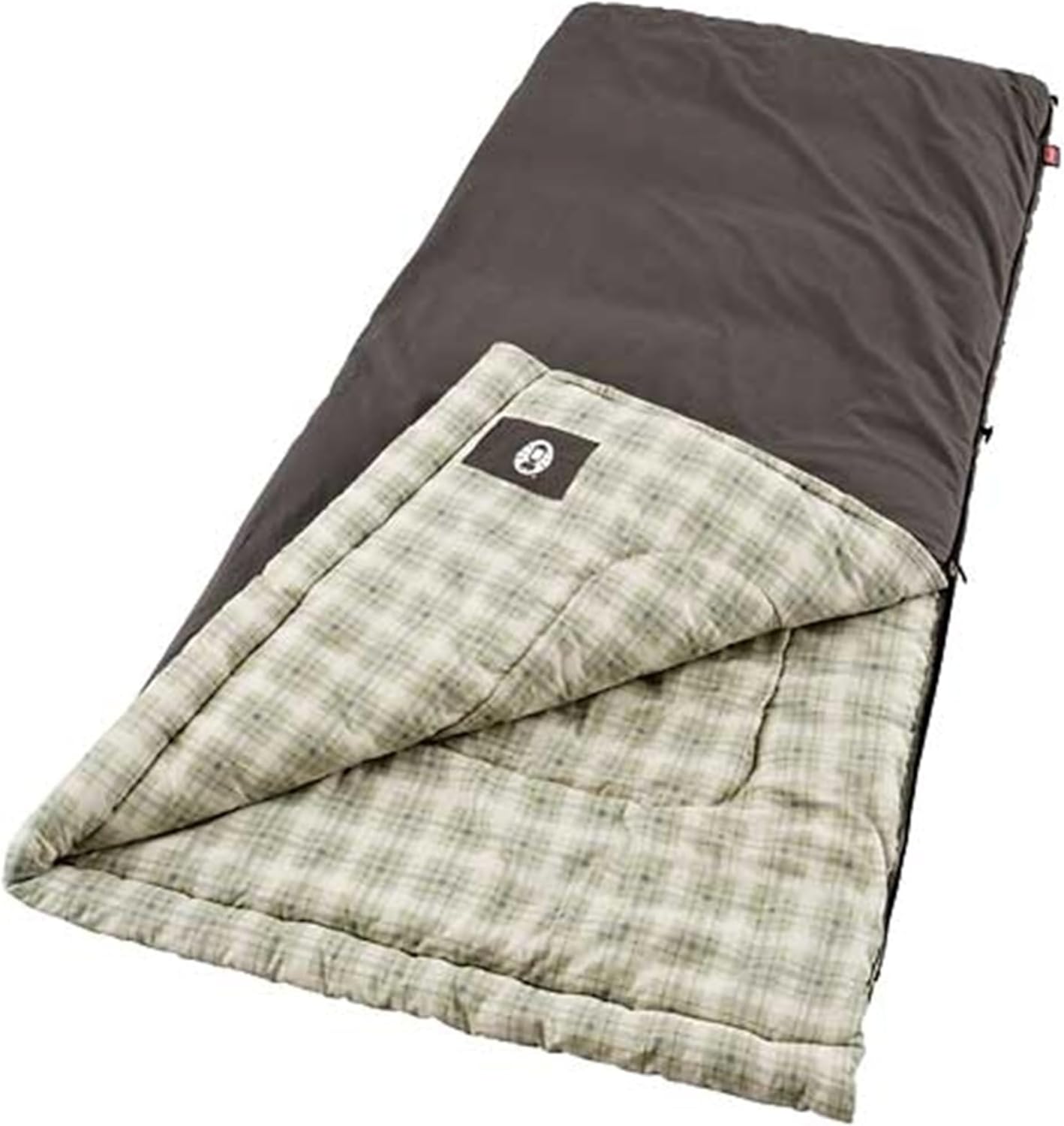
Coleman Heritage Big & Tall 10°F Bag
Roomy XL bag rated to 10°F with flannel comfort; machine washable and built tough for family camping.
Why we love it
- Fits tall adults or two kids bundled close
- Flannel liner beats scratchy nylon on skin
- Machine washable beats campfire smell
Pros
- 5 lbs Holofill insulation traps heat
- Flannel liner instead of cheap nylon
- No-snag zipper holds up to kids
- Machine washable for easy cleanup
- XL size fits adults up to 6'7"
Cons
- Heavy for backpacking trips
- Rectangular cut wastes heat around edges
Room to Stretch Without Sacrificing Warmth
The difference between best XXL sleeping bags and standard bags is not just length. XXL bags are wider in the shoulders and hips, with more interior volume that lets you move freely without cold spots where fabric pulls tight against your body. After 14 years of watching people buy the wrong size, I can tell you the real problem: most XXL bags are marketed as roominess alone, and nobody talks about what that extra space does to heat retention or how to pair it with a pad so you do not lose warmth through the gap.
The picks here all hit 86 to 90 inches long and 39 to 40 inches wide. That matters because a standard bag at 80 by 33 inches will feel tight if you are tall or broad-shouldered, and a true XXL actually sleeps warmer because your insulation is not stretched thin. The trade-off is packed bulk and weight, which these bags handle in different ways.
Why Length Alone Is Not Enough
A long bag that is still narrow at the shoulders creates pressure points and dead air space. Your arm can press against the side wall, and cold creeps in where the bag does not touch you. XXL bags solve this by cutting a wider rectangle, so your shoulders sit inside the insulation rather than at its edge. The catch: you need a pad wide enough to support that width, or you lose warmth through the underside. A 20-inch pad under a 40-inch bag leaves 10 inches of unsupported bag on each side. That is where you fail in cold.
Synthetic Versus Down in Larger Cuts
Synthetic fill holds its loft when damp and does not clump after compression, which matters if you are packing an XXL bag frequently. Down compresses smaller and weighs less, but one night in damp coastal air or morning condensation can reduce its warmth by 30 percent. Most of the XXL bags here are synthetic because the wider cut already adds weight, and synthetic forgives poor storage habits. If you are car camping and can hang the bag between trips, down is lighter and more durable over years.
Three-Season Versus Cold-Weather Ratings
An XXL three-season bag (rated 30 to 40 degrees) is not the same as a standard three-season bag. The extra interior volume means air takes longer to warm, so you need either more insulation or a better pad underneath. A VENTURE 4TH Backpacking Sleeping Bag rated for 30 to 70 degrees works for spring and fall if you use a pad with an R-value above 2. Below that, you will be cold. A cold-weather XXL bag (rated 10 to 20 degrees) is heavier and bulkier, so choose it only if you actually camp in winter.
Packed Size and What It Costs
An XXL bag stuffed into a compression sack takes up more volume than a standard bag, even when compressed hard. Some people do not mind because they car camp or backpack with a larger pack. Others find the bulk deal-breaking on a 40-liter pack. A XXL Sleeping Bag for Adults Lightweight at 4.6 pounds is the lightest here, but that is still 1 to 2 pounds heavier than a standard synthetic bag because of the extra fabric and fill. If weight is your main concern, XXL is a compromise.
An XXL bag under a narrow pad is like wearing a coat with no sleeves. The warmth is there, but not where you need it.
Synthetic Fill and Durability Over Time
Every XXL bag in this list uses polyester or hollow fiber, not down. That choice shapes everything: how it handles moisture, how it recovers after compression, and how long it lasts. Synthetic fiber does not absorb water the way down does, so a damp bag still insulates. The trade-off is that synthetic is bulkier to pack and does not compress as small, and it can lose loft permanently if you store it compressed for months. The bags here use either taffeta or pongee shells, which are thin and light. Taffeta breathes slightly better, pongee sheds water a bit more. Neither is waterproof, so pair with a pad that has a vapor barrier or use a footprint.
What Happens After a Wet Night
I have hung synthetic bags in the sun after damp coastal trips and watched them dry in 2 to 3 hours. Down takes 6 to 8 hours or longer if the sun is weak. If you camp in the Pacific Northwest or anywhere with morning condensation, synthetic wins. The catch is that synthetic bags develop flat spots if you compress them in a stuff sack for weeks at a time. The Naturehike Big and Tall Flannel Sleeping Bag includes a note about hang storage, which is the right call. Store it loosely on a hanger or in a mesh bag between seasons, not in the compression sack.
Washing and Restoring Loft
All six bags here are machine washable on gentle cycle with cold water and mild detergent. Synthetic fiber bounces back after washing better than down does. Lay it flat to dry or hang it loosely. Do not put a synthetic XXL bag in the dryer on high heat, which damages the shell. Low heat or air dry is safer. If the loft looks flat after storage, hang it in sunlight for a day or fluff it in the dryer on air-only mode for 15 minutes. Down requires the same care but takes longer to recover.
Seams and Zipper Draft Tubes
The bags here have different levels of draft protection. A full draft collar (a tube that runs the length of the zipper) blocks cold air better than a simple tube sewn to the inside. Wind baffles at the foot of the bag prevent air from sneaking in where the zipper ends. The Coleman and Naturehike models have both. Cheaper bags skip the baffles, which means cold air can enter at the foot even if the zipper is sealed. Check the product photos for a baffled foot box before buying.
A synthetic bag that is stored loose and dried properly will outlast one that is compressed and damp for months.
Getting the Fit Right at Home
An XXL bag that is too loose will not sleep warm because the insulation has to heat a larger air space. An XXL bag that is too tight defeats the purpose. The only way to know is to lie in it on your bed before the return window closes. Wear the clothes you actually sleep in. If you sleep in long underwear and a base layer, wear them. If you sleep naked, do that. Lie on your back, your side, and your stomach. Your shoulders should have 2 to 3 inches of clearance on each side when you lie flat. Your hips should not touch the sides when you roll over. Your feet should not compress the foot box.
Checking Length and Shoulder Fit
All six bags here are 86 to 90 inches long, which fits people up to 6 feet 7 inches. Lie in the bag with a pillow under your head and measure the distance from the top of the bag to the top of your head. There should be 4 to 6 inches of extra length. If your head is within 2 inches of the top, the bag is too short and heat will escape. Shoulder fit is harder to judge on a bed, so stand up in the bag with it zipped. Your shoulders should not feel squeezed. If the bag bunches at your armpits, it is too narrow.
Pairing With a Sleeping Pad
An XXL bag needs a pad at least 25 inches wide to prevent side gaps. A standard 20-inch pad leaves 10 inches of bag hanging off each side, which loses heat. If you already own a 20-inch pad, buy a second one and place them side by side, or upgrade to a 25-inch wide pad. The pad R-value matters more for an XXL bag because the larger interior volume takes longer to warm. A three-season XXL bag needs a pad with R-value 2 or higher to reach its rated comfort temperature. A cold-weather XXL bag needs R-value 3 or higher. If you have a thin foam pad, add a second layer or upgrade.
Testing the Zipper Before Committing
Unzip and zip the bag 10 times while lying in it. The zipper should move smoothly without snagging fabric. If it catches or pulls hard, the bag is defective and you should return it. Open the bag fully and lay it flat like a blanket. The fabric should lie flat without wrinkles or bunching. Wrinkles mean the shell and lining are not sewn evenly, which creates cold spots. Check the foot box for baffles by looking at the inside seams. You should see horizontal stitches that divide the foot area into chambers. If the foot box is a single open space, cold air can circulate inside.
Tips From the Trail
- Store uncompressed between seasons. Hang the bag on a wide hanger in a closet or lay it flat in a mesh storage bag. Compression damages synthetic loft permanently, so stuff sacks are for travel only.
- Fluff before sleeping. Unpack the bag 30 minutes before bed and let it sit. The insulation expands as it warms, and you will sleep warmer than if you zip into a compressed bag.
- Use a footprint or groundsheet. The thin shells on these bags are not waterproof. Moisture wicks up from damp ground and reduces loft. A footprint costs 20 dollars and adds no weight.
- Wash once a year if you camp monthly. Dirt and body oils break down the shell and lining over time. Machine wash on gentle cycle, air dry, and hang to store.
- Pair with a pad that supports the width. Do not try to use a 20-inch pad under a 40-inch bag. The unsupported edges lose heat and the bag will feel colder than its rating.
- Check the zipper pull in the dark. A two-way zipper is only useful if you can find it with gloves on. Feel the pull before buying. Some bags have small pulls that are hard to grip when cold.
Questions I Get Asked
Will an XXL bag sleep cold because it is too big?
Only if you do not pair it with a wide enough pad. An XXL bag on a narrow pad loses warmth through the unsupported sides, which can make it feel 10 to 15 degrees colder than its rating. With a matching pad, an XXL bag sleeps at its rated temperature just like a standard bag.
What is the difference between a 3-season and 4-season XXL bag?
A 3-season bag is rated 30 to 40 degrees comfort and works spring through fall. A 4-season bag is rated 10 to 20 degrees and includes extra insulation and a full hood for winter camping. The 4-season bag is heavier and bulkier. Buy a 4-season only if you actually camp in snow and cold.
Can I wash an XXL bag in the washing machine?
Yes, all six bags here are machine washable on gentle cycle with cold water and mild detergent. Use a front-load washer if possible, as top-load agitators can damage the seams. Air dry completely before storing. Do not use a dryer on high heat.
How much does an XXL bag weigh compared to a standard bag?
An XXL synthetic bag typically weighs 1 to 2 pounds more than a standard bag because of the extra fabric and fill. The lightest XXL here is 3.4 pounds, the heaviest is 5.5 pounds. A standard three-season bag usually weighs 2 to 3 pounds.
Do I need a liner with an XXL bag?
A liner adds warmth (about 5 to 10 degrees) and protects the bag from sweat and dirt, extending its life. If you are camping in cold weather or want to reduce washing frequency, a liner is worth the 20 to 40 dollars. It is not required for three-season camping.
What does the temperature rating actually mean?
The comfort rating is the temperature at which an average sleeper in a base layer on an insulated pad will stay warm all night. The limit rating is the lowest temperature at which the bag will keep you alive but not comfortable. Manufacturers test to ISO 23537 standards, but real conditions vary based on pad R-value, your metabolism, and what you wear. Always assume you will feel 5 to 10 degrees colder than the rated number if you are a cold sleeper or camping on thin ground.


Write Your Review
No reviews yet. Be the first to share your experience!