


Kanyak 32F Sleeping Bag
Roomy rectangular bag that keeps kids warm on frosty nights and zips together for couples, machine washable for sticky minivan life.
Why we love it
- Rectangular cut gives kids room to move at night
- Zips to a second bag for family sleeping setup
- Machine washable synthetic fill handles damp gear
Pros
- Rectangular design with elbow and knee space
- Side and bottom zippers for temperature control
- Two bags zip together into double bag
- Machine washable synthetic fill
- Waterproof shell handles rain and fog
Cons
- Rated at limit temperature, not comfort level
- 4-pound weight limits trail backpacking use

ETGLCOZY 3-Season Sleeping Bag 50-80F
Lightweight rectangular bag with a bottom vent that lets you dial in warmth for shoulder-season camping with kids.
Why we love it
- Bottom zipper vent cools it down on warm nights
- Dual zippers work smoothly, kids can operate alone
- Compresses small, fits easily in the minivan
Pros
- Lightweight and packable design
- Dual-way zipper for temperature control
- Machine washable after wet trips
- Bottom vent lets you adjust warmth
- Fits adults and growing kids comfortably
Cons
- 50-80F rating limits cold-weather camping
- Synthetic fill, not down compressibility

SereneLife Double Sleeping Bag 5F
Double bag that splits into two, rated to 5F, with included pillows and a waterproof shell for family camping.
Why we love it
- Splits into two bags for flexible sleeping arrangements
- Hollow cotton fill handles damp Pacific Northwest trips
- Waterproof shell protects gear in wet conditions
Pros
- Detachable into two individual bags
- Rated to 5F for shoulder-season cold
- Waterproof outer layer
- Includes two pillows and carry bag
- Machine washable synthetic fill
Cons
- Bulky packed at 15x12 inches
- Heavy for backpacking trips

Night Cat 3-Season Sleeping Bag 5-15C
Budget rectangular bag that converts to a quilt, with enough room for a restless kid on shoulder-season trips.
Why we love it
- Unzips flat to a wide quilt for ventilation control
- 2.6-foot width lets kids move without fighting the bag
- Under $40 means you can buy two without guilt
Pros
- Double-sided zipper for venting
- Converts to quilt or blanket
- Roomy rectangular cut
- Lightweight at 2.64 pounds
- Machine washable synthetic fill
Cons
- Rated temp is a limit, not comfort
- Bulky packed size for backpacking

Coleman Brazos 20/30F Sleeping Bag
A roomy rectangular bag that keeps kids warm on chilly state-park nights and survives getting stuffed damp into the minivan.
Why we love it
- Rectangular cut gives kids room to move
- Machine washable for sandy, muddy trips
- Zips to a second bag for family warmth
Pros
- Thermolock draft tube seals heat
- Fiberlock prevents insulation shifting
- No-snag zipper won't jam mid-trip
- Stuff sack included, packs compact
Cons
- Bulky for backpacking overnight trips
- Rated limit, not comfort warmth
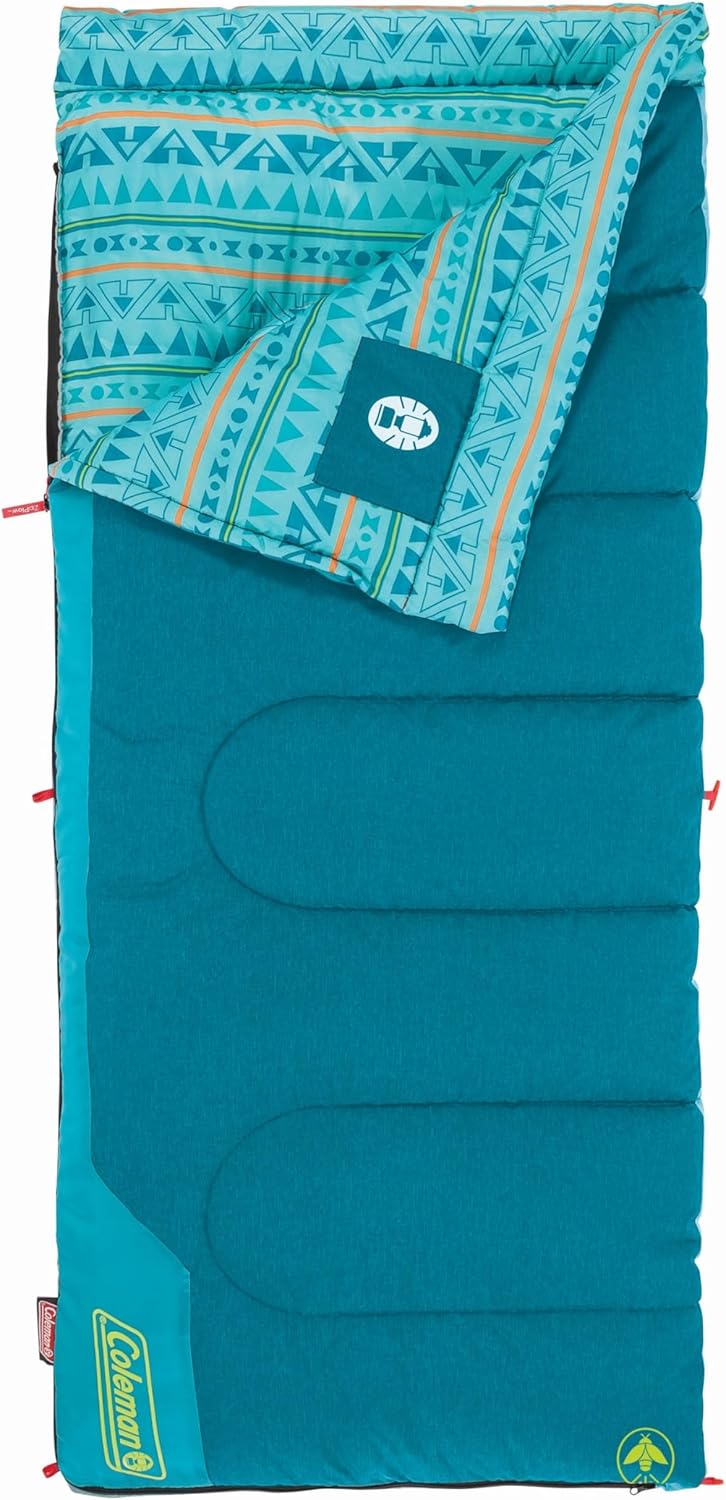
Coleman 50°F Youth Sleeping Bag
Glow-in-the-dark bag sized for kids up to 5 feet tall, rated to 50°F and machine washable for easy care after muddy trips.
Why we love it
- Machine washable after wet, muddy camping trips
- Glow-in-the-dark design helps find kids at night
- Fits kids up to 5 feet, grows with them for years
Pros
- Sized specifically for children
- Machine washable synthetic fill
- No-snag zipper rated for kids
- Glow-in-the-dark interior
- Stuff sack included
Cons
- 50°F rating is limit, not comfort zone
- Rectangular cut adds packed bulk
Weight and Warmth Trade-Offs at 3 Seasons
Best lightweight 3 season sleeping bags sit in a narrow band where you cannot ignore the math. Spring and fall nights on the Cascades or the coast demand real insulation, but you also want to carry it 8 miles uphill without your shoulders hating you. That tension shapes every choice in this list. Most buyers chase the lowest weight number and wake up cold, or pick something warm and regret the bulk on mile four.
The bags above share one honest trait: they do not pretend to be four-season systems or ultralight quilt setups. They are mummy and rectangular cuts built around 40 to 50 degree comfort numbers, using hollow fiber or down that compresses to pack volume under 20 liters. They work because they stay focused on what three seasons actually demand.
What 3 Season Really Means
A three-season bag is rated for spring, summer, and fall. That is roughly 35 to 60 degrees Fahrenheit at night. Below that band you need a four-season setup or a different strategy. Above it, you are adding a liner or sleeping in your clothes. The temperature rating on the tag is the limit number, not the comfort number. If you want to sleep warm and relaxed at 40 degrees, pick a bag rated for 20 degrees. The difference in weight is real but not dramatic, usually 4 to 8 ounces.
Hollow Fiber Versus Down in Damp Air
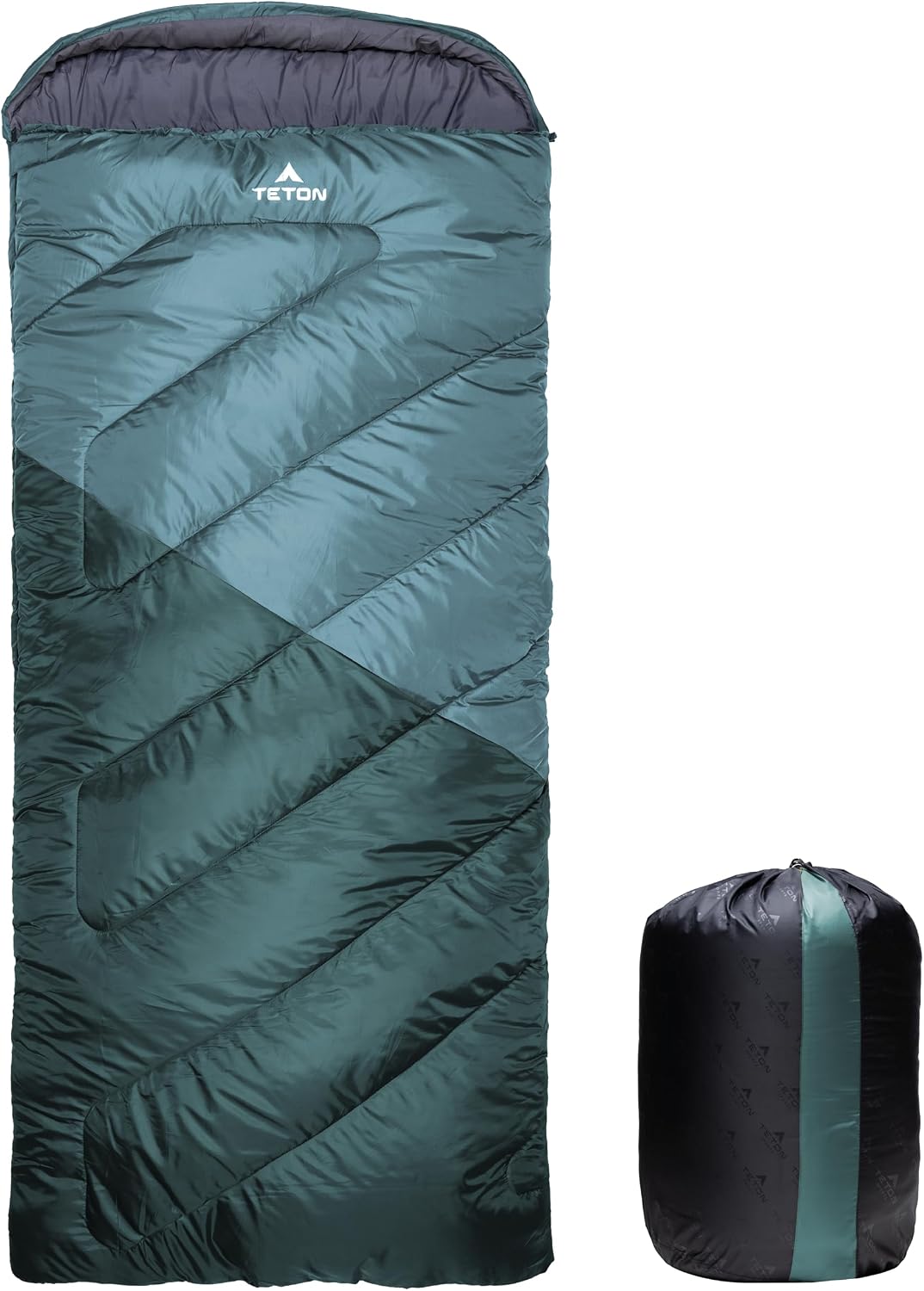
Synthetic hollow fiber holds loft when damp. Down loses it fast. On the wet coast or after a night where your breath soaks the interior, synthetic keeps working. Down is lighter and compresses smaller, but it demands dry storage and care after a wet trip. The Night Cat Camping Sleeping Bag uses hollow cotton, which is synthetic fiber marketed with a fabric name. It is not pure cotton and it handles moisture better than true down. Most three-season bags in this range lean synthetic because the weight penalty is small and the reliability gain is large.
Packed Size Matters More Than Weight Alone
A bag that weighs 2 pounds but packs to 25 liters is heavier on your back than a 2.5 pound bag in 15 liters. Compression sacks help, but they have limits. Mummy cuts compress smaller than rectangular, but they also feel tight if you move around at night. The Lightweight 3-Season Sleeping Bag for Adults/Kids Camping includes a compression sack and rates high on reviews partly because users see the stated packed size match reality. Hollow fiber bags compress better than down, so if you care about pack volume, synthetic is the easier choice.
Draft Collar and Zipper Design
A draft collar seals the bag around your shoulders and stops warm air from leaking out the top. A full-length draft tube runs along the zipper and blocks cold spots there. Three-season bags that cost under $60 often skip the draft tube or use a partial one. That is a real loss. A bag without a draft tube loses 5 to 10 degrees of effective warmth on a cold shoulder-season night. Check the product images and the reviews for mentions of draft sealing. If the collar is loose or the tube is missing, you are paying for warmth you will not feel.
The temperature rating is the limit number, not the comfort number. Sleep warm at 40 degrees by picking a bag rated for 20.
Synthetic Fill and Long-Term Durability
Hollow fiber insulation does not clump or degrade the way down can, but it does compress over time. A bag you stuff into a sack every weekend for two years will lose some loft in that compressed zone. The loss is slow and the bag still works, but the effective rating drops by a few degrees. That is why storage matters. Between trips, hang your bag in a closet or lay it flat in a bin. Do not leave it compressed in a stuff sack for months.
Washing a synthetic bag is straightforward. Cold water, gentle cycle, mild detergent, and air dry. No heat. Down bags need special down wash and careful drying. If you camp often and your bag gets dirty, synthetic is lower maintenance. The SereneLife Sleeping Bag lists machine washable in the features and includes a waterproof outer layer that sheds dirt. That is practical for a bag that will see real use.
When Compression Loss Becomes Real
After one season of weekly trips, you might notice a bag feels slightly less warm on the cold nights. After two seasons, it is noticeable. After three, you are thinking about replacement. That is normal wear. Synthetic fiber does not have the lifespan of premium down, but it costs half as much and handles wet conditions better. For a three-season bag you plan to use hard for two to three years, synthetic is the right material choice. If you want a bag to last a decade, you need down and you need to care for it like gear, not like a blanket.
Fit, Length, and Side Sleepers
A rectangular bag gives you more room to move. A mummy bag traps heat better because there is less dead air space. Most three-season bags compromise with a tapered mummy cut that is roomy at the shoulders and hips but narrows toward the feet. That shape suits most people. If you are a side sleeper who tosses around, a rectangular cut feels better even if it sleeps slightly cooler. If you are tall, check the stated length. Most bags are 6 feet to 6.5 feet long. If you are over 6 feet 2 inches, your feet will touch the end and you will lose warmth there.
The Coleman Brazos 20/30 Degree Adult Cool-Weather Sleeping Bag is a traditional mummy cut. It is narrow, which means it traps heat well but also means you need to like sleeping in a cocoon. The Night Cat bag is wider and longer, marketed as roomy for side sleepers and kids. Width and length matter more than you think. Lie down in a bag at home if you can. If your shoulders feel squeezed or your feet have room to slide around, that bag is not the right fit.
Check length and width at home. A bag that feels tight in the shoulders or leaves your feet loose will not sleep warm.
Matching the Pad to the Bag
A sleeping bag does not keep you warm on the bottom. The ground sucks heat out faster than air ever will. You need an insulated pad underneath. A three-season bag rated for 40 degrees comfort is rated with a sleeping pad in place. Without a pad, you are cold at 50 degrees. The pad R-value should be at least 2.5 for spring and fall, higher if you camp on snow or very cold ground. A foam pad or a hybrid pad rated R-3 to R-5 pairs well with a three-season bag. If you already own a pad, check its R-value before you buy the bag. If your pad is R-1 or lower, you need a warmer bag to compensate, or you need a new pad.
This is where people get cold and blame the bag. The bag is fine. The pad is too thin. Spend the time to measure or look up your pad’s R-value. It is usually printed on the stuff sack or the tag. If you do not know, assume it is lower than you think and plan accordingly.
What Gets Cut at This Price
Three-season bags under $50 use thinner shells and simpler draft collars. The zipper is usually a two-way slider, which is fine, but the draft tube is partial or missing. Insulation is hollow fiber, often with lower denier outer fabric that tears easier. They work for car camping and short backpacking trips. They do not last as long as bags at the $80 to $100 mark. At the $50 to $70 range, you get a full-length draft tube, a better quality shell, and insulation that does not compress as quickly. At $70 to $100, you get features like a two-way zipper, a higher denier shell, and insulation that performs closer to its rating across multiple seasons. Above $100, you are paying for brand name or premium down, not for meaningful gains in warmth or durability at three-season use.
Do not stretch your budget to $120 for a three-season bag. That money is better spent on a good pad or a quality tent. A $60 bag and a $100 pad will sleep warmer than a $150 bag and a $30 pad. The math is simple.
Tips From the Trail
- Store it uncompressed between trips. Hang it in a closet or lay it flat in a bin. Compression sacks are for travel, not storage. A bag left compressed for months loses loft faster.
- Wash it only when it is visibly dirty. Detergent breaks down insulation over time. Brush out loose dirt, spot clean stains, and wash the whole bag only once or twice a season.
- Dry it completely before packing. Any moisture left in the insulation will cause mildew and odor. Hang it in the sun or near a fan for hours, not just until it feels dry to the touch.
- Pair it with a pad that matches the bag’s rating. A thin pad under a warm bag is worse than a warm pad under a thin bag. Check your pad’s R-value before you buy.
- Test it at home before a cold trip. Sleep in it in your backyard on a night near the bag’s lower limit. You will learn how it actually feels and whether you need to adjust your layers or pad.
- Use a liner in wet conditions. A lightweight liner adds 5 to 10 degrees of warmth and keeps the bag dry. On coastal trips, a liner is worth the extra ounce.
Common Questions
Is a 3 season bag really good from April to October?
Roughly, yes, but it depends on your location. In the Cascades or the Rockies, April nights are often below 30 degrees, which is colder than a three-season bag handles comfortably. In the coastal Pacific Northwest, October nights stay in the 40s. A three-season bag is reliable from late May to mid-September in high mountains, or April to October at lower elevations. Know your trip elevation and season before you assume a three-season rating covers you.
Do temperature ratings match reality?
Not exactly. The rating is the limit, the point where a standard sleeper barely survives the night. You will feel cold at that temperature. Real comfort is 15 to 20 degrees warmer. A bag rated 20 degrees is comfortable around 40 degrees. That is why the picks in this list are rated 20 to 32 degrees even though they are called three-season bags. The overlap is intentional.
Can I use a three-season bag in winter?
Not safely below 20 degrees without a liner and a very good pad. Winter camping demands a four-season bag or a two-bag layering system. A three-season bag plus a liner gets you to maybe 15 degrees on a calm night with a quality pad, but you are cutting it close. Do not rely on it.
How much weight difference is there between synthetic and down at the same rating?
Down is usually 10 to 20 percent lighter at the same warmth. A three-season down bag might weigh 1.5 pounds while a synthetic version weighs 1.8 pounds. That is not enough difference to outweigh synthetic’s advantages in wet conditions and care. For backpacking, the weight difference matters. For car camping, it does not.
What is the difference between a mummy and a rectangular cut?
A mummy bag is tapered and narrow, trapping heat efficiently. A rectangular bag is roomy and loose, giving you space to move. Mummy bags are warmer for the weight. Rectangular bags are more comfortable if you move around at night or camp with a partner. Most three-season bags split the difference with a tapered mummy cut that is wider at the shoulders.
Should I buy a kids’ bag or just use an adult bag?
A child in an oversized adult bag will be cold because there is too much dead air space to heat. Kids grow fast, so a bag that fits at 8 years old is too small at 11. Buy a bag sized to your child’s current height, plan to replace it in 2 to 3 years, and do not try to stretch the purchase. A Coleman youth bag is a better choice than an adult bag downsized.


Write Your Review
No reviews yet. Be the first to share your experience!