
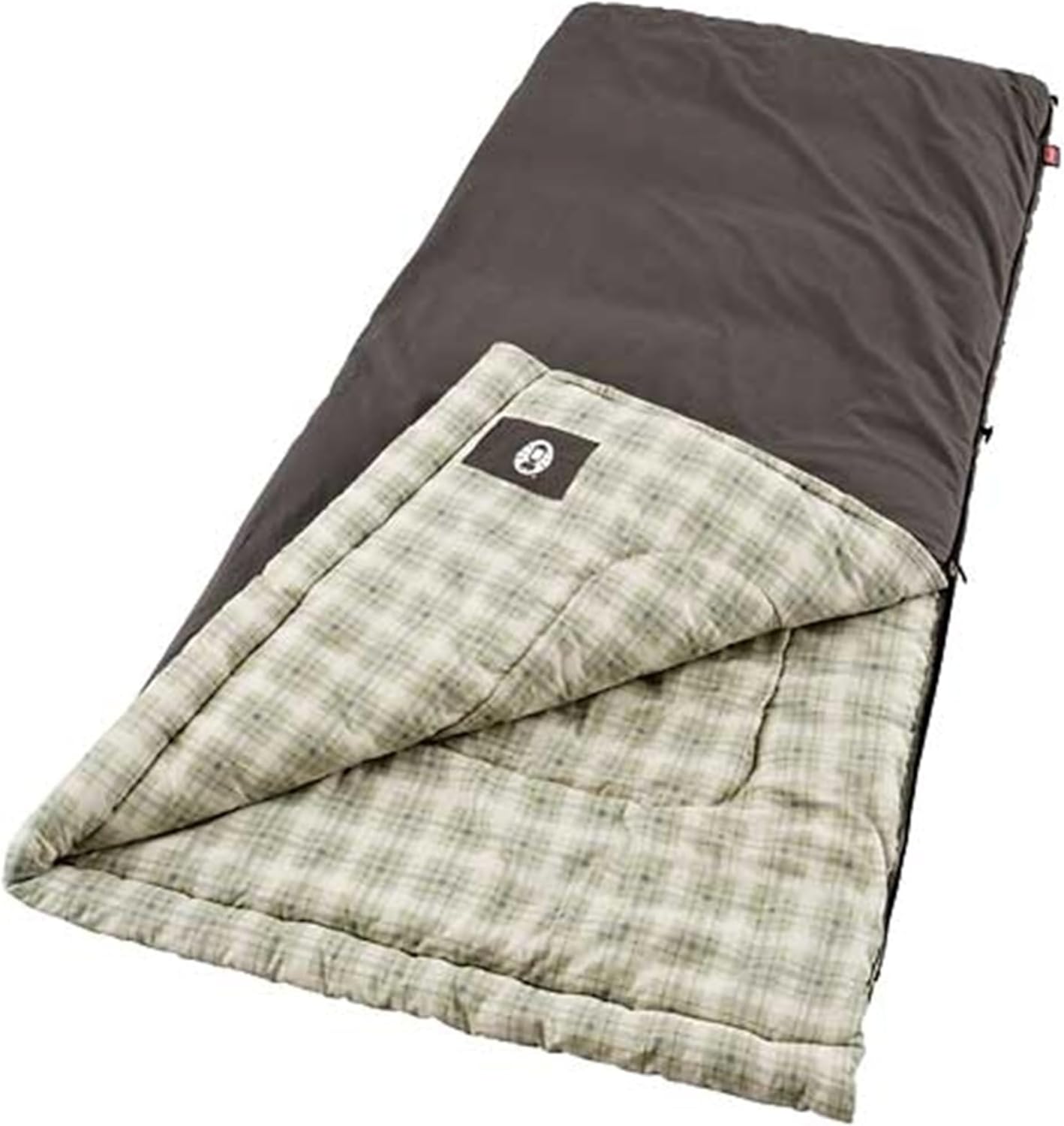
Coleman Heritage Big & Tall 10°F Bag
Roomy XL bag rated to 10°F with flannel comfort; machine washable and built tough for family camping.
Why we love it
- Fits tall adults or two kids bundled close
- Flannel liner beats scratchy nylon on skin
- Machine washable beats campfire smell
Pros
- 5 lbs Holofill insulation traps heat
- Flannel liner instead of cheap nylon
- No-snag zipper holds up to kids
- Machine washable for easy cleanup
- XL size fits adults up to 6'7"
Cons
- Heavy for backpacking trips
- Rectangular cut wastes heat around edges

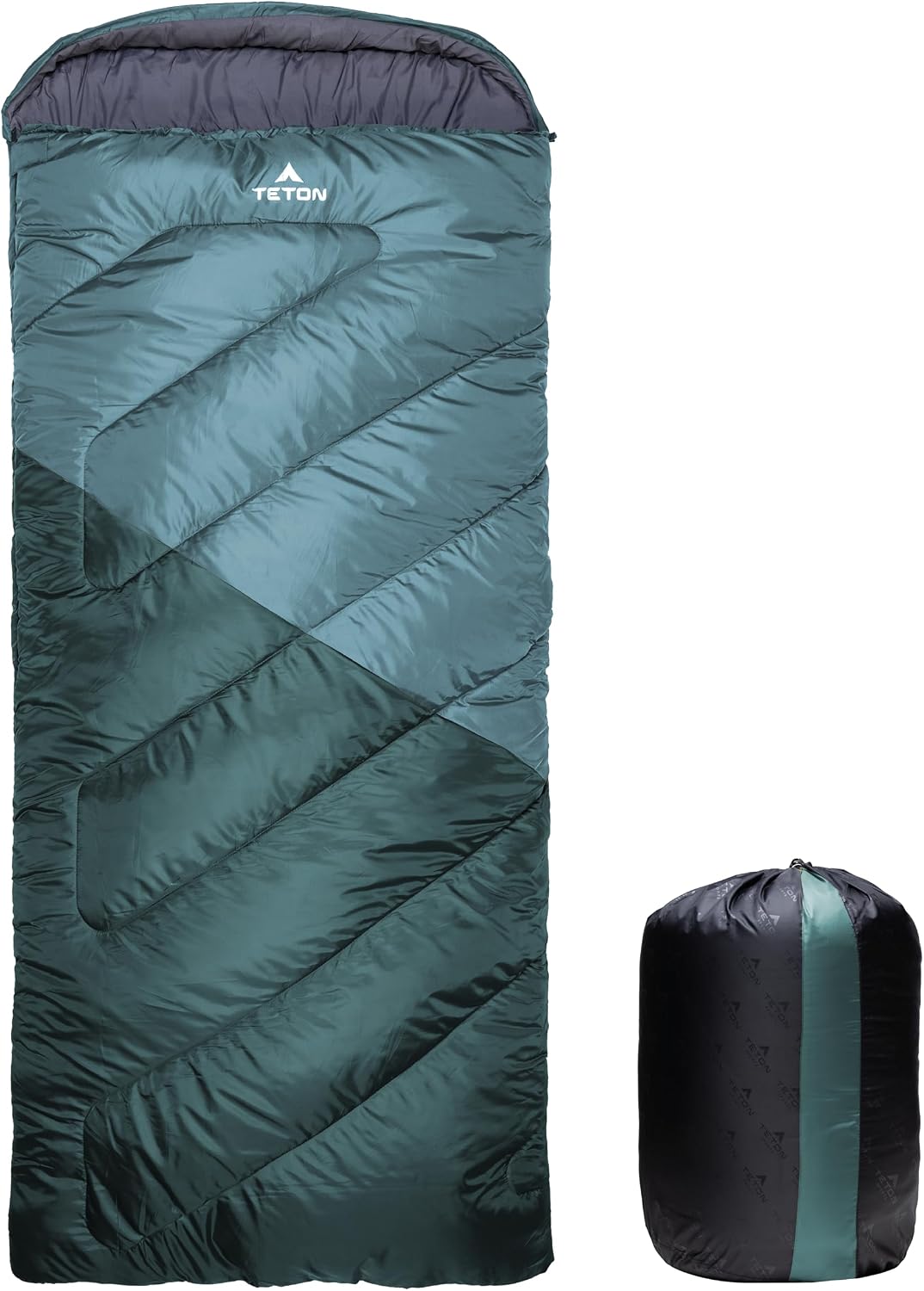
TETON Deer Hunter -35F Bag
A roomy, heavily insulated bag built for car camping in shoulder-season cold, with enough warmth to keep kids comfortable on frosty state-park nights.
Why we love it
- Double-layer canvas shell survives wet minivan packing
- Cinch hood and draft tubes lock warmth on cold mornings
- Rated to -35F, so you stay warm without layering games
Pros
- Roomy rectangular cut, fits kids without cramping
- Heavy-duty canvas shell withstands repeated use
- Flannel lining soft and warm against skin
- Draft collar and hood cinch seal heat in cold
- Rated to -35F for true cold-weather camping
Cons
- Heavy and bulky, car camping only
- Not packable for backpacking trips

QEZER Down Mummy 600 Fill 0F Bag
Compact down mummy rated to 0F, packs small enough for backpacking but warm enough for frosty state-park nights with the kids.
Why we love it
- 600-fill down compresses to 13x6 inches
- Dual zippers let you zip two bags together
- Mummy cut with trapezoidal foot box fits kids
Pros
- 600-fill down insulation
- Dual side zippers for couples or kids
- Compact packed size for minivan trips
- Trapezoidal foot box design
- Tear-resistant nylon shell
Cons
- Down loses loft if it gets damp
- Rated limit, not comfort temperature

TETON Deer Hunter Sleeping Bag -35F
A roomy, well-insulated bag that handles cold nights and family camping without breaking the bank.
Why we love it
- Canvas shell survives wet minivan trips and rough handling
- Mummy hood and draft tubes trap heat on frosty mornings
- Spacious cut fits kids comfortably without claustrophobia
Pros
- Double-layer construction for durability
- Mummy-style cinch hood traps warmth
- Flannel lining soft and comfortable
- Canvas shell built to last years
- Rated to -35F for cold camping
Cons
- Heavy at 8.5 to 17.5 lbs packed
- Bulky packed size limits backpacking use

Teton Celsius 25F Sleeping Bag
Flannel-lined bag that keeps kids warm and doesn't fall apart after a wet Oregon weekend.
Why we love it
- Flannel lining beats synthetic slickness on cold nights
- Two-way zippers work with gloves and tired kids
- Unzips flat to blanket when the cabin gets stuffy
Pros
- Soft flannel lining
- Water-resistant taffeta shell
- Draft tubes at shoulders and zipper
- Stuff sack included
- Interior pocket for keys and phone
Cons
- Heavier than ultralight options
- SuperLoft fill needs a quality pad underneath

ALPS OutdoorZ Redwood -10F Bag
Roomy rectangular bag that keeps kids warm on cold state-park nights and survives being stuffed wet into the minivan.
Why we love it
- Flannel lining feels like a blanket kids actually want to sleep in
- Zips to a second bag for family warmth on frosty nights
- Canvas shell handles wet gear and rough packing without tearing
Pros
- Oversized 38x80 inch cut fits growing kids
- Two-layer TechLoft insulation keeps cold spots away
- Heavy-duty zippers built for real use
- Cotton canvas shell resists wear and tears
Cons
- Heavier than backpacking bags, car-camp only
- Bulk makes it tough to pack tight in tight spaces
Rating Claims vs. Real Cold
Best sleeping bags for backcountry hunting get picked for one job: staying warm when the hunt keeps you out longer than planned. The temperature number on the tag tells you the survival limit, not the temperature where you actually sleep comfortably. That gap is where most hunters get cold on opening weekend, especially if they pair the bag wrong with a pad or wear too little underneath.
Backcountry hunting means you are carrying the bag, not driving to a campground. Weight matters, but so does whether you can actually sleep in the thing at 2 a.m. when the wind picks up and your core temp drops. The bags here balance packability against real warmth, and they handle the damp that comes with late-season hunts.
What the Temperature Rating Really Means
The number on a hunting bag is the extreme survival temperature, not the comfort rating. A 10-degree bag keeps you alive at 10 degrees if you are still and dry, but you will not sleep well there. Most hunters need a bag rated 10 to 20 degrees colder than the coldest night they expect. A 0-degree bag is the practical floor for serious cold hunts, and a 10 or 15-degree bag handles early season or mild climates. The Coleman Heritage Big & Tall 10-Degree Flannel Sleeping Bag is rated to 10 degrees with 5 pounds of Holofill synthetic fill, which is honest for a car-camping bag but aggressive for backcountry trust.
Synthetic vs. Down in Wet Conditions
Synthetic insulation keeps working when it gets damp, which matters on coastal hunts or late-season trips where fog rolls in at night. Down clumps when wet and loses all loft, but it compresses tighter and weighs half as much for the same warmth. The Down Mummy Sleeping Bag with 600 Fill Power packs to 13.78 by 6.3 inches at 2.34 pounds, which is real weight savings on a multi-day pack. If you hunt in dry high desert, down wins on packability. If you hunt coastal ranges or timing puts you in wet weather, synthetic earns its bulk.
Mummy vs. Rectangular for Trail Use
Mummy cut wraps close to your body and traps heat efficiently, critical for backcountry where you are pushing your thermal limits. Rectangular bags give you room to move and layer underneath, but cold air pools around you and you lose efficiency. For backcountry hunting, mummy is the right choice. The TETON Sports Deer Hunter Sleeping Bag uses a canvas shell with a mummy-style hood and draft collar, designed for cold weather and built to last through seasons of use.
Draft Collar and Hood as Temperature Insurance
A full draft collar seals the shoulder hole where heat escapes fastest. A mummy hood that cinches around your head adds 5 to 10 degrees of real warmth because you lose huge amounts of heat through your head and neck. Bags without a hood or with a shallow one leave you cold no matter the fill. Check whether the zipper has a draft tube on both sides, stopping cold air from flowing through the seam. Most hunting bags at this level include both, but verify before buying.
A rated temperature is a survival number, not a sleep number. Buy for 10 to 20 degrees colder than your actual low.
Weight and Packed Size Trade-offs
Backcountry means your pack weight matters every step. A down bag that compresses to shoebox size weighs 2 to 3 pounds. A synthetic bag with the same warmth often weighs 4 to 5 pounds and takes up half again as much room. Over a multi-day hunt, that compounds. But if your trips are 1 to 2 nights and you hunt wet regions, the synthetic durability and performance in damp conditions may outweigh the weight penalty.
Canvas shell bags, like those TETON makes for hunting specifically, are heavier than nylon. Canvas is tough against brush and rocks, which matters if you are crawling into tight spots or setting up camp on rough ground. Nylon is lighter and packable, which matters if you are covering distance. Decide whether durability or packability weighs more for your hunting style.
How Many Grams Actually Matter
The difference between a 2.5-pound bag and a 3.5-pound bag is real on your back over 5 miles of elevation gain. But a 0.5-pound difference is not why anyone gets cold. If a heavier synthetic bag performs better in wet conditions where you actually hunt, the weight is not a problem. If you are choosing between two bags and one is both lighter and warmer, pick the light one. If you are trading warmth or durability for 4 ounces, keep the warmer bag.
Packed Volume vs. Pack Space
A mummy bag packed tight into a stuff sack sits between your pack’s main compartment and your back, taking almost no extra room. A rectangular bag stuffed loosely creates bulk that forces you to pad your pack around it, wasting space. For backcountry, the mummy’s efficiency is not just about warmth, it is about packing smart. Confirm that a bag comes with a stuff sack and that the packed dimensions fit your pack frame.
In backcountry hunting, weight matters less than whether the bag actually keeps you warm where you hunt.
Caring for a Hunting Bag Between Seasons
A bag packed away compressed, especially down, loses loft year to year. Store it uncompressed in a mesh bag in a cool, dry place. Wash it once a year in cool water on gentle cycle, then dry it low heat with a few wool dryer balls to break up clumping. Synthetic bags are more forgiving in the wash, but both types die if you leave them wet or moldy. A bag you spent the season sleeping in deserves an hour of care in spring.
Down Care and Loft Recovery
Down that has been compressed for months will feel flat when you first unpack it. Hang it in the sun for a few hours before your trip, and it will loft back up. If down gets damp, hang it in moving air, not direct sun, until completely dry. A clumped section of down in your bag is permanent, so prevent moisture from the start by using a good sleeping pad underneath and wearing dry base layers. Never use a down bag in snow without a bivy sack or waterproof outer, or you will learn this lesson the hard way.
Synthetic Bag Washing
Synthetic bags tolerate washing better than down, but still use cool water and gentle cycle. Machine dry on low heat, and the bag will be ready in an hour. Synthetic does not loft back after compression the way down does, so it arrives ready to use. The trade-off is that synthetic bags do not compress as small or stay compressed as long. If you hunt every fall and use the bag hard, synthetic may actually hold up better because you are not fighting loft loss and compression memory.
Using Your Bag Right in the Backcountry
The best bag in the world will not keep you warm if you are lying on cold ground. A sleeping pad with R-value 3 or higher is not optional. Wear dry base layers and a hat to bed. Fill your water bottle with hot water and put it near your feet or core to add a few degrees. These habits matter as much as the bag itself, especially on hunts where conditions drop below the bag’s comfort range.
Pad Pairing and Ground Insulation
A bag rated to 0 degrees only delivers that performance on an insulated pad. Lying on bare ground or a thin closed-cell pad, you lose half the bag’s effective rating because cold conducts through you faster than the bag can fight it. A foam pad with R-value 3 to 5, or an inflatable pad with R-value 4 to 6, is the minimum. Combine them if you are pushing limits. Test your pad and bag combination in your backyard before the hunt, not on opening weekend.
Layering Underneath to Stay Warm
A fleece or down jacket and thick wool socks inside the bag add warmth without adding bag weight. Wear a hat to bed, because heat loss through your head and neck is enormous. A lightweight balaclava takes almost no space in your pack. Keep your base layers dry during the day so you have dry insulation for night. Sweat in a bag kills warmth fast, so avoid overdressing during activity.
Moisture Management in the Bag
Breathing inside a bag creates condensation, especially on cold nights. Crack the zipper slightly or vent the foot if you start to feel damp, even if it is cold. Your core warmth will keep you warm with slight ventilation, and staying dry is more important than sealing tight. If morning comes and your bag is damp, hang it open to air during the day. Damp insulation loses warmth fast and grows mold in your pack.
Tips From the Trail
- Store uncompressed in a mesh bag. Compression kills loft over time, especially in down. A mesh storage bag lets the insulation breathe between seasons.
- Wash once a year in cool water on gentle cycle. Sweat and body oils break down insulation faster than normal use. A single wash keeps the bag fresh and lofty for years.
- Dry low heat with wool dryer balls. High heat damages synthetic and can clump down. The balls help fluff it back up as it dries.
- Test your pad and bag combo at home before the hunt. A cold night in your backyard beats discovering a gap in your insulation at 11,000 feet in October.
- Wear a hat and keep socks dry. Heat loss through your head is fast, and wet socks pull warmth from your core all night. Both are free or almost-free warmth.
- Crack the zipper if you wake up damp. A little ventilation is worth more than a sealed bag that traps moisture. Dry insulation is warm insulation.
Common Questions
Does a temperature rating actually mean what it says?
No. The number is the extreme survival limit, not where you sleep comfortably. You need a bag rated 10 to 20 degrees colder than your actual expected low. A 10-degree bag is for nights that actually hit 0 to 10 degrees, not for 10-degree nights where you want to be comfortable.
What is fill power and does it matter for hunting?
Fill power measures how much volume a given weight of down occupies. 600 fill power is mid-range for down bags and balances cost and compressibility. Higher fill (800 to 1000) compresses smaller and weighs less but costs more. For backcountry hunting, 600 fill is solid, and 400 to 550 fill is still useful if you find a good synthetic alternative that handles damp better.
Can I use a hunting bag for three-season backpacking?
Yes, if the rating fits. A 15 or 20-degree hunting bag handles spring and fall backpacking fine. A 0-degree bag is overkill for summer but works. The real question is whether the weight and bulk make sense for the trips you take. If you hunt in October and backpack in June, one bag does both jobs if the rating is in the middle of your range.
Is synthetic or down better for hunting in the rain?
Synthetic performs better in wet conditions because it retains loft when damp. Down loses almost all warmth when wet and takes forever to dry. If your hunting region gets rain or fog, synthetic is the safer choice. A dry bag for the sleeping bag inside your pack is also smart insurance with either fill type.
How long do these bags actually last?
A well-maintained bag lasts 8 to 12 years or longer if you use it 10 to 20 nights a year. Canvas and synthetic shells are tough. Zippers fail before the insulation does, and replacement zippers can be installed. The insulation itself does not wear out from use, only from compression storage and moisture. A bag that gets cared for between seasons will outlast one that does not by years.
What is the difference between a hunting bag and a regular camping bag?
Hunting bags often use canvas shells for toughness against brush and rock, and they tend to have heavier draft collars and hoods for extreme cold. Regular camping bags prioritize packability and versatility. A hunting bag is often heavier, bulkier, and colder-rated than a hiking bag of the same warmth level. If you hunt rough country, the durability is worth the weight. If you backpack smooth trails, a hiking bag is smarter.


Write Your Review
No reviews yet. Be the first to share your experience!