


ORTHOMTEX 0-25F Sleeping Bag
Waterproof synthetic bag rated 0-25F with zippered combo design; machine washable and kid-tough for family camping.
Why we love it
- Zips to another bag for shared warmth on cold nights
- Machine washable synthetic fill dries fast after damp trips
- Two-way zipper lets you vent on warm evenings or seal tight
Pros
- Waterproof outer shell
- Zips to matching bag for doubles
- Machine washable synthetic fill
- Adjustable hood with drawstring
- Two-way zipper for temperature control
Cons
- Synthetic fill bulkier than down
- Rated temperature is limit, not comfort zone

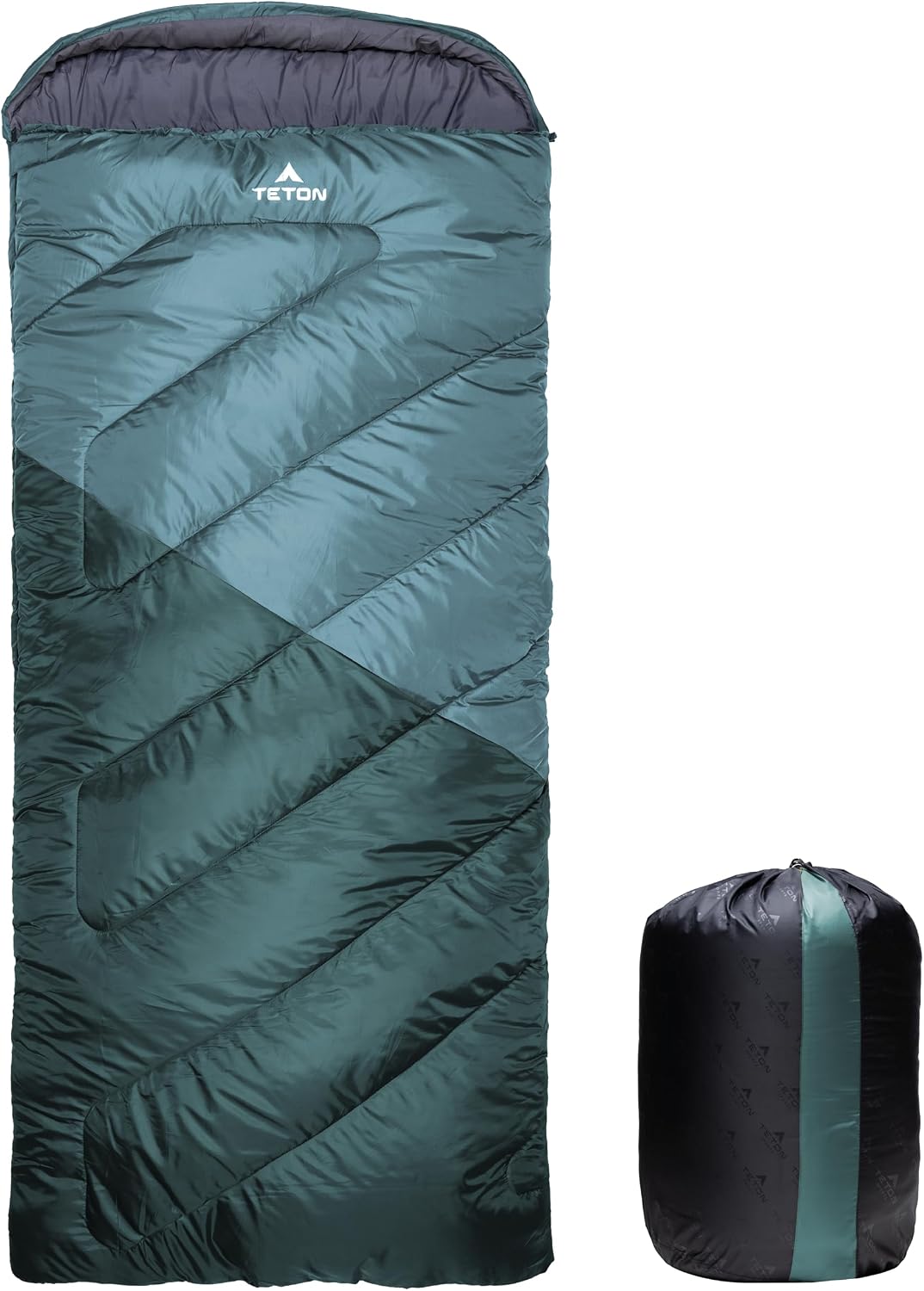
Teton Celsius 25F Sleeping Bag
Flannel-lined bag that keeps kids warm and doesn't fall apart after a wet Oregon weekend.
Why we love it
- Flannel lining beats synthetic slickness on cold nights
- Two-way zippers work with gloves and tired kids
- Unzips flat to blanket when the cabin gets stuffy
Pros
- Soft flannel lining
- Water-resistant taffeta shell
- Draft tubes at shoulders and zipper
- Stuff sack included
- Interior pocket for keys and phone
Cons
- Heavier than ultralight options
- SuperLoft fill needs a quality pad underneath

Teton TrailHead 20F Sleeping Bag
Synthetic mummy bag that stays warm when damp and packs small enough for the minivan, at a price that won't hurt the family budget.
Why we love it
- Synthetic fill handles wet coastal trips better than down
- Draft collar and hood seal warmth on frosty mornings
- Stuff sack keeps gear organized in a packed car
Pros
- Lightweight synthetic insulation
- Full-length anti-snag zipper
- Oversized mummy fit for comfort
- Draft collar and hood included
- Compression sack in the box
Cons
- Synthetic bulk adds packed volume
- 20F rating is survival limit, not comfort

ECOOPRO Warm Weather Sleeping Bag
Budget envelope bag that fits two kids or an adult, rated for warm weather but genuinely compact for family car camping.
Why we love it
- Squeezes two small kids or one adult comfortably
- Rolls down to 11 inches, fits in the minivan easy
- Machine washable after muddy trail weekends
Pros
- Fits two children side by side
- Ultra-lightweight at 1.45 lbs
- Waterproof nylon outer shell
- Compresses small for tight packing
Cons
- 55-60°F rating limits shoulder-season use
- Thin material won't handle heavy abuse

QEZER Down Mummy 600 Fill 0F Bag
Compact down mummy rated to 0F, packs small enough for backpacking but warm enough for frosty state-park nights with the kids.
Why we love it
- 600-fill down compresses to 13x6 inches
- Dual zippers let you zip two bags together
- Mummy cut with trapezoidal foot box fits kids
Pros
- 600-fill down insulation
- Dual side zippers for couples or kids
- Compact packed size for minivan trips
- Trapezoidal foot box design
- Tear-resistant nylon shell
Cons
- Down loses loft if it gets damp
- Rated limit, not comfort temperature
What Actually Matters When You Pick One
Most best hiking sleeping bags reviews come from people who unrolled a bag on a living room floor and called it tested. I have packed these bags away damp, watched down clump after a bad wash, and helped friends buy the wrong rating for the season they actually camp in. The gap between a temperature rating on a hang tag and how a bag actually sleeps at 2 a.m. is where most buyers get burned.
The picks above share one trait: they deliver what the spec promises, or at least come close enough that you can trust the number. That matters because a bag that sleeps warm at 20 degrees but weighs three pounds is not the same bag as one that hits the same rating at two pounds. One works for car camping, the other works for the Cascades.
Synthetic vs Down Insulation
Synthetic fill stays lofty when damp and dries faster, which is why it dominates in wet coastal air. The trade-off is weight and packed bulk. A synthetic bag rated to 20 degrees typically runs heavier and takes up more space than a down equivalent. The ORTHOMTEX Sleeping Bag for Adults, Kids & Girls uses polyester fill and waterproof nylon, designed for 3 to 4 season use. Down fill compresses smaller and weighs less for the same warmth, but loses loft when wet and takes time to dry. A 600 fill power down bag like the Down Mummy Sleeping Bag for Adults gives you 2.34 pounds and a packed size of 13.78 by 6.3 inches. Choose synthetic if you camp in the Pacific Northwest wet season. Choose down if weight matters more than weather risk.
Temperature Rating vs Real Warmth
A 20-degree rating is the limit number, not the comfort number. That is the lowest temperature at which a standard adult sleeps warm enough to survive. Comfort is 20 to 30 degrees higher. So a 20-degree bag keeps you alive at 20 degrees, but you sleep warm at 40 to 50 degrees. The Teton 20F and 5F Degree Sleeping Bag is survival rated to 20 degrees, meaning comfort sits around 40 to 50 degrees. Add a sleeping pad with R-value 3 or higher, wear a hat, and you move the real number down by 10 to 15 degrees. This is why a bag rated 20 degrees works for spring Cascades if you have a good pad underneath.
Mummy vs Rectangular Shape
Mummy bags fit snug around your shoulders and hips, trapping dead air close to your body. They weigh less and pack smaller because there is less interior volume to heat. The QEZER Down Mummy has a trapezoidal foot box that gives your feet room without wasting heat. Rectangular bags give you room to move and work well for car camping or if you sleep restless. The trade-off is that you heat more air, so you need more insulation or a warmer rating to feel the same. Mummy bags win for backpacking. Rectangular wins for car camping with the kids.
Draft Collar and Hood Design
A full draft collar blocks warm air from escaping where the bag cinches around your shoulders. A hood that cinches tight keeps heat in around your head and face. These two features matter more than fill type when the temperature drops. The Teton Celsius Regular Sleeping Bag has a half-circle mummy-style hood and double-layer construction with draft tubes. Without a good hood and collar, a 20-degree bag sleeps cold at 30 degrees. With both, you can push it down another 10 degrees.
Temperature rating tells you the limit, not the comfort. Pad R-value and a good draft collar move the real number down by 10 to 15 degrees.
Fill Power, Loft, and Weight Trade-offs
Understanding Fill Power
Fill power measures how many cubic inches one ounce of down occupies. A 600 fill power down compresses tighter and weighs less than 400 fill power down at the same warmth rating. But higher fill power costs more and requires better care. A 600 fill bag like the QEZER Down Mummy gives you loft that bounces back after compression, while a 400 fill bag takes longer to re-loft. If you compress a down bag for months without ventilation, the down can clump and lose warmth. This is why storage matters as much as the fill power number.
Packed Size vs Weight
The QEZER Down Mummy weighs 2.34 pounds and compresses to 13.78 by 6.3 inches. That is roughly half the volume of a polyester bag at the same warmth. But synthetic bags like the ORTHOMTEX stay lofty even when compressed, so they do not suffer from clumping. If you pack a bag tight in a stuff sack for weeks, synthetic is more forgiving. Down rebounds faster once you unpack it, but it demands respect during storage. For backpacking where weight matters, down wins. For car camping where you unpack the bag each night, synthetic is easier to live with.
How to Check Loft Before Buying
If you can handle the bag in person, fluff it for a few minutes and feel how quickly it re-expands. Press down on the top with your hand and watch how fast it springs back. A high fill power bag bounces back in seconds. A lower fill bag takes longer. If you are buying online, read reviews that mention how the bag feels after sitting compressed in the bag. Ask whether the reviewer had to shake it out or hang it to re-loft. A bag that takes hours to re-loft is signaling lower fill quality or a synthetic blend that does not respond as fast.
Down packs smaller but demands storage respect. Synthetic is heavier but forgives long compression.
Seasonality and Temperature Ranges
Three-Season vs Four-Season Bags
A three-season bag works spring through fall, roughly 30 to 70 degrees. Most of the picks above are three-season bags. A four-season bag adds insulation for winter use, 0 to 40 degrees, and weighs more. The ORTHOMTEX is rated 3 to 4 season with a temperature range of 0 to 25 degrees, meaning it bridges the gap. If you camp only in spring and summer, a three-season bag is all you need. If you want one bag for Cascades trips in April and October, you need a bag rated to at least 15 to 20 degrees.
Warm Weather vs Cold Weather Use
A warm weather bag, like the ECOOPRO Warm Weather Sleeping Bag rated 55 to 60 degrees, works for summer car camping or low-altitude trips. It is lightweight and compact because it has minimal insulation. A cold weather bag adds loft and a full hood, pushing the rating down to 0 degrees or lower. The weight difference is significant. A warm weather bag might weigh 1.7 pounds. A 0-degree bag weighs 3 to 4 pounds. Choose based on when and where you actually camp, not on a theoretical worst case.
Shoulder Seasons and Layering
Spring and fall in the Cascades demand a 15 to 20-degree bag because nights drop fast. If you have a 30-degree bag, you can add a liner or sleep in a fleece to move the effective rating down by 5 to 10 degrees, but you are fighting the bag instead of trusting it. A bag rated for the season you actually camp in sleeps better and requires less fussing. If you camp across multiple seasons, a 15 to 20-degree bag is the sweet spot. It works for summer at altitude, spring and fall in the mountains, and winter if you add a pad with R-value 4 or higher.
What Happens When You Use It
Pairing With a Sleeping Pad
A sleeping pad is not optional. The insulation under your body is as important as the insulation on top. A bag rated 20 degrees assumes you are on a pad with R-value 3 to 4. Without a pad, the ground pulls heat out of the bottom of the bag and you sleep 15 to 20 degrees colder. With a pad rated R-value 5 or higher, you can reach the bag’s rated temperature even in colder air. If you sleep on a thin foam pad with R-value 1, a 20-degree bag sleeps like a 30-degree bag. This is why the Teton bags mention using an insulated camp pad to sleep warmer.
Moisture Management and Condensation
Your breath and sweat create moisture inside the bag. On a cold night, that moisture can condense on the inner shell and dampen the insulation. A bag with a breathable lining and good ventilation sheds some of that moisture. Synthetic bags handle this better than down because synthetic retains loft even when slightly damp. If you camp in humid conditions, crack the top of the bag open an inch or two to let moisture escape. If your bag gets wet from rain or a leaky tent, hang it in the sun or drape it over a tree to dry. Down takes hours to dry. Synthetic dries faster but still needs air circulation.
Zipper Care and Draft Tubes
A two-way zipper lets you open the bottom for ventilation on warm nights and close it tight on cold nights. The draft tube is a strip of insulation along the zipper that blocks cold air from leaking through the slider. If your zipper sticks or snags, do not force it. Spray a little silicone lubricant on the slider and work it gently. Avoid getting lubricant on the insulation. A stuck zipper on a cold night is miserable, so test it at home before a trip. The ORTHOMTEX includes a two-way zipper with a zipper guard specifically to prevent snagging.
Tips From the Trail
- Fluff your bag before bed. Spend two minutes shaking and massaging the insulation to restore loft. A compressed bag sleeps 5 to 10 degrees colder than one that has been fluffed.
- Store it uncompressed in the off-season. Hang it in a closet or lay it flat in a storage bag. Long-term compression damages loft, especially in down. Stuff sacks are for travel, not storage.
- Wash it only when needed. Most bags do not need washing for years. When you do wash, use a gentle cycle with down-specific soap, never dry-clean. Synthetic bags can handle machine wash on delicate, but check the label.
- Air it out after a wet trip. Hang the bag in the sun for a few hours to evaporate moisture and kill odors. Do not use a dryer on high heat, which damages the shell and insulation.
- Test the fit at home first. Climb into the bag, lie down, and check that the hood does not pinch your face and the zipper does not catch fabric. Spend 10 minutes in it to feel how it drapes around your shoulders.
- Keep the compression sack dry. If your pack gets wet, the sack keeps water off the bag for a while, but it is not waterproof. On a long wet trip, open the sack and let the bag breathe.
Common Questions
Does a temperature rating really mean what it says?
No. The rating is a survival limit, not a comfort number. A 20-degree bag keeps a standard adult alive at 20 degrees, but most people sleep warm at 40 to 50 degrees in that same bag. The rating assumes you are on a good pad, wearing a hat, and hydrated. If you are cold-blooded or sleep restless, add 10 degrees to the rating for your real comfort number.
Can I use a summer bag in spring?
Not reliably. A 55-degree bag is designed for warm nights. In spring Cascades, where temperatures drop to 35 degrees at night, you will be cold. You can add a liner or sleep in a fleece, but that is fighting the bag. Buy a bag rated for the coldest night you expect to encounter.
How long does a sleeping bag last?
With care, 10 to 15 years or more. Down lasts longer if you store it uncompressed and avoid getting it wet. Synthetic degrades faster from UV exposure and repeated washing, but still delivers 8 to 10 years of solid use. The zipper often fails before the insulation does.
What should I wear inside the bag?
Dry base layers, a hat, and socks. Your body generates heat that the bag traps. Wet clothing kills that system. A hat keeps heat from escaping through your head. Socks insulate your feet from the cold ground even with a pad underneath.
Can I zip two bags together?
Only if both bags have compatible zippers and are designed for coupling. The ORTHOMTEX and QEZER bags include left and right zippers that can couple to form a double bed. Regular bags have zippers on opposite sides and cannot couple. Check the product description before assuming you can link two bags.
How much does a good sleeping bag actually weigh?
A three-season synthetic bag runs 2 to 3 pounds. A three-season down bag runs 1.5 to 2.5 pounds. A four-season bag adds 0.5 to 1 pound. For backpacking, weight matters. For car camping, it does not. The QEZER Down Mummy at 2.34 pounds is on the lighter end because of its 600 fill power down.


Write Your Review
No reviews yet. Be the first to share your experience!