

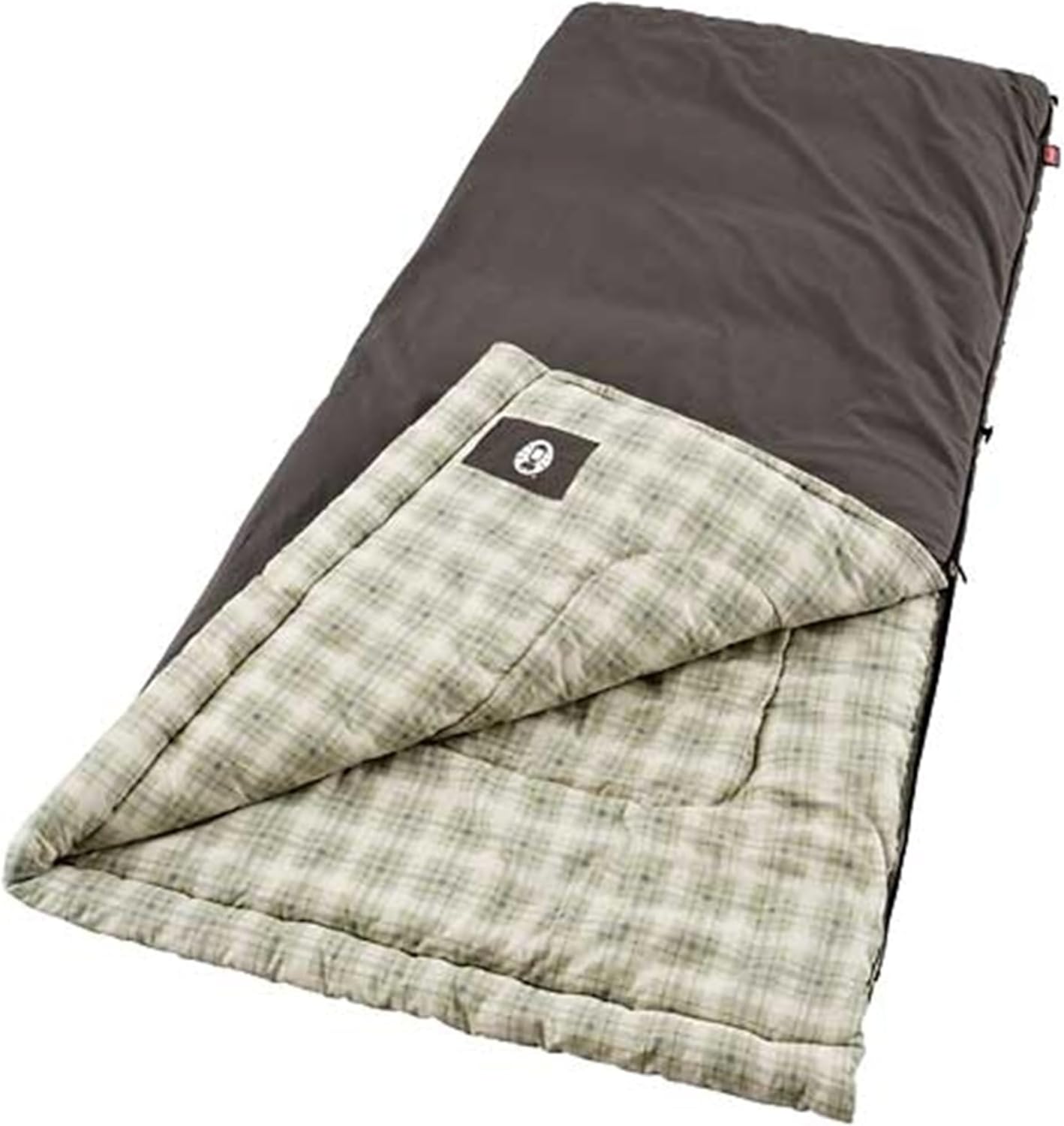
Coleman Heritage Big & Tall 10°F Bag
Roomy XL bag rated to 10°F with flannel comfort; machine washable and built tough for family camping.
Why we love it
- Fits tall adults or two kids bundled close
- Flannel liner beats scratchy nylon on skin
- Machine washable beats campfire smell
Pros
- 5 lbs Holofill insulation traps heat
- Flannel liner instead of cheap nylon
- No-snag zipper holds up to kids
- Machine washable for easy cleanup
- XL size fits adults up to 6'7"
Cons
- Heavy for backpacking trips
- Rectangular cut wastes heat around edges
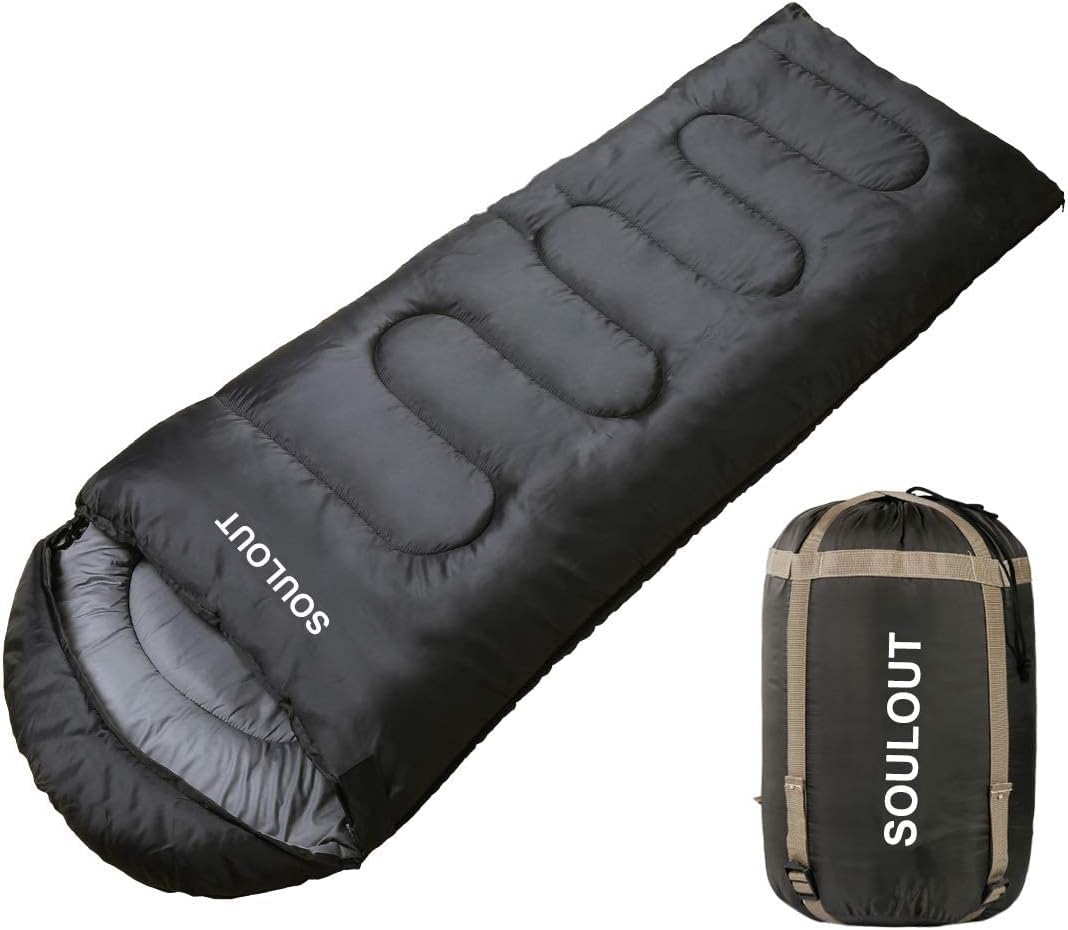
SOULOUT 3-4 Season Sleeping Bag
Roomy rectangular bag that keeps kids warm on chilly state-park nights and survives the minivan without complaint.
Why we love it
- Rectangular cut gives kids room to move
- Water-resistant shell handles damp mornings
- Machine washable, no fuss after muddy trips
Pros
- Spacious envelope design for comfort
- Water-resistant outer shell
- Machine washable synthetic fill
- Includes compression sack
- Good warmth for spring and fall camping
Cons
- Bulky when packed for backpacking
- Rated limit, not comfort temperature

QEZER Down Mummy 600 Fill 0F Bag
Compact down mummy rated to 0F, packs small enough for backpacking but warm enough for frosty state-park nights with the kids.
Why we love it
- 600-fill down compresses to 13x6 inches
- Dual zippers let you zip two bags together
- Mummy cut with trapezoidal foot box fits kids
Pros
- 600-fill down insulation
- Dual side zippers for couples or kids
- Compact packed size for minivan trips
- Trapezoidal foot box design
- Tear-resistant nylon shell
Cons
- Down loses loft if it gets damp
- Rated limit, not comfort temperature

ORTHOMTEX 0-25F Sleeping Bag
Waterproof synthetic bag rated 0-25F with zippered combo design; machine washable and kid-tough for family camping.
Why we love it
- Zips to another bag for shared warmth on cold nights
- Machine washable synthetic fill dries fast after damp trips
- Two-way zipper lets you vent on warm evenings or seal tight
Pros
- Waterproof outer shell
- Zips to matching bag for doubles
- Machine washable synthetic fill
- Adjustable hood with drawstring
- Two-way zipper for temperature control
Cons
- Synthetic fill bulkier than down
- Rated temperature is limit, not comfort zone

REDCAMP Cotton Flannel Sleeping Bag
Durable cotton flannel bag that handles Oregon shoulder-season camping without breaking the budget.
Why we love it
- Cotton flannel lining stays comfortable in damp conditions
- Two bags zip together for family sleeping setup
- Stuff sack packs small enough for minivan trips
Pros
- Cotton flannel lining breathes well
- Hollow fiber fill handles 5-32°F range
- Waterproof exterior wipes clean easily
- Right or left zipper option
- Two-person capacity for smaller kids
Cons
- Heavier than modern synthetic bags
- Cotton can retain moisture if wet

Cotton Flannel XXL Winter Sleeping Bags for Adults
Previous page Next page 1 8lb Winter Sleeping Bag 2 Machine Washable 3 Multiple ColorsPrevious page Next page 1 Wind Baffle 2 Anti-Pinch Strip 3 Halef-Circle Hood 4 Free Feet 5 Internal PocketPrevious page Next pagePrevious page Next page 1 Indoor Use 2 Outdoor Use
Why we love it
- Flannel
- Imported
- 【KEEP WARM】Soft cotton flannel lining soft and keep warm,bring a better sleep experience.Adjustable Half-Circle Hood comes with an elastic draw string to tighten the hood like a hoodie.Neck windbreak strip fits the neck, reducing heat loss.The foot zipper can be opened separately ffor easy access and ventilatio.
What Makes a Bag Work Across All Seasons
A true all-around sleeping bag sits in the middle of the spectrum. Best all around sleeping bags are the ones that don’t force you to choose between weight and warmth, or between car camping comfort and trail packability. After 14 years of rotating gear through the Cascades, the coast, and the high desert, I’ve learned that versatility isn’t about being mediocre at everything. It’s about being genuinely capable across the seasons most people actually camp in.
The mistake I see most often is someone buying a bag rated for one specific temperature and then being shocked when it doesn’t work for the three months they planned to use it. A bag that handles spring, fall, and shoulder-season camping needs to balance loft and packability, have a draft collar that actually works, and not demand a premium pad underneath just to stay warm.
Synthetic vs. Down: The Versatility Trade
Synthetic insulation tolerates damp conditions better and recovers loft faster after compression, which matters if you’re packing and unpacking weekly. A bag filled with polyester holds its shape even when humidity creeps in from coastal fog or morning dew. Down insulation compresses smaller and weighs less, but it demands respect. A 600 fill power down bag like the Down Mummy Sleeping Bag for Adults, 600 Fill Power Backpacking gives you serious warmth in a 2.34 pound package, though it needs a dry environment and a decent sleeping pad to earn its temperature rating.
Shape and Interior Room
Rectangular bags give you the most interior space and let you sleep any position without restriction. They pack larger but are warmer per ounce because that extra room is dead air that traps heat. Mummy bags hug your shoulders and taper at the feet, cutting heat loss and saving weight. The Sleeping Bags for Adults, Kids & Girls, Waterproof, Camping, Hiking | 3-4 Season bridges both worlds with an envelope design that offers generous room without the bulk of a full rectangle.
Temperature Rating Reality
A bag’s temperature number is the limit rating, not the comfort rating. That means a 10-degree bag keeps you alive at 10 degrees, not comfortable. For actual all-around use, a 20-degree to 30-degree rated bag covers most spring, fall, and mild winter camping. The Coleman Heritage Big & Tall 10°F Flannel Sleeping Bag rates at 10 degrees and packs 5 pounds of synthetic insulation, making it a genuine cold-weather option without the weight penalty of down.
Packed Size and Car Camping Versatility
An all-around bag needs to fit in a backpack on a three-day trip but also work for car camping without feeling cramped. Synthetic bags compress to roughly 20 to 30 liters with a good compression sack. Down bags shrink to half that volume. If you split your time between trail camping and base camps, consider how the bag stows in your pack and whether you can actually compress it enough to move on to the next site without frustration.
Versatility means the bag works for you, not the other way around.
Fill Quality and Longevity Under Real Use
Down Fill Power and Clumping Risk
Fill power measures how much volume one ounce of down occupies. A 600 fill power down is genuinely premium material. The problem is that down clumps when wet, and once it clumps, that section stops insulating. If you’re camping on the wet coast or in spring when everything is damp, a synthetic bag or a down bag with a water-resistant shell is not optional. Down bags need a protective layer and careful storage between trips.
Synthetic Fiber Durability
Polyester insulation doesn’t care if it gets damp. It dries faster and recovers loft on its own. The trade-off is that synthetic bags are heavier than down for the same warmth. They also compress less, so they take up more pack space. A synthetic bag rated for 3 to 4 seasons is a workhorse that tolerates being packed away slightly damp and still performs next weekend. Machine washability is standard on synthetic bags and makes field cleaning easier.
Checking the Stitching and Baffle Design
Look for box baffle or V-baffle construction, which prevents insulation from shifting inside the bag. A bag where the down or synthetic can migrate to one side will develop cold spots fast. Stitching should be tight and consistent. Run your fingers along the seams before buying if you can. Poor stitching is where heat escapes and where the bag fails in the field. A 5-year warranty suggests the maker expects the bag to hold up, but the stitching is what actually determines whether it will.
The best bag is the one you actually use, not the one that sits in a closet because it doesn’t fit your trips.
How to Pair a Sleeping Bag with a Pad
R-Value and Temperature Ratings Work Together
A sleeping bag’s temperature rating assumes you’re sleeping on a pad with an R-value of 2 to 3. If you’re on bare ground or a thin pad, you lose heat from below and the bag’s rating becomes fiction. A 20-degree bag on an R-value 1 pad performs like a 30-degree bag. Conversely, a good pad under a 30-degree bag gets you through nights that the rating alone wouldn’t handle. For all-around camping, pair a 20 to 30-degree bag with a pad rated R-3 or higher and you cover most seasons without buying multiple bags.
Testing Fit Before a Trip
Sleep in the bag at home first. Lie on your pad in the position you actually sleep in. A bag that feels roomy standing up can feel claustrophobic when you’re lying on your side with your knees bent. Check whether the draft collar closes properly around your neck without cutting off circulation. Confirm the zipper moves smoothly and doesn’t snag fabric. A 10-minute home test saves you from discovering problems at 2 a.m. on a cold night.
Venting on Warm Nights
All-around bags need to breathe when temperatures climb. A two-way zipper lets you open the foot end without unzipping the whole bag, shedding heat without exposing your torso. If you’re camping in shoulder seasons where nights cool but days warm, this feature matters. Some bags include a foot vent or a full-length zipper on one side. Test how much you can open the bag and still stay warm if the night cools unexpectedly.
Tips From the Trail
- Store it uncompressed between trips. Hanging it in a closet or laying it flat in a storage bag keeps the loft alive. Leaving it in a compression sack for months crushes the insulation permanently.
- Wash synthetic bags on gentle cycle, cold water. Dry on low heat or air dry. High heat breaks down the fibers. Down bags need special down wash and low heat drying, or take them to a professional cleaner if you’re unsure.
- Air out a wet bag immediately after a trip. Hang it in the sun for an afternoon if possible. Moisture left inside breeds mold and degrades the insulation.
- Inspect the zipper before every trip. Run it slowly in both directions. A stuck zipper at night is a real problem. A little silicone lubricant on the slider keeps it moving.
- Use a sleeping pad liner if you want to add warmth without buying a new bag. A fleece liner adds 5 to 10 degrees of effective warmth and extends the usable season of a 30-degree bag into early winter.
- Know the difference between comfort and limit ratings. The number on the tag is where the bag stops working, not where you sleep comfortably. Plan for bags rated 10 degrees colder than your expected low.
Common Questions
How much does a temperature rating actually matter?
It matters a lot, but not the way the tag suggests. A 20-degree rating means you’ll survive 20 degrees, not sleep comfortably there. Most people need a bag rated 10 to 15 degrees colder than the coldest night they’ll encounter. A 30-degree bag is genuinely comfortable down to around 40 degrees, not 30 degrees.
Can I use the same bag year-round?
Yes, if you choose the right rating and pair it with a good pad. A 20-degree bag works from fall through spring in most of the Pacific Northwest. Summer requires venting or a lighter setup. The trade-off is that a true all-around bag is a compromise. It won’t be as light as a summer-only quilt or as warm as a dedicated winter bag.
Is a more expensive bag always better?
Not necessarily. Premium down and ultralight shells cost more, but a well-made synthetic bag at half the price will outlast a cheap down bag. Look at the baffle construction, stitching quality, and warranty, not just the price tag. A bag that fits your trips and gets used regularly beats an expensive bag that sits unused.
How do I know if a bag is actually waterproof?
Most bags are water-resistant, not waterproof. The shell fabric repels light rain and morning dew, but heavy rain will eventually soak through. A waterproof bivy sack or tent keeps the bag dry. Down bags need extra protection. Synthetic bags tolerate some moisture better, but neither type should be counted on to stay completely dry in sustained rain without a shelter overhead.
What happens to a down bag if it gets wet?
Down loses loft and insulating value when wet. If your down bag gets soaked, hang it to dry completely in warm air or sunlight. Once dry, fluff it by hand to restore loft. If it stays wet or damp for days, mold can develop and permanently damage the down. This is why down bags are best paired with good shelters and why synthetic is more forgiving for damp conditions.
Can I wash my sleeping bag at home?
Synthetic bags handle home washing on gentle cycle with cold water and mild detergent. Air dry or low heat. Down bags are trickier. Special down wash exists, but many people take down bags to a professional cleaner to avoid damaging the fill. Check the care tag. If it says machine washable, the maker tested it. If it says hand wash only, respect that.


Write Your Review
No reviews yet. Be the first to share your experience!