
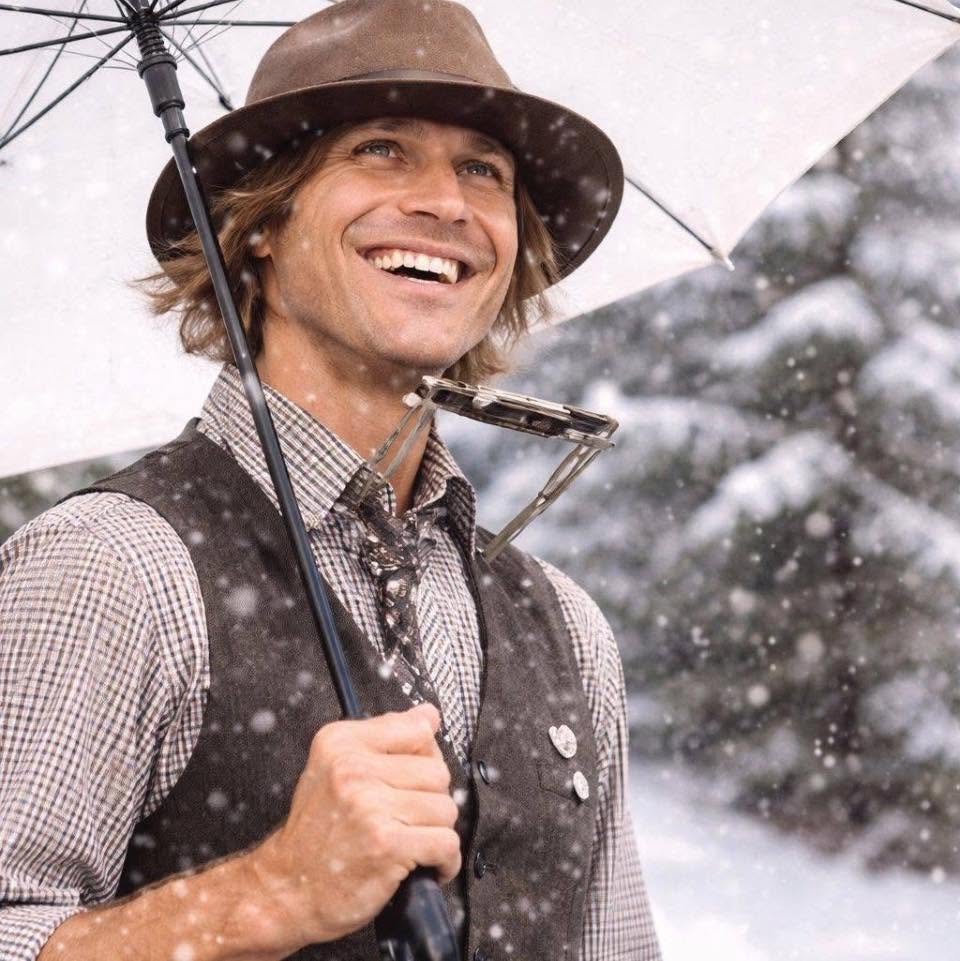

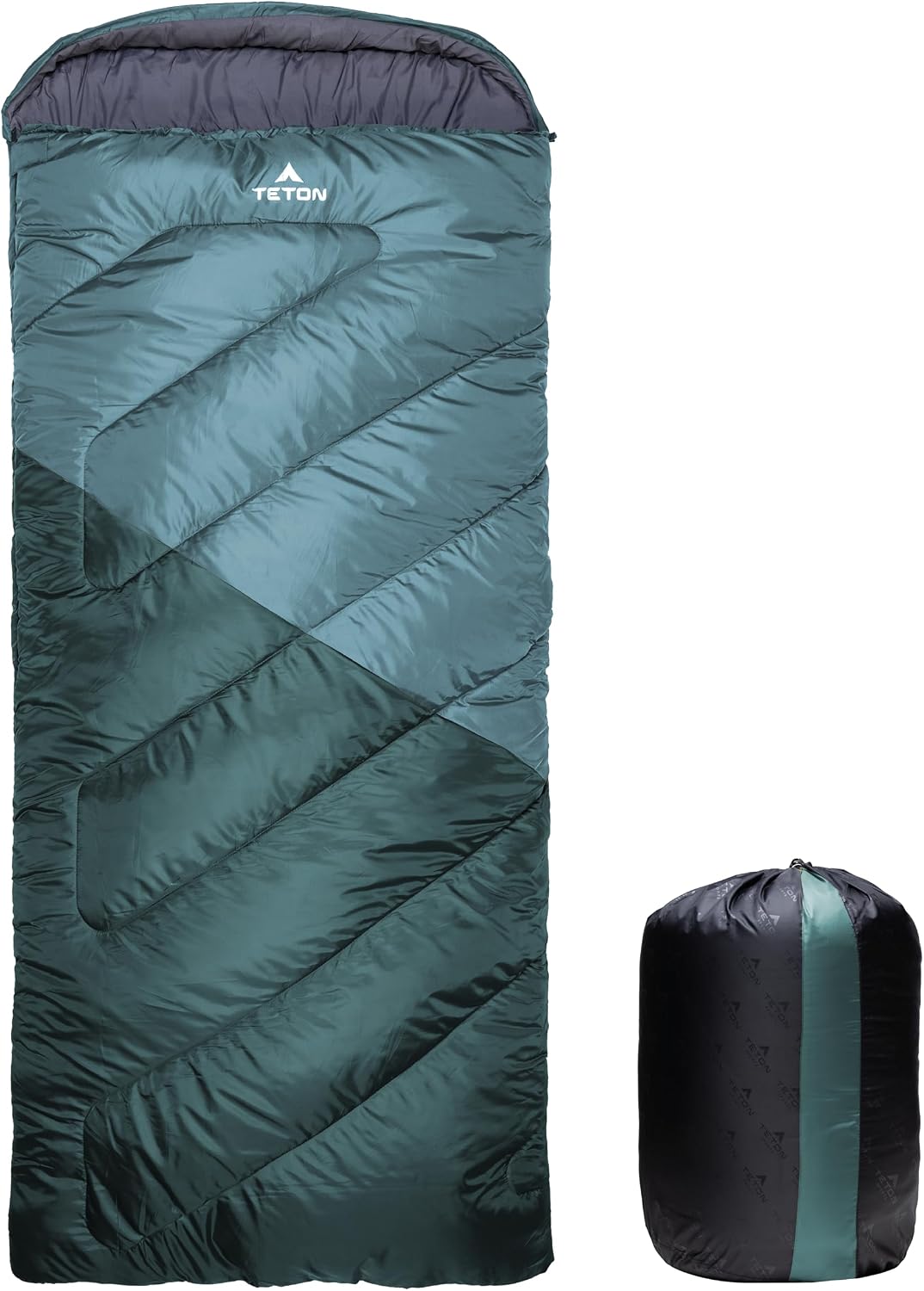
Teton Celsius Junior 20F Bag
Synthetic junior bag that keeps kids warm on frosty state-park nights and survives wet stuffing into a minivan.
Why we love it
- Two-way zipper lets kids vent or cocoon alone
- Flannel lining stays soft after wash cycles
- Draft tube seals warmth on 30-degree mornings
Pros
- Two-way anti-snag zipper
- Full-length draft tube
- Flannel-lined interior
- Includes stuff sack
- Affordable synthetic fill
Cons
- Synthetic fill bulk when packed
- 20F is limit temperature, not comfort

TETON Bridger Junior 20F Sleeping Bag
Canvas bag rated to 20F with a cinch hood and flannel lining, built tough enough for kids and weekend camping.
Why we love it
- Canvas shell survives stuffing wet into a minivan
- Mummy hood keeps a cold kid's head and neck warm
- Sized right so an 8-year-old can zip it alone
Pros
- Durable canvas exterior shell
- Cinchable mummy-style hood
- Flannel lining stays soft and warm
- Two-way zipper for easy access
- Compression straps for packing
Cons
- Heavy for backpacking overnight trips
- 20F rating is a limit, not comfort zone
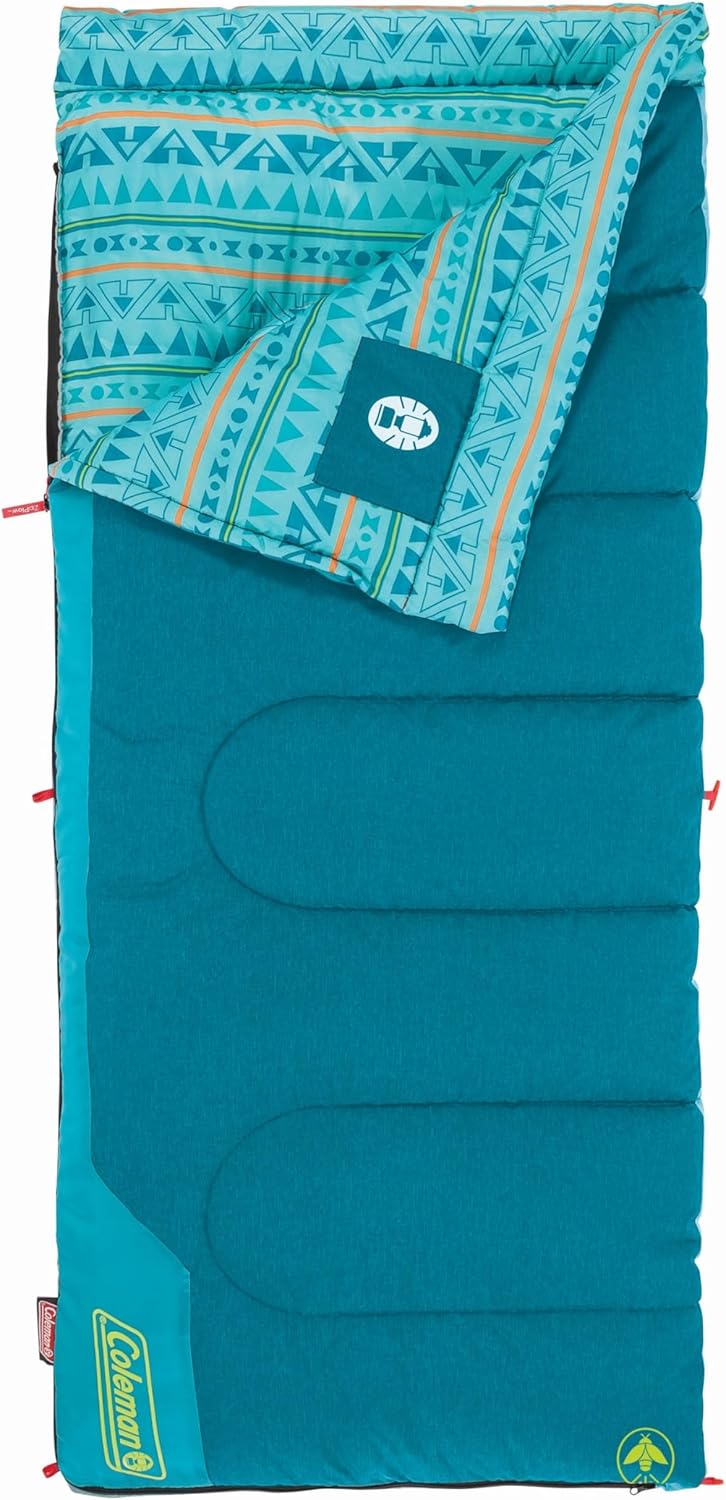
Coleman 50°F Youth Sleeping Bag
Glow-in-the-dark bag sized for kids up to 5 feet tall, rated to 50°F and machine washable for easy care after muddy trips.
Why we love it
- Machine washable after wet, muddy camping trips
- Glow-in-the-dark design helps find kids at night
- Fits kids up to 5 feet, grows with them for years
Pros
- Sized specifically for children
- Machine washable synthetic fill
- No-snag zipper rated for kids
- Glow-in-the-dark interior
- Stuff sack included
Cons
- 50°F rating is limit, not comfort zone
- Rectangular cut adds packed bulk
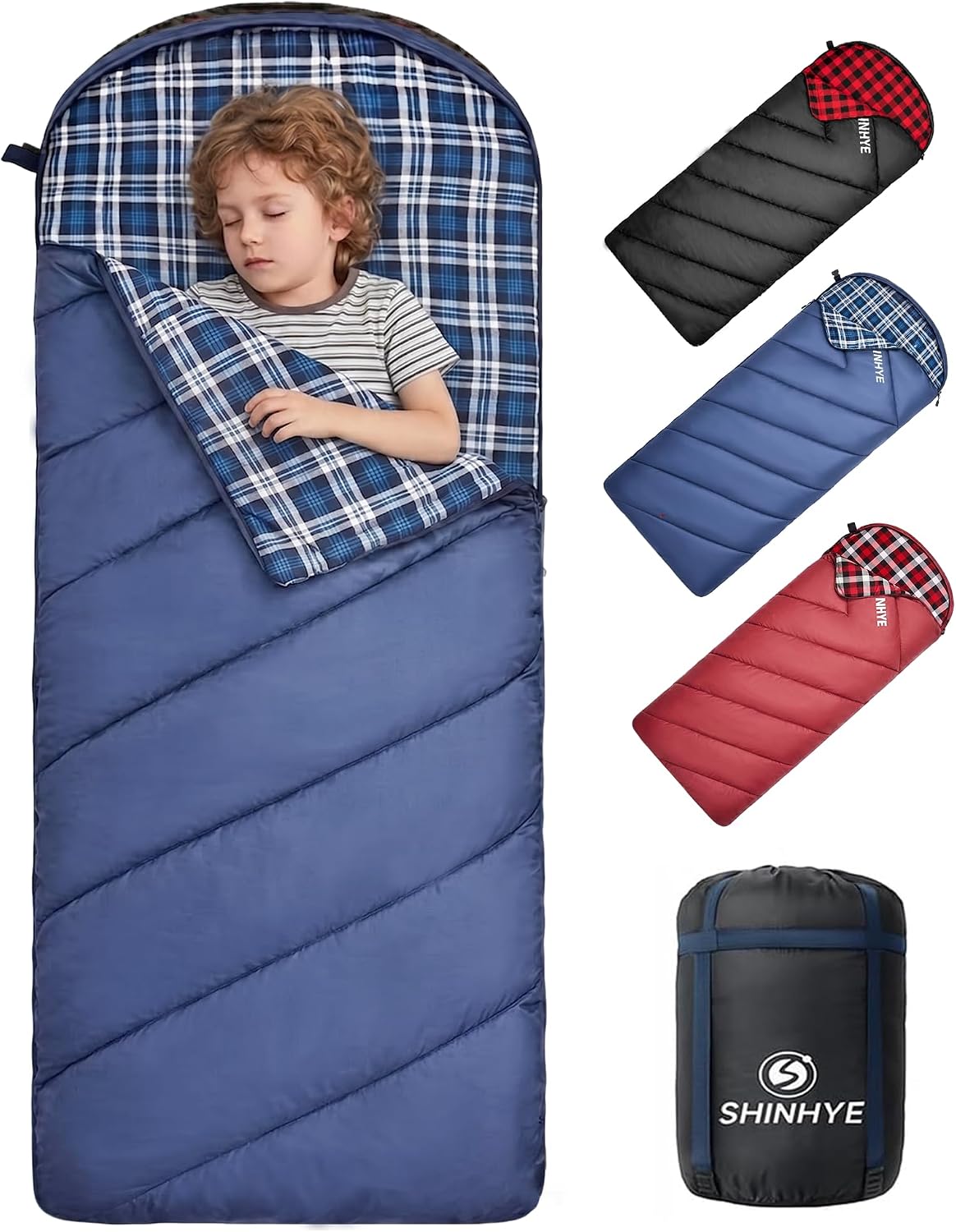
ShinHye Kids Sleeping Bag 45F
Rectangular kids bag with flannel lining and two-way zip that doubles as a blanket for car camping and family trips.
Why we love it
- Cotton flannel interior stays soft and quiet all night
- Two-way zipper zips to another bag or opens flat
- Lightweight with compression sack kids can carry
Pros
- Soft cotton flannel lining
- Two-way zipper connects two bags
- Waterproof ripstop outer shell
- Comes with compression sack
- Rectangular cut gives room to move
Cons
- Cotton fill heavier than synthetic
- Not rated below 35 degrees

Big Agnes Kids 20F Sleeping Bag
A kid-sized bag that actually keeps young campers warm on chilly nights without the bulk of adult gear.
Why we love it
- PadLok keeps restless sleepers from sliding off the pad
- Synthetic fill stays warm even when damp from morning dew
- Sized right so kids can zip and adjust it themselves
Pros
- PadLok pad attachment system
- Synthetic insulation performs when wet
- Kid-friendly contoured hood and draft collar
- Includes REM Storage Sleeve
- Lightweight and packable
Cons
- 20-degree rating is limit, not comfort
- Not ideal for backpacking long distances
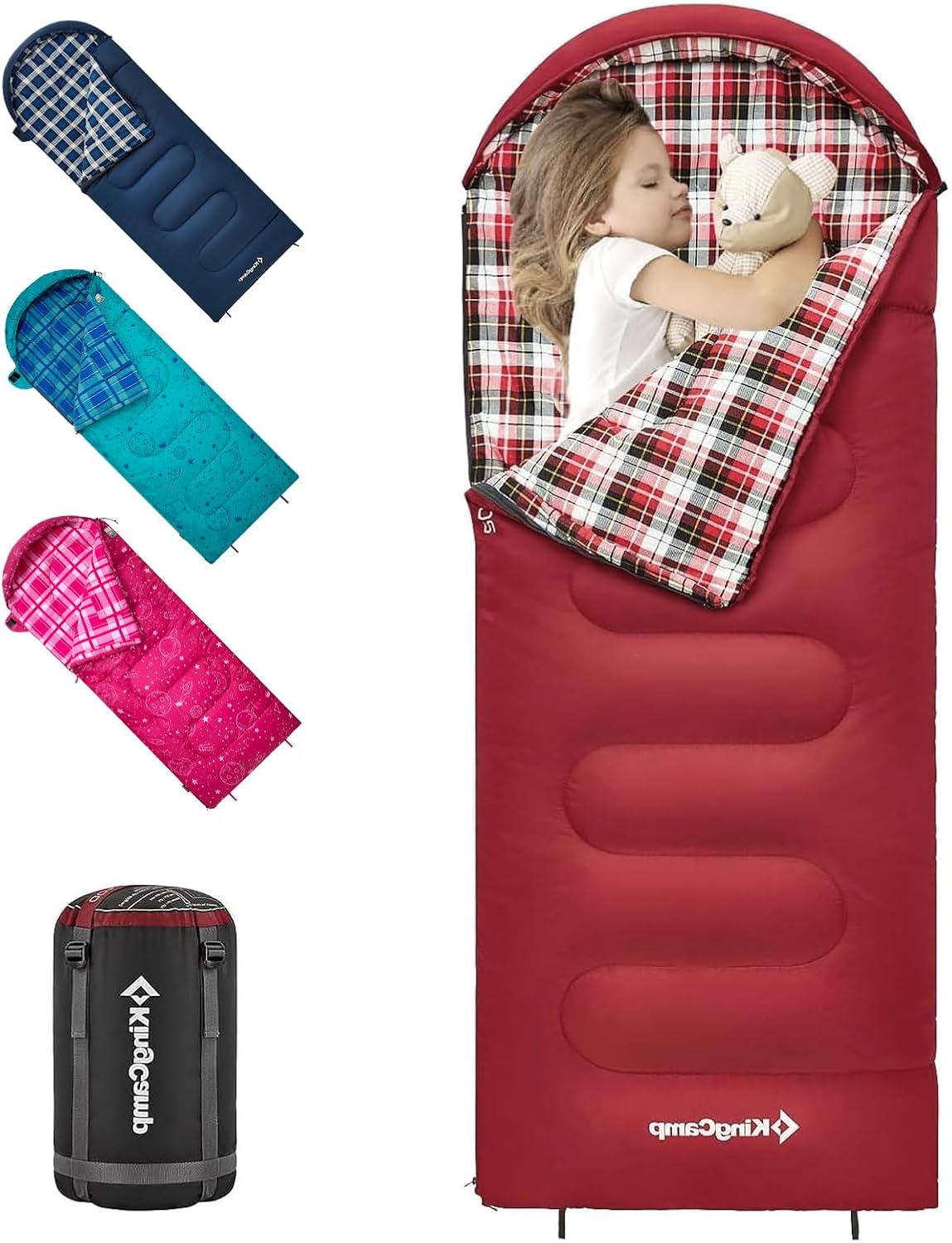
KingCamp Kids Sleeping Bag 45F
Flannel-lined kids bag that handles frosty state-park nights without the rustling that keeps everyone awake.
Why we love it
- Soft cotton flannel inside stays quiet all night
- Zips to a second bag for sibling warmth sharing
- Light enough for a kid to carry on short hikes
Pros
- Waterproof outer shell sheds morning dew
- Two-way zipper converts to a blanket or picnic pad
- Cotton flannel lining cuts the noise
- 3.09 lbs keeps it packable for family trips
Cons
- 45F comfort rating runs cold in shoulder season
- Synthetic fill needs air drying after damp trips
Sizing a Bag a Kid Won’t Swim In
Best junior sleeping bags live or die on one detail: fit. A bag sized for an adult will swallow a child, trapping air that never gets warm, no matter how good the insulation is. I’ve watched kids shiver in bags rated to 10 degrees because the bag was built for someone three feet taller. The 6 bags above range from models designed for kids up to 4 feet tall to bags for preteens pushing 5’5″, and that range matters more than the temperature number on the tag.
Your child’s actual height determines whether they stay warm or whether a bag becomes a liability on the trail. Most junior bags compress too much around the shoulders and hips when oversized, which kills the insulation. A bag that fits means your child can move enough to stay comfortable, and the insulation stays lofted where it needs to be.
Measure from floor to the crown of the head
Don’t estimate. Have your child stand straight and measure the distance from floor to the top of their head. Most junior bags specify a range: up to 4 feet, or 4’7″ to 5’5″. If your child is near the edge of a range, go with the smaller bag. A child who is 4’11” fits better in a bag rated to 4’7″ to 5’5″ than in an adult bag. When in doubt, call the manufacturer. They know where their seams sit.
Why oversized bags feel colder
A child in an oversized bag doesn’t fill the interior volume with body heat. The insulation lofts normally, but there’s empty air around the child that the bag has to warm up first. It’s like running the heater in a warehouse instead of a bedroom. Additionally, an oversized bag often has a hood and draft collar designed for a larger neck, so cold air spills in at the opening. The Teton Junior, 20 Degree and 0 Degree Sleeping Bags offers multiple temperature ratings and a full-length zipper draft tube that actually seals around a child’s size, which is why fit-specific construction matters.
Test fit while you can still return it
Before a trip, have your child get inside the bag at home. They should be able to move their arms and legs without the bag bunching up at the shoulders or tightening at the hips. A mummy cut should follow the shape of the body, not wrap around it. If your child has to wiggle to get comfortable, the bag is too small. If there’s a hand’s width of slack at the shoulders when they’re lying on their back, it’s too big. Most online retailers give you 30 days to figure this out. Use that window.
A child who fits their bag stays warm. A child swimming in fabric stays cold no matter what the tag promises.
Temperature Ratings and What Kids Actually Need
The comfort number matters more than the limit
A 20-degree bag’s “20 degree” refers to the limit temperature, not the comfort temperature. That’s the coldest your child can survive in it, not the temperature where they’ll sleep comfortably through the night. Most junior bags specify a comfort range around 40 to 50 degrees Fahrenheit. The Big Agnes Kids & Youth Sleeping Bag, 20 Degree uses synthetic insulation that stays effective when damp, so the comfort range holds even on Oregon’s coastal trips where moisture is the real problem. For three-season family camping in the Pacific Northwest, a 40 to 50 degree comfort range covers spring through early fall.
Pair the bag with a sleeping pad
A sleeping pad adds insulation from the ground and is as important as the bag itself. A child loses warmth downward faster than in any other direction. An insulated pad with an R-value of 2 or higher will change how a bag performs by 10 to 15 degrees. Without a pad, a 20-degree bag might only keep a child comfortable down to 40 degrees. With a decent pad, that same bag works fine at 25 degrees. The ratings on junior bags assume a pad underneath. On a cold night at Mount Hood, you’re not trusting the bag alone.
Synthetic or down depends on how wet it gets
Synthetic insulation like the recycled FireLine in the Big Agnes holds warmth even when damp, which matters on wet trips. If your family camps in places where gear gets soaked or where drying out overnight is impossible, synthetic is safer. Down insulation packs smaller and lighter but loses most of its warmth when wet, and drying a down bag in humid conditions takes days. If your main trips are in the dry high desert east of Bend or on established campgrounds where you can dry gear, down works. If you’re near water or in the Cascades where everything stays damp, synthetic is the right choice.
A child sleeping on bare ground stays cold. A pad is not optional.
What to Check Before a Trip
Inspect the zippers and seams
Before the trip, have your child practice zipping the bag from inside. Two-way zippers on junior bags should move smoothly without catching fabric. Seams should be straight and reinforced where the hood attaches. If the zipper binds or a seam looks loose, contact the seller. Zippers break in use, especially with kids who pull hard. A stuck zipper ruins a trip. The KingCamp 45°F Kids Sleeping Bag includes two-way zippers that allow pairing two bags together, which is useful when sibling bags need to be connected on cold nights. Test both directions before you leave.
Fluff the bag for 24 hours before using it
Synthetic and down insulation compress flat when packed. Before the first night, lay the bag out in your living room or yard and let it loft for a full day. The insulation expands and settles into its designed shape. A bag used straight from the compression sack will feel thinner and won’t keep your child as warm. This takes no effort, just time. Do it before every trip if the bag has been stored compressed for weeks.
Wash the bag only when necessary
A sleeping bag doesn’t need washing after every trip. Spot-clean stains and air it out. Wash it only if it smells or has visible dirt. Machine washing, even on gentle, degrades the insulation over time. When you do wash, use cool water and a gentle detergent designed for down or synthetics, depending on the fill. Dry completely before storing. A damp bag stored away will grow mold. Most junior bags come with a stuff sack and storage sleeve. Use the storage sleeve for long-term storage, not the compression sack. Compressed bags lose loft permanently if left that way for months.
Getting Kids Independent at Night
Teach your child to work their own zipper
Around age 6 or 7, a child can learn to zip and unzip their own bag. Practice at home first so they don’t panic in the dark. Show them how to hold the fabric away from the slider so it doesn’t catch. Teach them how to unzip just enough to get their arm out or to vent if they get too warm. A child who can control their own comfort is a child who sleeps better and doesn’t wake you up at midnight saying they’re hot or cold.
Use the internal pocket for a flashlight
Most junior bags have a small pocket in the lining meant for a phone or flashlight. A small LED flashlight or headlamp stored there lets your child find their own things without waking the whole family. It also helps if they need to get out of the tent in the middle of the night. This small detail makes a night in the tent feel less intimidating for a kid on their second or third overnight.
Tips From the Trail
- Never compress a bag more than necessary for packing. Long-term compression breaks down insulation fibers, especially in down. Use a proper sleeping bag compression sack for transport, then remove the bag immediately at camp and let it expand.
- Have your child wear dry layers inside the bag. If a child goes to bed damp from a day of hiking, they’ll stay cold all night. Change into dry clothes, even if it’s just a dry shirt and socks. The bag can’t work against moisture the child brought in.
- Store the bag uncompressed in a mesh bag at home. A mesh storage sack lets air flow while the bag hangs or sits in a closet. This keeps the insulation lofted and ready to work. A compressed bag sitting in a garage all winter loses effectiveness.
- Pair temperature ratings with your specific trips. A 20-degree bag is overkill for summer camping at 3,000 feet but necessary for high Cascades in shoulder season. Match the bag to the coldest nights you actually plan, not to the hypothetical worst case.
- Check the fit every two years as your child grows. A bag that fit perfectly at age 8 becomes oversized at 10. Kids grow faster than sleeping bags wear out. Once the fit is wrong, the warmth is compromised, and it’s time to trade up.
FAQ
How much warmth does a sleeping pad really add?
An insulated pad with R-value 2 to 3 effectively adds 10 to 15 degrees to a bag’s performance. The ground pulls heat from your child at a rate the bag alone cannot overcome. A pad is not a luxury, it’s part of the system.
Can a child use an adult bag if we stuff it with extra clothes?
No. Extra clothes take up space but don’t fix dead air inside the bag. An oversized bag still won’t loft properly around your child’s body, and warmth is lost through the gaps. Buy the right size.
Do temperature ratings on junior bags work the same way as adult bags?
Yes. The 20-degree or 45-degree number is the limit, not the comfort. Use it the same way: pair it with a pad, expect comfort to be 10 to 20 degrees warmer than the limit, and don’t camp at the limit.
What should my child wear inside the bag?
Dry base layers or pajamas. Avoid cotton, which holds moisture. Use merino wool or synthetic underwear and a long-sleeve shirt. A dry child in a dry bag sleeps warm. A damp child in any bag stays cold.
How often should I wash a junior sleeping bag?
Once or twice a year if used regularly, or only when visibly dirty. Washing degrades insulation over time. Spot-clean stains and always air the bag out between trips instead.
When should my child move up to an adult bag?
When they consistently measure taller than the top of the junior range. If a junior bag is rated to 5’5″ and your child is 5’6″, the fit is compromised and it’s time to switch. Don’t hold onto a bag that no longer fits.


Write Your Review
No reviews yet. Be the first to share your experience!